
It would be hard to exaggerate the seismic shift museums across the West are facing.
As governments slash funding and threaten further cutbacks in public support, American museums, long facing dwindling backing from central bodies like the National Endowment for the Arts (NEA) and the National Endowment for the Humanities (NEH), have typically looked to corporations, individual donors, private foundations, and earned income to prop up their budgets. British and especially German museums have long been able to rely on public largesse to a greater degree, but now even they, and museums in other European countries, are facing politicians who say they cannot justify cultural funding in times of strained budgets.


These pressures add up to more than just financial belt-tightening. Across the U.S., the U.K., and Europe, museums are grappling with a fundamental question of survival: how to remain relevant, independent, and adequately resourced in an era of shrinking subsidies, volatile politics, and shifting philanthropy. The result is a sector-wide reckoning that touches not only budgets, but also programming, governance, and the very role of museums in civic life.


“I talk to a lot of directors and trustees,” Stephen Reily, founding director of think tank Remuseum and former director of the Speed Art Museum in Louisville, Kentucky, said in a phone conversation. “The general tone is concern and uncertainty. I’m not sure anyone feels like they have a clear road map to sustainability.”

The Japanese American National Museum. Photo: Paloma Dooley.
The U.S. Funding Squeeze
President Donald Trump’s deep cuts to organizations like the NEA, NEH, and the Institute for Museum and Library Services (IMLS) since he took office in January 2025 have meant losses of hundreds of millions of dollars to cultural institutions; one tracker tallies $428 million in lost NEH funds alone. Museums had already counted on public funds less and less, the American Alliance of Museums (AAM) has reported. Elizabeth Merritt, the organization’s vice president for strategic foresight and founding director of the Center for the Future of Museums, wrote in a recent blog post that in 1998, when AAM began tracking museums’ financials, “government funding comprised 40 percent of museum income on average. By 2010, that portion had declined to a little under 24 percent, a figure that seems to have remained stable for the next 15 years.”
Compounding the effects of those cuts is a drastic dip in international tourism that has typically helped drive U.S. museum attendance; on top of this, stock market falls in response to unpredictable economic policy coming from the White House could cut into the principal value of museums’ endowments. What’s more, increased taxes on income from endowments in Trump’s omnibus budget bill will further cut into museums’ budgets.
“From conversations with a few directors, my sense is that the current administration’s vengeance against progressive institutions is an ascendant concern, making business as usual difficult,” said Maxwell Anderson, formerly a director at New York’s Whitney Museum of American Art, the Indianapolis Museum of Art, and the Dallas Museum of Art and now president of the Souls Grown Deep Foundation, in an email. “Wedged between anxious boards seeking to avoid controversy and arts communities clamoring for resistance, it’s an impossible situation. Nonprofits of all missions are mindful of the repressive climate and are largely favoring the familiar in programming and events.”
Europe Under Pressure
Berlin, the art-rich capital of Germany, saw €130 million (about $151 million) in cultural funding cut from the city’s budget—a 12 percent hit—in December 2024, with mayor Kai Wegner of the Christian Democratic Union saying the cuts were crucial for maintaining financial sustainability amid decreasing revenues.
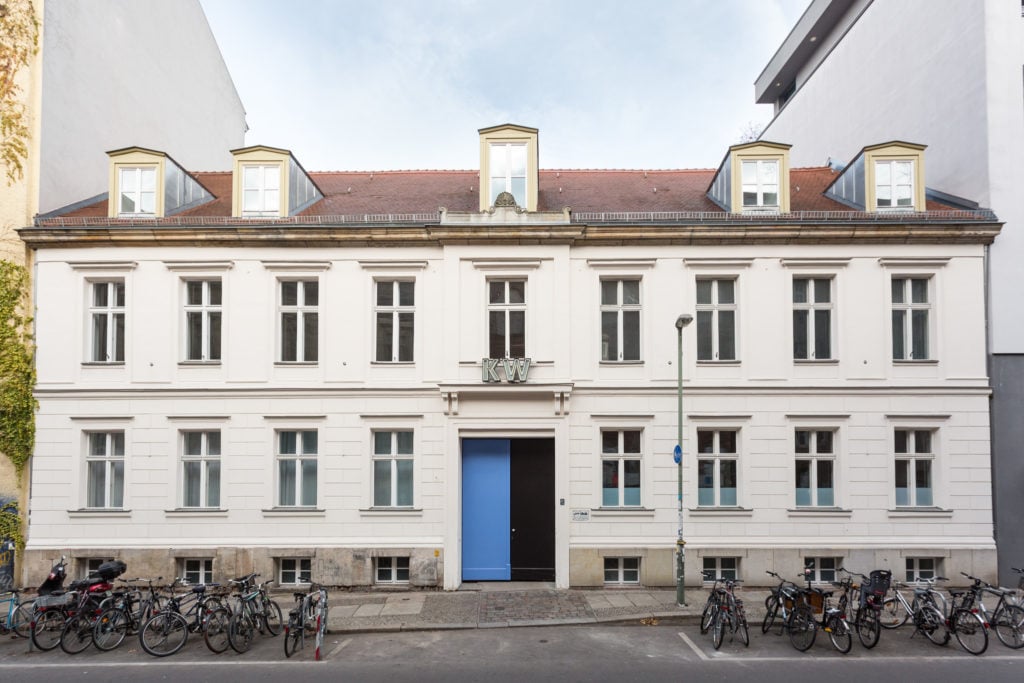
KW Institute for Contemporary Art in Berlin. Photo Frank Sperling.
When he was director of KW Institute for Contemporary Art in Berlin (2016–24), Krist Gruijthuijsen said in a phone interview, his institution saw a 14 percent cut in funding, or about €350,000 ($408,000) from a budget of about €3 million ($3.5 million). Faced with rising fixed costs but unable to cut staff due to regulations, he said sarcastically, “At KW, I proposed to exhibit the staff instead.” Gruijthuijsen was previously artistic director of the Grazer Kunstverein in Austria (2012–16), and in October, he begins as director and chief executive officer of EMMA–Espoo Museum of Modern Art in Finland.
Unlike in the U.S., mixing private and public funding is difficult for these government-reliant institutions. At many German institutions such as KW, Gruijthuijsen said, the government forces the books to “end up at zero,” he added. “If we went into a surplus, we would have to pay it back to the city. It was a system that never encouraged an institution to be too successful and fully dependent on its public funding.”
In the U.K., meanwhile, 14 years of rule by the conservative Tory party’s austerity policies have seen steep cuts to support for culture—overseen by no fewer than 12 culture secretaries over that time—that even the more sympathetic Labour party’s return to power may not be able to rectify. Immediately after, Labour candidate Keir Starmer became prime minister last summer, Tristram Hunt, director of London’s Victoria and Albert Museum, called for “emergency financial support for regional museums facing bankruptcy.”
“It’s no exaggeration to say the situation is critical,” said Rachel Browning, director of program and policy at Art Fund, a U.K. charity, in an email. “Museums across the U.K. are operating in an increasingly challenging environment. Years of real-terms cuts, the cost of maintaining aging buildings, and rising overheads are placing them under immense strain.”

Beamish, The Living Museum of the North, Museum of the Year Awardee, 2025. © David Levene / Art Fund 2025.
A Climate of Anxiety for Museums
What has resulted is a climate of considerable anxiety for institutions throughout the Western world. Philanthropy expert Leslie Ramos, co-founder of art philanthropy advisory firm the Twentieth and author of the 2024 book Philanthropy in the Arts: A Game of Give and Take, sees a daunting landscape. Institutions are facing greater scrutiny over speech on sensitive issues, causing their leaders to second-guess every decision, even as they see philanthropic funding migrating to other causes.
“Overall, in the U.K., the U.S., and Europe, it really is grim,” she said in a video conversation. “I think there is a crisis of relevance for the arts as something to support, which is causing a decline not just in funding but even in people who are curious and interested in even the possibility of funding the arts. The second thing is that, generally, the need is so great.”
The problem goes beyond funding. “It is perhaps common with all progressive institutions, including museums, that there are now so many competing issues, and they want to solve them all, all the time, tying themselves into ethical knots,” Ramos said. Issues like programming, collections management, ethical funding, and accessibility are all under a microscope. Even the strongest and better-funded museums are struggling.”
Politics also play into the equation. Last year, the Arts Council England (ACE) warned organizations away from allowing anyone who may be linked with them to make “overtly political or activist” statements, for fear of “reputational risk” that could jeopardize funding agreements. In Germany, freedom of speech is at issue since the Israel-Gaza war broke out in 2023, with institutions canceling events and exhibitions by artists who express support for Palestine. And on August 12, the Trump administration announced that it would conduct a comprehensive review of current and future Smithsonian exhibitions “to assess tone, historical framing and alignment with American ideals.” Samuel Redman, a history professor speaking to the New York Times, dubbed this move “a full assault” on the Smithsonian’s autonomy.

The Smithsonian Institution’s National Museum of American History. Photo: Kevin Carter/Getty Images.
Deepening the problem is that philanthropy is changing, with younger generations less reliably supporting cultural institutions and museums being slow to adapt. For example, said Joe Dunning, founder of London consultancy Dunning and Partners, “I’ve seen institutions try to engage with millennials in the same way as they did with their boomer parents, but there are assumptions about loyalty and reasons for giving that do not hold true for a younger generation.”
Furthermore, he points out, museums may be loath to try untested approaches. “One U.K. museum wanted a new development director, and initially wanted someone from a different professional background to shake things up,” he said, “but ultimately trustees weren’t willing to take the risk.”
How Can Museums Respond to a New Context?
Museums have struggled to find ways to respond to the new reality. People often invoke the metaphor of a battleship being much harder to quickly steer past obstacles than a speedboat. The struggle to adapt to the new reality is especially prevalent in the U.S., where rapid-fire changes under Trump have prompted radical reallocations of monetary support.
Museums may face an even greater threat as of August 19, when Trump posted on Truth Social that museums throughout the country are “the last remaining segment of ‘WOKE.’” Criticizing the Smithsonian for overly focusing on “how bad Slavery was,” he said his attorneys will “go through the Museums” and subject them to the same kind of regulation that he has exerted on colleges and universities, where he has withheld federal funds and even demanded multimillion-dollar payments in order to tamp down academic freedom.
A dozen American museums’ press offices either did not answer emails requesting interviews for this article, or responded that, in the current climate, they could not participate. James Steward, director of the Princeton University Art Museum in New Jersey, isn’t surprised.

James Steward, director of the Princeton University Art Museum. Courtesy the museum.
“I think there are number of issues affecting why some museum directors are holding back in the current moment,” he said in a phone conversation. “More than one museum director who was not U.S.-born has told me that their general counsel is advising them to keep a low profile because of the risk of having their visas revoked or because if they travel they may find themselves not allowed back in the country. Under the circumstances, it’s a reasonable fear.”
Others, he said, may be hesitating due to concerns about future positions, the views of future boards they may deal with, and their own career paths. “Toward that second category of director, I’m maybe less empathetic, because it feels like a personal calculation at a moment when we need to think of what our communities and our nation need of us. For those of us not in such circumstances, it’s vital for us to continue the work of advancing the needs of our communities, the complexities of our history, and the cause of academic freedom. If we don’t, I think our museums are going to become irrelevant.”
New Methods for New Scenarios
One institution has even taken advantage of being targeted by the Trump administration to rally public support. Another opted out of government funding for exhibitions that might rankle the president. In other cases, private funders and individuals are doing their best to step up and bridge the gap.
When Los Angeles’s Japanese American National Museum (JANM), a Smithsonian affiliate, said that it would refuse the Trump administration’s demands for recipients of federal funding to remove anything that could be construed as supporting efforts toward diversity, equity, inclusion, and access (DEAI) from their websites, board chairman Bill Fujioka told the Los Angeles Times that the museum would “scrub nothing.” As a result, the museum lost some $659,000 in government funds.

Courtesy the Japanese American National Museum.
In response to an email and social media fundraising campaign, said chief development officer Kelli-Ann Nakayama in a video conversation, the museum managed to drum up $530,000 in support. An anonymous supporter gave $85,000 in a challenge grant to help replace a lost $170,000 NEH grant; the museum raised the rest, with some online donors giving as little as $5. (In a bit of symbolism, California Governor Gavin Newsom chose JANM as the venue for his August 14 press conference at which he announced that California would respond to Trump’s efforts to bolster Republicans’ lead in the House of Representatives through redistricting in Texas; scores of federal immigration officers, some armed, assembled outside the venue.)

The Smithsonian National Museum of African American History and Culture. Photo by Alan Karchmer, courtesy of the Smithsonian Institution.
Another Smithsonian affiliate garnered public support without even asking. The National Museum of African American History and Culture (NMAAHC), sited on the National Mall in Washington, D.C., came in for criticism in a Trump executive order in which he accused Smithsonian museums of promoting what he calls a “divisive, race-centered ideology.” As a show of support in response, Black churches are becoming museum members—and encouraging their congregations to do the same.
One well-funded institution chose to withdraw federal grant applications and fund potentially problematic exhibitions itself. The Yale University Art Gallery, in New Haven, Connecticut, withdrew applications for $200,000 in NEA and NEH grants for a show on the art of the Nguni people of southern Africa, scheduled for fall 2026, “because it refused to agree to the anti-DEI language that was part of the Trump administration’s new grant acceptance guidelines,” reported Connecticut Insider, which noted that Yale University reported an endowment worth $46 billion at the end of the 2024 fiscal year.
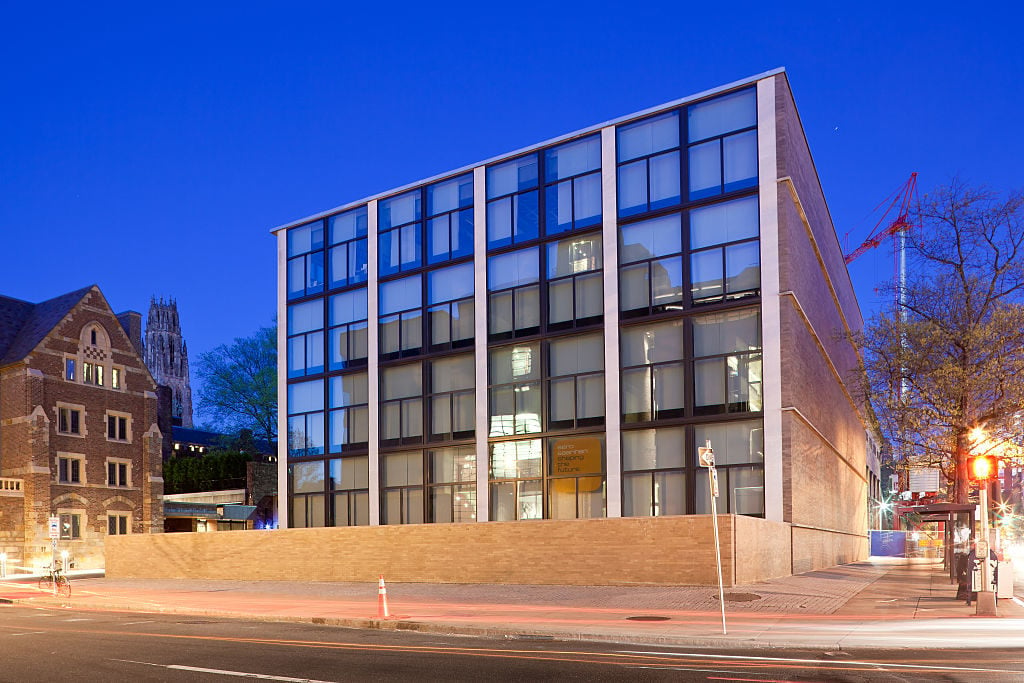
Yale University Art Gallery in New Haven, Connecticut, 2010. Photo: Getty Images
Major funding organizations have also seen fit to reply. The Helen Frankenthaler Foundation and the Andy Warhol Foundation moved to replace some $800,000 in funding to 80 visual arts programs that was lost due to cuts to previously promised NEA grants; among the grantees were seven museums nationwide.
Public Versus Private
Museums and other cultural institutions have long done things in traditional ways, but they may have to get creative as they pivot to some degree away from public funding.
One British ex-museum director, for example, has proposed that the U.K. institute admission fees for tourists at British museums, which have long been free to enter. U.K. museums are also working to bolster existing sources of funds, said Charlotte Appleyard, formerly director of development and business innovation at London’s Royal Academy of Arts, currently advisor to former shadow culture secretary Baroness Debbonaire, and soon to be director of development at the British Museum.
“Whilst membership has always been a key part of major museum funding, most of the big museums are really doubling down in their investment in it,” she said in an email. “The Royal Academy, the National Gallery and Tate have all invested considerably in their members’ spaces and programs. The focus for a lot of us has been on becoming a place that people want to hang out and spend time beyond just seeing an exhibition.”
She also points out that U.K. museums are looking across the pond for inspiration. “Most of the big museums are now focusing on endowment. It’s not as common in the U.K. as it is in the U.S., and so we’re all looking and learning from our American counterparts.”
Tate, for example, is developing the Tate Future Fund and aims to raise £150 million (about $204 million) by 2030 to support acquisitions and curatorial staff. The institution’s chair, Roland Rudd, has said the museum is seeking naming donors for its trademark Turbine Hall, in return for upwards of £50 million (about $68 million); as of June, the museum had raised £43 million (about $58 million).

Tate Modern’s Turbine Hall. Photo: Tate Photography.
It remains a difficult landscape for German institutions. Museums are innovating but moving carefully. “The more you build private backing, the more chances are that you lose public funding,” Gruijthuijsen, former director of KW in Berlin, warned. “It has to be fairly balanced, especially when the collections are publicly owned.”
AAM’s Merritt points out that some museums are seeking greater flexibility in the way they use grants from foundations. “Some museums are asking private foundations from which they have received grants to loosen the restrictions on how and when the money is spent, simplify the reporting requirements, and provide non-financial assistance such as legal services and risk assessment,” she said.
Credit: Artnet