

1. Maasai Tribe of Kenya and Tanzania
Quick Facts:
- Population: ~2.1 Million
- Location: Kenya (1.2M) & Tanzania (900K)
- Language: Maa, Swahili, English
- Known For: Warrior culture, pastoral lifestyle
The red-clad Maasai of Kenya and Tanzania are synonymous with the great plains of East Africa. These renowned warriors and pastoralists have roamed these lands for centuries, maintaining their traditional way of life despite modern pressures.


Sacred Origins

According to Maasai oral tradition, Maasinta, the first Maasai, received cattle as a sacred gift from Ngai, the sky god. Lowered to earth on a leather thong, these cattle established the Maasai’s deep connection with their herds—a relationship that defines their culture today.

Traditional Territory

The Maasai’s ancestral lands encompass some of East Africa’s most iconic landscapes, including the famous parks of Ngorongoro, Amboseli, Serengeti, the Masai Mara, and Tsavo.
Distinctive Traditions
- The Adamu (jumping dance) – performed during male initiation ceremonies
- Shuka (traditional dress) – vibrant red cloth symbolizing blood and protection
- Unique customs – including ceremonial spitting and blood-milk mixture consumption
- Strong pastoral traditions – maintaining large cattle herds
Experience Maasai Culture:
Deepen your Africa safari experience by meeting the Maasai on these authentic East African safaris:
- 15 Day Kenya & Tanzania Safari – Cultural & Wildlife Adventure
- 12-Day Masai Mara & Serengeti Safari
- 8-Day Kenya Family Safari
If you’d like to know more about these incredible people and their traditions, read our Maasai culture feature, The Maasai Tribe of Kenya.

2. The Hadza Tribe of Tanzania
Quick Facts:
- Population: 1,200 to 1,300
- Location: Lake Eyasi, Tanzania
- Known For: Last traditional hunter-gatherers in Africa
- Language: Hadzane (unique click language)
The Hadza tribe is an indigenous hunter-gatherer African tribe that resides in Tanzania, around Lake Eyasi in the Arusha region. The Hadza predate modern Bantu speakers and have inhabited the Lake Eyasi region for thousands of years.
Ancient Origins
Hadzaland lies only 50 km from Olduvai Gorge, known as the Cradle of Mankind, and 40 km from the prehistoric site of Laetoli. This proximity to important archaeological sites suggests the Hadza have inhabited this area since at least the later Stone Age, around 50,000 years ago.
Traditional Lifestyle
The Hadza are one of the last remaining groups of traditional hunter-gatherers in Africa. They maintain a unique and distinct way of life, relying on the surrounding savannah and woodland ecosystems for sustenance. Their exceptional hunting and gathering skills allow them to collect diverse plant foods and engage in cooperative hunting.
Social Structure & Culture
Their social structure is characterized by collective decision-making without centralized leadership. Men specialize in hunting and honey gathering, developing a special relationship with the honeyguide bird. Women are expert gatherers, collecting berries, tubers, greens, and eggs.
Unique Language
The Hadza language, Hadzane, is a language isolate spoken nowhere else in Africa. It serves as a unique identifier for the tribe and is primarily used in homes.
Oral History
According to Hadza tradition, their history spans four distinct periods:
- The Geranebee (ancient ones) – hairy giants who lived without tools or fire
- The Xhaaxhaanebee – cave dwellers who mastered fire
- The Hamakwanebee – who developed tools and first contacted other tribes
- The hamayishonebee – the present-day people
Experience Hadza Culture:
Visit the Hadza on these Northern Tanzania safaris:
- 8-Day Masai Mara, Ngorongoro, & Serengeti Lodge Safari
- 10-Day Wildlife & Culture Safari to Tanzania
- 10-Day Tanzania Safari & Zanzibar Vacation
Find out more about the Hadzabe tribe in our African culture feature: Who are the last true hunter-gatherers in Africa? Discover the Hadzabe of Tanzania.

3. The Samburu Tribe of Northern Kenya
Quick Facts:
- Population: ~160,000
- Location: North-central Kenya
- Language: Maa (dialect shared with Maasai)
- Known For: Pastoralist culture, colorful attire
Origins & Location
The Samburu tribe from north-central Kenya are pastoralists from the great plains of the Samburu region. They are closely related to the Maasai people of Kenya and are said to have migrated south from the Nile region of North Africa.
Language & Environment
The Samburu people speak a dialect of the Maa language which they share with the Maasai. The Samburu people are considered to be even more remote as the region that they inhabit is dry and can support less life.
Traditional Lifestyle
Pastoralists, the Samburu raise primarily cattle but also keep other livestock like goats, sheep, and even camels. Because of the arid environment that they inhabit, this African tribe is traditionally nomadic. Their diet, like the Maasai, consists of milk and animal blood while eating is reserved for special occasions.
Cultural Dress & Adornments
The Samburu people are renowned for their colorful clothing and unique social structure:
- Men wear pink or black cloth similar to Scottish kilts
- Warriors (Moran) wear their hair in long braids
- Women keep their heads shaven and wear two clothes
- Women apply ochre to their bodies, similar to the Himba
Social Structure
What sets the Samburu tribe apart is its gerontocracy – a social structure governed strictly by the elders. These leaders make all decisions and possess the power to curse younger members. Their God Nakai is the ultimate source of power for this deeply religious tribe.
Experience Samburu Culture:
Visit this remarkable tribe on these Kenyan safaris:
- Masai Mara, Samburu, Nakuru 4×4 Kenya Lodge Safari
- Masai Mara & Northern Kenya Game Parks 4×4 Safari
- Samburu Safaris
4. The Karo Tribe of Ethiopia
Quick Facts:
- Population: 1,000 to 3,000
- Location: Omo Valley, Ethiopia
- Known For: Body painting & scarification
- Name Meaning: “Fish” (fish-eaters of Omo Valley)
Origins & Location
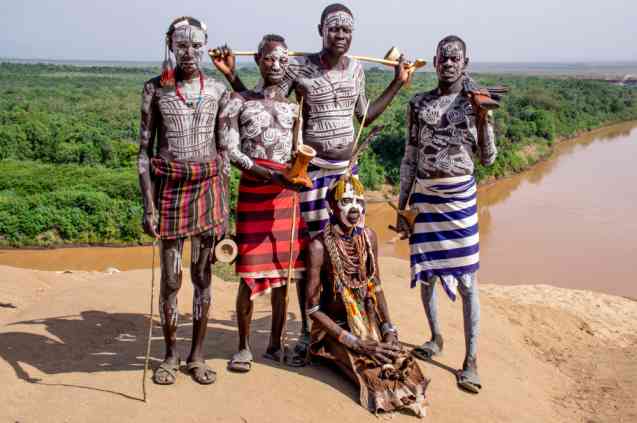
The Karo people, residing in the Omo Valley of Ethiopia, are known for their vibrant cultural practices and unique way of life. As the smallest African tribe in the Omo Valley, they maintain a close connection to the Omo River and the surrounding fertile lands.
Traditional Lifestyle
Agriculture forms the foundation of Karo life. They practice flood-retreat cultivation along the riverbanks, similar to the ancient Egyptians along the Nile, growing sorghum, maize, and beans. The tribe also fishes and breeds goats and cattle.
Artistic Expression & Body Art
The Karo are inherently artistic and renowned for their captivating body and face painting. Using locally sourced materials like white chalk, yellow mineral rock, iron ore, and charcoal, they create elaborate designs ranging from delicate dots to bold lines, often featuring animal motifs like guinea fowl patterns.
Cultural Practices
- Scarification: Women use scars to enhance beauty, while men’s chest scars represent kills
- Bull Jumping (Bula): Young men must jump over bulls six times to prove manhood
- Crocodile Ritual: Monthly ceremony to maintain peace between humans and crocodiles
- Marriage Customs: Strict social taboos around marriage and children
Experience Karo Culture:
Visit the Karo on these Ethiopian safaris:
Learn more about the Omo Valley tribes in our feature: Up Close with the Omo Valley Tribes of Ethiopia.
5. The Himba Tribe of Namibia
Quick Facts:
- Population: ~50,000
- Location: Kunene region, Northwest Namibia
- Known For: Red ochre body paint, sacred fire traditions
- Origins: Descended from Herero of Angola
Sacred Traditions
Life for the Himba revolves around the holy fire called Okuruwo. This sacred fire symbolizes their connection with their ancestors, who communicate directly with their God Mukuru. The fire burns continuously at the village center, tended by designated fire-keepers from each family.
Lifestyle & Social Structure
The Himba are nomadic pastoralists, traveling between waterholes with their cattle and goats. Their unique bilateral clan structure – rare among traditional peoples – means each member belongs to both maternal and paternal clans, improving survival chances in harsh environments.
Gender Roles & Customs
- Women: Water carrying, milking, building homes, childcare
- Men: Politics, livestock management
- Unique hygiene practices: Men use water, women use herb smoke
Distinctive Appearance
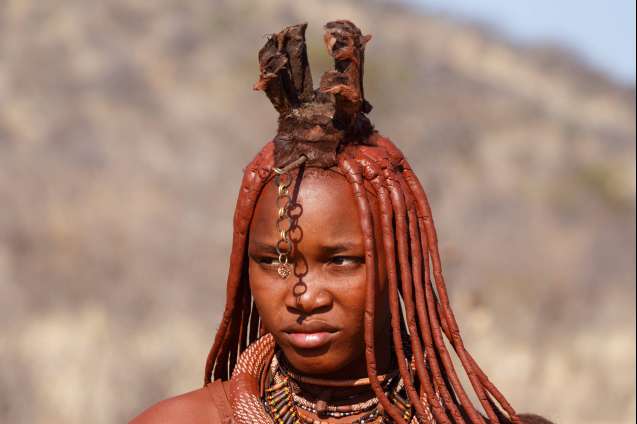
The Himba are known as the “Red People of Africa” due to their distinctive otjize body paint – a mixture of butter, animal fat, and ochre. This serves both practical (sun protection, insect repellent) and aesthetic purposes. Their elaborate hairstyles indicate age, status, and social standing.
Experience Himba Culture:
Visit the Himba on these Namibian safaris:
- 6-Day Namibia Camping Safari: Etosha, Himba & Skeleton Coast
- 10-Day Explore Namibia Budget Camping Safari
- Explore Northern Namibia Safari Adventure
- Complete Namibia Camping Safari

6. The Zulu Tribe of South Africa
Quick Facts:
- Population: 10-13 million
- Location: KwaZulu-Natal, South Africa
- Known For: Beadwork, warrior culture
- Origins: East African descent
Historical Legacy
The Zulu people are the largest ethnic group in South Africa. They rose to prominence under the leadership of Shaka in the early 19th century, building a formidable empire that played a crucial role in South African history.
Modern Culture
Today’s Zulu people blend modern progress with strong traditional roots. They are known for their warmth and hospitality and introduced the concept of Ubuntu – the philosophy that we are defined by our connections to others rather than individual identity.
Spiritual Beliefs
While predominantly Christian, the Zulu maintain traditional beliefs in:
- Unkulunkulu – supreme creator being
- Amadlozi – ancestral spirits
- Sacrificial offerings for marriages and births
Artistic Heritage
The Zulu are master craftspeople, particularly renowned for their:
- Beadwork with symbolic patterns and colors
- Earthenware pottery
- Traditional weaving
Experience Zulu Culture:
Visit the Zulu people on these South African safaris:
- South Africa Walking Safari to Kruger & Zululand
- South African Coast & Kruger Exclusive Overland Safari
- 19-Day Southern Africa Small Group Adventure Safari
Learn more about Zulu culture in our feature: The Lightning Bird in Zulu Culture.
__medium.jpg)
7. The Xhosa Tribe of South Africa
Quick Facts:
- Population: 9+ million
- Location: Eastern & Western Cape, South Africa
- Known For: Click language, rich traditions
- Notable Leaders: Nelson Mandela, Desmond Tutu
Origins & History
The Xhosa people, South Africa’s second-largest ethnic group, are a Bantu-speaking people who have inhabited the Eastern Cape since the 7th century. They represent the southernmost arm of the great Nguni migration from East Africa, integrating with the San and Khoisan peoples over time.
Language & Name
The name “Xhosa” comes from the Khoisan language, meaning “angry men.” Their language, isiXhosa, is unique as both a click and tonal language, with about 15% of vocabulary derived from Khoekhoe.
Traditional Lifestyle
Historically, the Xhosa were successful cattle farmers, with livestock symbolizing wealth, status, and honor. Their agricultural practices included:
- Cattle farming (used for lobola/bride price)
- Mixed livestock (dogs, goats, horses, sheep)
- Crop cultivation (millet, maize, beans)
- Later additions: tobacco and hemp
Spiritual Beliefs
The Xhosa recognize uThixo or uQamata as their Supreme Being, though daily spiritual practices focus on ancestral intermediaries. Religious observances include elaborate rituals, initiations, and feasts.
Cultural Identity
Known as the “Red Blanket People” for their distinctive red ochre-dyed blankets, the Xhosa have played a crucial role in South African history, producing leaders like Nelson Mandela and Desmond Tutu.
Experience Xhosa Culture:
Visit the Xhosa heartland on these South African tours:
Learn more about the Xhosa people of South Africa.

8. The San Tribe (Bushmen) of Southern Africa
Quick Facts:
- Population: ~80,000
- Location: South Africa, Botswana, Namibia
- Known For: Rock art, click language
- Status: First people of southern Africa
Ancient Heritage
Known as the first people of South Africa, the Khoisan are renowned for their close connection to nature, their nomadic lifestyle, and their distinctive click language. Today, their traditional way of life faces significant challenges.
Traditional Lifestyle
Traditionally, hunter-gatherers, the San people, lived off the land, roaming vast tracts of bushveld across southern Africa. Modern pressures have restricted their range to small clusters around the Makgadikgadi Pan.
Artistic Legacy
The San were southern Africa’s great artists, creating rock art that dates back thousands of years. Their paintings, found in caves and rock overhangs, used pigments from mineral deposits, ochres, blood, and eggs to create vivid imagery of humans and animals.
Spiritual Practices
The magical trance dance remains central to San customs and beliefs. This healing dance brings together the entire community, with healers and elders leading ceremonies that include:
- Rhythmic clapping and chanting
- Fire-side dancing
- Animal mimicry
- Spiritual communion
Experience San Culture:
Meet the San people on these southern African safaris:
- Kalahari & Bushman Botswana Camping Safari
- 13-day Namibia, Chobe & Vic Falls Lodge Safari
- South Africa, Namibia & Botswana Overland Camping Safari
- Namibia Desert & Botswana Delta Safari
Learn more about the San in our feature, the Khoisan people of South Africa, and San Rock Art in Southern Africa.

9. The Southern Ndebele Tribe of South Africa
Quick Facts:
- Population: ~1.1 million
- Location: Mpumalanga, Gauteng, Limpopo
- Known For: Geometric house paintings
- Related To: Zulu (linguistic cousins)
Cultural Beliefs
In traditional Ndebele society, illness is believed to be caused by spells or curses. The traditional healer (sangoma) combats these forces using herbs and bone throwing. Both male and female healers (izangoma) can commune with ancestral spirits, with their success measured by their ability to defeat illness.
Initiation Traditions
- Boys join age-group regiments (indanga) at 18
- Girls wear beaded hoops (izigolwan) during initiation
- Initiation schools are held every four years
- Girls trained as matriarchs and homemakers
Artistic Heritage
The Ndebele are renowned for their distinctive artistic expression, particularly their geometric house paintings. Women are responsible for decorating homesteads with vibrant patterns and colors. Modern artists like Esther Mhlangu have gained international recognition, with some even creating designs for BMW Art Cars.
Credit: africanbudgetsafaris