What's Hot?
South African Tourists Chased Out Of Restaurant In...
Saudi Arabia Integrates Visa Application Into Travel Bookings
Netflix’s Most-Hated Man: How S’Dumo Mtshali Turned Villainy...
France Returns Syria’s Ancient Artifacts
Cannes Awards: Between Winners’ Accolades and Collaborators’ Celebrations
Gbubemi Ejeye’s Sculptural Natural Hairstyle Is a Celebration...
Canada Citizenship Processing Time Stretches To 19 Months
Saudi Arabia’s Licensed Tourism Facilities Rise 22.7pc In...
Europe’s Most Overcrowded Island Is Still Inviting More...
Lateef Adedimeji, Linda Ejiofor-Suleiman Lead ‘Black Market’ Guinness...
  • Home
  • Arts & Exhibitions
  • Culture & Festivals
    • Culture Africana
    • Culture People
  • Fashion & Lifestyle
    • Music, Movies & More
  • News
    • Travel News
  • Opinion
    • Reviews (The Critics)
  • TCN Literati
  • Tourism & Hospitality
The Culture Newspaper
Arts & Exhibitions

4,000-Year-Old Temple Predating Machu Picchu Unearthed in Peru

by The Culture Newspaper July 13, 2024

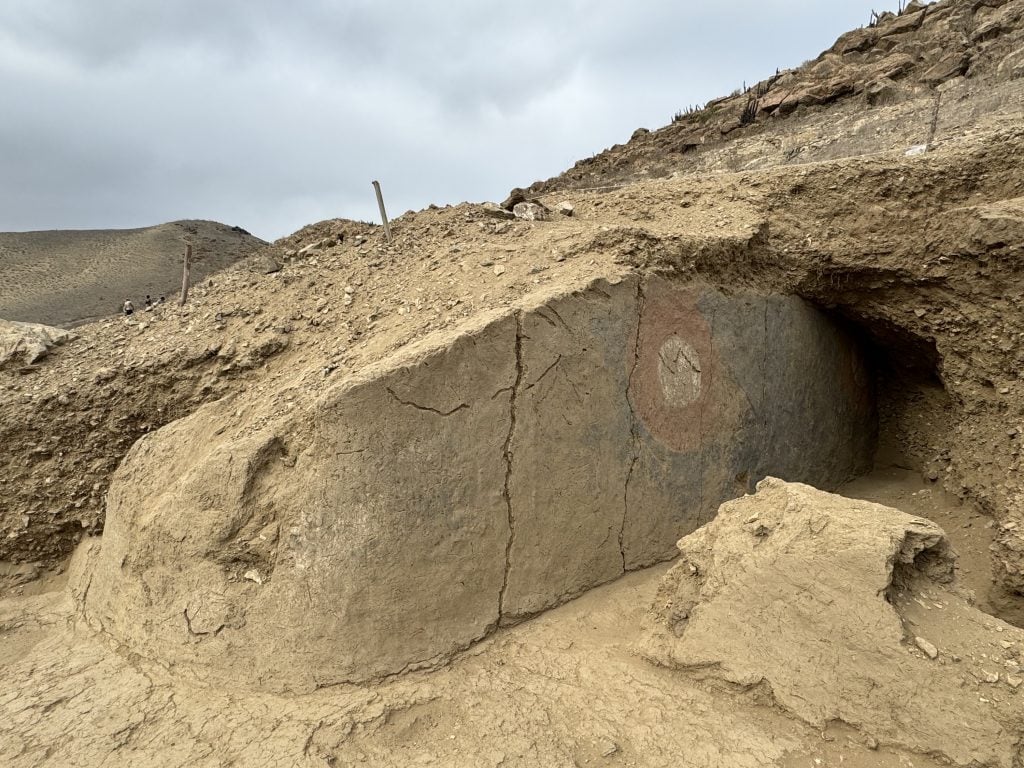
Archaeologists working in Peru have made a truly remarkable discovery. The remains of an ancient temple and theater that have been dated to 3,500 years older than the famed ancient site of Machu Picchu have been uncovered by a team led by Luis Muro Ynoñán from the Field Museum in Chicago, Illinois.

While Machu Picchu, Peru’s most renowned archaeological site, was constructed by the Incan Empire approximately 600 years ago, the newly discovered temple predates it by a whopping 3,500 years. The people who built it were older than the Inca and even their predecessors, such as the Moche and Nazca cultures. “We don’t know what these people called themselves or how they were known by others. Our knowledge of them is derived solely from what they left behind: their houses, temples, and funerary goods,” Muro Ynoñán explained in a press release.

Courtesy of Ucupe Cultural Landscape Archaeological Project.

The discovery came after local authorities reported looting near the northern Peruvian town of Zaña, prompting Muro Ynoñán and his team to intervene and study the area before it was further damaged. With support from organizations like Dumbarton Oaks, Archaeology in Action, and the Pontifical Catholic University of Peru, the excavation commenced in June 2024.

In a 33-square-foot excavation plot, the scientists found ancient walls made of mud and clay just six feet under the ground.
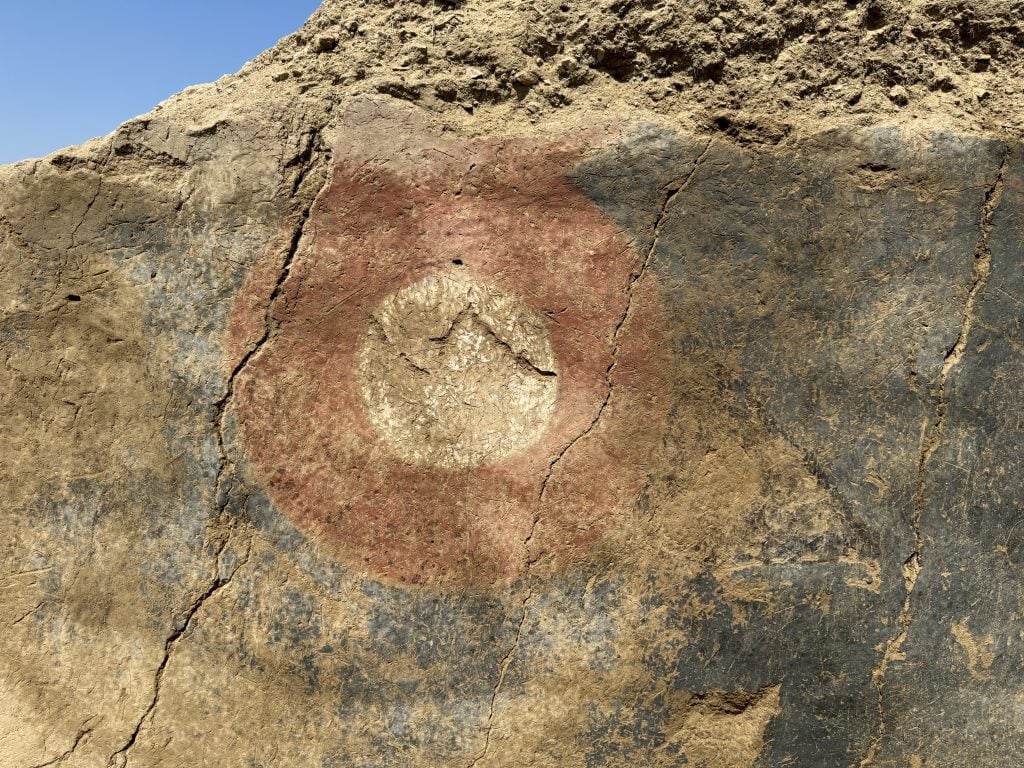
Details of the discovery in Peru. Courtesy of Ucupe Cultural Landscape Archaeological Project.

Further excavation revealed a large temple built into the mountainside and a small theater with a stage-like platform, likely used for rituals. “The people here created complex religious systems and perceptions about their cosmos,” Muro Ynoñán says. “Religion was an important aspect of the emergence of political authority. People used religion to wield control over each other, early leaders personified mythological figures in performances. It gives us insight into the human mind because religion is still used as a tool for political purposes today.”

READ More  U.S Museum Repatriates Marble Head To Turkey

For Muro Ynoñán, this is more than a professional accomplishment, it’s personal. “This is the story of my own ancestors” he said, noting that both his parents are from the area. “It was really incredible to come face to face with these depictions of an ancient god that was so important for these ancient groups… My connection with it is so special, so deep.”
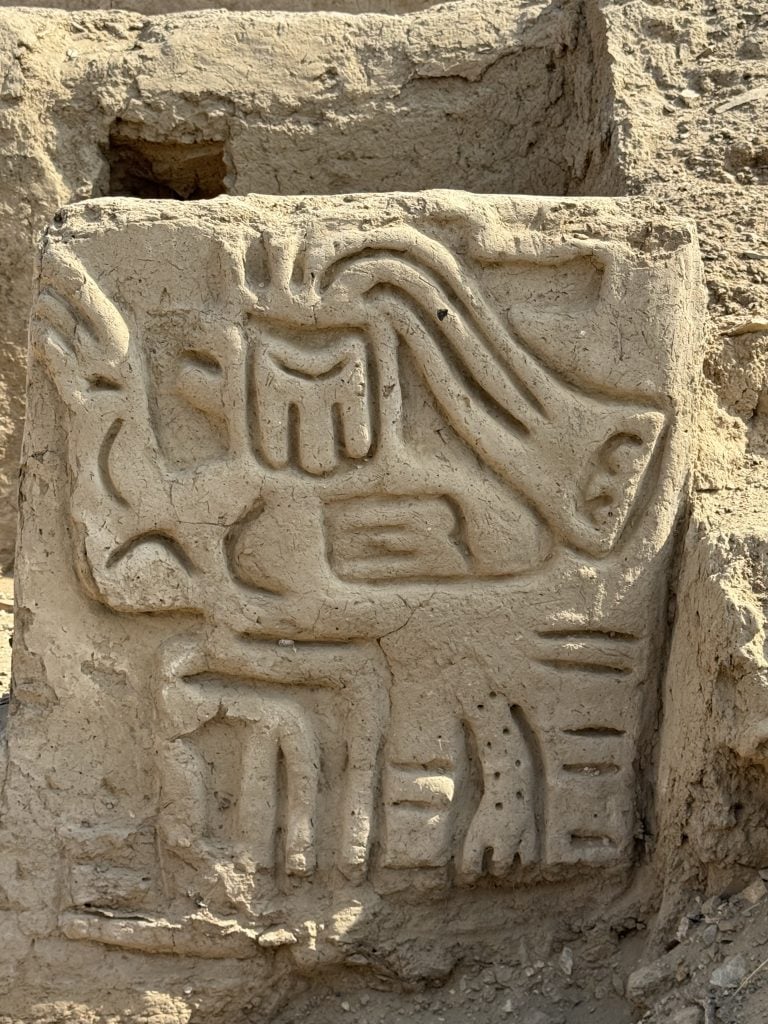
A detail from the discovery. Courtesy of Ucupe Cultural Landscape Archaeological Project.

The theater’s staircases featured mud panels with intricate carvings of a mythological bird-like creature found in similar ancient Andean sites. Those sites were dated to the Initial Period, around 4,000 years ago, when a sedentary agricultural lifestyle took hold in Peru, leading to the development of crafts like weaving, pottery, and stone carving. Despite its name, the Initial Period was not the beginning of human habitation in Peru, which dates back 15,000 years. During the Preceramic Period (5000-3000 BCE), coastal Peruvians began forming societies and complex political systems. The Initial Period followed, starting around 2000 BCE and lasting until 900 BCE.

The team also found large murals from which they extracted pigment samples for analysis to determine their origins and confirm the site’s age through carbon dating.

4000yearoldinmachuperupicchupredatgpredatingtempleunearthed
0
FacebookTwitterPinterestLinkedinWhatsappEmail
The Culture Newspaper

previous post
Brazilian Conceptual Artist Steals Historic Coin From the British Museum
next post
90th Birthday: Atiku, Sanwo-Olu, Abiodun, Others Congratulate Nobel laureate Prof. Soyinka

You may also like

France Returns Syria’s Ancient Artifacts

July 10, 2026

South Asian Stories Told Through Personal Artwork

July 5, 2026

Artisanal Potters In Benin Are Preserving Their Heritage

July 4, 2026

Monarch Of The Glen Sister Painting Sells For...

July 3, 2026

Alaafin Visits Latin America’s Largest Afro-Brazilian Museum

July 2, 2026

‘True Jewel’ Museum And Gallery Wins UK Award

July 1, 2026

Canadian Museum For Human Rights Opens ‘Nakba’ Exhibit...

June 30, 2026

Swiss Museums Return 18 Benin Artefacts To Nigeria...

June 30, 2026

The De Young Opens Nigerian Artist Nengi Omuku’s...

June 29, 2026

Where Scrap Meets Spectacle: Abuja’s Newest Cultural Gem...

June 27, 2026

Leave a Comment Cancel Reply

Save my name, email, and website in this browser for the next time I comment.

Recent Posts

  • South African Tourists Chased Out Of Restaurant In Mozambique
  • Saudi Arabia Integrates Visa Application Into Travel Bookings
  • Netflix’s Most-Hated Man: How S’Dumo Mtshali Turned Villainy Into Global Stardom
  • France Returns Syria’s Ancient Artifacts
  • Cannes Awards: Between Winners’ Accolades and Collaborators’ Celebrations

Sponsored

Recent Posts

  • South African Tourists Chased Out Of Restaurant In Mozambique

    July 10, 2026
  • Saudi Arabia Integrates Visa Application Into Travel Bookings

    July 10, 2026
  • Netflix’s Most-Hated Man: How S’Dumo Mtshali Turned Villainy Into Global Stardom

    July 10, 2026

Categories

  • Arts & Exhibitions
  • Culture & Festivals
  • Culture Africana
  • Culture People
  • Fashion & Lifestyle
  • Food
  • Music, Movies & More
  • News
  • Opinion
  • Photo News
  • Reviews (The Critics)
  • TCN Interview
  • TCN Literati
  • Tourism & Hospitality
  • Travel News
  • Travel Trends
  • Travelogue
  • What's Hot?
  • World Culture

Connect with us

Connect with us
  • Facebook
  • Twitter
  • Instagram
  • Youtube
  • About Us
  • Advertise With Us
  • Privacy Policy
  • Contact Us

@2025 - The Culture Newspaper. All Right Reserved. Maintained by Freelart

The Culture Newspaper
  • Home
  • Arts & Exhibitions
  • Culture & Festivals
    • Culture Africana
    • Culture People
  • Fashion & Lifestyle
    • Music, Movies & More
  • News
    • Travel News
  • Opinion
    • Reviews (The Critics)
  • TCN Literati
  • Tourism & Hospitality