
“You don’t need to be a musical genius to become a Music Critic, but a passion for music and in-depth knowledge of music artistry is essential.”
How easy is it to review sound, more so from a versatile artist who sings, dances and acts on stages & screens across the world? It is certain I have a passion for Yinka’s artistry but I do not have an in-depth knowledge of the progression of keys. My expertise is in reviewing texts or images; I have hardly put my mind on reviewing a piece of work as subjective as music. To help calm my anxiety, Steve Bell, a music critic has these words of advice


“with both live and album reviews the main aim is to let the reader know how you as a music fan have enjoyed the music/experience [the work] given your own personal musical predilections – it’s just not feasible to be entirely and unequivocally objective and take your own tastes out of the equation, art doesn’t work like that.”


I am aware of the subjective nature of reviewing anything music included but I have more questions on this herculean task that African musicologists find so easy; how can a media studies scholar present and interpret an authentic African sound ‘cooked’ with Western instruments. Though the outcome of most African rhythms are pleasing to the ears and move the body to an imaginary dance floor. Yet there is more to music than what you hear or what you think your ears are picking up. I will like to agree with Maurice Amutabi (2017), who observes,
“people will recognize what is consonant and what is dissonant in their music and learn patterns of their music.”
I am aware that Amutabi’s reference is to collectively owned musical works. He probably will think differently about the genre of popular music that appeals to a cross-section of listeners, especially those in urban centers of the African continent. On that premise, it can be agreed, “every artist who gains some traction in a professional field will come under scrutiny.”
This present exercise is not to put Yinka Davies under any scrutiny but share her work across cultural lines and collect the subjective views for your reading pleasure. It may serve as an alternative way of you taking a second listen to her musical offerings.
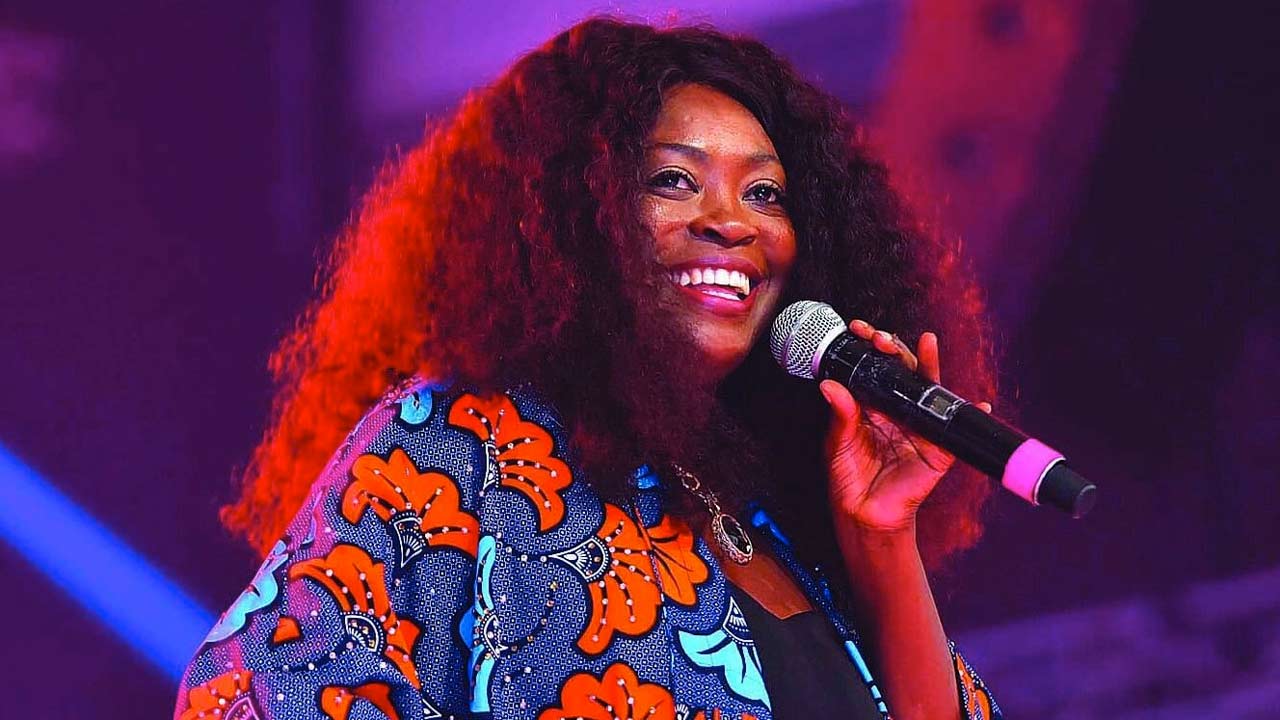
A journalist in 2011 described Yinka Davies as “the petite vocal power house” and I will add that she is a whole house of creativity with rooms for secular and sacred offerings. Yinka Davies grew up in a household surrounded by music. Her father owned a guitar and he exposed her to the music of maestros like Johnny Cash, Sam Cooke, Jimmy Dean and others. The track for this treatise is taken from her Album Black Chiffon released about nine years ago.
Now let us get into the innards of this textual offering. The respondents to my text messages were to listen to a track by Yinka Davies and share with me their honest feelings about the track. There was no particular reason why I decided on the particular track but it presented a range of unconnected themes and different musical styles.
The question I sent by text to selected listeners was;
“Can you share with me what you think about this track? Just anything”
The first reaction from my Abuja-based friend was “I am not a music critic.”
Then after a few sentences to encourage her to participate, I wrote “just what you think, do you like it”
In a few minutes her response came in very few words;
“Sounds like Afro-beat meets gospel”
I wanted more from her so I wrote “is it pleasurable to your ears; is there a message; can you get the message or is it beautiful nonsense”
I think my prodding did something, she came out with her ungarnished expression
“With great background drums, jazz and Afro-fusion I don’t like her voice… but she has a good group accompanying her”
Now I had what I wanted from her and to put her mind at rest I let her know that it is the Yoruba rendering of John 3 :16 and that the same track then moves on to Nigeria’s national anthem and ends with our national pledge.
I think a light bulb came on after she read my quick summary about the track.
“So, like I said the chorus and instrumentals are great. Not so sure about the lead singer. Okay. I like the background music and band more than the lead singer and her message. Great band. So, do you like it?”
You will notice the fluidity of her sentences like someone thinking about her former position and trying to revise herself. I did not respond to the last part of her question whether I liked it or not…
From Tayo, Female, Nigerian Writer & Researcher
I like the folkloric feel. And the love-thy-Neighbour. Still listening, I hope she also quotes other religious books so it does not exclude some people. Well except it is gospel…
“I love the blend but my only fear is that… because even then, there are so many religions and how many can a singer draw from 🤔
I love the horns breaking it in the middle… Hmm, now a national ‘anthemish’ thing; song is doing too many things now… Needs to be trimmed to focus.
Is it a good behavior from treating humans as you’d like to be treated or a civic engagement angle?
She has to pick her hustle and focus on it. There’s room for both ideas but not sure in the same song.
This can be tackled separately; Classic Yinka Davies ending: high pitch, drums, as though setting a case. It works… but one has to be sure that all the songs, I assume, are in an album and don’t have similar endings; variety is the spice of life thing. Those all my observations”
There was so much in here. What else can I add in substance and in essence?
An actor from the Yoruba and English sectors
“This track is from funkified Apala to Afro-pop. Still with the familiar Yinka Davies character. Even if I can’t understand the reason for the mixed themes of religion and patriotism, it’s still a good piece though not for general appreciation.”
Steve- A trained musicologist
“I’m familiar with this song. It’s vintage, crazy, quintessential Yinka.
Rooted musically in Afrobeat, but her vocal delivery is afro-jazz. It’s executed stylishly in three movements.
Purists might wonder why she chose to drag the national anthem into a somewhat inspirational song. But that’s Yinka, the jazzist, taking liberty with her music, and with awesome wit too
She kills it (dead) when she enters into modulation towards the end; raising the tempo of the beat and song and ended it accelerando.
Sheer brilliance!”
When a musicologist speaks, I guess the rest of us should just listen and learn. In very few words anyone can relate to how sound has turned into text. The end part invited me to listen with a trained ear.
A concert musician based in Spain thinks about the track
“Is it a piece of music with a fusion between ethnic, soul and pop music, perhaps? Or something like that. It combines very well all the ethnic elements with the current commercial music and she has a very good voice. And their recording studio and producer must also be very good. I did not know this singer but now I do and it is thanks to you.”
As you can notice, a trained ear hears something deeper from the rest of us. This musician even singles out the Studio technicians for commendation. As an untrained consumer of music, I am still at a loss how she was able to give credits to different sectors of the production chain!
A female social media friend from Sierra Leone but based in Australia
“It’s brilliant! I particularly like the instrumental part of it. My heart melted at the start with just 2 distinct instruments (it sounded like) the shegureh (probably) and the drum. I’m not sure the lead singer’s voice blended well with the chorus, but I adored the softness of the chorus — very soothing. A very pleasant way to deliver the message. My layman’s opinion 🙂”
On further inquiry, I found out “shegureh” is a musical instrument used by Temne and Mende ethnic groups of Sierra Leone. Yoruba people call it
Shekere. It is that gourd with beads all around it.
A theater Artist based in Rwanda
I sent her the track, like I did to others with this question; Can you share with me what you think about this music? Just anything
“oh shortly,” she reverted.
I guessed she may be busy, so I wrote back to her that;
“no rush. Enjoy”
In about ten minutes her very short response came;
“I love it… what are they singing about. Sounds peaceful and joyous”
Since she does not understand Yoruba, I let her into the secret of the lyrics.
“Now the revelation. It is the Yoruba rendering of John 3 :16. It then moves on to Nigeria’s national anthem and ends with our national pledge”
“Sounds like a revelation at the end i visualized a strong light that split open a door… and the woman ran out singing loud”
As it is usual with me, I moved on to another topic but had time to think about her words….
When I noticed that almost all the Black people had a comment or two about her voice, I asked the music expert for his opinion; the musicologist responded that
“[the observation by the listeners] is not surprising. Like Fela, Lagbaja and Seun Kuti, Yinka has her Off-Days vocally. Moreover, those days are plenty. It’s not a weakness though. It’s more of an artistic defiance to sing certain parts and notes that are way beyond your range”
After listening to the track for the ‘God-knows-how-many-times’, I was able to condense into text my rendering of the lyrics;
The message to those who can reach deep into the lyrics is that the Supreme Being is unlike Human Beings (Olorun ko jo yin). It goes on quickly to add that the blessings we have are divine; both the crown and the clothes are gifts to humanity, again remember that the Creator is unlike the created. These gifts, the singer says is such that we do not lack anything in the world.
The repetitiveness of the chorus line; Creator does not look like you (Olorun ko jo yin), and the Creator is not interested in the downfall of any, hunts the ears. In addition, humanity is not compelled to worship in any particular ways. What is important is that good character is the adornment of humanity. If I dare add that material things are not what makes a human soul here on earth.
The song goes on to enjoin that affection for the other is the foundational requirement of the Almighty. As soon as the vocal messages are delivered. The horns make a brief interlude just to re-emphasize the vocal message. The playfulness of this track comes toward the end when bits of the National pledge and anthem make an unexpected showing. While listeners may be contemplating how that happened, the horns session takes over in a very fast beat tempo that delights the main singer and she can be heard hailing the instrumentalists with expression such as o o dagba (you will grow old), o o darugbo (you will age gracefully), o kare (I salute you). These expressions just go to show how pleased the main singer was with the performance of her instrumentalists. As the song rides to a desired end her voice trails off with an injunction for humanity to change for the better.
Conclusion,
The objective of the exercise above is to collate individual views on how Yinka Davies’ music makes them feel. Those who had no idea about the lyrics allowed the instrumentation speak to their hearts. However, those who had access to both the lyrics and the instrumentation experienced the piece of work differently. You cannot believe that I have still not taken a position on why the lyrics started on a prayerful note and soon moves into the biblical universe invoking a particular chapter and verse. The main voice in this track sets up a binary of they and us, especially when it comes to religious tolerance. By the time the horns session breaks free the main vocal goes after them howling as if liberation sought for was finally won. The unanswered question for all who participated in this exercise is “how come a nation’s national anthem & pledge got into the mix? The work is done and we just may never know why artists do what they do.
https://musiccritic.com/articles/become-music-critic/
https://musicindustryinsideout.com.au/tips-good-music-reviewer/