

By Nkanu Egbe
purple robes adorn our bodies
as stench from decaying
limbs signal turbulence.
we wine and dine in this room
where cadavers are laid like logs,
pulling the strings of our heart.
we do not see cadavers but paintings
on the wrong canvas.
the land is green, but its dreams are deferred
till her civil war victims are canonized on the
altar of many truths…


- Echezonachukwu Nduka – We wear purple robes 2014

The words come pouring out of his mind, smooth as if they were anointed oil running down the beard of Aaron, all coming together in fabled unity. Echezonachukwu Nduka is a handsome dark bearded man, a classical pianist and a poet, and the oil could as well be running down his beard but in this case the words that he effuses are more than adequate.


As his fingers pound the computer keyboard, just as they pound the piano, rattling out the rush of verses that quickly form in his treasured mind, Echezona is in a rush to capture the ambience and the beat of the pulsating life that he finds himself surrounded by. He says his poetry is a mirror of his music.
“If my brain were to be opened up, one part will be music, the other part words,” Echezona says. I think sometimes they collide.”
Echezona, the poet continues:
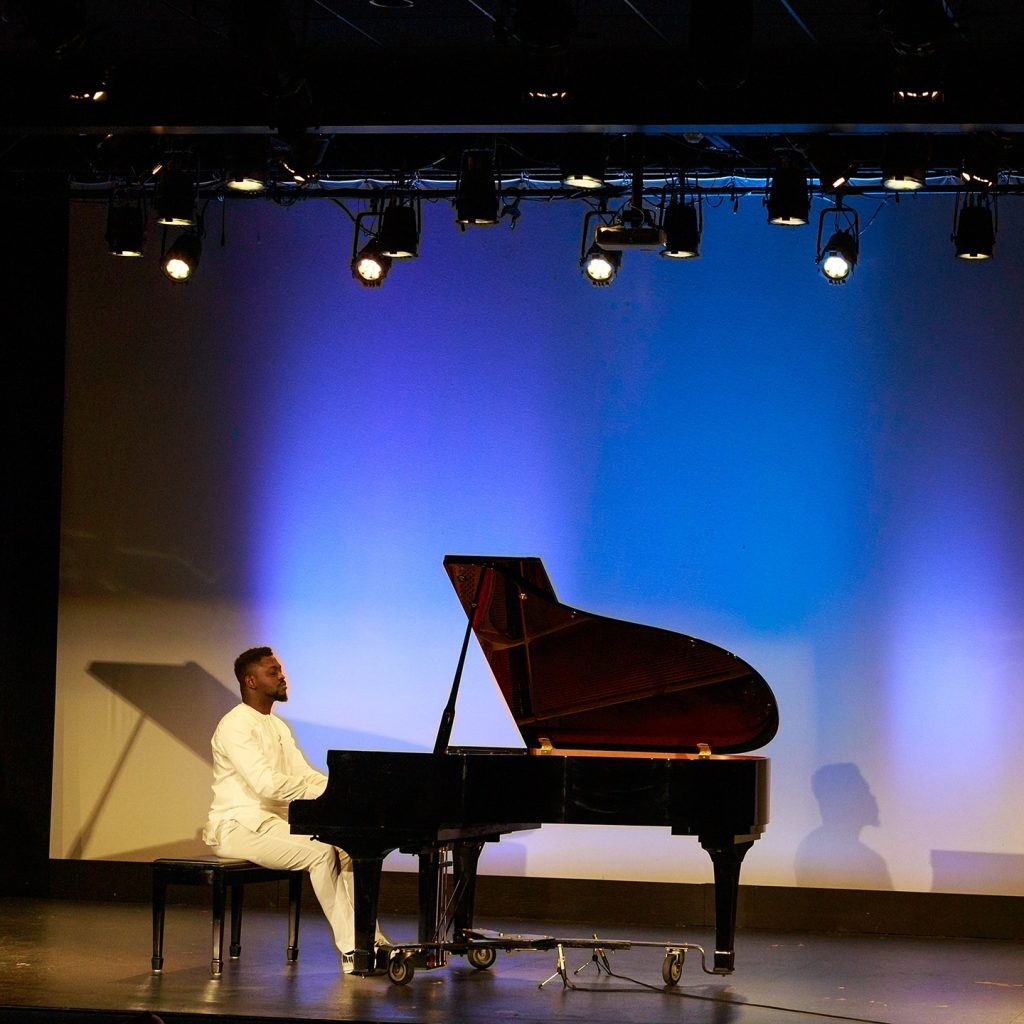
“So, what happens is that when I write, that influence of music is there. I have a lot of music on my mind. Because I listen to a lot of music and I also play music, and I memorise music as a musician, when I try to write, to express my thoughts in words, there is that tendency that, that writing will have some sense of musicality, some sense of rhythm. Sometimes I am very intentional or deliberate about it because I want to see, especially when I deal with themes of music or when I have references in music or trying to mention something about music, then that one is deliberate. In some way I try to think that my writing tends to look at the world through the lens of music; like looking at the world using music as a lens in a way that when one reads the poetry you feel that musicality even when it’s not very clear on the big you feel, that there is music going on in it. So, I think that is one of the reasons is that I am in music, and I have a lot of music in my subconscious. I play a lot of music and I listen to a lot of music. So, when I write there’s that intersection. That shows on the page as well.”
His literary efforts have thrown up two anthologies – Chrysanthemums for Wide-eyed Ghosts (2018) and Waterman (2020).
Today, we also talk about the fastmoving fingers of Nduka the pianist, on the black and white piano keys. The fingers sing his music which consists of strong rhythmic pieces. While they could draw from the stalls of old great Western composers like Franz Lizst, Frederic Chopin, Ludwig van Beethoven, Robert Schuman, and Franz Schubert, on a normal day though, Nduka would be given to strong rhythmic routines that have a dominance of African tones. We talk about his influences. He reveals that his main influences include J. B. Kwabena Nketia, Christian Onyeji, Joshua Uzoigwe and William Chapman Nyaho.
Nduka speaks about Christian Onyeji:
“Onyeji a brilliant scholar and composer, is also a pianist. He is a fantastic pianist. In fact, he won the best classical pianist in his set (at the University of Nigeria, Nsukka), when he graduated in the early 90s. His technique is something else. The man is a brilliant pianist in his own right. He influenced me a lot. He taught me how to sit at the piano for long hours; that I really need to practise and introduced me to compositions by Joshua Uzoigwe. He gave me his own music as well like Oga, Ufieh, Echoes of Traditional Life, and the rest of them.”
He continues:
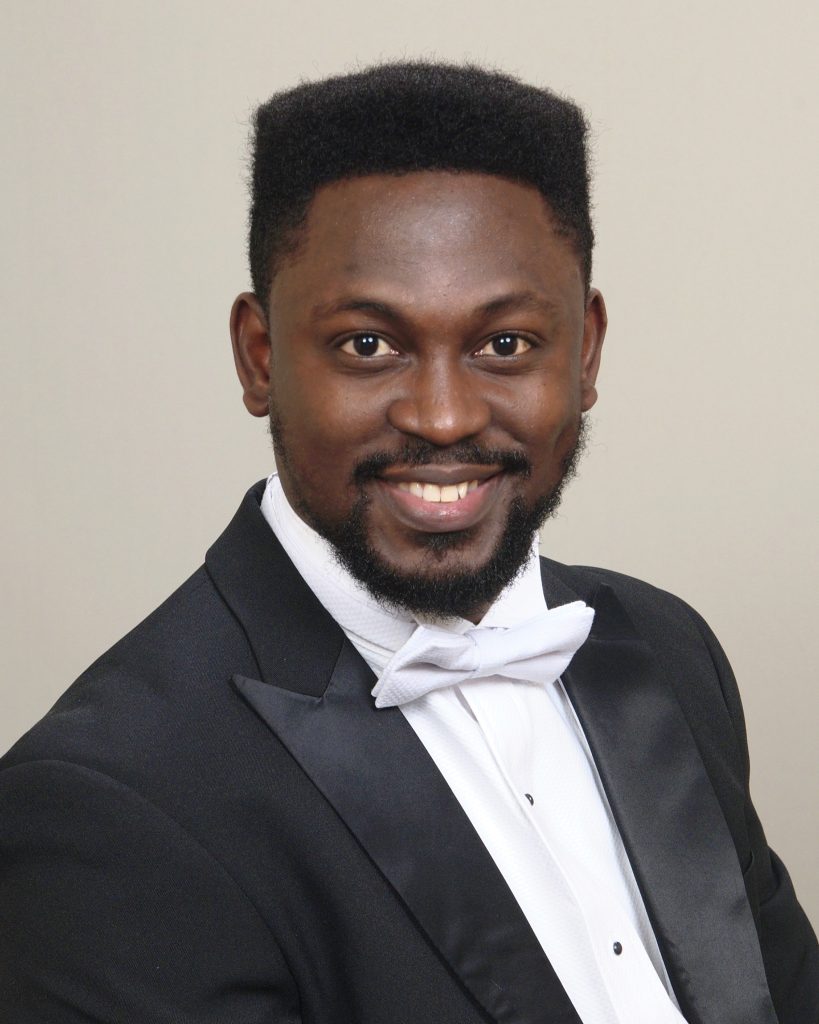
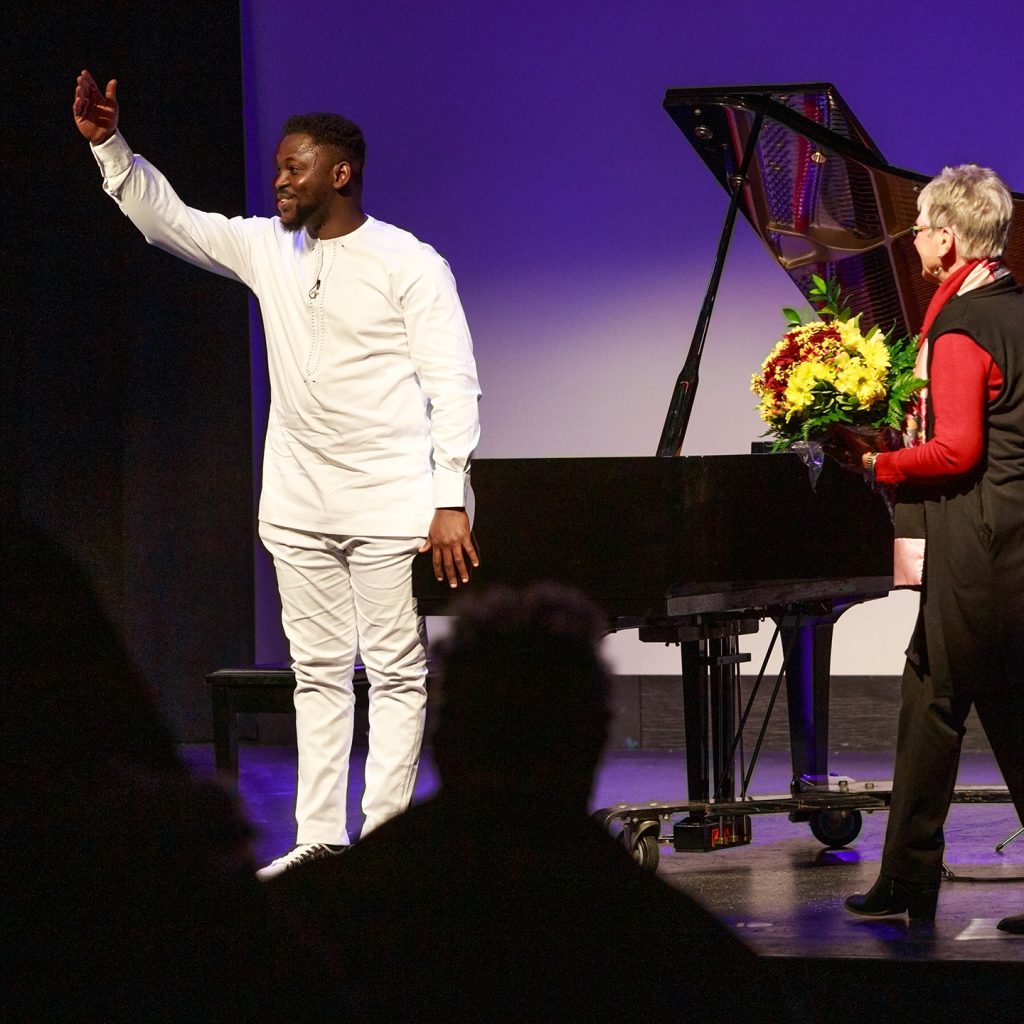
“Then, I discovered Nyaho and he became another inspirational figure. I followed his work for years. In fact, it was because of their influences, that I decided to bear down and focus on works by other composers from West Africa, our part of the world. So, I play music by Nigerian composers, Ghanaian composers. I have played Nketia a lot. They have had a huge influence on me. There are lots of other people.”
“I listen to Western classical pianists a lot – Daniel Barenboim, Lang Lang, Evgeny Kissin, Martha Argerich; a lot of them that I enjoy watching play music repeatedly. But because of what I do which is focusing on the piano music of West African composers, particularly Nigerian composers, I think my greatest influence would be my teacher, Christian Onyeji. Then, I have had to work closely with Fred Onovweruosoke here in the United States.”
Has he ever considered composing being both a poet and a pianist? He lets out a hearty guffaw.
“I have thought about that, but I have not considered it as something I’d like to pursue professionally. But it is a thought I have tinkered with. But I don’t see myself being a composer. I think I am comfortable being a performer and a writer. The kind of compositions I have done have been on the spot – improvisations; like in the course of playing music one has to improvise or think of some musical idea right there on the spot. I do improvisations a lot especially if I am playing live music. That you can consider a form of composition, but it is not something you can retrieve and play again because it is not scored.”
But is there any piece of music that has never been played publicly that he was inspired by, that in his confines he plays to himself over and again?
“I have music like that, something I have not played publicly but I like to just play to entertain myself. Sometimes, I want to take a break from memorising and practising. Then, I get into that routine. I just play and play, and that idea is there. Then, I’m tempted to sit down and score. And then I say, no, I don’t want to do this. Because I think there is this kind of technicality that when you now sit down to put on the hat of a composer, you now go into a different realm. I feel like the technicalities, the works, the process of writing might kill the spontaneity I have when I sit down on the piano. So, I don’t try to do that. I just sit down and play and that’s it.”
But Nduka has indeed tried his hand in composition. At least, once. So, if you will, you can wiki Echezonachukwu Nduka, poet, pianist and one-time composer.
“There’s a song I composed in 2012. It’s an Igbo folk piece. It is titled: Muna chi muso. And it has been performed in the United States twice by a Nigerian soprano, Blessing Agu. The recording I believe is on YouTube. That song came to me; I just played it in my mind once, twice, thrice, then, I said, ok, let me sit down and score this. It’s a short Igbo song. Nothing elaborate. What I had in mind, I wrote, exactly as I heard it. So, I had it scored. I had my students back in Nigeria perform it during their presentations. I sent it to my other colleagues; then, a few other universities, and then, years after, I heard it in the US. My friend sent it to me, saying, I sang your composition. And I go, oh! This is interesting. Then, some people said, you should compose more. You need to write more songs. And I go, Ah! Nah! Don’t even go there!”
Nduka is doing a lot of writing at present and is also engaged in the new concert season that began in October 2021, playing at various concert venues across the United States. But of particular interest to him is February 2022, which is the Black History month in the United States.
“I look forward to traveling to play at concerts. During the Black History month, I engage in lecture recitals and collaborative performances. So, I am preparing ahead of February. I am preparing for my February to May concerts before the summer.
- Nkanu Egbe is a music critic and Editor, Lagos Metropolitan