What's Hot?
Funa Maduka: Rescripting Global Movie Industry
From The Maldives To Venice, The 17 Tourist...
US Jewish Author Peter Beinart Receives PEN America...
Michael Jackson Biopic Debuts Top Box Office With...
Olamide Reveals Why Stage Performances Still Make Him...
Technician Dies During Stage Construction For Shakira’s Brazil...
Visa Overstays Can Affect Opportunities For Nigerians, US...
Fans Furious After Major Disruption At 2026 Stagecoach...
NFVCB CEO Hails Oyebanji’s Creative Economy Drive, Pledges...
Conakry Hosts 18th “72 Hours Of The Book”...
  • Home
  • Arts & Exhibitions
  • Culture & Festivals
    • Culture Africana
    • Culture People
  • Fashion & Lifestyle
    • Music, Movies & More
  • News
    • Travel News
  • Opinion
    • Reviews (The Critics)
  • TCN Literati
  • Tourism & Hospitality
The Culture Newspaper
World Culture

Oldest Example Of Ancient Red Dye Found On Tiny Textile

by The Culture Newspaper July 29, 2024

Until the Spanish discovered cochineals in the New World, harvesting and crushing parasitic scale insects that live on oak trees was the predominate means of producing high quality red dye. Early Egyptians used the dye and the term “scarlet worm” appears 25 times in the Bible, often referring to prized items, such as the covering of the Tabernacle.

Today, the dye is known as kermes, derived from a Sanskrit word meaning “worm made,” and researchers working in Israel claim to have found the earliest evidence of a woolen textile treated with the dye.

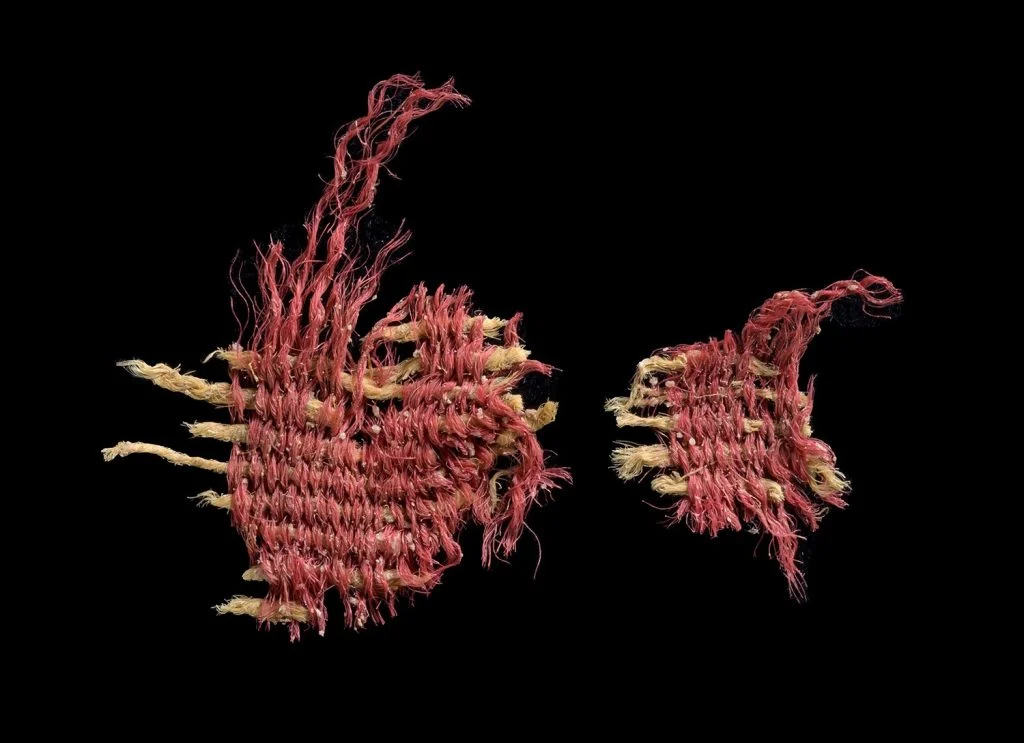
Measuring less than 0.7 inches in size, the textile is a weave of colored woolen thread and uncolored linen ones. It was discovered by the Israel Antiquities Authority and Hebrew University in 2016 as part of emergency excavations to preempt theft in the Cave of Skulls, named for the seven skulls found inside it in 1953.

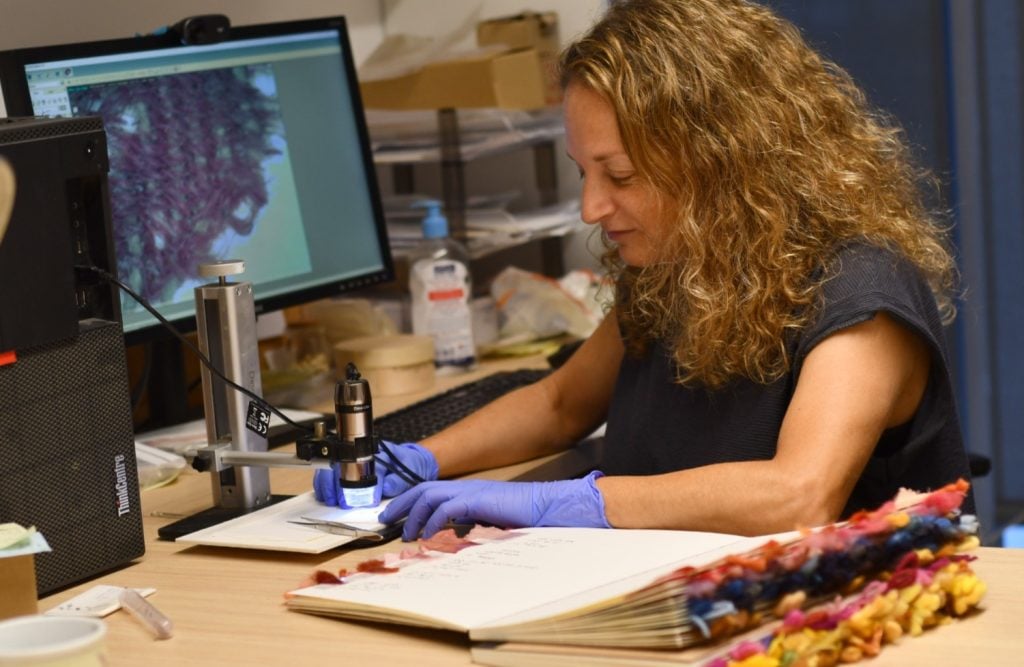
Dr. Naama Sukenik from the Israel Antiquities Authority tests the textile with a device connected to a computer

Naama Sukenik from the Israel Antiquities Authority testing the textile. Photo: courtesy Israel Antiquities Authority.

The textile has been dated to the Middle Bronze Age, 1767 B.C.E. to 1954 B.C.E., through carbon dating. The dye itself was identified using High-Performance Liquid Chromatography, a technique commonly used in biology and chemistry labs capable of pinpointing substances in minute quantities. The findings were published in the Journal of Archaeological Science.

“Our analysis enables [us] to pinpoint the precise source of the red color in archaeological textiles down to the species level,” the authors wrote. “It can be determined with a high degree of certainty that the dye used was Kermes vermilio.”

READ More  PMAN, COSON Fight Deepens As Alleged Arrest Of Members Creates Fresh Worries

One reason for the dye’s prestige and value was the difficulty in acquiring it. The kermesic acid that provides the bold red color is only produced by female insects during a period of a month after the eggs have been laid but before they have hatched. Furthermore, the insect’s size (three to eight mm) and uncanny camouflage makes them hard to spot.

photograph of a lab worker holding the textile in hand.

The kermes textile in the lab. Photo: courtesy Israel Antiquities Authority.

The discovery not only evidences ancient knowledge of using tiny insects to dye wool fibers, but also the possibility of complex trade networks. While there is a type of scale insect native to the region—one that lives on Palestinian oaks and produces a red-orange color—the kermes vermillo lives on a type of oak tree native to the central and eastern Mediterranean.

“The important find bridges the gap between written sources and the archaeological discoveries,” said Naama Sukenik from the Israel Antiquities Authority. “The rare textile is a testament to broad international commercial networks functioning already at this time and indicates the presence of an elite society.”

The disintegration of textiles over time means few examples predating the Roman period have so far been discovered. Still, the practice is known to date back thousands of years with the dye referenced in 5,000-year-old cuneiform tablets and found in jars discovered in a Neolithic-era cave.

ancientdyeexamplefoundofoldestonredtextiletiny
0
FacebookTwitterPinterestLinkedinWhatsappEmail
The Culture Newspaper

previous post
US, UK And Canada Issue Travel Warnings Over Nigeria Protests
next post
I’m Not In A Rush To Be On Rema, Asake’s Level Of Stardom -Afrobeats Singer, Victor

You may also like

From The Maldives To Venice, The 17 Tourist...

April 28, 2026

How African Films Are Gaining Global Attention

April 26, 2026

Pressure Mounts On Spotify, Apple To Remove D4vd...

April 26, 2026

Seun Kuti Drops Bombshell On IShowSpeed’s Africa Tour

April 22, 2026

‘The Specialists’ Bags 7 Nods At Canada’s IBDFF...

April 19, 2026

Asha Bhosle: The Sound Of Bollywood Dies At...

April 13, 2026

Nigerian Artistes Doing Enough To Export Our Music...

March 29, 2026

Filipinos Agog About Their Representation In Upcoming DreamWorks...

March 28, 2026

Bafta TV Award Nominations Revealed As Adolescence Leads...

March 25, 2026

Zurich Transfers Ownership of Looted Benin Bronzes to...

March 25, 2026

Leave a Comment Cancel Reply

Save my name, email, and website in this browser for the next time I comment.

Recent Posts

  • Funa Maduka: Rescripting Global Movie Industry
  • From The Maldives To Venice, The 17 Tourist Destinations That Could Be Wiped Off The Map By The End Of The Century
  • US Jewish Author Peter Beinart Receives PEN America Award For Book On Gaza
  • Michael Jackson Biopic Debuts Top Box Office With $220m
  • Olamide Reveals Why Stage Performances Still Make Him Nervous

Sponsored

Recent Posts

  • Funa Maduka: Rescripting Global Movie Industry

    April 28, 2026
  • From The Maldives To Venice, The 17 Tourist Destinations That Could Be Wiped Off The Map By The End Of The Century

    April 28, 2026
  • US Jewish Author Peter Beinart Receives PEN America Award For Book On Gaza

    April 28, 2026

Categories

  • Arts & Exhibitions
  • Culture & Festivals
  • Culture Africana
  • Culture People
  • Fashion & Lifestyle
  • Food
  • Music, Movies & More
  • News
  • Opinion
  • Photo News
  • Reviews (The Critics)
  • TCN Interview
  • TCN Literati
  • Tourism & Hospitality
  • Travel News
  • Travel Trends
  • Travelogue
  • What's Hot?
  • World Culture

Connect with us

Connect with us
  • Facebook
  • Twitter
  • Instagram
  • Youtube
  • About Us
  • Advertise With Us
  • Privacy Policy
  • Contact Us

@2025 - The Culture Newspaper. All Right Reserved. Maintained by Freelart

The Culture Newspaper
  • Home
  • Arts & Exhibitions
  • Culture & Festivals
    • Culture Africana
    • Culture People
  • Fashion & Lifestyle
    • Music, Movies & More
  • News
    • Travel News
  • Opinion
    • Reviews (The Critics)
  • TCN Literati
  • Tourism & Hospitality