
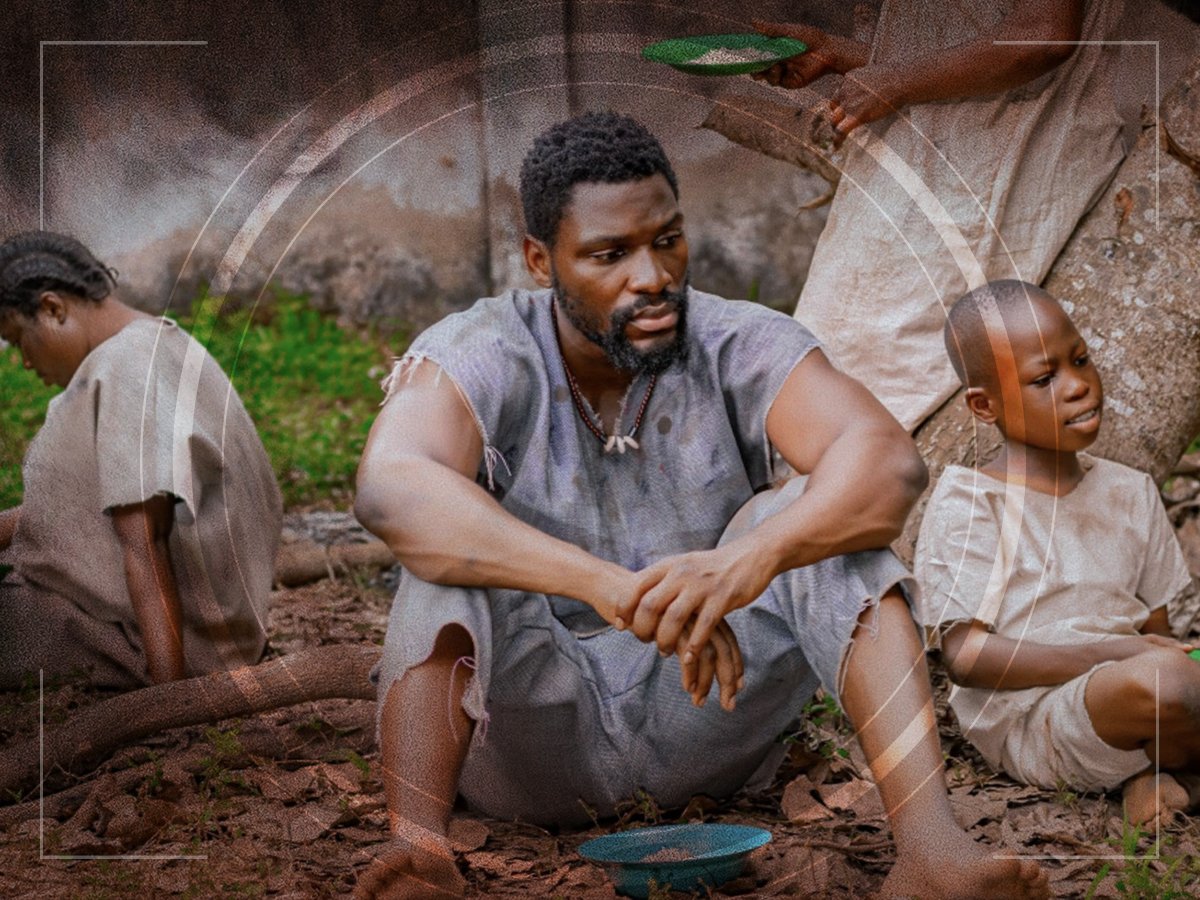
A recent release from the flourishing film industry in Nigeria, or “Nollywood”, is an intense historical drama, inspired by an early 18th-century slave revolt in the Caribbean and the circumstances surrounding it.
Queens of the Stone Age playing ‘No One Knows’ at the Rock N Roll Circus in Sheffield


This is a debut production for director Gbolahan Peter MacJob, formerly an investigative reporter and producer for the BBC and sometime actor and comedian. MacJob was inspired by the historic uprising, and by the people behind it: native Jamaicans who allied with enslaved Africans to escape and fight their colonial masters; these rebels became known as ‘Maroons’.


While the fictional drama does not follow historic details closely, the director considers it a “tribute” to the heroics of the Maroon community – not just another slavery narrative, as MacJob admits those are all too common, but an account from the perspective of the enslaved population, which, as MacJob said in interview, expresses “the need for us to control the telling of our stories to the global north, and not the other way around”.
The film concludes with the onscreen message: “Dedicated to our ancestors, who fought back and won.” Ireke is, the director explains, about “the small victories our ancestors recorded”. The dialogue is in Yoruba with some English, making it the first Nigerian-language feature to premiere at Cannes. It is an imperfect but heartfelt and moving dramatisation, taking a great deal of poetic license with essentially real events.
The story begins with a betrayal within the Nigerian royal family. The king’s brother has enabled the British military to invade the palace and assassinate the king, allowing the treasonous brother to take the throne. In exchange, the brother accepts British rule and formally adopts Christianity, and allows most of the former king’s household to be taken as slaves. This bit of Shakespearean political drama is only an introduction to the main plot, which takes place in Jamaica.
The king’s young heir and central protagonist, Atanda (portrayed as an adult by Tobi Bakre), grows up as part of the enslaved workforce on a Caribbean island. The miserable lives of the enslaved plantation workers are the background to their personal lives and friendships, shown in sympathetic detail and allowing for individual differences in perspective, giving them an identity beyond their bondage.

The lives of the enslaved workers under plantation owner Master Gerard (Demetri Turin) are explored at great length. Rather than dwelling exclusively on physical hardship, there is often more emphasis on the personal degradation of the slaves and the manipulation of their feelings and beliefs. This includes cringeworthy efforts to evangelise the workers and to carefully equate Christianity with obedient servitude in the sermons they hear. Their labourers’ mandatory show of gratitude is as disturbing as Master Gerard’s self-congratulation for the way he ‘benefits’ the slaves.
This attitude is underlined by the absurd behaviour of Johnson (Wetsy Baba), the slave trusted as an overseer, who solidifies his position with a painfully obsequious and self-effacing manner toward the white landowners he serves. The obligatory exposure to watered-down Christianity and Western values is contrasted by scenes in which the Maroons are free to engage more sincerely in their traditional religious devotions and other cultural practices, including a distinctive form of martial arts.
Ireke is visually impressive, making good use of the natural landscape (ostensibly Jamaica, although filmed in Nigeria) and the actors’ faces in moments of high drama. The visuals are particularly striking in the later scenes of battle, in which the Maroons make a breathtaking entrance following a lengthy build-up.
The more dramatic scenes, both of battle and of conflicts between labourers and masters, are enhanced by a musical score that is stirring, sometimes matching the action perfectly, but at other times a bit overblown (The best piece of music overall is played over the final credits, a Yoruba rap-style number by Nigerian band Vocamonix). The humiliation and abuse of the enslaved workers seems, at times, to verge into slavery “trauma porn”, its saving grace the emphasis on the helplessly grieving onlookers, and their struggle to retain their humanity under duress.
The onscreen horrors are not unrealistic and lead logically into the ferocity of the eventual uprising, but are sometimes presented as a series of contrived vignettes, disconnected from the main story and focusing on distractingly gruesome details in some of the scenes of violence. The final battle also allows for a full-scale expression of revenge, reminiscent of a less fanciful and far more brutally realistic version of the final scenes from Django Unchained – complete with a repellent counterpart to Django’s ‘Miss Laura’ in the plantation’s bitter and sadistic mistress (Alex Franklyn).
One of the film’s flaws is a lack of cohesion in the storyline. There are multiple side stories introduced, which may have become interesting or pertinent, but which simply end without being explored, much less brought to a conclusion. For example, in one of several unfulfilled subplots, Atanda secretly courts a young house servant, Adunni (Atlanta Bridget Johnson), whose mixed-race background provides a poignant tale of its own, shown in flashbacks.
The production’s strong point is the drama and pathos drawn from even the more clumsy scenes, and most of all, the presentation of the Maroons themselves, which is cleverly handled. The Maroons are shown only in brief glimpses for most of the film, seen living in secret enclaves in the surrounding woods, but presented as heroes, almost as super-heroes or mythological warriors – as the slaves they assisted may well have seen them.
They occasionally appear on the plantation, briefly, by night, their furtive actions increasing suspense and giving the slaves hope. The timing of their ultimate attack is perfect, and provides a stirring battle scene and brutal but satisfying conclusion. The end result is a flawed but entertaining spectacle, and a fitting tribute.
Credit: https://faroutmagazine.co.uk/