

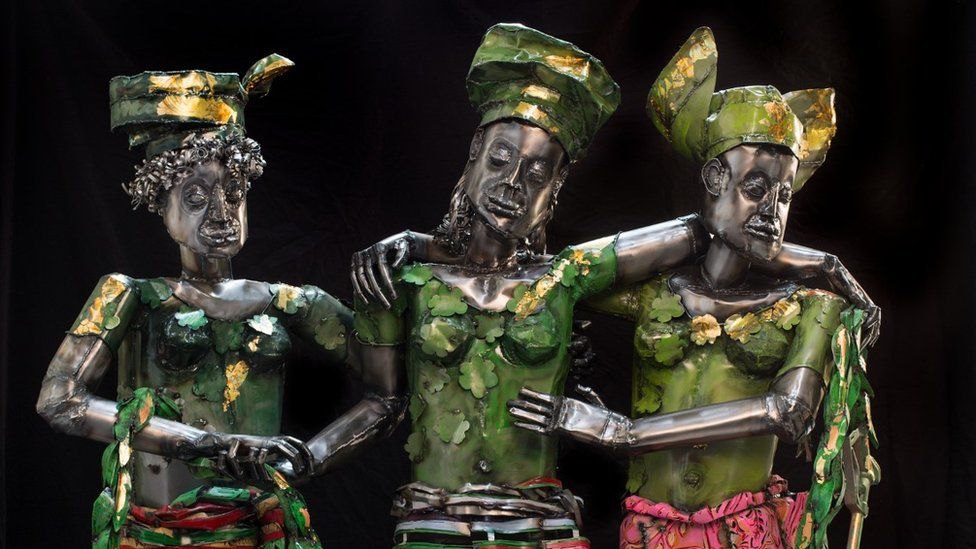
Sokari Douglas Camp laughs as she says she is “amazed that there is still money being spent on my work”.
The Nigerian-born artist is one of the world’s most-prominent sculptors, and her giant steel creations have dominated spaces in leading galleries, museums and collections around the world.


Her pieces has even been exhibited at the Houses of Parliament.


Some of Ms Douglas Camp’s work is currently on display at London’s Victoria and Albert Museum – next to a Rodin. So it perhaps shouldn’t be such a surprise that her sculptures, which sell for tens of thousands of pounds, have been attracting attention from institutions and individuals with deep pockets.
She half-jokingly describes herself as “having a moment”, despite having a career spanning back to the 1980s.
“City bank clients have come in and said ‘I want to buy this, this and this’. Or somewhere like the British Museum wants to buy this or that, and you think – wow!”
Contemporary art is considered to be work by living artists, or those who have died in recent years. Whereas, modern art typically applies to work from 1880s to the 1970s.
Ms Douglas Camp is not the only contemporary African artist who’s been enjoying a surge in interest.
The value of auction sales of contemporary and modern African art surged by 44% to a record high of $72.4m (£65.6m) last year, according to consultants ArtTactic.
That $72.4m may still be a relatively modest proportion of the $2.7bn sales of all modern and contemporary art at auction in 2021. But some experts say that, despite increased demand, African art is still under-priced and that’s attracting a lot of attention.
“The aesthetic qualities my pieces have are definitely foreign from other western ideas,” says Ms Douglas Camp. “It takes a long time for the West to accept that other people have ideas, or have worthy cultures and traditions.”
Giles Peppiatt, director of modern and contemporary African art at auctioneers Bonhams, is one of the leading lights in the field. His last auction attracted bids from around the globe, with interest from the Far East being particularly strong.
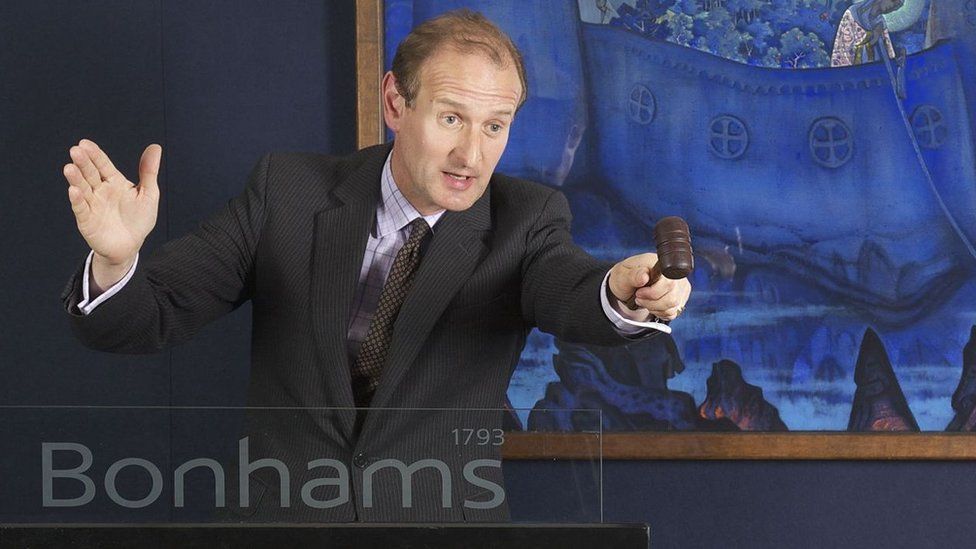
“It is a very hot market,” he says. “There are works by African artists that are fetching over £1m, and other works by African artists fetching £500,000 that a few years ago were only fetching £10-15,000.”
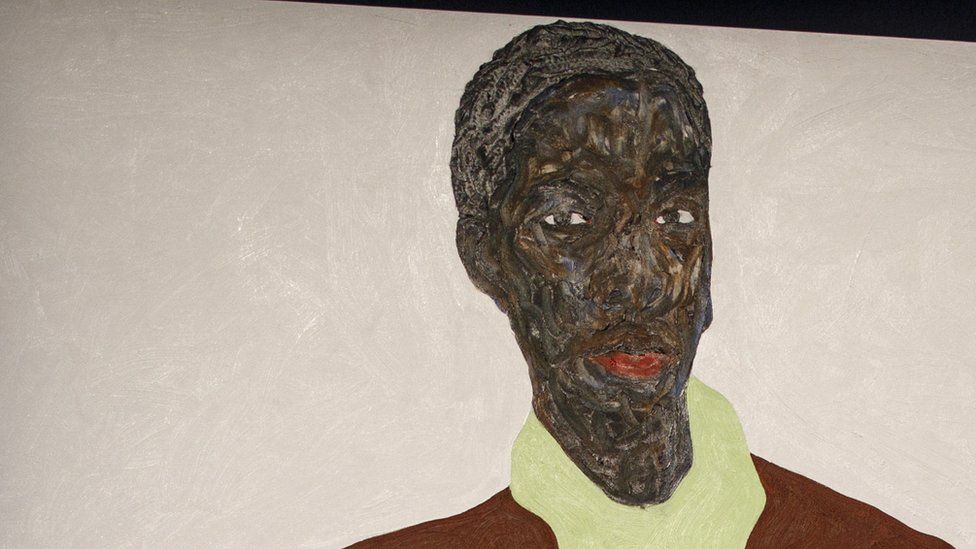
At the very top of the market, the auction prices can be even greater. For instance, a painting by Ghanain artist Amoako Boafo sold for $3.4m in Hong Kong at the end of 2021 – more than 10 times the expected price.
“The best and the finest works tend to appreciate the most,” says Mr Peppiatt.
So what’s driving the market?
Mr Peppiatt says that major international institutions like the Tate in London, and the Metropolitan Museum of Art in New York, are racing to make up for years of neglecting the sector.
“When a museum buys, it’s a great signal to private collectors.” he explains. That in turn helps boost prices.
Counterintuitively, the economic chaos caused by the pandemic may also have helped boost interest from wealthy collectors.
“Investors of that nature don’t want to keep cash,” says Mr Peppiatt. “They were getting nothing for it in the bank. So they bought art.”
The rapid expansion of online auctions and promotions on platforms like Instagram have also helped by boosting the exposure of African artists.
But having your work sell for big prices at auction doesn’t mean an artist can immediately break out the champagne.
Artists usually sell their work via a gallery, which exhibits and markets their art. The gallery typically takes around 50% of the sale price.
If a buyer sells the piece again and perhaps doubles their money, the artist will see little of that profit.
In Europe the maximum royalty fee payable to the creator of the work is 4% of the sale price at auction.
High auction sale prices may mean your gallery is able to charge more for your other work, but the increase there is unlikely to be stratospheric, according to Mr Peppiatt.
Owning around 500 pieces of contemporary and modern African art, UK businessman Robert Devereux is a prominent collector. He has some at his home, loans out others, but much is kept in storage.
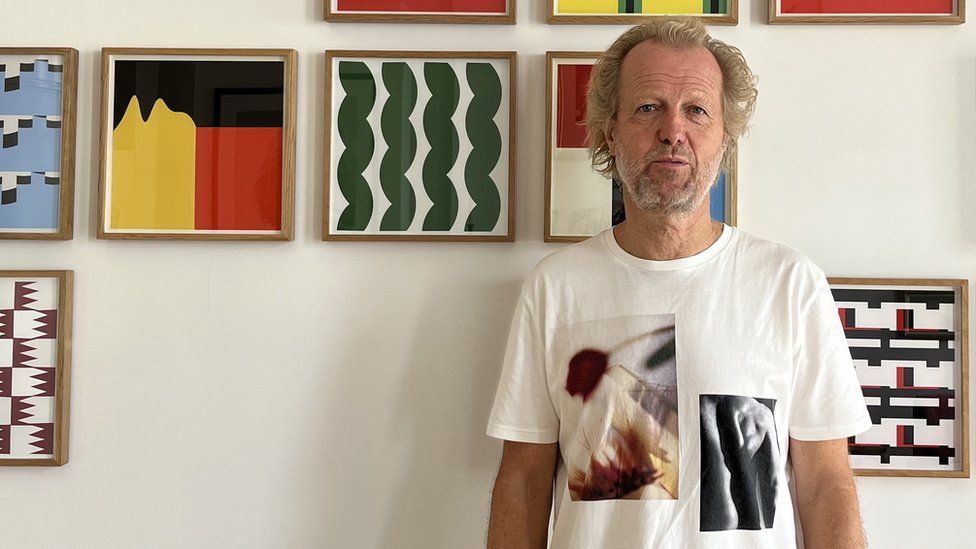
He has some sobering advice for those looking to make a quick buck from the market. “It’s extremely dangerous to buy art as an investment,” he says. “It’s an unpredictable market, things go in and out of fashion. If you get your timing wrong….”.
Mr Devereux says he’s amassed his large collection simply for the love of the art and its creators.
“I tend to buy artists’ work quite early in their career. I think that’s the point at which artists need the support. I never buy for investment. Ever.”
Some African countries like Nigeria, South Africa and Ghana are developing thriving regional markets for art work from their countries and across the continent. But a lack of government backing, problems with infrastructure, and a shortage of arts training are inhibiting growth.
This leaves the global trade for African art dominated by collectors and institutions in places like London, New York and Hong Kong.
Mr Devereux thinks this has to change. He’s working to support grassroots arts organisations on the continent with his African Arts Trust.
He’s aiming to boost that work by selling more than 70 pieces from his collection on Thursday, 13 October at an auction at Christie’s in London. The sale will include work by emerging artists, but also some from big names like Ghanaian sculpture El Anatsui, whose New Layout instillation sold for $1.9m in New York last year.
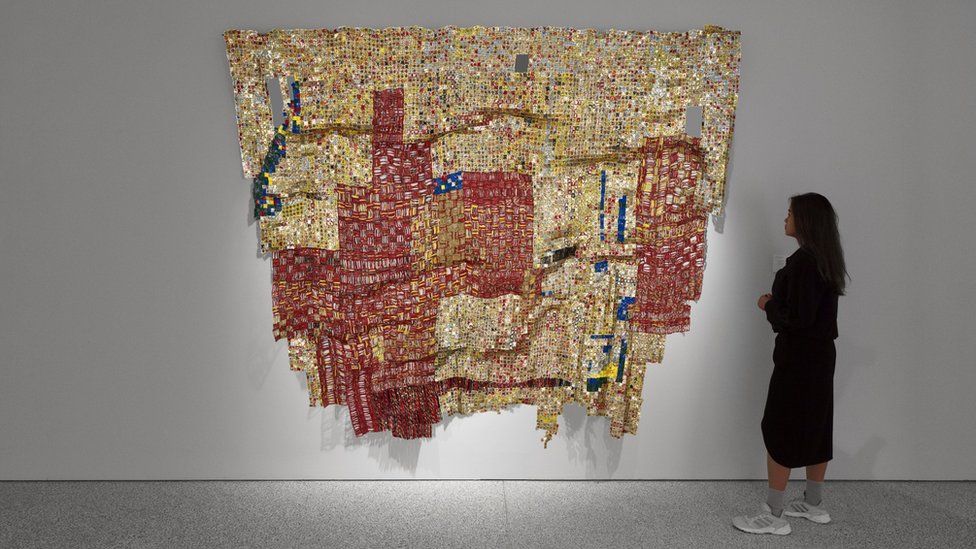
“Even if it’s a disappointment,” says Mr Devereux of his own sale at Christie’s, “it will certainly generate a lot more than it cost me to buy them” .
Established African artists are also trying to help the next generation come through across the continent.
“Certain artists from certain African countries, who are doing well in London, are now starting to turn back to their own countries,” says Melanie Gerlis, arts finance columnist for the Financial Times. “You see artists putting money into art schools – just really developing the system.”
She says they’re stepping in to fill a critical gap.
“A lot of these countries have much bigger problems than ‘can we make a museum look nice?’. There isn’t a huge amount of state support. But there is private money from individuals, and those individuals are increasingly the artists themselves.”
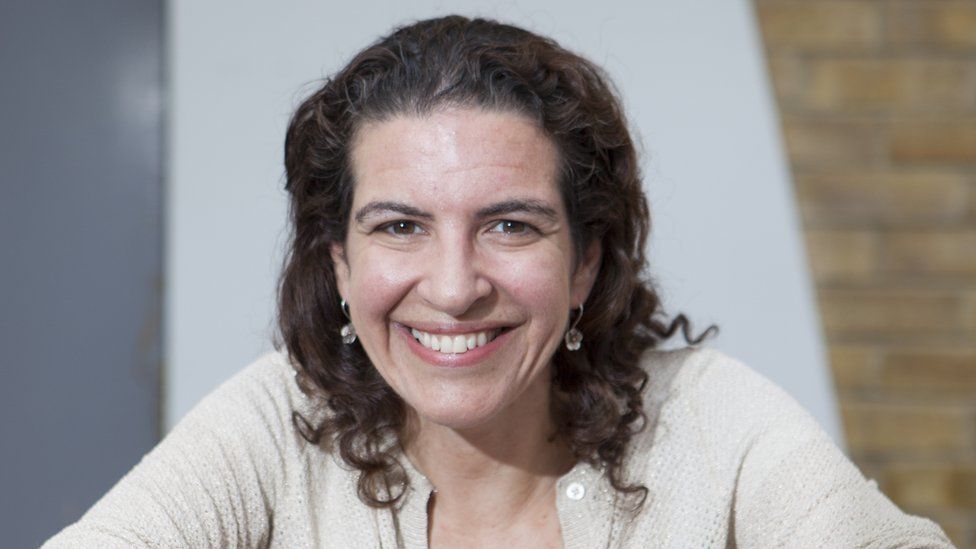
Giles Peppiatt of Bonhams thinks further growth in the international trade in African art will continue.
“Like everything else, we will see a plateau,” he says. “But for the moment it’s very strong indeed.”
Ms Douglas Camp also thinks there’s a long way to go. “It takes a lot to get your monetary value when you’re a person that’s different,” she says.
But she believes the increasing importance of African art is about more than just money. “It’s about giving a more complete picture of the world.”
Source: BBC