
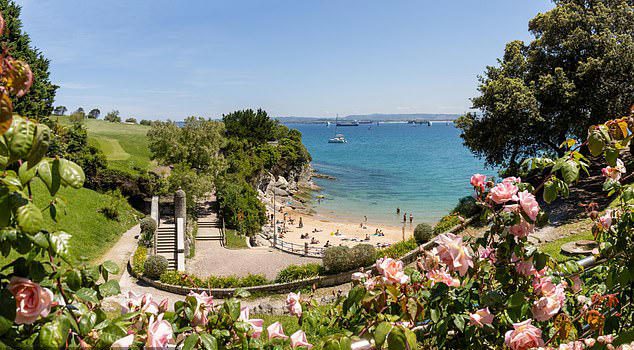
With travel to faraway destinations in the Middle East, or spots that require flights with stopovers in the region, many holidaymakers are opting for locations closer to home this year as the conflict continues.
Spain is expected to be particularly busy and last year saw a record-breaking 97million tourists.


Now, experts are predicting this summer could even hit 100million visitors to the sunny European spot, The Sun reports.


Flight bookings to Spain surged by 32 per cent year-on-year, as of April 2, according to digital travel marketing platform Sojern.
But for holidaymakers wanting to avoid rammed beaches and busy streets, there are thankfully plenty of hidden gems to check out.
Almería


Located in southeastern Spain, Almería is a relatively lesser-known spot and basks in year-round, near-summer sunshine, seeing just 26 days of rainfall each year.
Tucked away on Spain’s Mediterranean coast, the region is recognised as the continent’s only true desert thanks to its proximity to the Tabernas Desert and its geographical placement in the rain shadow of the Sierra Nevada mountain range.
Almería saw around 2.7million tourists visit last year, much less than the over 11million that headed to the likes of Madrid.
Beyond its balmy weather, the area boasts breathtaking natural landmarks, unique landscapes, and a coastline that is largely free of high-rise hotel blocks.
It is home to an impressive fortress, Alcazaba de Almería, the 16th-century Catedral de la Encarnación, and a multitude of museums and galleries, including the Museum of Almeria and Museo de la Guitarra, home to a range of vintage guitars.
Stroll amid palm trees and pools in the Nicolas Salmeron Park, then along the Paseo de Maritimo to the San Miguel and Zapillo beaches.
Sierra de las Nieves

Sierra de las Nieves is a National Park in Andalusia that boasts 1,500 different plant varieties
A dreamy mountain escape, Sierra de las Nieves is a beautiful National Park and UNESCO Biosphere reserve.
Located in the region of Andalusia, it boasts 1,500 different plant varieties and 14 picturesque villages to explore.
The tranquil spot is home to the deepest vertical cave in the region and has peaks that soar 2,000 metres high, according to the local tourism board, which describes the area as ‘a paradise of contrasts’.
It was named a National Park in 2021, becoming Spain’s 16th overall and the first in the Malaga region.
La Rioja

La Rioja is a beautiful region that manages to avoid hordes of tourists
According to Spain’s National Institute of Statistics (INE), La Rioja was the country’s least visited region in 2024.
The gorgeous destination, known for its wine production, welcomed just 123,123 visitors.
Around 10,000 Brits head there a year, as per The Telegraph, so you shouldn’t find restaurants overcrowded with tourists and busy streets.
La Rioja is an inland region in northern Spain and deserves far more attention than it tends to get.
Lonely Planet reveals: ‘Wine goes well with the region’s ochre earth and vast blue skies, which seem far more Mediterranean than the Basque greens further north.
‘This diverse region offers more than just the pleasures of the grape, though, and a few days here can see you mixing it up in lively towns and quiet pilgrim churches, and even hunting for the remains of giant reptiles.’
Cantabria

Cantabria is another spot often skipped over by tourists but has plenty to offer
Often one of Spain’s least-visited coastal regions, Cantabria is often missed by tourists.
But it shouldn’t be overlooked, it boasts the jaw-dropping Picos de Europa mountains as well as countless unspoilt sandy beaches.
For those wanting to delve into the history of the region, there is even world-renowned prehistoric cave paintings.
According to Lonely Planet, there are many more Spanish tourists than foreigners – at a ratio of four to one.
Its capital, Santander, is home to the Palacio de la Magdalena – formerly a roayl summer residence – and is a popular spot for Spaniards to visit.
El Hierro and La Gomera

El Hierro is the smallest Canary Island with far fewer crowds than popular spots like Tenerife and Lanzarote
While the Canary Islands are one of Spain’s busiest destinations, a couple of the islands get much less attention.
According to Statista, both La Gomera and El Hierro received just 69,000 visitors in 2022.
And Marek Bron, travel expert at the Indie Traveller, previously told the Daily Mail that La Gomera is the most underrated of the Canary Islands.
He said: ‘It has these very lush forests that feel like rainforests and they’re amazing for hiking.’
Meanwhile El Hierro is the smallest Canary Island with far fewer crowds than popular spots like Tenerife and Lanzarote.
Tourists can visit the pretty hidden gem by taking a ferry or plane from Tenerife or Gran Canaria.
Navarre

The region of Navarre, in northern Spain, has lots to offer, including the Royal Palace of Olite, wihtout the crowds
Another typically quieter spot, located in northern Spain, Navarre boasts peaceful villages and stretches of countryside.
It’s also home to Pamplona, a city renowned for its running of the bulls festival.
The Running of the Bulls takes place every July over several days and brings the city’s small population of 200,000 to over one million for the big event.
But otherwise, Navarre is a relatively sleepy region. Visitors can explore the Bardenas Reales – a natural park and UNESCO Biosphere Reserve.
Or, if delving into the area’s history is of interest, Castillo de Javier is the oldest civil monument in the region and was built in the 10th century. There’s also the medieval Royal Palace of Olite, too.
Mariña Lucense

With 100km of coastline, Mariña Lucense is a great spot for those seeking a quiet break by the sea
Mariña Lucense is the Spanish stretch of coast that’s the least visited, according to statistics from the INE and Turespana, but it’s not one to be missed.
It boasts 100kilometres of stunning coastline and is located on Spain’s northern Galician coast where some of the country’s least well-known beaches are.
While the weather can’t be guaranteed to be sunny, the beaches in Marina Lucense are much quieter than in the Costa del Sol or Costa Blanca.
The area has a focus on promoting sustainable and slow tourism in an attempt to prevent hordes of visitors.
Visit Spain explains: ‘The Marina Lucense has around 100km of coastline where you’ll find old whaling ports and a variety of landscapes.’
One of the region’s most spectacular beaches is As Catedrais, or the Cathedrals. The 1.5km long beach earned its name from the Gothic-looking rock towers and arches on its sands.
Credit: Daily Mail