
What's Hot?
We Lost Majek Fashek To Spiritism – Amos...
NFVCB Pushes For Kaduna As Hub For Indigenous...
Loyal Groundskeepers Guard Sudan’s Ancient Nubian Pyramids
Large-Scale Bronze Sculpture By Yinka Shonibare, CBE, Acquired...
Man Pleads Guilty To Plotting Attack On Taylor...
Davido Beats Gunna, Rema, Tyla For Best International...
2026 AMVCA May Be The Last, Filmmaker Mildred...
Nigerian Man Dies Aboard Istanbul –Lagos Flight
Davido beats Tyla, Rema, Others to win Best...
Ebosetale Gideon Crowned Mister International Nigeria 2026
  • Home
  • Arts & Exhibitions
  • Culture & Festivals
    • Culture Africana
    • Culture People
  • Fashion & Lifestyle
    • Music, Movies & More
  • News
    • Travel News
  • Opinion
    • Reviews (The Critics)
  • TCN Literati
  • Tourism & Hospitality
The Culture Newspaper
Culture People

From Ancient Egypt, ‘Heads Of Secrets’ Find An Afterlife

by The Culture Newspaper February 14, 2024

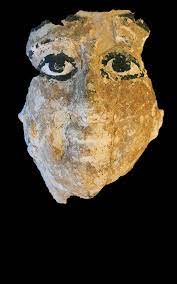
When it came to the dicey journey to the afterlife, the more affluent citizens of ancient Egypt took no chances. In elaborate funeral ceremonies, protective spells were invoked, sarcophaguses were larded with amulets, and the faces of the dead were covered with death masks designed to guide the spirits of mummified remains into the next world — a placid field of reeds — then back to their final resting place in the body.

Recently, an expedition of Japanese and Egyptian archaeologists unearthed three such masks in a series of cut-rock tombs in the cliffs of Saqqara, a primary burial site for the Pharaonic capital of Memphis. In texts of the New Kingdom, a period spanning 1550 B.C. to 1070 B.C., a mask placed over the head of a mummy was called a sukhet, meaning “egg,” and sometimes tep en seshta, meaning “head of secrets” or “head of mysteries.”

Foy Scalf, an Egyptologist at the University of Chicago, said that the “secret” or “mystery” was a euphemism for the mummy itself, which, after the embalming and appropriate rites, took on a special nature. In cases of physical damage, a face covering helped preserve the head and provided a permanent idealized likeness of the deceased.

The masks, manufactured by artisans in workshops, would not have come cheap. Kara Cooney, a professor of Egyptian art and architecture at UCLA, said that although the masks were not always constructed of expensive materials, the pigments and labor were costly, and most working peasants would not have had the disposable income to afford them.

But Scalf said the sheer number of masks that have survived suggested that they were not restricted to the elites. “I don’t think it would be surprising if up to 35% of the population had the means to acquire them,” he said.

One of the newly unearthed Saqqara masks was discovered outside a Greco-Roman catacomb discovered in 2019. Made of clay, it was wedged above a human skull and surrounded by fragments of a striated wig.

“The color scheme of the wig indicates the dating from the Late Period and the Ptolemaic Period, roughly 713 B.C. to 30 B.C.,” said Nozomu Kawai, an archaeologist at Kanazawa University in Japan and the expedition leader.

The other two masks were found inside the catacomb along with terra-cotta figurines of Isis-Aphrodite — the goddess of childbirth and rebirth — and her son Harpocrates, the Greek version of Horus, the Egyptian god of silence who could protect himself from sickness and death.

“With infant mortality so high, one can imagine that Harpocrates was especially revered,” Cooney said.

The two masks have been traced to the second century A.D., a time when Egypt was an imperial province of the Roman Empire. Both masks were molded from cartonnage, a material similar to papier-mâché that is created by soaking strips of linen or old papyrus scrolls in a paste and laying them over a woodblock form or the actual head of a mummy. The masks were then covered with a thin layer of gesso and painted gold, believed to be the color of the gods’ flesh and considered an eternal and indestructible hue.

This article originally appeared in The New York Times.

READ More  Slave Trade Abolition Remembrance: Badagry To Host Cultural Rites, Lectures
afterlifeanancientcientEgyptfindfromheadsofsecrets
0
FacebookTwitterPinterestLinkedinWhatsappEmail
The Culture Newspaper

previous post
Europe To Africa By Road: Budapest Bamako Rally Returns To Sierra Leone
next post
I’ll Destroy $45m Worth Of Rembrandt, Picasso And Warhol Masterpieces With Acid If Julian Assange Dies In Prison, Says Artist

You may also like

Soyinka Calls For Cultural Liberation On World Heritage...

April 21, 2026

Egba People Celebrate Grand Finale of 39th Lisabi...

March 29, 2026

Benin Queen Fires Back Over Palace Expulsion After...

March 21, 2026

GOTHAD To Host World Drummers Day 2026

March 20, 2026

Lisabi Festival: 50 Countries To Pay Homage To...

March 20, 2026

‘Creativity Meets Innovation’ In City Of Culture Bid

March 14, 2026

Singapore Surpasses Bali To Be Voted As World’s...

March 13, 2026

The Hair-Dos Of Nigerians In The Days Of...

March 12, 2026

Ooni of Ife Installs Awojoodu As New Jaaran...

February 28, 2026

Argungu Fishing Festival Reflects Nigeria’s Rich Culture -Tinubu

February 14, 2026

Leave a Comment Cancel Reply

Save my name, email, and website in this browser for the next time I comment.

Recent Posts

  • We Lost Majek Fashek To Spiritism – Amos Mcroy
  • NFVCB Pushes For Kaduna As Hub For Indigenous Film Growth, Capacity Building
  • Loyal Groundskeepers Guard Sudan’s Ancient Nubian Pyramids
  • Large-Scale Bronze Sculpture By Yinka Shonibare, CBE, Acquired By Vero Beach Museum Of Art
  • Man Pleads Guilty To Plotting Attack On Taylor Swift Concert

Sponsored

Recent Posts

  • We Lost Majek Fashek To Spiritism – Amos Mcroy

    April 29, 2026
  • NFVCB Pushes For Kaduna As Hub For Indigenous Film Growth, Capacity Building

    April 29, 2026
  • Loyal Groundskeepers Guard Sudan’s Ancient Nubian Pyramids

    April 29, 2026

Categories

  • Arts & Exhibitions
  • Culture & Festivals
  • Culture Africana
  • Culture People
  • Fashion & Lifestyle
  • Food
  • Music, Movies & More
  • News
  • Opinion
  • Photo News
  • Reviews (The Critics)
  • TCN Interview
  • TCN Literati
  • Tourism & Hospitality
  • Travel News
  • Travel Trends
  • Travelogue
  • What's Hot?
  • World Culture

Connect with us

Connect with us
  • Facebook
  • Twitter
  • Instagram
  • Youtube
  • About Us
  • Advertise With Us
  • Privacy Policy
  • Contact Us

@2025 - The Culture Newspaper. All Right Reserved. Maintained by Freelart

The Culture Newspaper
  • Home
  • Arts & Exhibitions
  • Culture & Festivals
    • Culture Africana
    • Culture People
  • Fashion & Lifestyle
    • Music, Movies & More
  • News
    • Travel News
  • Opinion
    • Reviews (The Critics)
  • TCN Literati
  • Tourism & Hospitality