
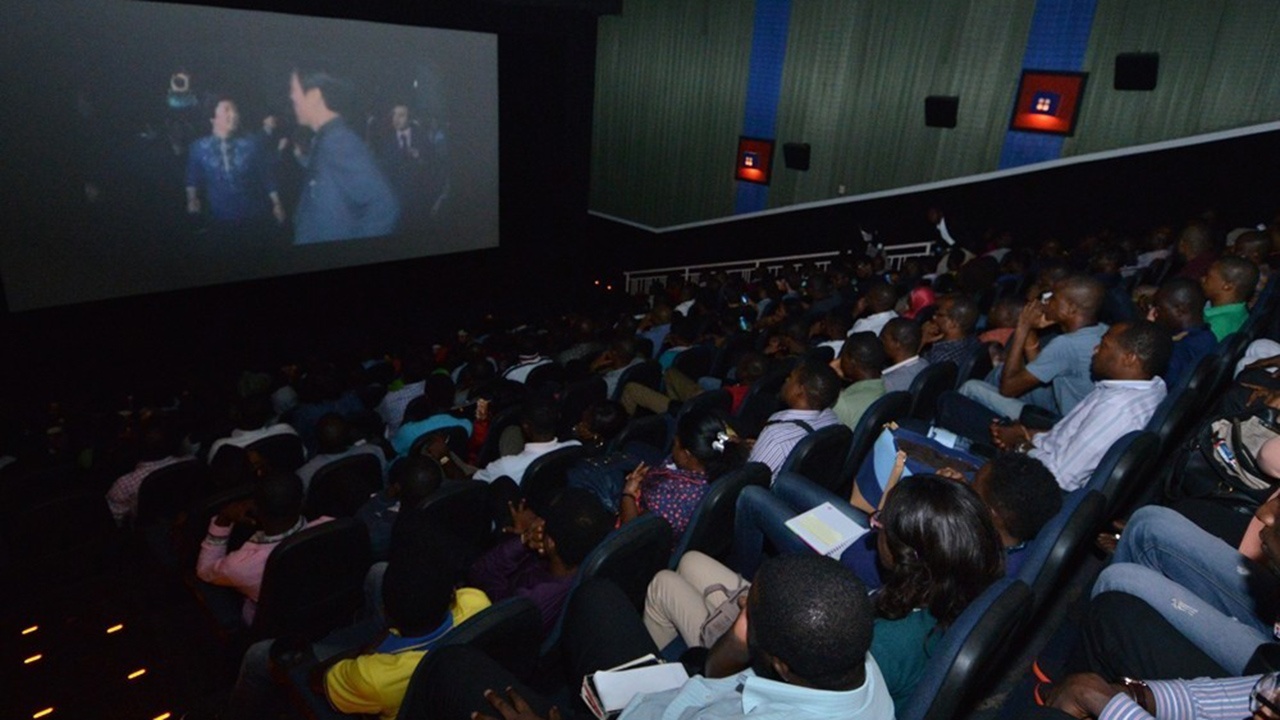
The Cinema Exhibitors Association of Nigeria (CEAN) has made an appeal to the federal government and President Muhammadu Buhari, urging them to include the cinema sector in its financial intervention plans to prevent an “imminent collapse”.
CEAN also asked the government to speedily open the theatrical sector, including the film industry, which it said had lost an estimated ₦22.5billion and more than 5000 industry jobs since the pandemic-induced lockdown in March and the subsequent social distancing restrictions.


The appeal was made at a meeting held last week, at the Lagos State Safety Commission (LSSC) Ikeja, Lagos.


In a press statement released after the meeting, CEAN’s chairman, Patrick Lee, lamented the financial loss suffered by the Nigerian film industry, due to the continued suspension of cinema and theatrical operations due to the lockdown.
“The coronavirus pandemic had an exact effect on all cinema industries in Europe, the United Kingdom, and America. However, considering the interventions by those governments, players in those markets are comfortably restarting their businesses and have sustained the livelihoods of their employees. The federal government needs to take a cue from that and save the second-largest employers of the Nigerian youth population from an imminent collapse,” Lee lamented.
According to him, the industry was providing over one million jobs per year ranking as one of the highest employers of labour in the country, second only to the agricultural sector.
Continuing he said: “Over 250,000 workers, some of whom are directly employed by 58 taxpaying cinemas in the country have been furloughed.
“Recent multi-million dollar investments, like MX4D, IMAX & 4DX theatre halls with heavy technical equipment, have been left to deteriorate; international/local creditors and investors are crying out for their money; production of films has been suspended, consequently resulting in joblessness and huge debts for Nollywood professionals. In 2019, the sector grossed over ₦10 billion in box office earnings alone, with estimated total revenue of ₦35 billion.”
The statement added: “the most rational treatment from the federal government should be to include cinema and allied services in all possible financial interventions.”
CEAN recalled that the Nigerian film industry, supposedly the second-biggest film industry in the world (based on the number of films released), was producing an average of 50 films weekly, accounting for more ₦200 billion in annual film industry revenue before the COVID-19 scourge.
While comparing the gradual resumption of activities in the aviation sector, the association argued that a critical evaluation of their operations would reveal similarities between airports and cinemas.
“A domestic flight from Lagos to Yola takes two hours, 30minutes, which is the same running time for all movies.
“Likewise, each customer is expected to spend a minimum of three to four hours for a domestic flight which consists of arrival at airport, ticket purchase, queuing, waiting, boarding, flying and exiting the aircraft; the same hours per customer processes can be likened to cinema visitor.
“Therefore, it is only more logically justifiable to classify cinemas alongside aviation (in prioritizing resumption), rather than with the hospitality sector, consisting businesses such as event centres, hotels, and bars with almost very different processes,” the association submitted.
Assuring that the association had mapped out safety protocols according to NCDC standards, CEAN submitted that the only way to reduce the psychological impact of the lockdown on the people is to allow them access to the cinema and leisure centres with well-defined safety measures in place.
CEAN however declared that the Nigerian film industry, unless an exigent action is taken, faces possible extinction since it went into a free fall as a result of the ban placed on large gatherings since March 30.