
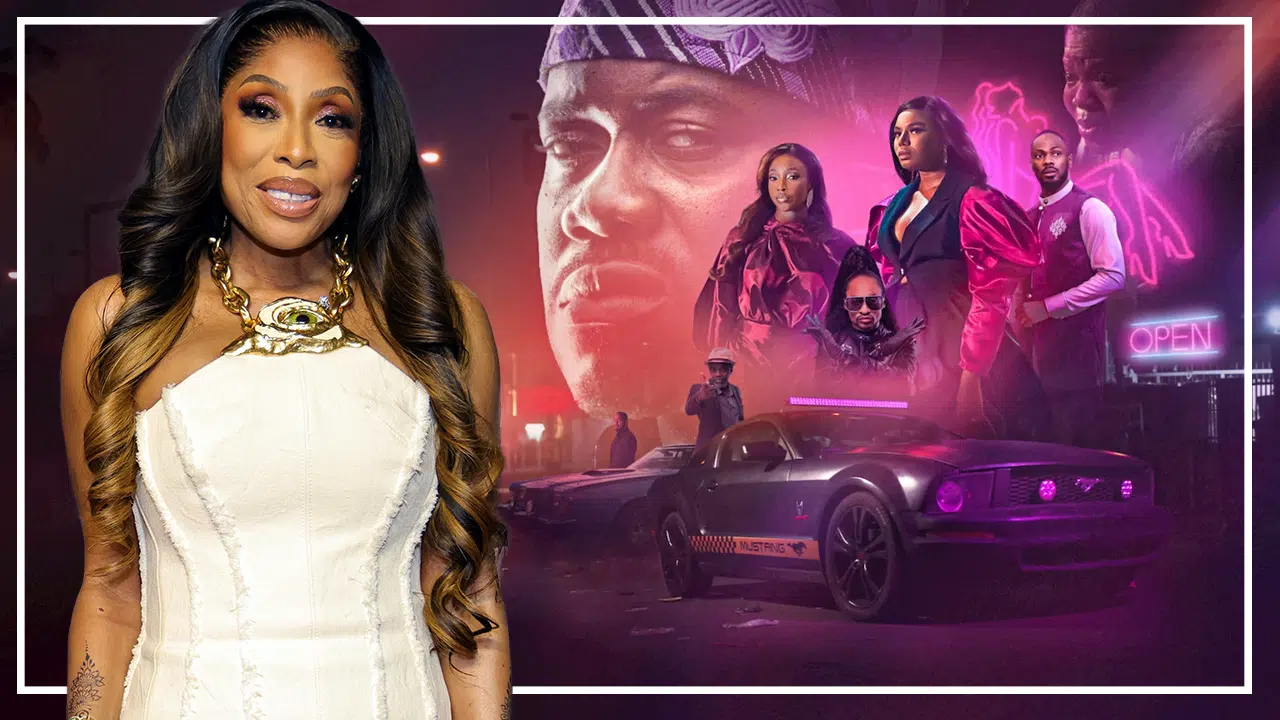
When Blood Sisters premiered in 2022 as Netflix’s first Nigerian Original series, it was billed as a one-and-done limited event. But audiences had other plans. Crashing into the platform’s Global Top 10 and racking up over 11 million viewing hours, the high-octane thriller didn’t just smash local expectations—it shattered the glass ceiling for Nollywood on the global stage. The show’s explosive popularity definitively proved that Nigerian storytelling could command the world’s attention, prompting Netflix to shift gears and eagerly greenlight a second season.
However, crafting a sequel to a standalone crime thriller with a definitive finale is a notoriously tricky needle to thread. To find out how the creative team pulled it off, we got to put questions to media mogul and executive producer Mo Abudu.
In our conversation, Abudu opened up about the pressure to elevate the show’s stakes, the creative pivot to exploring the deep emotional fallout of Season 1, and why the show’s distinctly Nigerian cultural DNA is exactly what makes it resonate universally. She also reflects on the shifting global appetite for African narratives and what it means to consistently deliver world-class entertainment on a fraction of Western budgets.
Blood Sisters was originally billed and structured as a standalone limited series. At what point during the post-launch buzz of Season 1 did the conversations with Netflix shift from “we made a great miniseries” to “we need to build a second season”?
The series was originally conceived as a limited series, but we always knew there was more story to tell and more drama to come. As Netflix’s first Nigerian Original series, there was naturally a lot of focus on how it would perform both locally and globally. The response exceeded all expectations. Blood Sisters broke barriers, reaching Netflix’s Global Top 10 and generating over 11 million hours viewed. That level of audience engagement made it clear that viewers were deeply invested in these characters and their world.
The conversations with Netflix evolved quite organically. We saw the global appetite for the story, the question shifted from whether there should be more to how we could continue the journey in a way that felt meaningful and exciting. Netflix essentially said that this was so well watched you need to go and make season 2, and we embraced that opportunity wholeheartedly.
When the show premiered in 2022, many critics saw it as definitive proof that Nollywood could produce world-class, high-octane thrillers for an international audience. Did you feel an added layer of pressure when stepping back into the producer’s chair for Season 2 to live up to those towering expectations?
Absolutely. With success comes expectation, and we were very conscious of the impact Blood Sisters had when it first launched. It wasn’t just a successful series; it became part of a larger conversation about the quality, ambition, and global competitiveness of Nigerian storytelling.
Our goal was never simply to replicate what worked in Season 1. We wanted to elevate every aspect of the production; from the writing and performances to the scale, pacing, and emotional stakes. We approached Season 2 with the mindset that audiences deserve something even more compelling, while staying true to the DNA that made people fall in love with the series in the first place.
Nancy Isime And Ini Dima Okojie
Writing a sequel to a crime thriller where the characters are constantly on the run is notoriously difficult. How did the creative team approach opening back up a story that had a relatively definitive finale in Season 1 without making the continuation feel forced?
That was one of our biggest creative challenges. We were very careful not to create a second season simply for the sake of extending the story. The starting point was asking ourselves what unresolved emotional truths still existed beneath the events of Season 1.
While certain plotlines reached a conclusion, the consequences of those actions did not. Trauma, loyalty, betrayal, power, family obligations – those themes don’t simply disappear because a chapter ends. We spent a great deal of time exploring how the choices made in Season 1 would continue to shape the lives of the characters.
Once we focused on the emotional aftermath rather than just the crime itself, the path forward became much clearer. Season 2 feels bigger, but it also feels earned because it grows naturally from the decisions and consequences established in the first season.
Nigerian series are reaching global audiences more than ever before. Which specific aspects of Blood Sisters—whether in its dialogue, family dynamics, or pacing—do you feel are uniquely Nigerian, yet still manage to resonate universally with viewers around the world?
What makes Blood Sisters distinctly Nigerian is the cultural specificity woven into every layer of the story. The family structures, the expectations around marriage, the influence of wealth and status, the complex relationships between parents and children, and even the way people navigate loyalty and obligation are all deeply rooted in our society.
At the same time, those themes are universally understood. Every culture understands friendship, family conflict, ambition, love, betrayal, and survival. That’s the beauty of storytelling. The details may be uniquely Nigerian, but the emotions are human.
I believe audiences around the world are increasingly looking for authentic stories rather than generic ones. The more specific we are about who we are, the more universal the story becomes. Blood Sisters is proudly Nigerian, and I think that’s exactly why it has resonated so strongly with audiences.
Ini Dima Okojie &Amp; Nancy Isime
What do you think the sustained popularity and high anticipation for Blood Sisters says about the shifting global appetite for Nigerian stories and African television productions in general?
I think it signals something incredibly exciting. For many years, African stories were often viewed through a very narrow lens internationally. What we’re seeing now is a genuine appetite for stories that reflect the full complexity, creativity, ambition, and diversity of our continent.
The success of Blood Sisters demonstrates that audiences are no longer asking whether Nigerian stories can travel globally. We have already proven that they can. Viewers have an abundance of international content to choose from, yet they have chosen to watch these Nigerian stories. The series has charted around the world, proving once again that great stories travel. Audiences connect with compelling storytelling regardless of where it comes from. The conversation now is about scale, consistency, and creating more opportunities for African creators to tell stories across every genre.
Viewers want great stories, and great stories can come from anywhere. Nigerian filmmakers, writers, producers, and actors are producing world-class content, and global audiences are responding. I believe Blood Sisters is part of a much larger movement that is positioning Nigeria and Africa as major contributors to the future of global entertainment.
I’ve said time and time again that we need stories that represent us and tell our own story. The success of Blood Sisters shows why that matters.
It is also worth remembering that we make these shows for a fraction of the budgets available in markets such as the UK, US, France, Germany, Italy and Spain. This is a testament to the strength of African storytelling. When we tell our stories with authenticity and excellence, they resonate far beyond our borders, and that is something we should all be proud of.
Credit: .whats-on-netflix.com