

Since 1986, Costa Rica has repatriated 3,650 archaeological assets from the United States and Europe. Last month, 395 of those artifacts arrived from Costa Rican diplomatic headquarters in Los Angeles, Miami, and Washington, D.C., where they had been held for about a decade. The U.S. Embassy assisted with the process, according to a release by the National Museum of Costa Rica, contributing funds to support this repatriation as part of a larger joint project to support Costa Rica’s efforts.
“The majority were surrendered voluntarily, while others were confiscated by authorities of the North American country and delivered to Costa Rica through consular offices,” the release noted. Neither the National Museum of Costa Rica nor the U.S. Embassy in San Jose have responded to questions about how the artifacts ended up in these facilities.


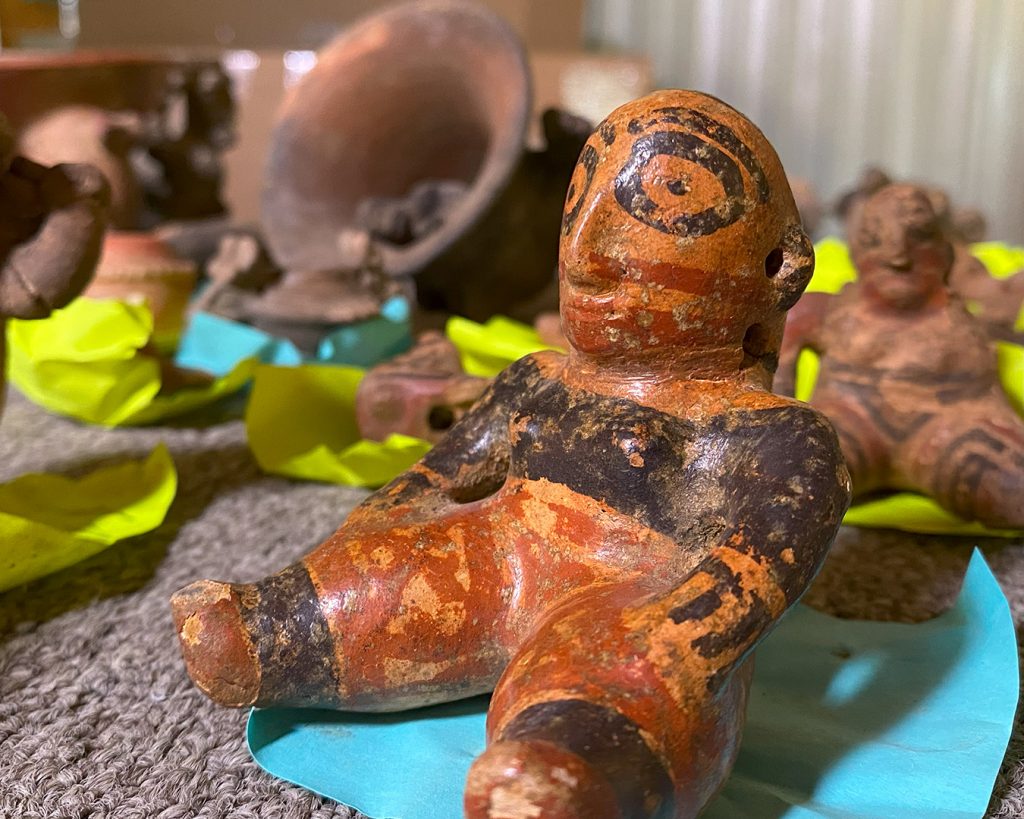


A female figure made of clay. Photo: National Museum of Costa Rica.
“Our two nations share a common belief about the importance of preserving and celebrating our unique stories,” said Cynthia Telles, the U.S. ambassador to Costa Rica, in that same announcement. “By repatriating these artifacts, we honor the ancestors who made them and the generations that maintained and nurtured their legacy. We recognize the value of these pieces as more than just objects, because they are an integral part of the identity of the Costa Rican people.”
In 1856, after Costa Rica had been colonized by Spain and then incorporated into Mexico, the newly independent country staved off an attempted government overthrow at the hands of U.S.-born settlers. Human occupation in the Central American country dates back to 10,000 B.C.E. through 19,000 B.C.E. Scores of ancestors from Costa Rica’s pre-Columbian cultures like the Nicoya and Diquís perished following the ravages of European contact, which started in the 16th century.
Artifacts in the cache originated from across the Central American country. One of the greatest gems is a Diquís sphere measuring about two feet in diameter, made from gabbro—a phaneritic (coarse-grained) mafic intrusive igneous rock. “The cultural and symbolic significance of the spheres is not well understood,” the Metropolitan Museum of Art noted, but “these monumental sculptures were prestige objects that marked the landscape around the ancient Diquís communities for residents and visitors alike to behold with awe.”
Additional treasures include metate cooking utensils, jade jewelry, polychrome vessels, ceramic sculptures, and stone tools. Costa Rica’s Minister of Culture and Youth, Nayuribe Guadamuz Rosales, said the collection evokes “a bygone era and completes one more piece of this puzzle of Costa Rican history, a history that is constantly under construction.”
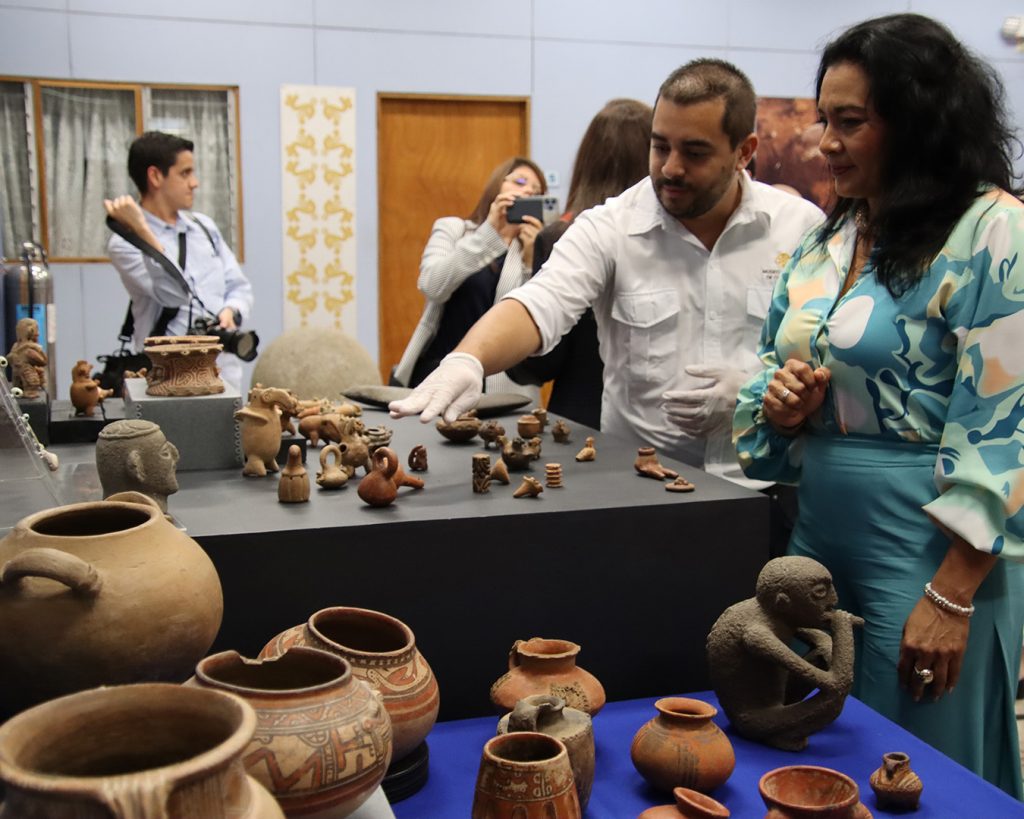
Javier Fallas, from Costa Rica’s Department of Cultural Heritage protection, gives Guadamuz background on the artifacts during the official delivery, on March 12. Photo: MCJ Communication Office.
Through the Cultural Agreements Fund, the U.S. Embassy added $83,000 to the approximately $11,123 contributed by the museum, and $42,650 it procured in partnership with the Parque Metropolitano La Libertad Foundation. That sum also supports a wider project that began last year to train Costa Rican forces in repatriation, outreach, and prevention. So far, they have trained an array of 141 Costa Rican officials, according to the museum’s director Ifigenia Quintanilla. The artifacts will tour museums across Costa Rica’s seven provinces in 2025.