What's Hot?
Suspense, Supernatural…Between Nollywood and Ghanaian Storytelling
The Article I Would Have Regretted Writing
Fans Rejoice As New ‘Romantasy’ Book Hits Shelves
12 Of The Best Films To Watch In...
Saudi Arabia Introduces Digital Entry Service For Citizens...
The Convergence Supports Creative Enterprise, Promotes Nigerian Art,...
Wizkid Reaches 12 billion Spotify Streams, Sets New...
Chris Brown Given Suspended Eight-Month Prison Sentence Over...
Volume Against Value: The Nollyood Industrial Paradox
Debating Nollywood As An Industry
  • Home
  • Arts & Exhibitions
  • Culture & Festivals
    • Culture Africana
    • Culture People
  • Fashion & Lifestyle
    • Music, Movies & More
  • News
    • Travel News
  • Opinion
    • Reviews (The Critics)
  • TCN Literati
  • Tourism & Hospitality
The Culture Newspaper
Arts & Exhibitions

2,000-Year-Old Lost Temple Discovered Beneath Italian Waters

by Tim Brinkhof October 28, 2024

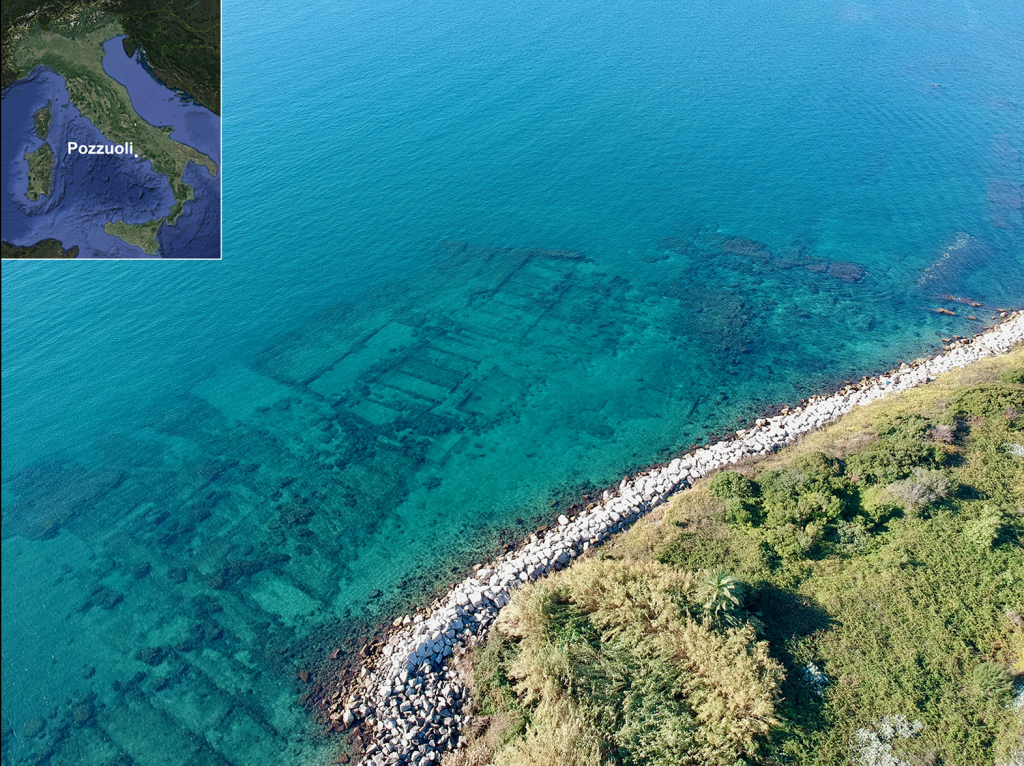
Most people associate ancient Nabataean civilization with Petra, the roughly 9,000-year-old “Rose City” carved out of sandstone in the deserts of Jordan—and for good reason, as it’s one of the most well-known and impressive UNESCO World Heritage Sites on the planet. While most Nabataean architecture is limited to the Middle East, one of their temples has been found in Italy, near the town of Pozzuoli, partially submerged beneath the sea.

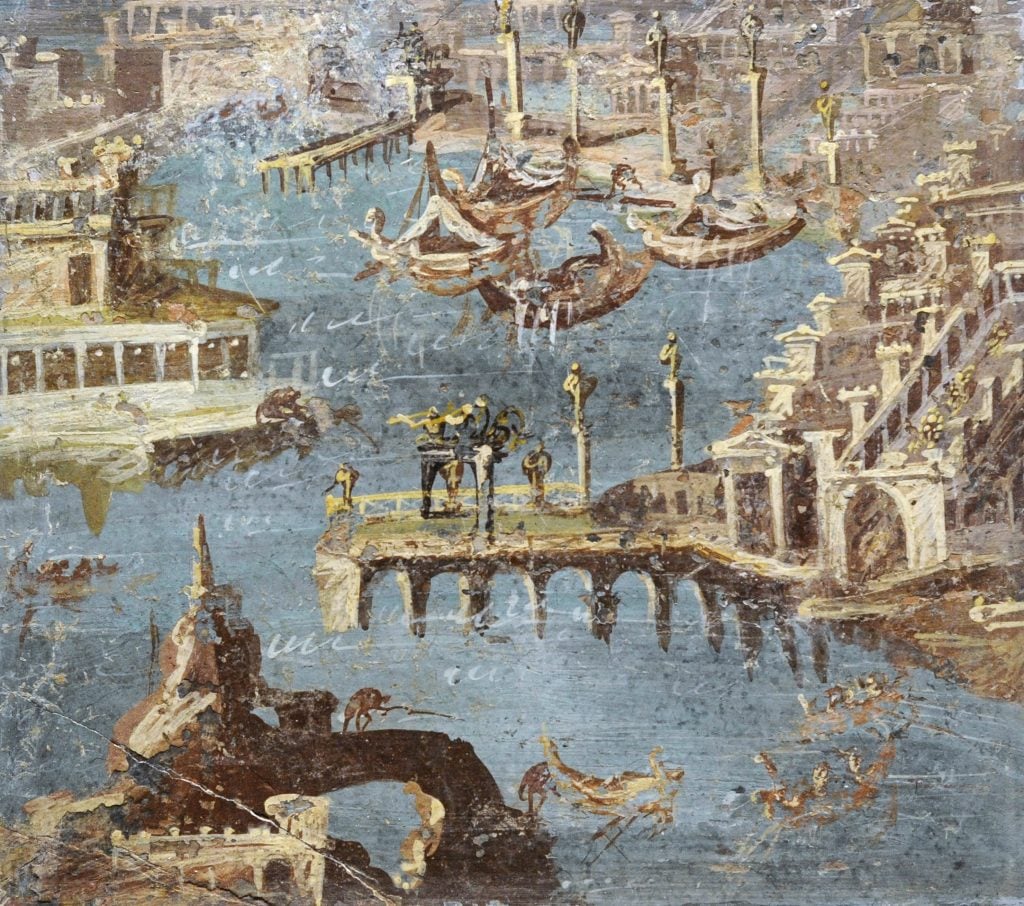
Under the protection of the Roman Republic, Pozzuoli (then known as Puteoli) developed into a bustling port for trading ships carrying goods across the Mediterranean. During the reign of emperor Augustus (31 B.C.E. to 14 C.E.), Roman builders filled the city with storehouses, which in turn were filled with grain exported from Egypt and North Africa. These remained in operation until volcanic activity reshaped Puzzuoli’s coastline, allowing the sea to swallow large parts of the city.

The best of Artnet News in your inbox.

Sign up for our daily newsletter.

An ancient fresco depicting a port filled with many vessels

Roman fresco depicting the Pozzuoli port (1st century C.E.). National Archaeological Museum, Naples, Italy. Photo: PHAS/Universal Images Group via Getty Images.

Other casualties of this natural disaster included a Nabataean temple. According to a study published in the academic journal Antiquity in September, this temple was built around 2,000 years ago, not long after the time that the Roman Empire conquered and subsequently annexed the Nabataean Kingdom, prompting many of its residents to migrate to different parts of the empire, including Pozzuoli.

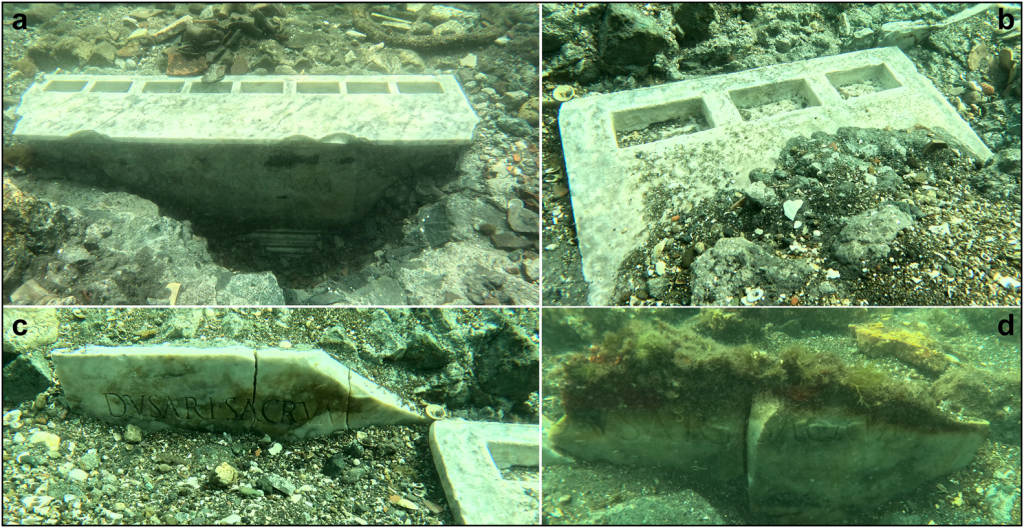
The study presents the results of a 2023 project called Between Land and Sea, a collaboration between the University of Campania and the Italian Ministry of Culture that enabled researchers to survey structures and artifacts submerged beneath Pozzuoli’s coastline. The Nabataean temple—thus far the only example found outside the Middle East—measures 32 by 16 feet and consists of two large rooms with altars made from marble that seem to have been originally decorated with “sacred stones.”
READ More  Archaeologists Stumble On Rare Statue Of Egyptian god Pataikos

photographs of white marble slabs on the seabed with rectangular shaped holes etched into their surface

Nabataean altar pieces with recesses for sacred stones. Photo: M. Stefanile / Antiquity.

The temple stands as an unlikely testament to Roman cosmopolitanism. Where other ancient civilizations shunned outsiders, the Romans, at least for part of their history, granted citizenship to people from non-Roman cultures and ethnicities, allowing their customs to mix and mingle. The Nabataean temple is dedicated to a Nabataean god, Dushara, but the inscription mentioning this god’s name is written in Latin, “Dusari sacrum,” while the building’s architectural style is decidedly Roman and very different from Petra.

“The edification of the sanctuary was possible when the Nabataeans enjoyed the freedom and opportunities offered by the friendship with Rome and the independence of their motherland,” the study reads, adding that Nabataeans in the Puzzuoli region were able to procure significant wealth and status between the reigns of Augustus and Trajan (98–117 C.E.), participating in the Mediterranean trade of luxury goods from Jordan and Gaza by way of Puzzuoli.

The study claims that much of this wealth and influence evaporated after the Nabataean Kingdom fell to Trajan’s legions in 106 C.E., allowing Rome to assume full control over their trade networks. Dwindling prosperity may have contributed to the Puzzuoli temple’s demise, which, according to the study’s lead author, maritime archaeologist Michele Stefanile, may have been purposefully buried in the 2nd century C.E., before the surrounding area was reclaimed by the sea.


2000yearoldbeneathdiscovereditalianlosttemplewaters
0
FacebookTwitterPinterestLinkedinWhatsappEmail
Tim Brinkhof

previous post
Inside Turkey’s Mysterious Ancient City That Once Sheltered Thousands—Underground
next post
Archaeologists Unearth a 2,000-Year-Old Inscription Honoring an Ancient Wrestler

You may also like

Art As Dialogue: Kokou Ferdinand Makouvia At The...

October 22, 2026

Munch Print Found At Estate Set For Auction

October 21, 2026

Abu Dhabi Art Foundation Celebrates Lebanese Heritage

October 20, 2026

Ibeme Laurina Captures Life, Memories And African Traditions...

October 16, 2026

Museum Marks 60 Years Celebrating County’s Heritage

October 15, 2026

Sola Olumuyiwa Paints The Pulse Of Lagos Iin...

October 12, 2026

Kokopelli Gallery Marks Five Years With “Call And...

October 6, 2026

British Museum Announces Changes To Ease Bayeux Tapestry...

October 5, 2026

Artists Announced For 2026 Lagos Biennial

October 5, 2026

In Lisbon, Ndikama Museum Reconnects with Benin’s Golden...

October 4, 2026

Leave a Comment Cancel Reply

Save my name, email, and website in this browser for the next time I comment.

Recent Posts

  • Suspense, Supernatural…Between Nollywood and Ghanaian Storytelling
  • The Article I Would Have Regretted Writing
  • Fans Rejoice As New ‘Romantasy’ Book Hits Shelves
  • 12 Of The Best Films To Watch In November
  • Saudi Arabia Introduces Digital Entry Service For Citizens Of 6 Countries, Visitors

Sponsored

Recent Posts

  • Suspense, Supernatural…Between Nollywood and Ghanaian Storytelling

    October 27, 2026
  • The Article I Would Have Regretted Writing

    October 27, 2026
  • Fans Rejoice As New ‘Romantasy’ Book Hits Shelves

    October 27, 2026

Categories

  • Arts & Exhibitions
  • Culture & Festivals
  • Culture Africana
  • Culture People
  • Fashion & Lifestyle
  • Food
  • Music, Movies & More
  • News
  • Opinion
  • Photo News
  • Reviews (The Critics)
  • TCN Interview
  • TCN Literati
  • Tourism & Hospitality
  • Travel News
  • Travel Trends
  • Travelogue
  • What's Hot?
  • World Culture

Connect with us

Connect with us
  • Facebook
  • Twitter
  • Instagram
  • Youtube
  • About Us
  • Advertise With Us
  • Privacy Policy
  • Contact Us

@2025 - The Culture Newspaper. All Right Reserved. Maintained by Freelart

The Culture Newspaper
  • Home
  • Arts & Exhibitions
  • Culture & Festivals
    • Culture Africana
    • Culture People
  • Fashion & Lifestyle
    • Music, Movies & More
  • News
    • Travel News
  • Opinion
    • Reviews (The Critics)
  • TCN Literati
  • Tourism & Hospitality