Every Sunday, if I have the time, I try to support African cinema. I watch an African film or a documentary about Africa, religiously, every Sunday. I do my best.
I’ve watched documentaries and films from East Africa, North Africa, West Africa, Nollywood, Ghana and you know Francophone Africa has my vote! My favourite African cinema hub.
Today, I said wait a darn minute! I haven’t supported my brothers and sisters in Naija in a while.
So I went on YouTube and started looking.
I have a little system. I watch the first five minutes of a film, and if it doesn’t make sense to me, I stop watching.
If I see certain overly yellow women, make up and wigs and standing with one leg forward or dramatic pauses in delivery, I move on.
I tend to gravitate towards older Nigerian movies for that reason. Some of the styling choices in contemporary films, particularly the earrings and braids on male actors, just aren’t my cup of tea. I’m sorry.
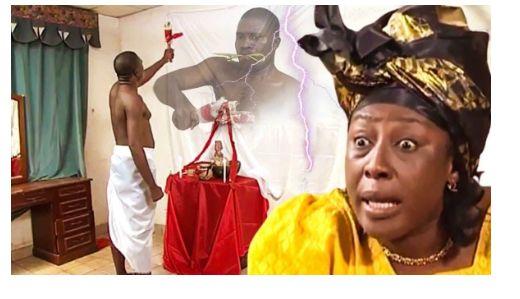
Anyway, I searched old Nigerian movies and settled on one called My Vision. It featured two of my all-time favorite Nigerian actors: Kanayo Kanayo and Patience Ozokwo.
Oh, I love those two! I absolutely love them. Whenever I see them on screen, I start laughing because I already know I’m in for something.
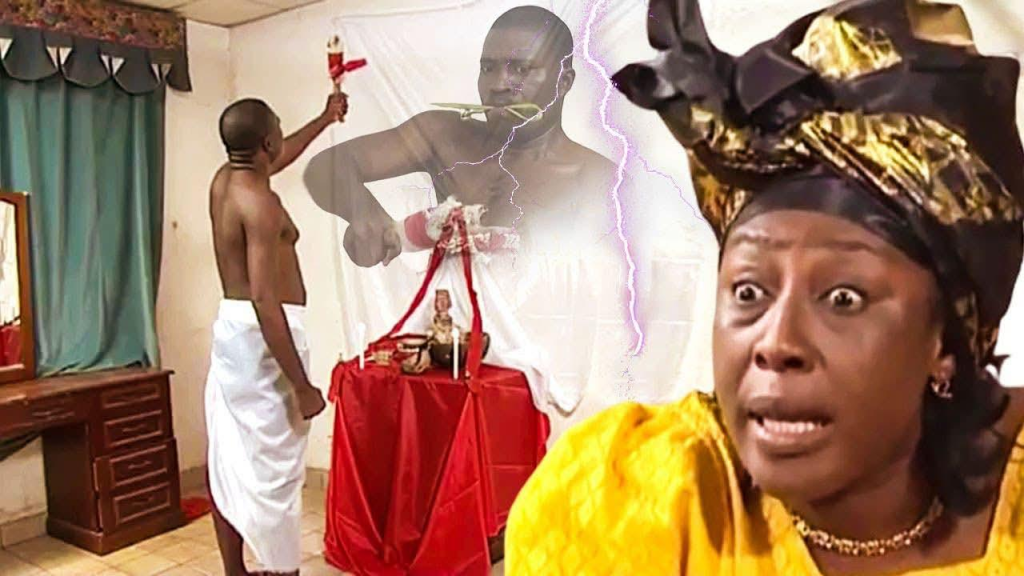
Now, in “My Vision”, Kanayo’s character has a wife who is tired of being poor. And in true Adam-and-Eve fashion, she persuades her husband to k!ll his brothers so they can divert the money their wealthy brother, a Catholic priest, has been sending them.
Now, we will discuss the rich Catholic priest part another day. How dude got 50,000 dollars?
But you know how Nigerian movies go. When I tell you the plot of a Nigerian movie, you can practically predict the ending. Jesus will appear. Somebody will confess. Somebody will die. Somebody might turn into stone. Something will happen!
And yet, you still sit there and watch the entire movie!
Approximately 95% of the people who follow this my page are Ghanaian. That is why I make so many Ghana-facing posts. This is where my Ghanaian audience is, and naturally, I want to engage with them. It’s a roller coaster.
So I started thinking about Ghanaian cinema, and I realised something.
With Nigerian cinema, you might know exactly where the story is going.
You might even predict the ending. But the filmmakers still take you on a winding journey to get there. Nigerian cinema has an inbuilt suspense mechanism.
Nigerian storytellers understand how to sustain narrative tension.
They know how to keep an audience invested in the journey, not just the destination.
Nigerian films are not trying to be polished. It’s raw. Gritty.
And the actors? My goodness!
The actors are INVESTED in their characters. They commit to the roles.
They inhabit these characters in a way that makes you believe what you are watching, even when the story itself is completely outrageous.
When I think about Ghanaian cinema, I think about actors like Grace Nortey, Grace Omaboe, David Dontoh and Doris Sackitey. These were actors who, in my view, brought a particular kind of commitment to their characters.
These days however…moving on…
I think one of the problems with Ghanaian cinema is storytelling, particularly our understanding and execution of disbelief.



If you ask me, Ghanaian films are very synthetic.
Because there is something else Nigerian filmmakers do exceptionally well – the suspension of disbelief.
I saw a post just before I started writing this. A Nigerian pastor was recounting how a bird fell in front of the vehicle he was driving. He got out, started speaking in tongues, and the bird remained there until they caught it.
I said ahh! A baby falcon learning how to fly is a demon?
What is wrong with you?
There are ravens outside my house. If I open my door and see them sitting there, does that mean witches are having a meeting outside my house? Please papa witch, I need money. $35 million budget please.
I really believe Nigerian movies have played a significant role in shaping how many of us imagine the supernatural.
They take familiar cultural beliefs and superstitions, amplify them, dramatise them and put them on screen until the extraordinary begins to feel entirely plausible.
A small incident becomes a spiritual attack.
A family dispute becomes a battle between the living and the dead.
Someone dies, returns as a ghost and seeks revenge. (Sister Emefaaaaa, you owe me vengeance!! Or should I put the list in your grave?)
See what I just did? Someone is calling blood of Jesus.
This is what Nigerians build a premise and somehow, within the logic of the film, you accept it all.
Nigerian filmmakers have learned how to bend the audience’s imagination. In horror or Romance.
They take what we already desire, fear, suspect or believe and build entire worlds around it.
This is the part I want you to get: They make the audience participate in the story because, even if you don’t believe everything you are seeing, you understand the cultural world from which it emerges. You are familiar with the framework.
K!ller Blowman movies. Indian movies. Chinese kung fu movies. The avid watchers in Ghana spoke none of the original language of these films but watched religiously. Why? They connected with the human story. They understood the framework.
And the only Ghanaian film that has ever done that to me, in quite the same way, was Zenabu. Gen Z people? How far?
That film has done a number on me!
Till today, if you are Liam Neeson and you suggest that we use a Volkswagen Beetle for our wedding, I am cancelling the wedding. We are NOT getting married. I did not dress my miracle for this. Trapped in a Beetle?? Kpawooo.
I will never willingly sit inside a VW Beetle because of Zenabu. Till today, I keep a rock in my car so I can break my window in an emergency because of that film. Zenabu will k1ll you in the most dramatic way!
I kid you not!
Another Ghanaian film that had a similar effect on me was “I Want Her Blood”. (Teki just come home, come home your mother is here) awwwwwww.
Whenever my girls tell me they don’t want to go to school, church or wherever else, I sometimes think, “No problem. Stay at home.” Because of that film!
Those films genuinely got under my skin and stayed with me. Another one was Menace. This girl went an unalived all the men she slept with cos she got HIV.
And now, I am actually interested in rewatching these films.
I want to see how I respond to them as an adult. I want to watch them with the eyes of a filmmaker, someone who can now critically examine the storytelling, character development, suspense and structure.
Would these films still work for me today?
Would they meet the standards of conventional story structure?
Would I identify weaknesses that I couldn’t recognise when I first watched them as a kid?
Or would I discover that the filmmakers understood something fundamental about storytelling that I am only now learning to articulate?
The art of taking the raw material of human experience and emotion and transforming it into a story that makes us feel something.
I think one of the real problems with Ghanaian cinema is how we construct our stories. Too often, we neglect narrative tension, story structure, and the development of believable, fully realised characters. Instead, we end up with synthetic characters who serve an unrealistic and unrelatable plot and rarely feel like people we know, recognise, or understand.
It’s really like taking an ordinary frog and dropping it into hot water.
That’s storytelling.
We need to talk about how we build our stories.
How we develop characters with genuine emotional depth.
How we create suspense, control information, and keep audiences emotionally invested.
How we make people care not just about what happens, but about who it happens to, why it matters, and what it COSTS them.
Predictability shouldn’t destroy suspense. They need to coexist.
The destination tells us where the story ends. The journey determines whether we care.
That, to me, is the real magic of storytelling.
**Djansi is an American-Ghanaian filmmaker