
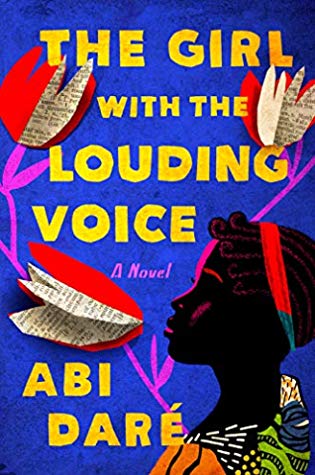
Abi Dare’s ‘The Girl with the Louding Voice’ is in contention for this year’s The Nigeria Prize for Literature alongside Cheluchi Onyemelukwe-Onuobia’s ‘The Son of the House’ and Obinna Udenwe’s ‘Colours of Hatred’. The winner of the Nigeria LNG Limited -sponsored prize with a cash reward of $100,000 would be announced in October. Ahead of the announcement, TCN reached out to Dare in the UK where she’s based. She talks about using nonstandard English, girl-child education and her influences. Excerpts:
You are in the last three of a journey that 202 of you started; how do you feel?


I am grateful first to God for the opportunity and to the NLNG committee and judges for the honour of the shortlisting. As is the nature of all competitions, there will be only one winner. So instead of fueling anxiety with possible outcomes which I have no control over, I focus instead on celebrating the fact that ‘The Girl with the Louding Voice’ is being recognised, that NLNG continues to recognise and support the immense power of literature.


Why do you write?
I tell stories because it gives me purpose, a meaning to this journey of life. My writing is my voice, which allows me to say and explore and understand and question. It is an absolutely delightful, therapeutic, life-affirming process.
Why do you think your book should win the prize?
Winning the prize would be wonderful, a great honour, and a true testament to the fact that stories that make a difference, that advocate for lives, for meaningful wellbeing, that were written in an unconventional way can and should matter.
What do you hope to do with the $100,000 prize money?
With the money, I hope to continue to support charitable organisations that advance the cause of the girl-child.
Your book, The Girl with the Louding Voice’, portrays the plight of the girl-child. Do you think society is unfair to the girl-child?
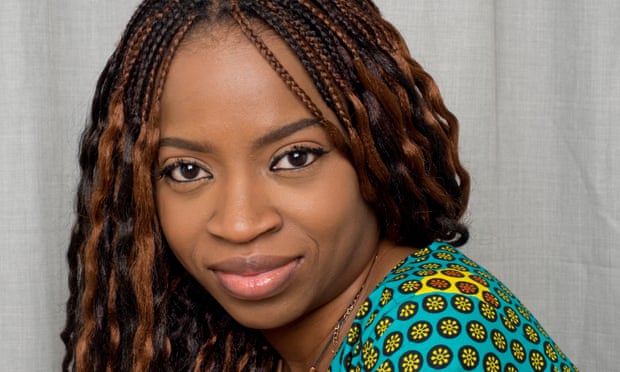
In many parts of the world, the girl child is at a disadvantage and is often marginalised. Nigeria is no exception. There is a common misplaced belief that the woman’s place is in the kitchen or the bedroom. As a profoundly patriarchal society, where there has historically been a lack of provision of adequate education and skills acquisition programmes for the woman, starting from when she is a girl through to adulthood, I find that a woman struggles to become all she wants. She ends up being wholly dependent on her husband or father, or brothers and her choices and dreams are thus relegated.
Educating the girl child has untold advantages, but once this opportunity is denied or reduced, the woman and the world around her suffers. It was important for me to highlight this in the exploration of Adunni’s journey. In a society (Adunni’s village in this instance) where poverty is rife, the girl child can be used as a commodity, and her dreams are often silenced. The girl child must be given the opportunity to choose the direction of her life and her dreams. Having an education is the first step, the foundation to making her dreams a reality.
You gave Adunni a very loud voice, but she needed other women to make her voice heard. Are women as supportive of others as Adunni gets in everyday life, since one often hears that women are their own worst enemies?
I hope the women in the story form a nuanced view of the world we live in. Some women bring each other down, and some lift each other up. In Adunni’s case, she gets a unique opportunity to experience both aspects. I was deliberate in ensuring that the support, mentorship, and allyship that women give each other is more pronounced and seen as that which happens, as we don’t hear of it enough.
Who and what are your influences?
I love and respect the writings of Toni Morrison, Khaled Hosseini, Chigozie Obioma, Anthony Doerr, Ayobami Adebayo, and so many others. I am always influenced by the book I am reading at the moment, as long as it engages me and is well written.
How much would you say The Nigeria Prize for Literature has energised writing in the country?
The NLNG Prize is a wonderful opportunity for literature in all its forms and manifestations to be celebrated, encouraged, and embraced, particularly in a world where there is a dearth of the appreciation of good literature, where so many other forms of media compete in a cluttered landscape. The brightest minds read, and reading can only flourish where there is good writing. Unfortunately, literature and education have not always been well rewarded. Many writers who aspire to not just win the prize, but to gain recognition are encouraged and motivated by the fact that NLNG has found literature worthy to be recognised and celebrated. It is the biggest literary prize in Africa, an innovation that I hope continues to allow writers to feel that they can enjoy some of the financial and non-financial rewards the prize brings
The language you use is experimental and quite innovative. It’s nonstandard English. Why did you choose it? What difficulty did you have sustaining it, especially since you live far from where it’s spoken?
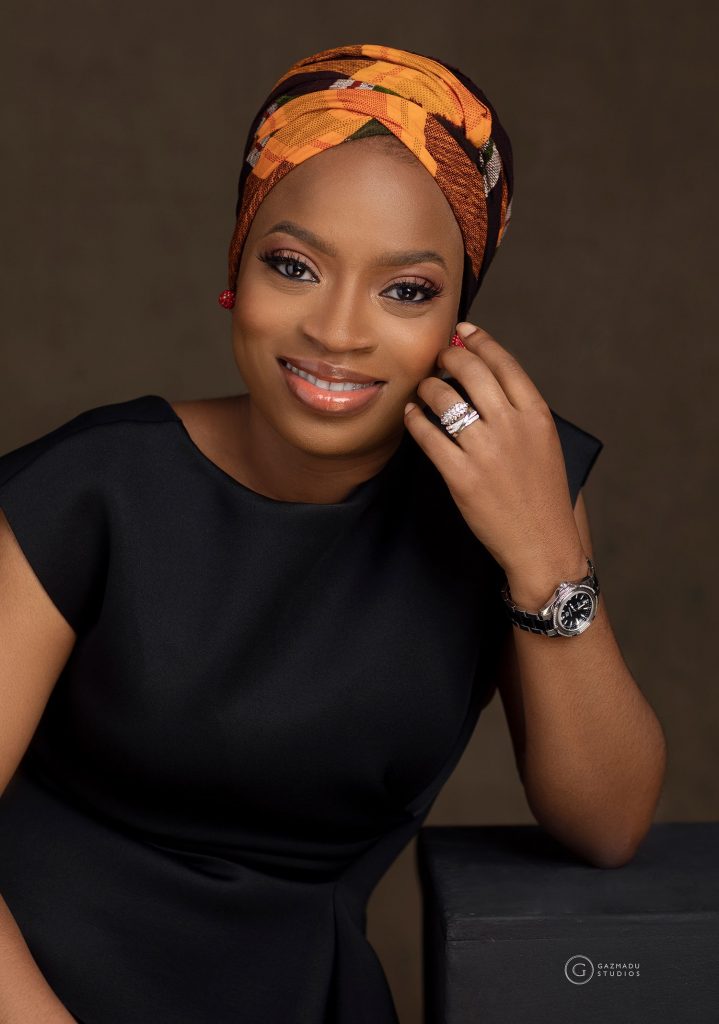
I’d like to say that I planned her voice- and that I had an idea of exactly how she would sound like and what she would say. Adunni’s voice came to me in a moment following a period of slight desperation. I was due to visit my supervisor for a consultation to discuss my MA dissertation submission. And while I had decided to write a book about a housemaid who lived in rural Nigeria, I had no clue how to form my ideas and research into a story worth telling. I also needed to send him 3000 words of my work in progress as a basis for any conversation.
The evening before my deadline, in a state of utter panic, I sat down in front of my laptop and wondered what she would say, what she would sound like- and then, I heard it—her voice. The first line of the book dropped into my spirit- and that was it. I grabbed it and never let go. The rest of the book built upon that foundation and evolved from an infusion of a number of sources: Nigerian slang, words from my then two-year-old who was just discovering how to speak, literal translations from Yoruba into English.
I also drew inspiration from the very many housemaids I and my friends and family encountered over the years, from listening to interviews and watching Nigerian movies, from reading excellent books such as ‘The Colour Purple’ that had been written in Non-standard English. Adunni needed to have a sense of humour and intelligence to balance out the heavy themes the book addresses-and I’d like to think that she demanded it to be this way. I discovered a lot about her as I wrote. She felt like a living, breathing character who was sitting in front of me as I wrote, arms crossed, a deep frown on her face or sometimes laughter, demanding what would happen to her and how she would react. Sometimes I felt her subtly chastising me for writing her reaction differently, and I’d rewrite a scene until I felt that she was satisfied. I’d like to think that I simply followed her directions through. In many ways, she was and still is a force unto herself.
In what ways can girls who like Adunni are still trapped escape her sort of tragic circumstance?
While there has been an increase in the report of abuse of girls like Adunni on the news and where organisations like NAPTIP exist, there is still so much more that can be done. The abolition of child marriage, for instance, needs to be enforced in every state in Nigeria. Law has to be enforced, and repercussions are severe for breaking the law. Once policymakers can make changes in the law and where there is enforcement and impunity is expunged, then there will be positive changes. Until then, girls like Adunni face a bleak future unless we speak up and demand change.