
Twelve minutes into an interview with Allen Ginsberg for the BBC’s Face to Face, Jeremy Isaacs asks him about the extraordinary long poem he wrote about his mother: “In Kaddish, you mourn your mother. What was the effect on you of living with a mother who was mad?” Ginsberg’s answer, mildly inflected by a laugh, is: “It gave me a great sort of … tolerance for eccentric behaviour.”
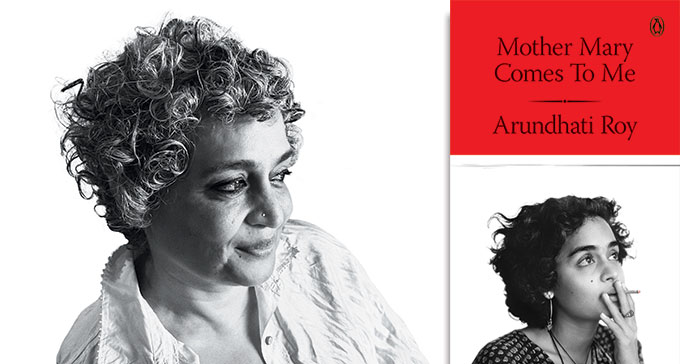
Arundhati Roy, whose memoir is partly an account of her life with her mother Mary Roy, might recognise this insight. Arguably, all mothers appear to their children as mad: madness here meaning an unbounded force, at odds with what society imagines normal parenting to consist of. The manifestations of this madness are as disparate as those of love, and these two aspects – the abnormal, the overbearing, and the protective, the nurturing – can be, in our mothers, intimately intertwined (“She was my shelter and my storm,” writes Roy). It is through loving and depending on the mysterious and incomprehensible that we come to “tolerate”, even embrace, the strangest thing of all: life itself.
Mary Roy was a kind of visionary, but she seemed to drive people around her mad, as well as being frequently driven mad by them. A Christian from Kerala, she escaped her parents by marrying a member of the Bengali bourgeoisie, known to his friends as Micky Roy, before leaving him when he became an alcoholic, “a Nothing Man”. She took her children, Arundhati and her brother Lalith, to a “cottage that belonged to our maternal grandfather” in Tamil Nadu, but came up against her family’s invocation of a law governing inheritance in her community: “daughters had no right to their father’s property and we were to leave the house immediately”. Finally they came to Aymanam, a village in Kerala (spelled “Ayemenem” by Roy, recognisable as the village in The God of Small Things), staying first with their family, “extraordinary, eccentric, cosmopolitan people, defeated by life”, before once more falling out with them. Mary then set up her own home and, eventually, a school that developed a national reputation.
Mary seemed to be perpetually at war, often for no clear reason, with her children, especially her daughter
Mary Roy’s years of doing battle allowed her to leave two remarkable legacies: her school, but also the case she eventually fought against her family, which went all the way to the supreme court, and resulted in the annulment of the discriminatory inheritance law. In the meantime, she seemed to be perpetually at war, often for no clear reason, with her children, especially her daughter: “In my effort to fathom my mother, to see things from her perspective … to understand what hurt her, what made her do the things she did … I turned into a maze … hoping to gain a vantage point for a perspective other than my own.”
This attempt to understand the compulsion to love what seems hostile transforms Roy’s writing, lending her prose, especially in the first 130 or so pages, an unprecedented freedom. An astringent conscience-keeper in the political sphere, she finds herself, with her mother as the subject, on terrain that tests her in quite a different way. We discover, in these sections, an ability to transition between contraries, a fluency that is less “empathy” than something unpredictable and alchemical. Note, for example, the paradoxically liberating role the word “fortunately” plays in this sentence about her mother, brother, and herself: “He remembered being loved. Fortunately, I didn’t.” Or the defiantly jubilant assertion, “I loved killing them”, about the lice the family help would comb out of her hair.
The world described in the first part of the book provides much of the material for The God of Small Things. But these pages aren’t significant for giving us access to Roy’s inspiration, or as a preamble to her life as a bestselling writer who would go on to become an oppositional political voice. Even if she were none of these things or had never written her novel, they would be utterly absorbing. They have a wonderful, self-assured self-sufficiency.
In the late 1970s, Roy escaped her mother, arriving in Delhi and enrolling in the School of Planning and Architecture there. At this point the memoir also bears witness to a world-historical shift: the receding of a kind of modernity and politics which had given rise to experimental lives and ways of thinking. Both Gandhi and Rabindranath Tagore, despite the great gulf between their backgrounds and world views, embodied the open-endedness made possible by such experimentation. So did Mary Roy and her brother George Isaac in their various projects and vicissitudes. I’d also situate Micky Roy in this context: one of the funniest, most moving sections in this book has to do with Arundhati’s reunion with her father in a hotel in Delhi: “He was lying on his stomach with his knees bent, his feet waving at the ceiling.”
This shift ultimately created the world we inhabit today. Even before the precipitous slide towards the far right now evident almost everywhere, there was the feverish globalisation that engendered a liberal elite just as bizarre as any of its political opponents. These changes are – explicitly and implicitly – the subject of the second half of the book. They are woven into Roy’s continual, courageous confrontations with the nation-state, including her criticism of its nuclear policies and opposition to Sardar Sarovar dam. Roy loves India deeply, but the nation-state isn’t India, and it doesn’t love her back. The conflict is comparable to, albeit profoundly different from, her relationship with Mary Roy.
Globalisation is also woven into Roy’s overnight success: it becomes a kind of co-author of her first novel. That success was akin to an inheritance left to a writer in the 18th century by an obscure uncle: something Roy benefits from but whose meaning she must also grapple with. In the midst of this, Mary Roy re-enters her daughter’s life, the mother delighted by Arundhati’s celebrity, but also puncturing it occasionally with Dadaist zeal. Throughout the book, but with especial force in the second half, Mrs Roy’s resistance and recalcitrance are an invigorating antidote to whatever our new world preaches is most rewarding about life.
Mother Mary Comes To Me is published by Penguin (£20). To support the Guardian order your copy at guardianbookshop.com. Delivery charges may apply.