
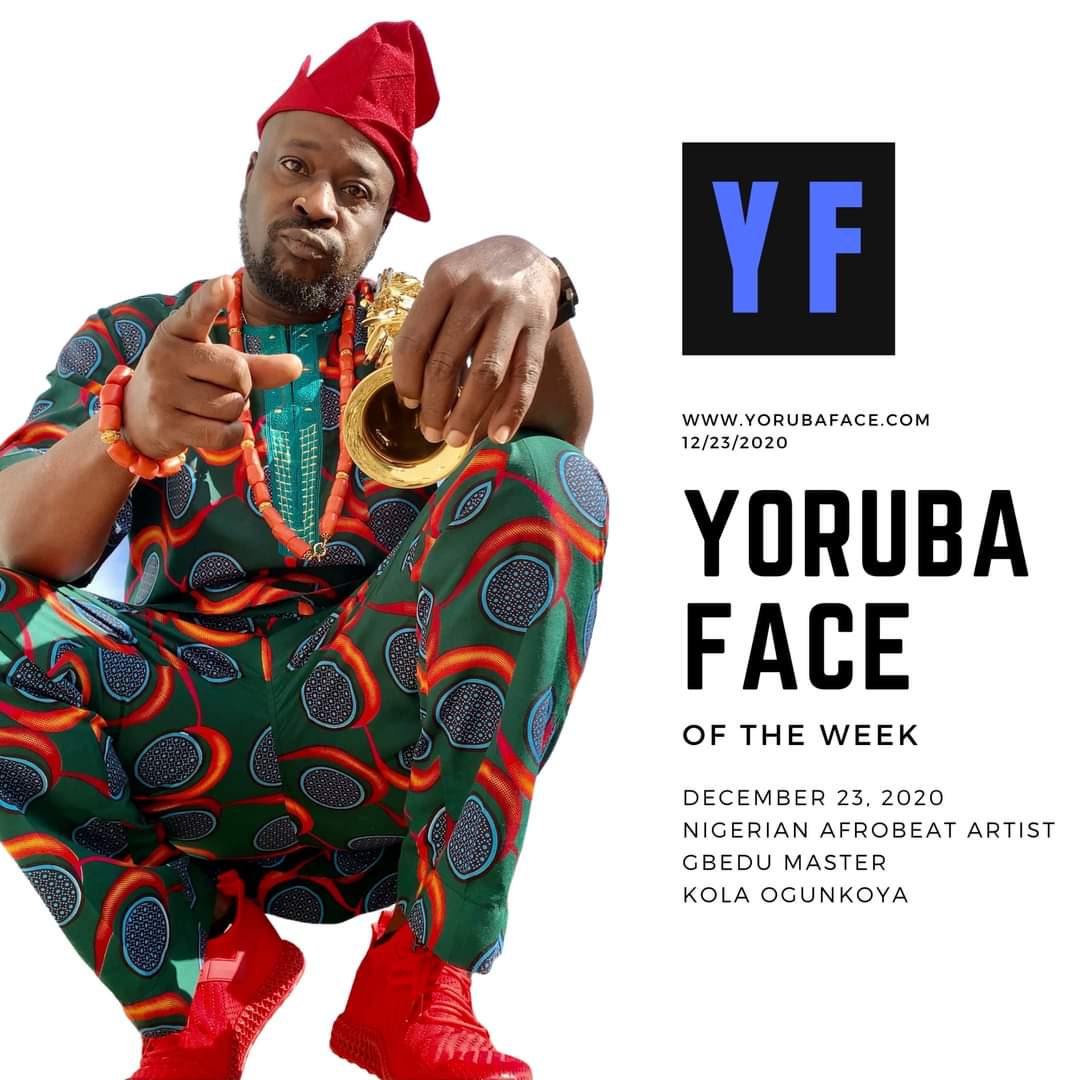
The cliché that the hood does not make the monk applies to Kola Ogunkọya in many ways. He does everything his own way and he has the capability to play multiple musical instruments, design his own posters and produce his own promotional materials as attested by one of his siblings. Kola is his own promoter and does not need this attempt at re-presenting him to any audience for that matter. If there is a performer who is certain about his life’s trajectory then Kola Ogunkoya is that creative mind. Should you ever search online for Kola Ogunkoya, what you will read below is an adopted version:
Kola Ogunkoya is a Nigerian-American Afrobeat musician who uses the term “Afro Gbedu” to describe his style of music, which includes jazz, highlife, Jùjú, funk and traditional Yoruba music.


Kola was born in Owerri, Imo State, Nigeria but he is of Yoruba background, the son of an itinerant police officer, Mr. S. I . B Ogunkọya and Mrs Simisọla Ogunkọya. After moving from Igboland to Lagos, he attended a number of schools among which are Iponri Estate High School & Okota Community High School. These institutions are known for their tough environments. He was a successful amateur boxer as a teenager, but due to opposition to his pursuing this career from his father, he turned to music, singing and playing the trumpet in his local church, the church of the Lord Aladura at 29 Adeyemi Street Mushin Lagos. He plays an array of instruments including the saxophone – soprano, alto, tenor and baritone, trumpet, fluger horn, and slide trombone.


Musicians such as Orlando Julius Ekemode, Fela Anikulapo-Kuti, Dr Victor Abimbola Olaiya, Eddy Okonta (Obi of Trumpet), Dayo Kujore, King Sunny Ade and many other Nigerian musicians who play authentic African music, influenced him. For two years, he played with Dr Abimbola Olaiya in All star Bandat Stadium Hotel as a Trumpeter. At age 18 he formed his own band in Lagos. Kola and his 15-piece Afro jazz Ensemble, which included female dancers. He has performed all over the globe. He went to USA in 1996 where he had a successful tour. On his return to Nigeria, he opened a cultural club for Art and Music in Opebi, Allen, Lagos,called Gbedu Music Village.
An eye-witness account provides us with an up-close narrative of tiny details that help us understand the twists and turns we may never be privy to. To tell this story one of his teachers, Mr. Kola Akinlua, at Iponri Estate High School, provides a side of the story.
********************
“When I discovered they young man with passion, I took him up as my child and I started encouraging him. To show his interest in music, Kola was the only student who opted to take Music during the School’s WAEC Examinations and I sacrificed my salary to make him excel in Music as a school subject. The strategy was to take him to Queens College where he was able to sit for the exam because that was the only center where that was possible.
Later I introduced him to the NYSC Camp at Yaba Tech. I could say that was how he became the official musician for NYSC for several years.
Of course, you should not forget that I printed posters through one of my friends at Mushin using personal funds.
After these series of efforts I introduced him to Tunde Olanipekun (now a Pastor), that was when Tunde was working at the Guardian newspapers, Isolo and moonlighting as a freelance journalist at Evening Times. Tunde Olanipekun got Kola to play at the Committee of Relevant Art’s (CORA’s) First stampede at Festac Town and at the opening of Society of Nigerian Artists(SNA) 10th Anniversary in 1991. That event was managed by Baffles Arts Galleryfounded by Tunde Olanipekun . The appearance at that event got Kola Ogunkoya revving press reviews .It will not be out of place to say that was the beginning of Kola Ogunkoya’s journey to stardom.
I, Akinlua was also the one who introduced Kola Ogunkoya to Richard Mofe Damijo (RMD) and this singular gesture got Kola Ogunkoya a place in MR magazine produced by RMD on several occasions.
Don’t forget that without Tunde & CORA then Kola Ogunkoya wouldn’t have had the kind of publicity he garnered. His talent and perseverance played a part in how he was quickly accepted by the critical audience in Lagos. As part of creating a name for Kola Ogunkoya we did a number of rounds to media houses. We came to theGuardian news room to ‘disturb’ people like Mr. Ben Tomoloju and reporters like Jahman and Steve Ayorinde, the only music critic with training in Music.
As part of my informal artist management strategies,I also introduced him to Mrs. Ajoke Mohammed and he became official musician for this woman for years in her botanical garden.
I must give credit to Mr. Ben Tomoloju, who during the Lekki Sunsplash in 1990 allowed Kola and his band to play for about 40minutes out of his own slot at the show. After the show,Benson and Hedges saw Kola Ogunkoya and a deal for Loud in Lagos concert was sealed. It was also at that in concert that Kola got his link to USA. That is my little story about KOLA.
Adding to the narration above, Kola Ogunkoya explained how the first Lekki Sunsplash set the ground for his second appearance and it was at that second opportunity that Fela Anikulapo Kuti heard his music for the very first time. Fela was impressed and sent for him to meet at the backstage. That chance interaction in the presence of Lagos-based journalists was the birth of the sobriquet Gbedu Master. According to an eyewitness account, Fela asked Kola his name and he told him. Fela then asked him where he hails from and Kọla replied that he is of the Ẹgba ethnic group. The questions and responses continued for a while with Fela asking the questions. Fela wanted to know if Kọla was a constant caller at the shrine or at his Kalakuta Republic on Agege road. Kọla responded that he does not visit the Shrine but he has listened to most of Fela’s records from where he drew his inspiration to compose his own brand of Afrobeat. Fela in a moment of excitement said men you are not only Kola but Gbedu Master. That was how the sobriquet stuck and until today Kọla Ogunkọya who unlike the Agbẹkọya of old has refused to join the people’s struggle but plays the Afrobeat brand his own way.
*************
That story you just read captures much of Kola Ogunkọya’s musical journey but what do his siblings think about his person, his music and his performances. Kayode Ogunkoya was the first to respond. He is the Chief Executive Officer of Saxokay Music Entertainment Production based in South Africa. In an email exchange, he praised his brother to the highest heavens as expected.
“The music of Gbedu Master is one of the best African classic evergreen music. His unique style, musical arrangements, brass section and melody lines are outstanding and of high class.”
When asked what he thinks his brother needs to do to improve his performances
“He needs to create more presence in the industry, come home to Africa more frequently to contribute to the entertainment industry. He needs to create a place where his fans in the United States of America can come to listen live to His music monthly/ periodically. In addition to those, he needs more concerts and European and African tours. These of course will need a structure and promoters who are willing to support him. Finally, I will say more music Videos will be an added advantage.”
*****************
Femi Koya, is the last in line in the family and his recollection of his elder brother is somewhat dramatic. He offers details no one has given thus far…
“…perhaps, being born in Owerri is a thing! It could be a contributing factor but Kola Ogunkoya is the most intuitive in the family and the one with the deepest well of creativity. Possibly, the inventive and innovative ancestral spirit of the Ogunkoya family rested upon him first as the stem and then branched out to the rest of us. I knew little of him since I am the third born of the family and hardly know much about him, as being at home is not one is his style. It is certain that my brother knocks hard at the doors of opportunity, he is always out there getting something done or starting something new and back home to sleep and out he goes again. I sense it’s the wind that comes with being born in Owerri by his Ijebu Parents. Most people may not know that he has this never giving up spirit except something better comes up. This is one value my brother demonstrates up until now. He is not a back-seat kind of person. As usual if there is a thing he wants badly, be sure there is no half measures with him.
Prior to his music career, he began running sprint relay as an athlete for the school and was quickly spotted by the school’s sports teacher who took him to Lagos State local government competition 100m sprinter sport events. It was where he showed great quality. I am not sure what happened with that, but Boxing took him over. You will notice his knocking walls and punching bags. He later joined the boxing academy, fought some local Lagos fights until music took the centre stage of his Life.”
How do you rate your brother professionally?
“…from a professional musician point of view, Gbedu Master (Shayo) as popularly known; is an endowed hub of creativity, music runs in his blood like the waves an ocean. I have so much respect for his musicianship and music compositions. He is a multi-instrumentalist and producer.
I very well remembered his first (Na Jeje) CD launch at the Jazz 38 Club in 1989. There I sat in the crowd and it was like wow, look at all these people here to watch my brother Kola, the same one whom my father chased out of the house for arriving home late from a show and he was made to sleep outside the flat in Mushin Olosha. Thank God, it didn’t take long for my father to reclaim him when the Televisions started displaying Kola’s performances, then my father was like “Yeah that’s my son.” Gbedu Master walked his way through the thick and thin of Nigerian music industry until the Benson and Hedges Golden Tones where all hell broke loose so to say. It was at this show he put up an exceptional performance and was labelled best performer of the festival and the American pie came his way.
A decade later, I had the opportunity to perform with his band at the Lagos Star show, Alliance France.I recall when we recorded the hit track “sweetie baby” and I had the singular honor of working at his Gbedu music Village. I soon realized he has never lost the power of his innovation and creativity even though he became American based in search for a better musical opportunity. Till date Kola Ogunkoya is still the Gbedu Master”
**********
In writing an unofficial biography of a musician like kola Ogunkoya, it makes a lot of sense to seek the opinion of a cross-section of lovers of Afrobeat music. Our first port of call is to Kenneth Murray who played drums in Kola’s band for almost ten years. He sent his brief comment on how he and others got involved with the Gbedu master himself…
“…many of the local musicians in Atlanta, Georgia State, were very interested in learning to play the music of Fela. I auditioned to play drum set for a big upcoming show Featuring Kola Ogunkoya ,I was hired and learned much about the importance of sound dynamics within the band and Kola served as a conductor leading us to play softer, louder,or just a little bit faster. I tell you this was so much better than learning the music from just listening to the records of Fela. The good thing in actually having a mentor and a teacher was a blessing to me, our concert was a success, I have since shared some of the experiences I garnered with other local musicians whenever I play with them as well.
I was sad to hear of the passing of the drummer Tony Allen who laid down the “Afrobeat “on the drum kit.I’m happy for Kola’s success and travels and I look forward to making music again soon and hanging out with my friend, peace”
Ms. Kelly Burrello is an African American who works as the Managing Director at Worldreach Consulting and Senior Consultant with the Diversity Training Group, in Washington, DC. I sent her and others a recent music video by Kola Ogunkoya and she responded with these words
“The instrumental and vocals are in the style of Fela, but they fall short. This gentleman’s voice tremors. If he wishes to pattern his style to an iconic musician like Fela, he will need to get some vocal lessons to correct the tremor. He does have potential though. Perhaps he choose a style of music that is more fitting to his voice tone, like Gregory Isaac’s.”
Moving from an African American’s opinion, the train moved to Germany.
Prince Abiola, an actor, show promoter and a social influencer based in Rodelheim, Germany is of the view that Kọla Ogunkọya’s songs are uniquely layered with Afro fused beat and messages! He is unsung,even Fela Anikulapo Kuti doffed his hat for him, shortly after listening to his tune. Kọla is a brilliant Composer and lyrist!”
The opinion train now moves to Nigeria where Yinka Akanbi, a trained Theater artist and a musician who has made his mark on different audiences. He is of the view that “Kola Ogunkoya is one of the beneficiaries of the vacuum created by the death of the world acclaimed exponent of Afrobeat, Fela Anikulapo Kuti. Though he calls himself Gbedu master, Kola’s music borrows greatly from Fela’s Afrobeat. Though with some variations. There is a deliberate attempt to make his brand sound different but his music is unmistakably Afrobeat. There is this raw –edge roughness to Kola’s voice texture which has refused to change through his different albums like “Sweety Baby”, Na jeje o, Pan PanRoborobo, Kola Omo baba Olopa and his latest effort. Kola’s music has that sharp feel that is a cut between baritone and treble , with the treble having an upper hand. Kola oscillates between tenor and bass as is necessary for a solo artist. Kola is a powerful vocalist but he does not seem to bother sometimes about key and fine-tuning his voice. He just uses it as raw as it comes. This does not mean it is not good for his art anyway. To date, with the Nigerian audience, Kola’s most popular work remains Sweetie Babywhich is nothing but Highlife. As a Gbedu master, one would expect his music to be highly percussive but his music generally is not. Perhaps as a brand of Afro music, Kola’s music would have grown tremendously if he has not been compelled by necessities to leave Nigeria. There is a lot more of Western influence in his music, these days which makes it a little apologetic in Afrobeat flavor and more generous in Western feel. His voice seems to be struggling to sit perfectly on the music here; these are evident in his latest work, Organic Afrobeat.
If readers are counting scores, the issue of Kola’s voice has come up for the second time. That notwithstanding, the train moves to South Africa where Dr. Kolade Arogundade, an associate editor of the Chronic sent in his perspectives
“The term Afrobeat when you think of it in terms of Fela might not really describe his music when he was in Nigeria. In fact, it might have disappointed you. However, if you look at him as a modern Highlife musician you will get him well. I saw him perform at his club Gbedu a couple of times before he moved to America. He was upwardly mobile. The closure of Gbedu, and his relocation to America took him off the radar and took highlife off the nightlife options on Allen.
At Gbedu, his Highlife covers were great and so were his original compositions. His first big hit, ‘Sweetie Baby’was rich and a fresh take on the fading Highlife big sound. It was full of confidence. It was a combustible mix of sounds. A great ensemble of horns topped with what I will call Palmwine/beer parlour lyrics. Although I have reservations about his ability to speak Yoruba on that song. Let me give just an instance;
“To’ba di ferefe, toba d’ojo ale”.
‘Ojo ale’ would refer to ‘old age’ not evening. ‘Oju ale’ would have been more appropriate.
In all, it was a great first outing and the fact that he played regularly at Gbedu would have helped become a Highlife great, especially because his live performances were magical.
In America, he however resurrected with Afrobeat and some traces of Highlife. His groove had become more jivey and laced with the Afrobeat polyrhythmic drumming in the style of Tony Allen and well layered steelwind sounds. The agogo seems to silently lead the rhythm over a piano. His horn sessions are not as rich as what they were in his Highlife incarnation. His lyrics have also not particularly improved. However, his arrangements and general sense of his product is more mature but not as confident as his Highlife. My verdict is that I prefer his highlife!”
Ayo Solarin, an Intellectual Property Lawyer with interest in music & entertainment, listened to the music video that was sent to our respondents. His verdict; “I have heard about him in music circles but yet to listen to his full album. Watched one or two videos of him on YouTube. Good prospect.On a quiet note I think he is playing more of 70s groove and may find it difficult to cope with the racy pace and energy of mainstream Afrobeat if that is where he is gunning for. He can definitely create a niche for himself good enough.”
“Kọla Ogunkọya’s classic for me is the incredibly produced song, E maa jo, ẹ maa yọ… It is a globally acclaimed Afronisation of Wally Baduru’s Highlife track… Kola has jazzed it up and given it more ambience than the original instrumental, jazz-themed version, according to a commentator on the song…Kola has brought a broader appeal to Afrobeat with his own unique style of instrumentation and deep tone of singing and enthusiastic dance steps…The Gbedu Master is great!…Bisikay Ayedun, London, UK
The next view is fromDr. Lee Chambers, a trained musicologist.
“I have never heard this singer, but I like the song! It’s not exactly what I expect from the “worldbeat” label, but–like someone like Fela–he does fall under the general banner of fusion, synthesizes some elements of funk, vocal jazz harmony, and highlife, among others. And there is a sense of asymmetry in terms of how musical ideas relate to each other (particularly on a small scale–sometimes the guitar appears unexpectedly, for example).
The instrumentation is primarily a keyboard synthesizer, an electric guitar (with more soloistic kind of licks and a darker tone color than one would hear in lots of the African guitar legends of the mid-20th century–Franco, Jean Bosco, etc.), and a (Latin-sounding?) percussion battery.
The background singers sound a lot like lyrics written for the Swingle Singers and similar groups back in the 70s–Luciano Berio’s “O King,” Steve Reich’s Tehilim, the Sesame Street song that just counts to the number 12, etc.
The lead singer is particularly fascinating in a popular music context, as his line mostly fits as part of the overall texture–punctuating or playing games with other parts–rather than standing out as a melody-and-accompaniment type texture. His tone color is relatively clear and bright, despite a slightly throaty quality. At times, I’m not certain if he has specific pitches in mind or if he’s just approximating in a general part of his voice, but his sense of rhythm and the ways different rhythmic ideas interlock in a composite context is pretty precise.”
Dr. Eyitayo Gad Aloh, Instructor, Department of Communication and Critical Thinking, Trent University Durham, Canada
“INSTRUMENTATION: Kola Ogunkoya’s instrument is an infusion of African drums and the western trumpets but unequivocally African. The trumpet pays homage to the Jazz tradition that has been the staple of African American musicians and has helped forged a resistance to the racial domination that blacks have suffered in the black Atlantic, but more visible in North America especially the United States of America. However, on the African continent, he would seem to take a leaf, once again and unsurprisingly from Fela Anikulapo Kuti. After all, his genre of music is Afrobeat. But, his infusion of the omele (Yoruba drums) and the African talking drums to the trumpet helps him cement that African feel of his music and assures his listeners that his message is for them. The infusion is also evidence of the adaptability of the African cultural heritage to whatever situation that it finds itself while giving the ultimate homage to the ability of music to be that cultural artefact that can be adapted as a tool for resistance.
TEXTURE OF VOICE: Kola Ogunkoya’s voice texture is polyphonic in nature, able to adapt to the mood that the instrumentation creates. In the example of “Jeje”, his tone when analysing the abuse of power is a rebuke and upbeat but when he comes to why he is singing, he lowers his tone to reflect a spirit of comeradeship with the oppressed of the society. His voice range matches the audience that he is addressing at every point in the music and that is not an easy thing to do; dropping and picking up voice pitch at intervals.
Overall, I see Kola Ogunkoya as that yet to be fully appreciated Afrobeat musician with much to give in terms of quality of song and the message found within the song.”
Dr. Omoniyi Ibietan, a social Entrepreneur, & strategic communication specialist, provides a contextualization that helps locate the socio-cultural planks on which Afrobeat as one of the liberation enterprises rest. His content and context analysis against the backdrop of Fela’s leitmotif is very instructive.
“Afrobeat as invented by Fela is possibly the most difficult genre of music to imitate. The reason is simple, its originality and peculiarity have their foundation laid in the circumstances of its evolution – a rejection of racism, injustice, oppression, and authoritarianism.
These were circumstances directly encountered by Fela, and his interpretation of those circumstances in the context of Fela’s conviction and revolutionary character.
It against the background that I found Kola Ogunkoya’s attempt at Afrobeat impressive. His expressions can surely be located in the Afrobeat genre. It is the closest attempt to re-story Afrobeat in its creative, unique, and concrete essence outside Fela’s own original works that I have listened to. I mean, besides those who attempted to mime Afrobeat.
Unlike Reggae, that has seen many largely successful attempts beyond Bob Marley’s classical outings, I do not know of successful attempts on Afrobeat, close to Kola’s in rhythm, lyrics, instrumentation, and voice texture. The chorus from the team is also a good attempt at re-inventing Fela’s ‘gang’.
However, if it is not Fela, it cannot look exactly like Fela.
Fundamentally, the revolutionary character of Fela’s Afrobeat in terms of the criticism of the ‘Republican’ and primitive content of the political space is not really evident in Kola’s work that I just listened to. And even this does not surprise me, because Kola’s experience with the Nigerian political space is different from Fela’s – Fela was intimately involved beyond social criticism, he was involved in expressing concrete resistance against oppression as an activist, and for which he suffered irredeemable damages.
Besides, what I just listened to is an incomplete story. Fela never left any musical story incomplete. Fela’s musical narration was never incomplete; he takes the listener to where he gets the message or where the listener can draw conclusions. But Kola’s did not establish for instance, why “dem godey run”, “dem go dey lie”, I mean, the reason for these actions are not quite explanatory, neither did he explain what makes the sister or brother “Apa”. So, the ‘running’, the ‘apa’, ‘stupidity’, the ’shayo’, the ‘ode’…ought to be clearly backgrounded or put in context that makes meaning. That is a gap, a creative noise in meaning exchange that Fela cannot be accused of.
So, yea, Kola’s outing is Afro but not in the fashion of Fela’s in truth and indeed. It is good his brand is called ‘Afro Gbedu’ not really Afrobeat. His is eclectic, combining juju, highlife, jazz, and funk, as well as elements of the Yoruba cultural music. But it is still a good outing in a creative enterprise.”
Therefore, to understand the cultural fount thatKọla Ogunkọya pools from there is the need to situate the context of the music and its origin beyond Fela as the originator. What is this Afrobeat that Kọla Ogunkọya and his siblings now play with different measures of competence. To respond to that question the voice of Sam Akabot through Sola Olorunyomi provides an answer
“In many traditional African cultures, including the Ègbá Yorùbá in which Fela was raised, music and dance are intrinsically tied to everyday experience. This process could be of a sacred event, thereby incorporating ritual elements, or a secular one, involving music and dance as accompaniments to social gatherings such as sport, general entertainment and, at times, an instrumental jam session. Some of the following have been identified as general practices of the tradition: call-and-response pattern of vocal music; the bell rhythm of the gong, which denotes time lines; the predominant use of the pentatonic scale; the speech rhythm growing out of tonal inflections of African words and chants; the use of polymeters and polyrhythms, and musical instruments used as symbols” (2005).
Olalekan Babalola, a professional percussionist who once performed with Fela says “Fela’s musical style is for his composition outputs, he chooses to sing in pidgin, but, upside down was sang by Sandra in English language. May be Afrobeat artists need to find that language of uniqueness. I don’t know”
Conclusion
This long textual journey to locate Kola Ogunkoya within the universe of Afrobeat has been worth every letter expended in this venture. It is certain that Afrobeat (or AfroGbedu) is a vehicle for social mobilization and an authentic tool for excitement, entertainment and eventual emancipation. That notion raises a number of issues for this particular performer. It allows us deliberate on what makes a good artist. How do you spot a gifted artist when one is encountered? Could the crazy attitude they exhibit be one of the indicators?Alternatively, could the quality of their innovative capability be that yardstick? On the one hand, Catarina Amaral (2018) submits, “For me, what makes an artist great is that he/she, is able to have a really strong concept about his creating, and then, technically, can do equally good. What I am saying is that it will fulfill not just on a technical aspect, but also in is ideas behind creation, even if exactly all spectators don’t understand these ideas. He will create stuff that people can’t be indifferent to, they love it or hate it.” If this template is used to evaluate Kola Ogunkoya what do you my readers think will be the people’s verdict?
On the other hand, Wale Obadeyi in 2018 suggested that “,….the unwritten duty of an artist -of whatever medium of expression – is to shorten distances and re-unite (hu)man(s) with his/their kind.”
Kola Ogunkoya like other talented souls is a bundle of contradiction. He croons ẹ ṣe rere in one of his tracks but will hardly be found doing a good deed when called upon. There are personal stories that can fill a book but those will be reserved for other times.
If my opinion counts in this matter, I will posit that Kola is a social experimenter. Someone who goes with the flow. A fantastic risk taker and a fast learner. To him music is an avenue for construction of self and not really of the society. He does not carry the burden big ideas nor does he allow too much interference into his creative process and outcome. What he yearns for is acceptability of his capacity and not to become a representative of the oppressed of the world.
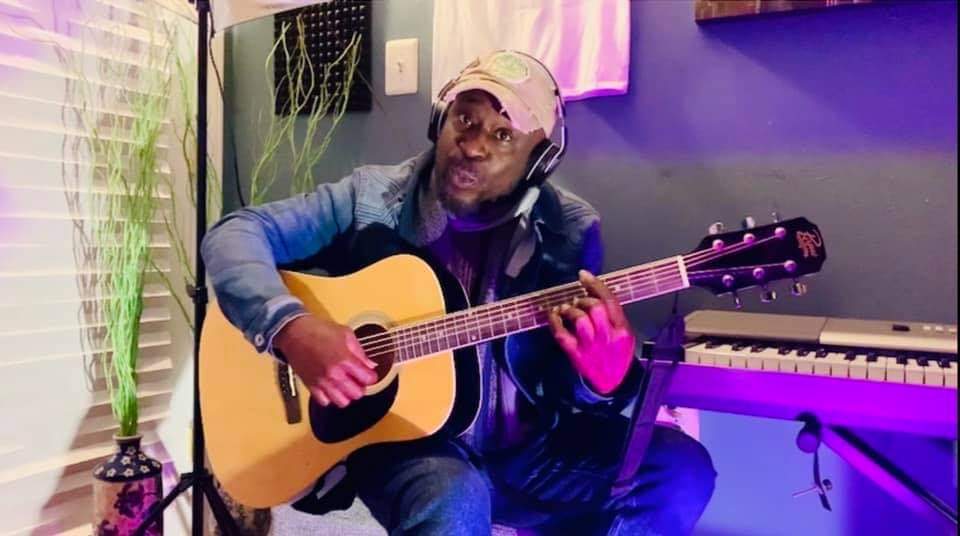
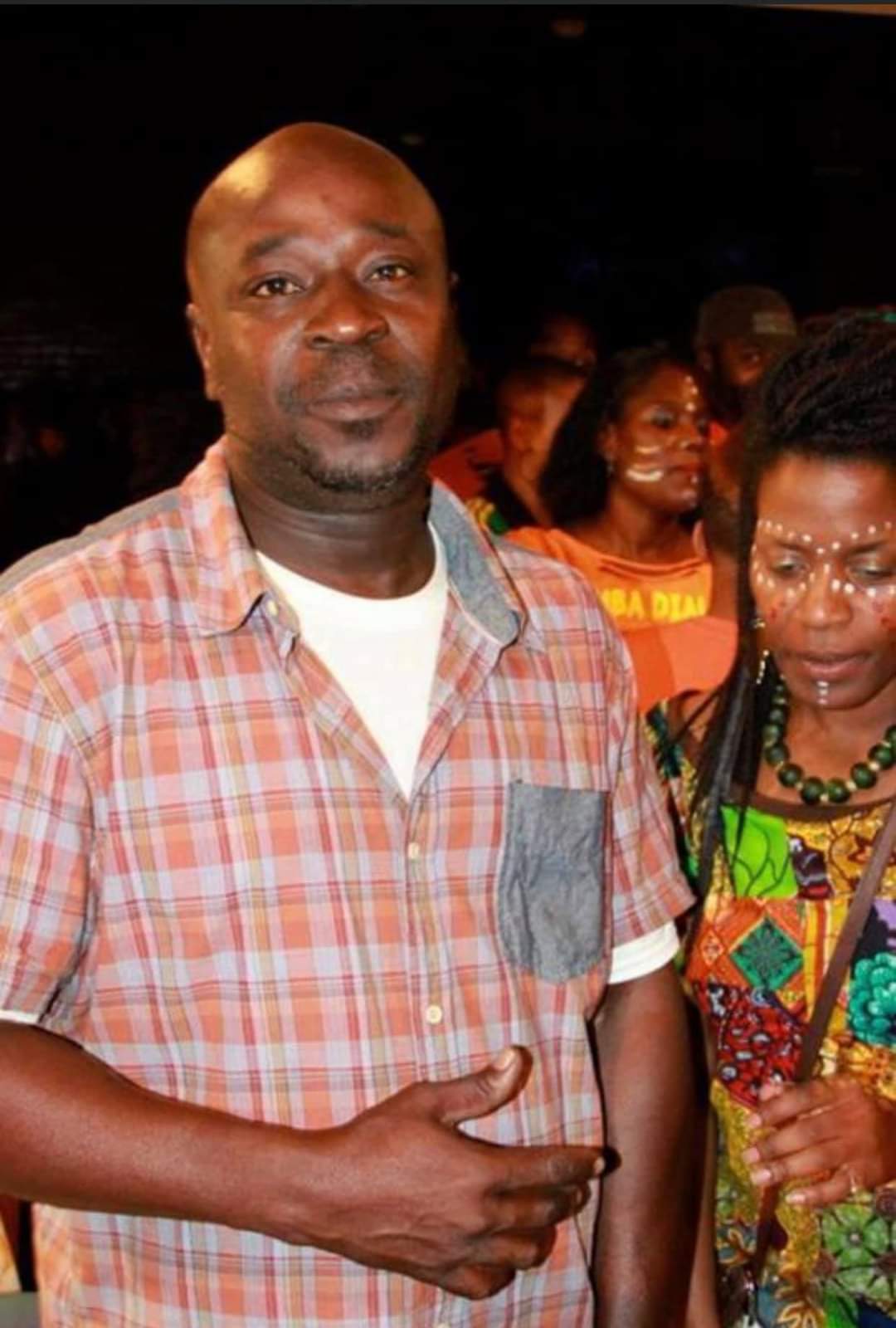
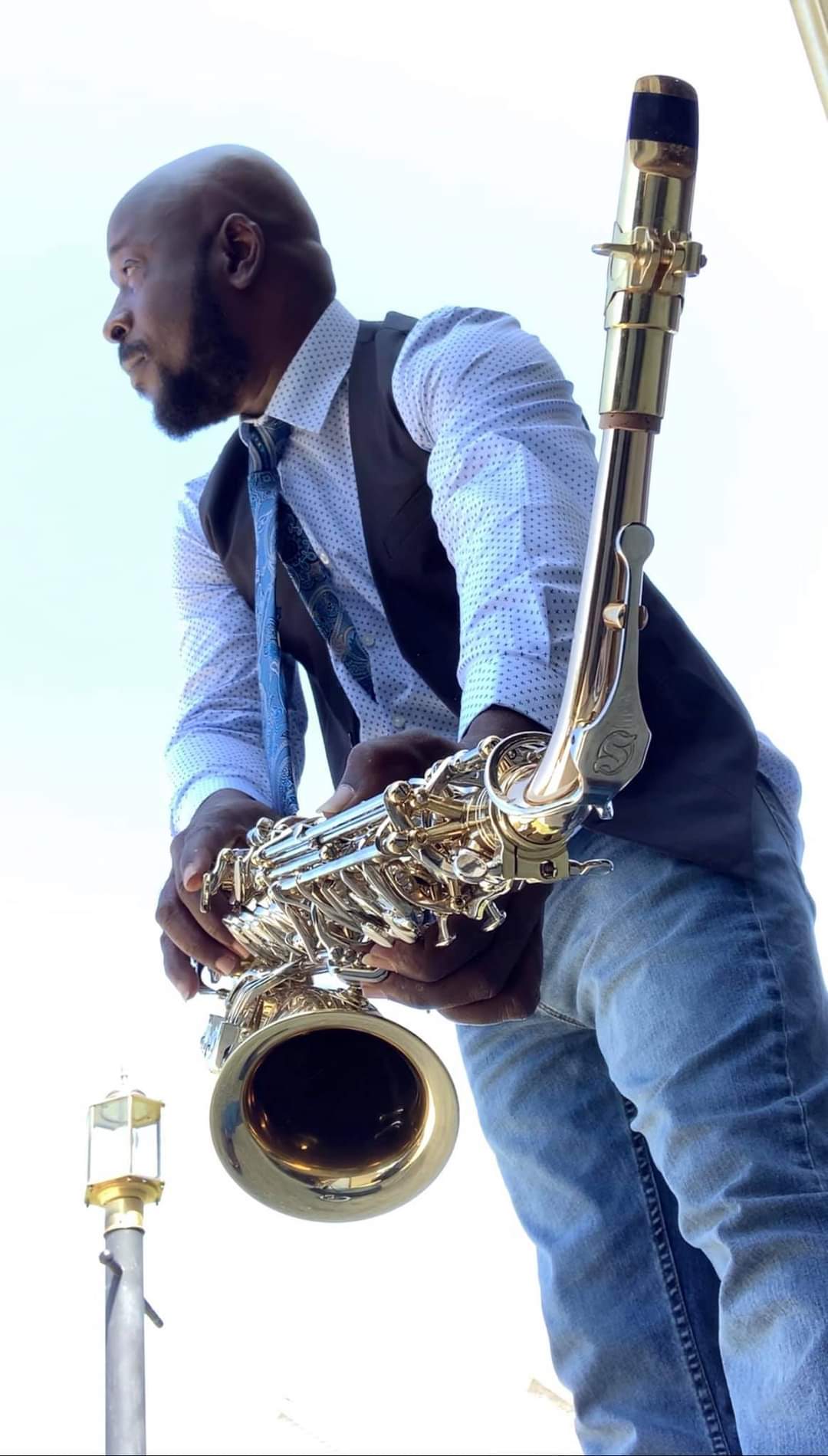
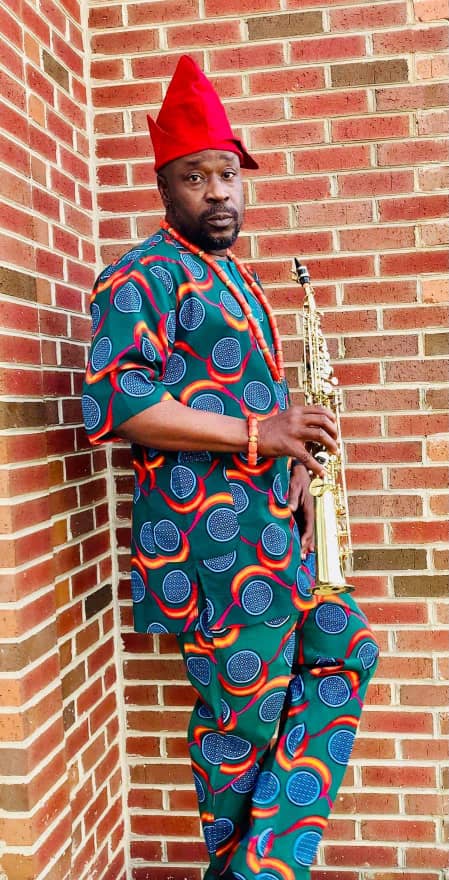
The focus for now is on the caliber of his public performances, musical productions including content analysis of his songs. The consensus is that Kola Ogukoya is an artist worthy of critical attention. However, when it comes to the quality of his voice, there are two distinct schools of thought. One group is of the opinion that he needs vocal refinement and another think his voice is a marker of his emerging brand. Apart from the quality of his artistic competence, some respondents to the informal survey also commented on the content of his creations. According to Dr. Ibietan, “if it is not Fela, it cannot look exactly like Fela.” To those who know Kola Ogunkoya on a professional level, they will say he is a man of his own. He simply wants to survive in a cruel capitalist world. His vision of society is emerging and his mission as a social engineer may take time in congealing.