
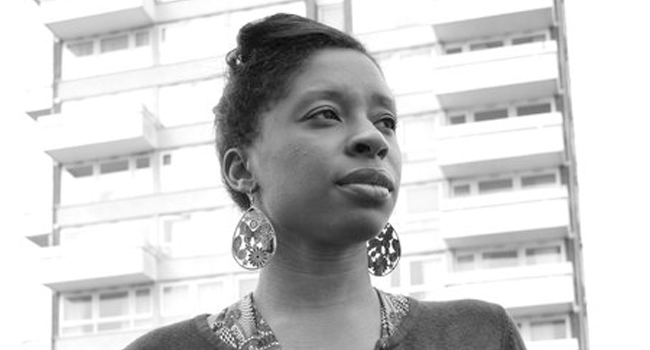
British-Nigerian writer, Irenosen Okojie, has been awarded the 2020 AKO Caine Prize for African Writing for her short story ‘Grace Jones’.
Okojie was announced the winner of £10,000 (about ₦4.8 million) award prize on Monday afternoon at a virtual unveiling on YouTube.


Organisers of the Prize had postponed this year’s award ceremony due to the COVID-19 pandemic, citing safety of authors, staff, guests and partners as their topmost priority.


Okojie was among the three Nigerian writers who made the five-man shortlist announced by the Prize in May. Others are Chikodili Emelumadu for his short story, ‘What to do when your child brings home a Mami Wata’ and Jowhor Ile for ‘Fisherman’s Stew.’
While announcing the award, Chair of the AKO Caine Prize judging panel and director of The Africa Centre, Kenneth Olumuyiwa Tharp CBE said: “This year’s winner of the AKO Caine Prize for African Writing is a radical story that plays with logic, time and place; it defies convention, as it unfolds a narrative that is multi-layered and multi-dimensional. It is risky, dazzling, imaginative and bold; it is intense and full of stunning prose; it’s also a story that reflects African consciousness in the way it so seamlessly shifts dimensions, and it’s a story that demonstrates extraordinary imagination. Most of all, it is world-class fiction from an African writer.”
Continuing he said: “In the wake of the Black Lives Matter movement, which has prompted deeply powerful questions about race, justice, and equality in the world today – this story offers a salient exploration of what it can mean to embody and perform Blackness in the world. This is a story of tremendously delicate power and beauty, and one in which we recognise the tradition of African storytelling and imagination at its finest.”
Olumuyiwa-Tharp also announced the winner of the £10,000 prize in a film, directed and produced by British-Nigerian filmmaker Joseph A. Adesunloye.
‘Grace Jones’ was published last year in Okojie’s second short story collection and third boom, ‘Nudibranch’.
It tells the story of a Grace Jones impersonator and deals with questions of trauma and identity as well as pleasure and escape.
The story chronicles the psychological and behavioural changes of the main character, Sidra, a young woman who becomes a celebrity impersonator who is wracked with guilt after her whole family dies in a fire that destroys their London flat.
Speaking on why she chose the story’s subject matter, the writer said it was essential to write experimental fiction that centres on a black woman.
She said: “I write weird experimental fiction. And I think it’s really important to centre experimental fiction by a black woman like myself, because for a long time, I felt like I was operating on the fringes. People were often quite surprised by my writing, just in terms of subject matter and style.
“I’m really passionate about centring the stories of black women and people of colour. It’s important to show their lived experiences. But I like to do it couched within these darkly fantastical worlds, pushing the boundaries of form, ideas and language, so the reader has a different experience.”
Okojie added that she had always found the actual Grace Jones “hugely inspiring”, and wanted to explore the “idea of trying to subvert the pain of the past by hiding under a different character.”
Other notable Nigerian writers who have previously won the AKO Caine Prize for African writing include Lesley Arimah (2019) for ‘Skinned’ ; Tope Folarin (2013) for ‘Miracle’ ; Rotimi Babatunde (2012) for ‘Bombay’s Republic’ ; Segun Afolabi (2003)for ‘Monday Morning’ and Helon Habila (2001) for ‘Love poems’.