
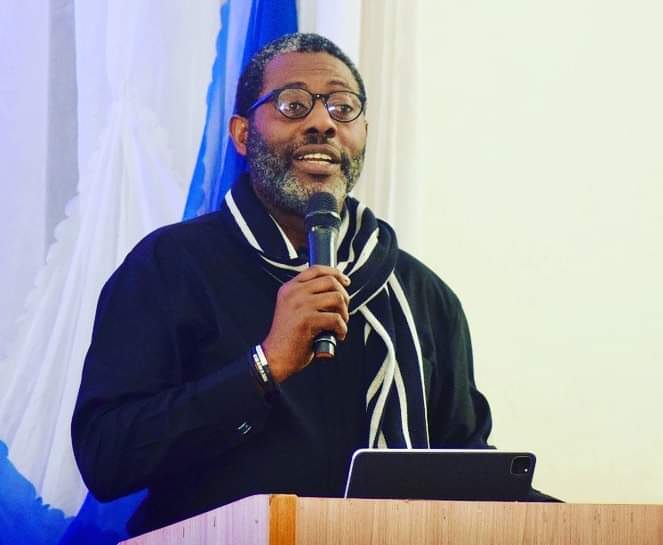
I begin with my humble appreciation to Dr. Saheed Aderinto and
everyone in the leadership of the Lagos Study Association (LSA), for this opportunity to speak here this morning. It is an honor and I am humbled and
excited to offer some contribution to the broader theme of the conference.
The LSA has curated a dynamic and inclusive space for the convergence of
academia and the wider creative community to share our experiences and perspectives, enriching your discussions with insights from the Nigerian film
industry.
This commitment to creating a space where the “town and gown”
can interface can only further enhance the authenticity and impact of creative voices across Africa’s cultural landscape. Indeed I thank you all very
much!
My subject today, ‘Authenticity and the African Story’ intrigues in the nuance of its subtle suggestions and interpretations. And what it is not helps to
better understand what it is. It is not authenticity OF the African story.
It is
authenticity AND the African story. The ‘and’ perhaps suggests, in its most ordinary of conspiratorial imputations, that the ‘African story’ as a genre is in crisis, even a contention. A crisis of identity, where its very genuineness is
at risk.
Yet we live in a time that has been described as the golden age of the
African story.


In 2018, Marvel Studio in the United States created the first global African
superhero. “Black Panther” a narrative about a futuristic African civilization became a huge global hit. The film appropriated different tribal representations in fashion, symbols, even an African sounding language. It also positioned it into the future as a leader in science and technology. It was a heady mix that awoke a sense of possibilities in black people everywhere.
The authenticity or purity of its ‘africaness’ was debated by some but none could argue against its impact as a powerful marker of hope for all black people.
Both ‘Black Panther and the sequel ‘WAKANDA FOREVER’ became
two of the highest-grossing films of all time. Both received critical acclaim for
its storytelling, performances, and cultural significance.
The film resonated
with audiences worldwide, showcasing the demand and interest for diverse and inclusive storytelling.
WAKANDA FOREVER became the first film to reach N1 billion box office returns in Nigeria and Ghana. In Kenya the film earned
25Million Kenyan Shillings in just its opening weekend.
Clearly Africans were
eager to pay to see an African story that wasn’t genuinely African at all. It was simply a well-told story appropriating African symbols and characters but with the right dose of inspiration to foreshadow a glorious future which every African desired.
In 2022 Sony Pictures too made close to $100Million globally with the historical film about the all-female army of ancient Dahomey Kingdom titled ‘Woman King.’ That film as well took a sliver of
Dahomey history, appropriated it with generous infusions of American style
action sequences, added superstar Viola Davies who delivered a
performance of a lifetime. It became another huge global hit with much of its box office receipts coming from the urban cities of Africa.
Was it an African
story, or a film based on a piece of African history?

None of these films were made by an indigent African storyteller, nor were they financed by any money from the continent. Infact, only about two or three
characters in ‘Woman King’ was played by an indigent professional actor living and working in Africa. Yet both films made huge revenues from Africa and became references amongst many emerging African filmmakers of what
kinds of films they imagine to make in their career.
Netflix with over 200
million paid subscribers globally recently launched an anthology of African folktales reimagined. I was one of the mentors of the young African filmmakers who made the six beautiful films in that series. Showmax is in 45
African countries, produces content in 17 languages and has 20 million subscribers. Amazon Prime, Disney Plus and Paramount digital platforms are
setting up shop in the continent equally focused on taking the ‘African story
to the world’ and taking along with that the huge subscriber base that urban Africa offers. Africa Magic Channels on the DSTV digital content belt streams African stories 24 hours a day through seven channels to over 48 countries in
Africa and in Europe as well.
These channels have spurred back to life the
creative industries of many African countries creating massive opportunies
for employment and building an economy that is breeding star brands, celebrities and top crew. ANIKULAPO the award-winning film by leading filmmaker Kunle Afolayan is another excellent example. A deeply cultural
story set in ancient Yoruba context made and promoted for international
distribution as a Netflix original. ANIKULAPO won the highest number of
awards at the 2023 Africa Magic Viewers Choice Awards just a couple of
months ago, including the best indigenous film and the best overall film.
I was the Head of Jury of the awards. The original film is now being made into a 6-part series, with Netflix reinvesting even more in the story.
The kernel of
the story’s premise is from the imagination of the filmmaker based on an anecdote. But can anyone contest that it is a beautifully-produced film showcasing the grandeur of the Yoruba culture and worldview. Nobody has
worried loudly yet about the authenticity of its premise or the plausibility of
its narrative.
The recent premiere of the Amazon Prime Video series ‘Gangs of Lagos’ a beautiful work produced by the talented Jade Osiberu, however, was a
different story. There was a huge dust-up everywhere on the very question of its cultural authenticity because the film opens with a scene where the Eyo Masquerade is seen wielding machine guns in a robbery. Infact
preceding that first scene there is a disclaimer stating that the characters and
narrative are purely fictional. Yet the loud noise from government and many supposed guardians of the cultural realm both online and in the regular media brought to the forefront best what I consider a good example of the
emotional passions that can envelope undue agitations on the question of authenticity especially in the context of the commodification of cultural narratives.
To fairly address the question of authenticity, therefore, I think we must first engage the inevitability of the commodification of cultural stories in a global technology-aided creative economy. We must concede that it is technology platforms that have greatly expanded access to our cultural content, enabling the ‘African narrative’ to reach global audiences more easily than
ever before. The access and reach that globalization offers is multilayered,
and full of possibilities we couldn’t even fathom half a century ago.
BATTLEGROUND a television drama I produced in 2018 funded by the Africa
Magic channel was viewed for a whole year across over 45 countries in the continent. It has since been translated to local languages on the Showmax platform and then licensed to Canal France to be overdubbed in French for
distribution in francophone Europe and Africa.
A local storyteller, a local story, with local nuance, connected to a global audience by market demand.
In the global creative economy, the audience is the prize. And they can be anywhere and everywhere. Everything is driven by the market forces of audience demand and profitability. And when cultural stories gain popularity, they become attractive for commercial exploitation as distributors seek to capitalize on its market value. But it is this very fact that has given local storytellers like my humble self today, the reach and access
to funding, promotional support and unprecedented exposure for my work beyond my imagination. Of course I as all other storytellers on this side of
the divide are confronted with the question of our creative Freedom vs.
commercial Demands. The commodification of cultural content often
involves adapting or modifying stories to meet commercial demands and reach a wider audience. Balancing creative freedom and commercial viability
is a delicate task that can sometimes lead to compromises in the
‘authenticity’ or purity of cultural narratives, but is it a higher value for the
story to be told at all? Is God only in the details of cultural signs, symbols,
songs and artifacts, and do we value those in of themselves higher than the opportunity to access finance, distribution, market share and the leverage and capacity that the story and storyteller get?
What about the influence the storyteller acquires as well to be able to dictate terms on the next project and the next project?
The debate is complex and perhaps with no easy answers. I fully understand concerns around issues such as cultural appropriatdon where it is feared that
elements of a marginalized culture may be adopted and exploited by those outside of that culture without proper understanding or respect. This can result in the dilution or misrepresentation of the cultural content,
undermining its authenticity.
Purists have also argued that the commodification of cultural content may perpetuate stereotypes or present a simplified, marketable version of a culture, which can distort its authenticity and perpetuate harmful narratives that may lead to the misrepresentation of cultural practices, traditions, and identities. As a culture advocate myself with deep roots and love for the legends of my beloved Okeigbo Kingdom in Ondo State, and proudly a nephew of Chief D.O.Fagunwa, a pioneering author of Yoruba mythological stories, these are
important arguments and risk factors I certainly do not dismiss.
A final and perhaps the loudest argument is often about the exploitation of
cultural content and how its profits primarily benefit those who control the distribution and marketing, rather than the creators or the originating culture, which they fear creates an imbalance of power and perpetuate inequality. Along with that of course is the asserton that when cultural content is commodified, the originating culture may lose control and
ownership over its representation resulting in misinterpretations,
manipulations, or erasure of important cultural aspects, which underminesits authenticity. These arguments frame the complexities of the debate.
Authenticity vs global access. Funding vs Exploitation. Is there nuance there?
Can I argue that commodifying cultural content can also foster and deepen cultural exchange and understanding if it is done in a respectful and in a collaborative manner, ensuring proper recognition, compensation, and
involvement of the originating culture?
Will the authenticity of the content not be preserved or even enhanced? Engaging and involving members of the originating culture in the creative process, such as writers, directors, and
consultants, certainly helps to ensure a more authentic representation of their cultural stories, even if adjusted sometimes to aid comprehension by
audiences outside the context of the culture.
I have argued at other times that content creators, broadcasters and international technology platforms certainly have an ethical responsibility to
approach the commodification of cultural stories with sensitivity and
respect. This means actively addressing issues of cultural appropriation,
misrepresentation, and equitable compensation for the originating culture.
In my tenure as Academy Director of the Multichoice Talent Factory (West
Africa) and also serving as a Mentor in the Netflix African Folktales
Reimagined project, I can admit that the influence of western storytelling
conventions on African narratives is a subtle challenge that strikes at the heart of the integrity of the cultural narra.ves sometimes simply because the spirituality and worldview innate to Africans, their capacity to understand a seamless connec.on between the physical and metaphysical realms of existence is not an easy fit for established genre formulas.
There is a risk of diluting African storytelling traditions simply by conforming them to Western standards and the storytelling formulas that are globally
established. Striking a balance between preserving African storytelling
elements and embracing innova.on is what is crucial to sustaining their authenticity. As a storyteller and filmmaker who perhaps has benefited from
the opportunities that the global access to my stories have been afforded by
broadcasters and international distribution platforms, and one who carries as well a native regard and responsibility to cultural representation and identity as critical to our very sense of self and purpose, I am often
confronted with the question of the seeming contradiction of my standing.
My answer is that the choice is mute.
My capacity to sustain my career and profit from my creative output needs two important things that I am unable to create for myself. The trust and
investment needed to transport my creative ideas and the characters that I create from behind a computer screen to a TV screen. And the technology to
find the eyeballs and viewership of audiences from everywhere who I hope are entertained, educated and enthralled enough by my stories to pay for it.
By my very choice to tell and sell my stories, I have commoditized it. So I do
not consider that in of itself the issue. The issue is what commitment do I bring to the table to preserve as much as possible the premise, context and insights of my narratives; not in the artificial pyrotechnics of costumes, drums, symbols and locations, but also in thes ustenance of meaning.
And here’s what I mean. All stories first and foremost are human stories.
Storytelling is the common language of all humanity. Should the storyteller’s
responsibility also interrogate the creative intent? Beyond cultural
representation, could our creative instincts be motivated with deeper
emotional intelligence and value propositions? The challenge of the African storyteller may be how we reframe our creative motivations. Making meaning fuels the storyteller’s understanding of a bigger picture. It is the
understanding of truth, historical context, legacy and possibilities shape into characters, voices, plots and narratives in the imagination. It is in making meaning that art reflects and reforms our very reality. Its authenticity can be argued to be in its capacity to speak truth to power, to advocate change, to insist on balance not just in narrative but in the real
terms of its humanity. For Nollywood for instance, I once asked an important existential question with regards to its authenticity as an art form:
What is the role of a thriving cinema in a country like ours tethering on the strings of inequity, injustice and desperate crimes like kidnappings, ritual killings, mob
killings and various shades of domestic violence? Shouldn’t the stories and
characters we create reflect and respond to what is happening around us?
Shouldn’t the themes of our stories, plots and characterization express the value systems that undergirds the choices that confronts us as storytellers?
How do those choices reflect or advocate for the highest value for human life, the fundamentality of human rights and the dignity of freedoms that
come with those rights? When we break these into molecular parts, the
question of authenticity focuses not just on our creative craft but on the
emotional intelligence our stories need to elevate our viewing experience
beyond slapstick humor and love stories.
How authentic are the values of our creative intent? Do the conventions of
our genres have shared meaning? How intentional are our images and visual
cues? What do these images mean in the syntax of film language? How are our films detailing the structures of social representation, gender inclusiveness, value referencing and conflict containment. In the world of our stories, does our visual language, historical context and referencing
invite our audiences to imagine or foreshadow a reality or a future for Africa different from our past or present? We need a Nollywood that will grow beyond refraction, to reflect on and towards a deliberate insightful
engagement with our social challenges and development ambitions. We cannot tell consequential stories or create heroic characters without understanding the primary imperative to humanize the value propositions of
the themes of our stories. We need to expand the context and world of our
characters both in their physical actions and in the inner recesses of their
mind. We need the articulation of performances in our films to go from the
inside out and not in the reverse. We need to surmise the emotional worlds of what they are sensing, thinking and feeling, so that their ethical choices
make sense and are may be even sometimes profound. We need the conflicts and choices in our stories to be larger than life, perhaps even existential in scope. That is when we can evolve more multi-dimensional characters and
performances that will showcase the awareness, respect, kindness and
empathy that are the emotional quotient necessary for authenticity in our
storytelling.
One thing to make clear is that technology is marching forward. A globalized creative economy is here to stay. Ever more experiential and immersive
technologies are here to offer every culture many pathways to transport
global audiences into its history, stories, music, art, books and everything inbetween. Artificial Intelligence (AI) and Virtual Reality (VR) technologies
today offer unique opportunities to enhance the experience of our
narratives. AI can aid in the preservation and digitization of African cultural artifacts, stories, and languages, ensuring they are accessible to future generations. VR can provide immersive experiences that allow people to explore and interact with African heritage sites, art, and tradi.ons.
By combining VR with AI, creators can personalize and adapt narratives to cater to individual user preferences, creating more engaging and impactful experiences. Leveraging AI-powered tools, African storytellers can create and distribute their stories in various formats, languages, and mediums
across the world.
African storytellers need to seize the initiative and embrace these
technologies by collaborating across disciplines, engaging with researchers,
and experts to co-curate innovative experiences. Imagine experiencing Chief D.O. Fagunwa’s ‘Ogboju Ode Ninu Igbo Irunmole,’ ‘Igbo Olodumare,’ or ‘Ireke
Onibudo,’ in virtual reality? I think the convergence of AI and VR technologies
will present African storytellers with unprecedented new opportunities to
amplify diverse voices, and create immersive experiences that will allow audiences, both within Africa and globally, to engage with the unique mythologies, folktales and stories rooted in African cultures.
The commodification of cultural stories may still be inevitable in a global creative economy, the technology evolving will offer many different channels and
bespoken experiences to frame and reframe the narratives of every culture.
I think embracing opportunity as a storyteller to reach global audiences
across the world is non-negotiable. Storytellers do not create for themselves,
they create for audiences. But I also accept it as a privilege to educate the
world, within those stories, not just about drums and whistles, but also about
our shared humanity, our compassion, our community, our spirituality; and
our capacities as an african civilization. I believe telling a balanced story is the pathway to authenticity. It is by offering nuanced and realistic portrayals that these narratives help to break down misconceptions and provide a more
accurate understanding of the continent’s diverse societies, challenges, and achievements. Authenticity should be about prioritizing the opportunity and
agency that technology gives to our creatives – writers, artists, musicians, and
filmmakers, enabling them to share their stories, truthfully and respectfully .
Stories that resonate best are human experiences that invites empathy,
appreciation, and understanding of ‘the other.’
Authenticity is more than the genuineness of representation, it is about truth. It is about being real. A purposeful cultural narrative built with balance and nuance, historical clarity and context wins an audience everywhere. It is the only basis to seek the best possibilities of a decolonized narrative.
Thank you.