There is a specific kind of heartbreak that happens in the cinema when a character you’ve loved for three hundred pages walks onto the screen looking and acting absolutely nothing like you imagined. It’s a risky business, turning a beloved book into a movie. We go into the theatre protective of our favourite chapters, ready to judge every skipped scene and every line of dialogue that didn’t make the cut. In the world of Nollywood adaptations, this tug-of-war between the paper and the screen is where the real drama happens.
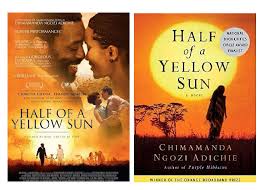
Take the film version of Chimamanda Ngozi Adichie’s Half of a Yellow Sun. For many of us, that book wasn’t just a story; it was an emotional workout. Adichie has a way of making you feel the heat of the sun and the weight of a character’s silence just through her words. When the movie arrived, it certainly looked the part. The sets were grand, the costumes were spot-on, and the actors were world-class. It was a beautiful production that captured the “bigness” of the story. But for some readers, something felt a little thin. A book lets you crawl inside a character’s head, but a movie can only show you their face. While the film was a visual treat, it struggled to capture that deep, quiet ache that made the novel so unforgettable.
The truth is, a movie can never be an exact copy of a book, and maybe it shouldn’t try to be. A director has two hours to tell a story that might have taken you two weeks to read. Things have to be chopped, characters get merged, and subplots often end up on the cutting room floor. When Nollywood takes on a literary giant, the goal shouldn’t be to match every sentence, but to capture the “vibe” of the story. If the movie makes your heart race or your eyes mist up in the same way the book did, then it’s a win, even if a few chapters went missing along the way.
In the end, we shouldn’t look at these movies as replacements for the books we love. Think of them more like a remix of a classic song. It’s the same soul, just with a different beat. Whether the movie “does justice” to the book usually depends on how much we’re willing to let go of our own imagination and enjoy someone else’s vision. And if the movie doesn’t quite hit the mark, the best part is that the book is still sitting right there on the shelf, waiting to be read all over again.
Credit: Leadership