
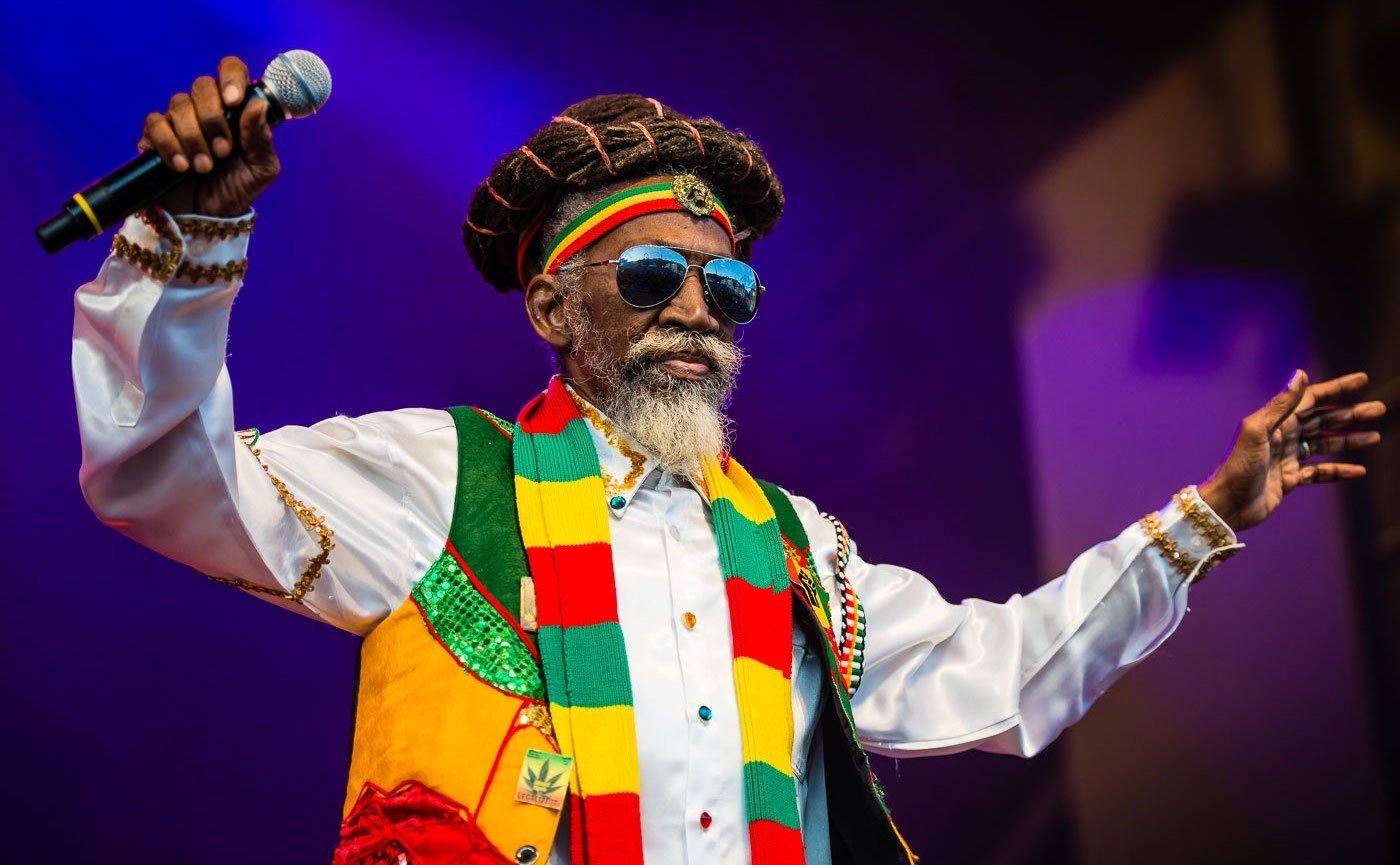
One of reggae’s most important voices, Bunny Wailer, has died at the age of 73.
The musician, from Kingston, Jamaica, was a founding member of The Wailers alongside his childhood friend, Bob Marley.


Together, they achieved international fame with reggae classics like Simmer Down and Stir It Up, before Wailer left to go solo in 1974.


He went on to win three Grammys and was given Jamaica’s Order Of Merit in 2017.
His death was confirmed by manager Maxine Stowe, and Jamaica’s Culture Minister, Olivia Grange.
The cause of death is unknown, but he had been in hospital since having a stroke in July 2020.
Tributes have already poured in for the musician, with fans and fellow musicians describing him as a legend.
“This is one of the lowest moment in the history of our culture,” wrote dancehall artist Shaggy on Facebook. “You have made us proud king. Rest well.”
“Oh man, god bless Bunny Wailer,” wrote Red Hot Chili Peppers bassist, Flea. “What a true rocker and noble man. I love him.”
Andrew Holness, Jamaica’s prime minister, also paid tribute, calling his death “a great loss for Jamaica and for reggae”.
The star, whose real name was Neville O’Riley Livingston, had been the last surviving member of The Wailers, following Bob Marley’s death from cancer in 1981, and Peter Tosh’s murder during a robbery in 1987.
Born on 20 April 10, 1947, Livingston spent his earliest years in the village of Nine Miles, where he was raised by his father, Thaddeus, who ran a grocery store.
That was where he first met Marley, and the toddlers soon became firm friends, making their first music together at Stepney Primary and Junior High School.
Following the death of Marley’s father in 1955, his mother, Cedella, moved in with Livingston’s father. The boys were essentially raised as step-brothers, especially after Cedella and Thaddeus had a daughter together, Pearl.
After moving to Trenchtown in Kingston, they met Peter Tosh and formed a vocal group called The Wailing Wailers – because, Marley said: “We started out crying.”
The area was poor and afflicted by violence. Livingston later remembered building his first guitar from “a bamboo staff, the fine wires from an electric cable and a large sardine can”.
But singer Joe Higgs, aka “the Godfather of Reggae”, lived nearby and took the boys under his wing. Under his tutelage, they refined their sound, adding vocalist Junior Braithwaite and backing singers Beverly Kelso and Cherry Green before shortening their name to The Wailers.
In December 1963, the band entered Coxsone Dodd’s infamous Studio One to record Simmer Down, a song Marley had written calling for peace in the ghettos of Kingston.
Faster and harder than the music The Wailers later became known for, the song was an immediate hit, reaching number one in Jamaica. They followed it up with the original version of Duppy Conqueror, before releasing their debut album The Wailing Wailers, in 1965.
Soon after, the band went on hiatus as Marley got married and moved to the USA, and Livingston served a year in jail for marijuana possession. But they still managed to release 28 singles between 1966 and 1970, before releasing their second album, Soul Rebels.
Their international breakthrough came three years later with Catch A Fire – the first record they made for Chris Blackwell’s Island Records.
The collaboration came about almost by accident. The Wailers had been touring the UK with Johnny Nash – who’d had a hit with a cover of Stir It Up – but found themselves unable to pay for their trip home.
Blackwell offered to sign the band to Island, paying them an advance to cover their air fares and cost of recording an album in Jamaica.
Much to the band’s displeasure, some of the songs were overdubbed to make them more palatable to an international audience.
“I felt the way to break the Wailers was as a black rock act; I wanted some rock elements in there,” Blackwell later told Rolling Stone. “Bunny and Peter didn’t want to leave Jamaica, so Bob came to England when we did the overdubs.”
The album was not a major seller and failed to chart in both the US and UK – but it has become widely recognised as a classic. Rolling Stone magazine recently placed it at number 140 in its list of the 500 greatest albums of all time, writing “the Wailers’ ghetto rage comes across uncut” in songs like Concrete Jungle and Slave Driver.
Commercial success followed with 1973’s Burnin’, which featured classic cuts like I Shot The Sheriff, Small Axe and Get Up, Stand Up.
However, it was to be the Wailers last album to feature the original Wailers line-up.
Tensions already present were exacerbated by Island marketing their albums under the name Bob Marley and The Wailers, and a touring schedule that kept Livingston away from his family.
He eventually left in 1973, saying the touring lifestyle clashed with his Rastafarian beliefs – citing the pressure to eat processed foods and play “freak clubs”. He later said fame was the enemy of creativity.
“Music is based on inspiration and if you’re in an environment where you are up and down, here and there, that’s how your music is going to sound,” Livingston told The Los Angeles Times in 1986.
“People get taken away in getting themselves to be a star and that is a different thing from getting yourself to be a good writer, musician, producer and arranger.”
Free from the band, he began to work on his solo album Blackheart Man, which included classic songs like Dreamland and Fighting Against Conviction, which was inspired by his stint in prison.
He went on to release several acclaimed albums, including 1981’s Rock ‘n’ Groove and 1980s’s Bunny Wailer Sings The Wailers, which saw him revisit some of the band’s classic material.
In the 1990s, he won the Grammy award for best reggae album three times – with each of those records extending and preserving the legacy of Marley and the Wailers: 1991’s Time Will Tell: A Tribute to Bob Marley, 1995’s Crucial! Roots Classics, and the 1997’s all-star Hall of Fame: A Tribute to Bob Marley’s 50th Anniversary.
“I’m satisfied with knowing that I’m serving the purpose of getting reggae music to be where it’s at,” he told the Washington Post in 2006. “I’m proud to be part of that.”
Source – BBC