
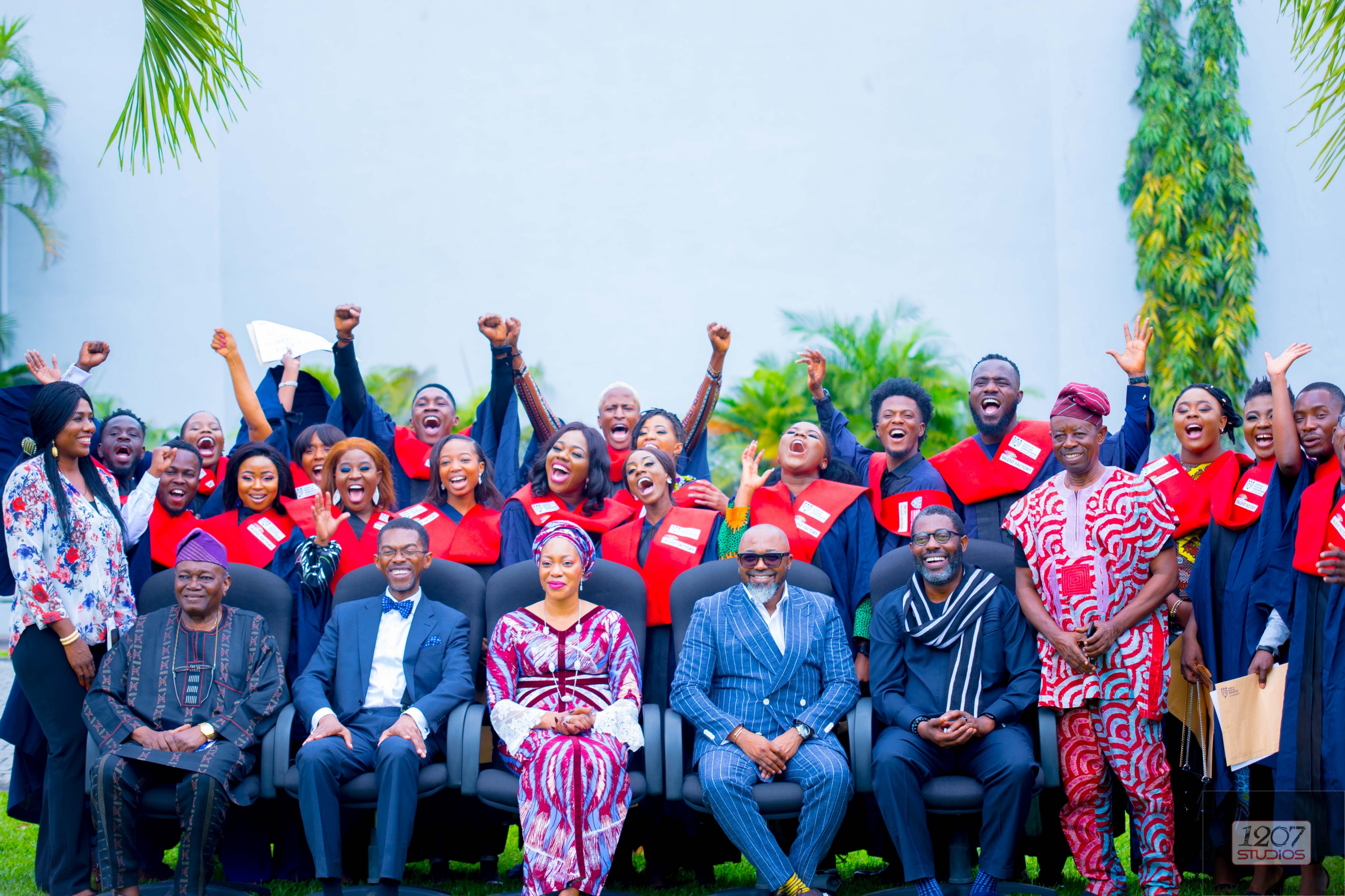
The best thing you can take out of anything is the experience, and the best thing you can get out of that experience are the lessons. My one year at the MTF literally and figuratively changed my life, and it has to do primarily with these lessons.
However, for the lessons to acquire context, I must tell you about the experience. The storyteller in me decided to break this narration into four acts, one prologue, an epilogue, and a surprise.


In case you don’t know what the Multichoice Talent Factory Academy is, it’s easily the most comprehensive 1-year film education you can get in this side of the world. It’s such a big deal because everyone that gets in does so on a scholarship, hence, you have to be really good to get in.

Without further ado, let’s begin.

Prologue: an ignorant thought ignored
My life revolves around three suns — music, filmmaking, and writing — and I always thought I’d get into filmmaking at the age of 40-something after I’d made my mark in the literary and music world.
But as anyone who’s lived long enough on earth knows, things never happen the way you initially planned them. Thankfully for me, this wasn’t one of life’s surprises that left you depressed and in tears, but rather, one that took you on a journey you’d never imagined possible.
Before the MTF came along and swept me off my feet and onto my place on the spaceship headed for the stars, I was working on my second novel and making songs on Fiverr for clients from all over the world.
In those days, I never believed that I was ready to be a filmmaker, and so when the call came informing me that I’d gotten in, a part of me thought it was a bad thing, because now I would have to abandon my life in the calm city of Abuja and head to the insanely crazy Lagos.
Add to that the fact that I’d never left home in almost five years, I was slightly worried.
Why would I worry you may wonder.
Well, I’m a being of routine, and having gotten into a routine that helped me finish one book, and was on the verge of helping me finish another, I wasn’t excited to leave. My plan had been made: I would make it big as a writer first, then use the money to make it as a musician, then use the money from both to make it as a filmmaker. This was an obstruction to the plan I didn’t have time for, and in light of that, I considered not going.
Thankfully, that ignorant thought only lasted for a few seconds every two days. Eventually, I made the move to Lagos to begin my new journey without much excitement, little did I know that it would be the best move I’d ever make.
Act I: Gilbert in wonderland

If first semester could be summed up in a word, it would be ‘wonder’. I don’t know if it had to do with the move, or the new life the MTF had bestowed on us (the chosen 20), but it seemed that every week for the duration of the 3-month long semester brought something that inspired a sense of wonder in me.
First was our reception. I doubt I’d ever forget it. We were lodged in a 5-star hotel for 3 whole days. Imagine me!, in a 5-star hotel in Victoria Island (I sincerely don’t care what the actual ratings are, all I know is that the door had a keycard; the room only came alive when said keycard was placed in a certain slot; and the food was always on a buffet level.)
Then there was wonder at my first film festival experience, which we attended on the status of special guests — a quite uncomfortable experience seeing as I was used to being normal, not special.
This was quickly followed by our first meeting with the then Managing Director of Multichoice, Mr. John Ugbe, who somewhat teased us with what was to come. Now I think about it, they had told us what was coming, the change that was going to take place, but I guess we didn’t believe, or rather, I did not believe. I mean, who could blame me, this was totally unprecedented and I could never have imagined it even if I tried.
After a dazzling opening ceremony, the head-bursting began in earnest and I was thrust into a world of constant intellectual wonders.
By far the best part of first semester were the lectures and talks with the Academy Director. I’ll come to the him later, but for now, let’s talk about the lectures.

Our first class was on emotional intelligence. Yes, emotional intelligence. You could only imagine my amazement at such a relevant and rare topic. To be sure, it wasn’t my first exposure to the concept because I’d read about it in books, but it filled me with wonder and joy all the same, because I’d been to school in Nigeria for over 16 years of my adult life and I’d never had a class that impacted me like that. To be clear, it was a very emotional class, and Dr. Puleng (if you’re reading, hiiihaaa), was absolutely amazing. I think this class set a tone for the whole semester.
There were classes in film financing, production management, pitching, production design, ethics — where I found myself arguing about morality with the lecturer (it’s testatment to the quality of liberality of the education that I wasn’t thrown out, but rather, encouraged to seek true understanding, by both the lecturer, Mr. Tomi Vincent — a fascinating man — and the Academy Director).
If I go over each class and the impact it left, I would exhaust my word-limit for this article and still wouldn’t finish. Take my word for it, there was a lot to wonder at.
Classes lasted for some ten or so weeks, and on came immersion — a whole new world in a whole new world. I got to see the movie world from inside, after having learnt about it in the classroom. I’d never been on a movie set in my life, and there I was, on a TV production with a budget of hundreds of millions. I was in the big leagues, baby. The Ajoche set experience was easily the most memorable. No show of it’s cultural and technological scale had been done before, and so to see what they were doing from up close was a life-changing opportunity. We got to learn directly from the visionary mind of James Omokwe, the show runner.

Immersion lasted four weeks, during which time we interned at other places, including Africa Magic’s Tinsel studio; the set of TV juggernaut, Battleground; and the Supersport studios — where we got to join the outside broadcast teams on major live events that were happening in Lagos at the time.
If first semester could be summed up in another word, it would be fun. You don’t put 20 dangerously creative people in a fancy apartment in Lekki Phase 1, pay them for learning, give them the best handlers, and not get a kickass amount of fun out of the whole experience.
The semester ended on an extreme high at the Multichoice end of year party, where I can still vividly remember dancing shaku shaku with John Ugbe. Imagine small me!
Act II: the story wars

Quite an active act title I know, but follow and you’ll see why.
Where first semester was characterized by wonder, due to the novelty of everything — the house, the life, the promises, the hopes — second semester was characterized, on one hand, by the feeling of new things becoming familiar. As human beings, we can all connect to what that feels like, the sense of loss, the dulling of the glitter. Thankfully, however, second semester was also characterized by a deeper intellectual entry into the craft of filmmaking, as well as a ramping up of the process towards making us the professionals we came here to become.
The classes were now more focused on the craft of filmmaking, and a lot of heavy hitters were employed for the process.
There was Prof. Linus, an extremely delightful man whose depth of knowledge in storytelling was only usurped by the grace of his warm personality — so warm in fact that he got some of us to cry when he was leaving (I shan’t name names, please).
Then there was Prof. Hyginus, who never passed up an opportunity to make us laugh without seeming like he was trying, but also got us to understand a greater deal about documentary filmmaking.
But of all, I’d have to say that my absolute favorite was Bobby Heaney, who took us on a week-long course in multi-camera directing. He was an absolute delight for not only did he know his craft, but also knew how to teach it in ways that made the incredibly challenging beast of directing seem like a pretty simple thing to a little boy like me. (Thank you Bobby, I promise to keep my foreground occupied almost always.)
By the middle of second semester, after he had left, I felt like I was more than ready to take on my first directing role.
While all the intellectually fascinating lectures were going on, the story wars were brewing.
We were going to make two films as our final project, which were to be shot in third semester, and now was the time to work on the stories. We had been split into four groups since first semester — Energetic, Team-players, Agile, and Courageous — and each group was to come up with two stories each that would be pitched to Africa Magic commissioning editors. Four stories would be picked, and two finalists will emerge.

Second semester was when the reality set in that we were on the cusp of doing something that neither of us had imagined we’d do in so short a time, an opportunity to pitch — something many in the industry sought, but only few found. Every team wanted their two stories to be picked.
In my team, when there was a story task, we had a method of having everyone pitch their idea, and then we would vote which one we liked best. The pitch with the highest votes would then be worked on by the whole team. Using this process, we found two stories, and began working. We worked at it for months, and on the day of the pitch, we were ready, we wanted it, all 5 of us — smiling Eddy, powerful Mnena, pretty Salma, friendly Metong, and my little self.
We were led into a different Multichoice office, one we’d never been to before, and there we pitched the hell out of the stories we’d poured pounds of sweat and lots of arguments on. When we were done, we came out and waited for the verdict. Did we do well? Were our stories as good as we thought they were?
Like every good second act, this semester ended on this cliffhanger. We weren’t to know which stories got picked until third semester. Thankfully, we were sent off on another bout of immersion, so we had our minds a bit occupied. This immersion took us to the set of various tv shows, including Brethren and Flatmates, where we interned in a larger capacity than we did in first semester. Holidays came right after, and everyone had only one thing on their mind.
Act III: the painful journey to magic
Like every good third act, the cliffhanger wasn’t sustained for long.
At the beginning of third semester, we got the answer for which four stories had been picked.
Pure elation for me and the rest of the group as our two stories made it to the last four. We kept our fingers crossed for about another week when the final verdict for the last two stories came.
One of our stories, Dreamchaser, was chosen. It is a story about a young girl that abandons her father and their cultural music band in Ibadan, to seek fame in the wild streets of Lagos, only to find that fame demands a high price. Also chosen was Life of Bim, a deeply powerful story about a boy who, due to a tragic accident, is compelled to abandon his love and ambition for football, which results in him growing up to be depressed. He must then seek a path to redemption or risk losing all that he has left. This story was created by team Agile.
The period that immediately followed this moment of elation was the most difficult of my MTF experience. The four teams were dissolved, two new crews of 10 each were created, and the third act began in earnest.
Preproduction involved working out the story and delivering a script. I suppose this was the real story wars, though it was more of a personal experience….or not. I remember now that towards the end of the programme, everyone was more than eager to agree that dealing with people was a very difficult thing. We all had to learn how best to navigate this rough terrain, and I’m sure that we all had to grow because this was the first time we were, in a sense, forced to work through a difficult process to the end. You desire that the story should go one way, another desires something different. How do you resolve that? Throw into that each person’s individual ego and what’s driving their desires and then the complexity begins to compound. Add to that the propensity for human beings to say the wrong things, or miscommunicate, or not listen properly and the complexity approaches maddening heights.
It’s important, so I’ll say it again, dealing with people is an incredibly difficult thing, and it’s made doubly so when you all have a goal you are fighting for.
During this period, I learnt that I was somewhat of an intellectual bully, and believe me, it wasn’t funny figuring it out. I also found that you must not only have good ideas, but also be willing to sell those ideas because what seems obvious to you is not obvious to all.
We fought. Wrote a first draft.
Argued. Wrote a second draft.
Swore. A third draft.
Probably cried. The Fourth draft.
Almost died. Fifth draft.
While playing the role of scriptwriter and fighting multiple battles on the story front, I was also given the role of music supervisor, and was responsible for making the music we were going to use for the film, seeing as our story was about chasing a music dream. Where writing the story had to happen with other people, music supervision had to happen with me alone. This helped balance things as I could run wild with just my creativity. I made solid use of the opportunity and composed and wrote 5 songs, working with three music super-talented producers to make the instrumentals for the songs (Blacknotes, Magical Andy, and Doka).
We went through the whole preproduction process — casting, scripting, budgeting, hiring, etc — by ourselves, and I know that if we didn’t get anything from this programme, we certainly got this. Being in charge of a full-fledged production on someone else’s money, and given the liberty to do it yourself and risk failure so you can gain experience, is a gift many do not get often, and one I’m immensely thankful to Multichoice for bestowing on me.
We all fought, screamed, argued, learnt front it, and in the end, one day before production, we had a story we were all proud of, and there was nothing else to fight for except against the beast of actual production.
I think that by the time production came along, we had all figured out that we had issues with ourselves and had taken the necessary steps to fix those issues because with regards to interpersonal relations, production was a lot smoother. The energy we gained from interpersonal relations was wholly consumed by tremendous physical exertion that took many us to our limits. We went to those limits and pushed through because in the end, both films were shot, and I am looking forward to experiencing the magic we made on graduation day. They are currently in post production and everyone is doing what they can to ensure that the magic is preserved and heightened.
Act IV: the five lessons
Having experienced the slice of this wonderful journey I’ve been able to remember and document, I can now share the lessons I’ve learnt during this process. Almost all the lessons here hinge on the existence of one man, and so I must say a little bit about him before I move on, so please pardon me.
I’m of the believe that if my MTF experience had happened without Femi Odugbemi in it as the Academy Director, I won’t feel as I feel about it now, for I have never met a man like him. For a long time I used to think that there were no people in this country worthy of my looking up to them as mentors, but I was duly surprised after hearing FO speak for a brief length of time. His intentions were noble, his methods were sound, his ego was contained, and his experience and wealth of knowledge was unbridled. As a result of these observations on my path, I paid close attention to anything he said, and luckily for me, I did get a few things.
“You are a Creative Entrepreneur”
Central of FO’s message in first semester was the lesson that we were not just what we had come in as — directors, scriptwriters, editors, sound specialists, etc. — we were creative entrepreneurs, hence, we did not have to wait for the job to come to us, we had the power to go out and we create the jobs from thin air, using only our ideas as starting-off points. He said it so much that it’s not a surprise it’s stuck to us all like glue. Where in first semester we were writers, editors, cinematographers, in third semester a few companies are on the cusp of being born, and some are already on a light jog, preparing for the long run.
“Hope will guide you”
As creatives, and in fact, as humans, we are constantly assaulted by our dreams and ambitions. They call out to us to come and fulfill them. When we want to, though, we can see so clearly why it shouldn’t and most definitely wouldn’t work. We emphasize the negative voices in our head and within our environment, and pay heed to them. Soon enough we see that we’re lazy and without the desire to even attempt that thing we so desperately want. That thing is fear and it holds everyone of us. The antidote to that is hope and it is severely lacking in our society. My one year at MTF helped me to see this a bit more clearly. FO, in many meetings with me, and some with the class, spoke about the ability to hope. He said, “delete all those voices in your head that say you can’t, and listen to the ones that say you can, only one is enough.” I’ve probably said it wrong, but that was the gist of it, hope.
“Courage will deliver you to the dream”
Where hope will guide you to belief and give you the energy to want to do, it is courage that will drive you the rest of the way. When I got into the MTF, I didn’t think I was going to make my first film until I was done with the one year, and even then, it would probably a few months after. One day, FO told me that I had everything else, and all I needed was courage to get me where I wanted to go. Operating on that maxim, I courageously produced and directed my first short film — Wole’s Revenge — towards the end of second semester. I’ve courageously opened a company focused on story consultation and educating more great storytellers. I’m courageously planning to do other things I’d set off for when I was ‘ready’, because I found that most times when we say “I’m not ready”, we’re really saying, “I’m afraid.” Courage will get you past fear and deliver you to the dream.
“Teamwork makes the dream work”
It goes without saying that in an industry of high-collaboration like filmmaking, one must be more than willing to leverage the power of teams if they are to get to their dream destination. Every aspect of the MTF process was designed to reinforce this lesson. Given how useful it is, I think the emphasis wasn’t misplaced. A difficult thing becomes easier when more people work at it. A film, TV show, or company are very difficult things, and only with a dedicated team will you be able to rise to excellence with ease.
When I made my short film, Wole’s Revenge, I experienced it first hand. The art director, Kaka Benson, whom I didn’t know existed two days prior to shoot, came the day before shoot and contributed more to the film’s final beauty than I could have ever envisioned. In my ignorance, I had imagined that I didn’t really need an art director — all I needed to do was put this here and there — but when I came on set on the day of shoot, I had to take my co-producer, friendly Metong aside and thank him for bringing in Kaka.
“A good story is enough, just figure out how to make it and sell it”
Many misconceptions exist about what makes a story or film commercially successful. Many have said the story is not that important, so long as it has the a-listers in spades; while others have said that it needs to be done with a certain ratio of demographic inclusion to ensure success in certain regions. Being primarily a storyteller, I was overjoyed when FO weighed in on the debate with “a good story is enough.” Whether it would benefit from a more diverse cast or a star-studded cast list is a different conversation. All that really needs to be said is that, regardless of what the film possesses, if a good story is not at the heart of it, then it’s useless. Yes, useless. Films are first and foremost, about stories, it’s the only thing the audience wants to experience.
Epilogue: looking to the future
With the explosion of global demand for original African content, the African film industry, particularly Nollywood, finds itself in an interesting period. Our choice is simple, either we make it beyond the level of promise, or we die, suffocated by the mediocrity of our unrefined talent. The only way we make it through this period on the wings of economic and artistic victory is to make better films. The question then becomes, how do we ensure that we make better films?
Some incredible minds had encountered this problem and put some thought to it. After thousands of hours of deliberation and analysis, they saw that the only thing that could guarantee better films were better filmmakers, and it was upon this conclusion that the MTF was formed.
My time at the MTF has been deeply rewarding and I am beyond grateful to fate for making it happen. We came in as the chosen 20, and now I believe that we depart the remoulded 20, for at the heart of it, that’s what the MTF is about, building a better film industry by elevating the mind of the filmmaker.
Hence, any African filmmaker who desires to succeed in this era of unrestrained opportunity should look towards building themselves to be the best versions of themselves, and this goes beyond technological mastery, or mastery of the craft. It’s also about knowing who you really are, about how the human mind works (because, at the end of the day, we are in the business of mind manipulation, and as a result, are unwitting social philosophers), and about how the world works, science, astronomy, anthropology, religion, etc. All this information is available to the filmmaker — either as books, articles, videos, or audiobooks — if they have an internet connection. Always remember, better films are made by better filmmakers.
Post-credits scene: a very brief summary of graduation day

When I wrote this essay, it was still a few weeks to graduation. I didn’t want to mess with what I’d written so I thought this post-credits scene will be best. I mean, how else would you know I’m a huge fan of the Marvel Cinematic Universe?
Exactly.
Anyways, graduation came along and it was the perfect day for me for two reasons:
- I was awarded the NYFA award for best graduating student, and with it came a 2-month fully-paid-for internship to study filmmaking in the New York Film Academy. I’d never been so congratulated in my life.
- The magic (films) we created were screened during the evening soiree at Terra Kulture on graduation day. Guess what? They got standing ovations. Isn’t that the perfect ending to a life-changing story? For me, it was.