
When a Japan Airlines airplane collided with a coast guard aircraft at Tokyo’s Haneda Airport earlier this month, the JAL A350 aircraft was swiftly engulfed in flames and terrifying images of the runway fire spread across social media.
Former Japan Airlines flight attendant and cabin safety officer Mizuki Urano saw the photos of the airplane inferno and “assumed the worst,” expecting “a very big disaster.”


But while five people on the Japan Coast Guard Dash 8 plane were killed in the crash, to Urano’s – and the world’s – surprise, all 379 people on board the JAL aircraft survived.


A phrase was soon being thrown around, both in the media and online: “It’s a miracle.” This thought initially crossed Urano’s mind, but then the former flight attendant reflected and changed her perspective.
“I know the Japan Airlines cabin crew members’ training manuals and training contents, and their concepts for safety and their passion for safety,” Urano tells CNN Travel. “I thought, ‘Oh, this was not a miracle. It’s the natural results of their efforts.’ ”
Across the globe in London, British flight attendant Kris Major watched the JAL collision, and its aftermath, play out. On his next shift with the European carrier he works for, Major and his fellow flight attendant talked about the crash. They were unanimous in their praise for the JAL crew and how they’d seemingly expertly executed their training.
“We were just so proud of how they represented what we do – and demonstrated what we do to a global audience,” Major tells CNN Travel.
It’s easy to view flight attendants as simply there to serve you food and drink, but safety is their primary purpose.
The JAL crash was a “visually dramatic” reminder of what can go wrong in the aviation world, says Major, but also a reminder that “when it does go wrong like that, you can still survive, if you do the right thing.”
Cabin crew hope the JAL runway collision – as well as a recent incident in which part of an Alaska Airlines’ Boeing 737 fuselage blew off mid-flight and passengers were successfully evacuated – will spark a wider conversation about crew and passenger relations and airline safety briefings, as well as increase understanding about the realities of working at 30,000 feet.
Importance of training
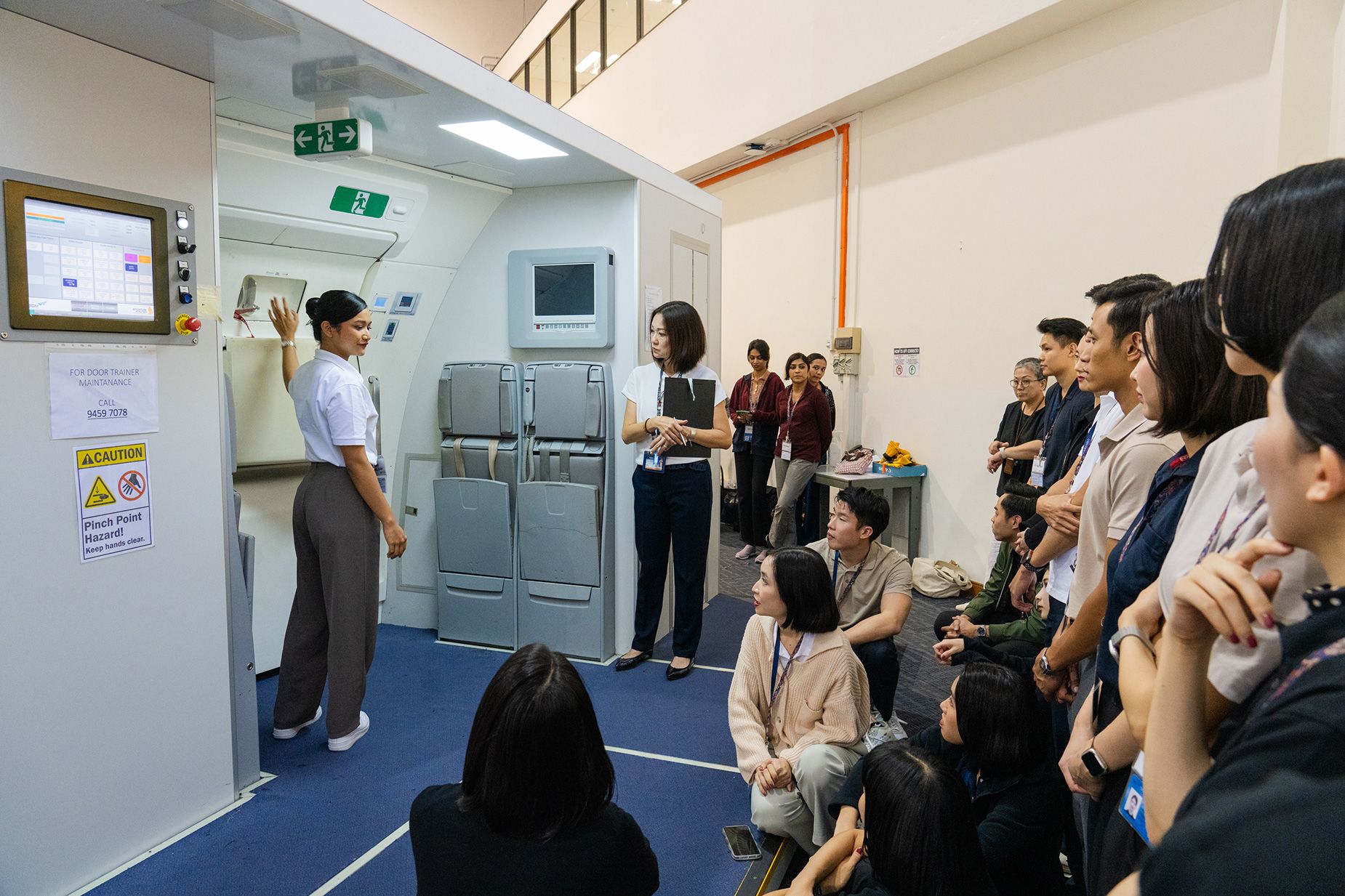
Cabin crew go through rigorous training. Pictured here: Singapore Airlines trainees at the company’s training centre in Singapore.Nicky Loh/Bloomberg/Getty Images
Flight attendants are trained to handle everything from disruptive passengers and potential human trafficking incidents to unexpected aircraft evacuations.
“There aren’t many industries where you go to work in the morning, and spend 15 minutes talking about how on earth you’ll save everybody’s lives and your own,” as Major puts it.
While airplane accidents are rare, flight crews prepare extensively for emergencies.
In Major’s 25 years of experience with European airlines, before every flight he’s met with the rest of the cabin crew for an inflight safety briefing, to talk through a “range of emergencies and drills and how we will cope with emergencies and evacuations.” Major says this is an industrywide standard and usually takes place in the airport crew room or on the aircraft before passengers board.
There aren’t many industries where you go to work in the morning, and spend 15 minutes talking about how on earth you’ll save everybody’s lives and your own.
Kris Major, flight attendant
Later, when crewmembers take their seats for take-off and landing, Major says they are supposed to sit there and “work out how they are going to evacuate the aircraft, every time,” calling this a “critical stage of the flight.”
Major says all cabin crew are trained to handle unexpected emergencies, but he also acknowledges there’s always a difference between the hypothetical and the reality. He praises the JAL crew for their apparent quick thinking under pressure on January 2.
Communicating safety messages
Airlines communicate safety messages via safety cards, videos and demonstrationsnelic/iStock Editorial/Getty Images
As well as learning the logistics of opening emergency exits and disembarking via airplane evacuation slides, flight attendants also learn expert communication skills. Clearly and calmly giving instructions and ensuring that travelers comply is crucial to conducting a successful evacuation.
Urano suggests this communication is easier if passengers are aware that cabin crew are safety professionals.
“I don’t want people to think that the reason for this successful evacuation is because of a Japanese mentality or Japanese culture,” says Urano, referring to the January 2 JAL crash.
“If passengers have (an) image of the cabin crew members as safety professionals from the time of the boarding, maybe the passenger will think that it is better to follow the cabin crew’s instructions in case of emergency, because they see them as safety professionals from the time of boarding.”
The importance of leaving belongings behind
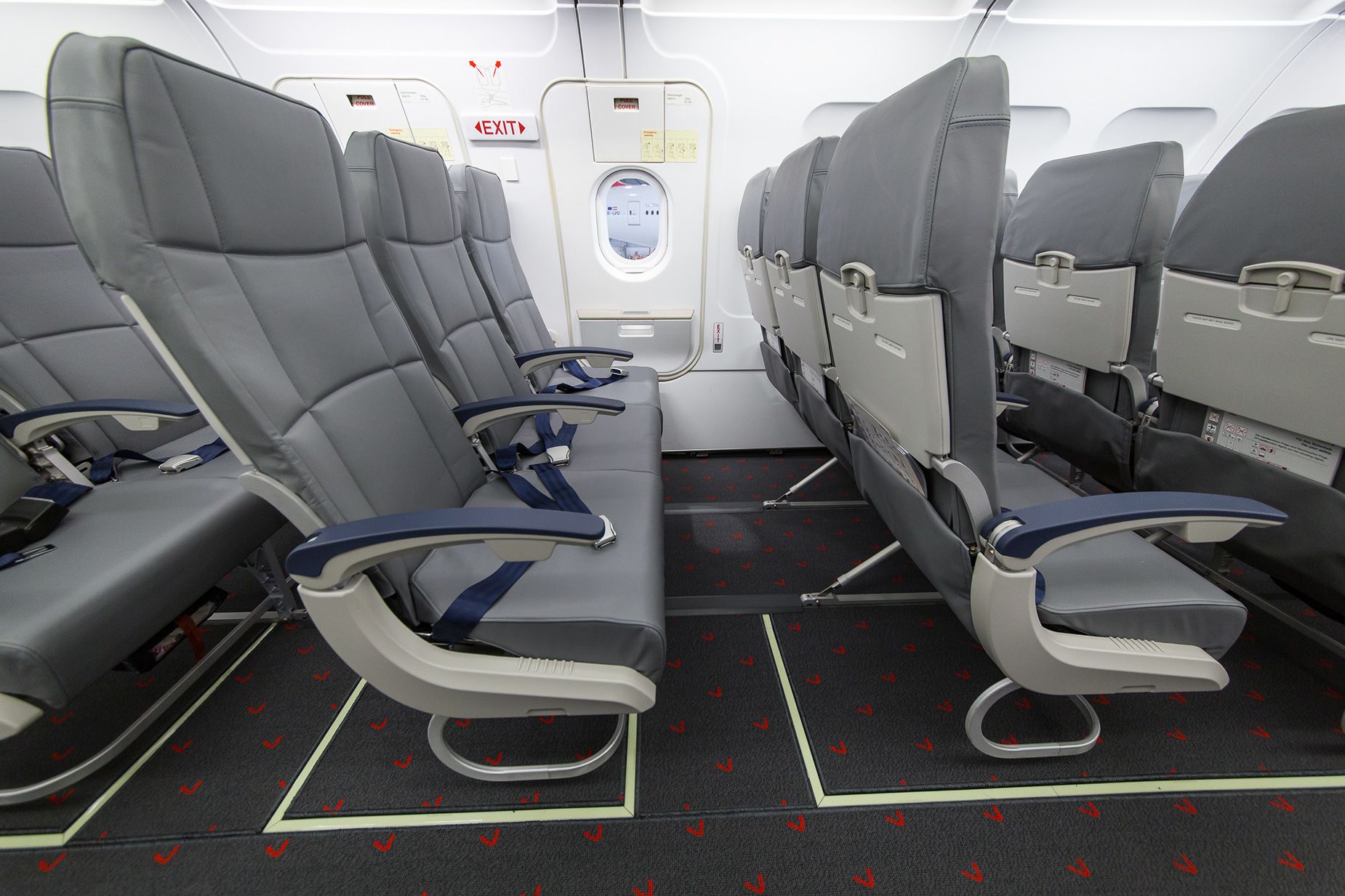
During safety briefings, passengers are told the location of emergency exits and instructed to leave all their belongings behind in the event of an emergency.Wirestock/iStockphoto/Getty Images
For Japan Airlines, the message that cabin crew are safety experts is delivered via the airline’s inflight safety video. The simple, direct video stresses the importance of following cabin crew’s orders and passengers leaving their belongings behind in the case of an evacuation. It shows, via animation, how travelers’ attempts to take wheeled suitcases down the airplane aisle and onto the emergency evacuation slide would delay an evacuation and potentially cause injury.
In the aftermath of the JAL crash, this video was widely praised by social media users because its clear message seemed to have worked. In the videos of people escaping the inferno on January 2, there’s no hand luggage visible.
Japan Airlines premiered this inflight safety video in September 2019, stating that the video “draws on actual incidents that have recently taken place across the airline industry.”
Urano, who was working for Japan Airlines at the time, says the airline decided to focus on the importance of leaving luggage behind after a 2016 JAL accident in which, as she describes, “many passengers took out their baggage and went sliding down the slide and as a result, many passengers got injured after evacuating.”
The new video was also influenced by the International Civil Aviation Organization’s (ICAO) Manual on Information and Instructions for Passenger Safety, published in 2018, a document Major helped put together.
“Evidence from evacuations has shown that significant numbers of passengers attempt to take carry-on baggage with them when evacuating an aircraft — contrary to cabin crew instructions,” reads the ICAO manual.
“Cabin crew commands should include instructions to leave all personal belongings on board; these should be repeated during the evacuation.”
It’s not easy, says Major, to voluntarily give up your bags.
“My diary and my laptop, I would want to take them,” he says. “We know people will want to take their things. It’s their private things – they might have their uncle’s ashes, they could have jewels, money, anything.”
That’s why Major praises Japan Airlines’ safety video for emphasizing the potentially disastrous outcome of taking your luggage with you during an evacuation.
“If you take your bag, people can trip up and die,” says Major, who says Japan Airlines’ video is “really quite blunt about that.”
A safety video that gets it message across
While JAL’s video is now being universally praised, Urano says some of her co-workers weren’t sure about it initially.
“Many of my colleagues were saying, ‘Oh, this video is really, really boring,’” she says, explaining they were comparing the video with other airline safety videos, many of which rely on humor, cameos from famous actors or fast-paced musical numbers.
According to Urano, there was some discussion about developing a Japan Airlines safety video starring Doraemon, the Japanese manga cat. But the airline ultimately went with the animated video.
When the JAL video launched in 2019, Urano got messages from friends at other airlines voicing their praise.
A subsequent International Air Transport Association (IATA) 2019 safety report indirectly commended the video: “It is well known that passengers frequently take carry-on baggage with them during an evacuation, and it is often indicated that airlines should do more to get the message across that this is not acceptable during an emergency,” read the IATA report.
“During 2019, one airline introduced a safety demonstration video that uses cartoon animation to clearly emphasize the importance of following crew instructions and shows some potential consequences of taking carry-on baggage during an evacuation. The message is conveyed in a direct, yet nonconfrontational manner, hopefully leading to correct behavior should an emergency arise.”
Major is also full of praise for Japan Airlines’ video, although he adds that he also believes a humorous approach can work – but if the emphasis shifts too far from the message at hand, key details can be lost.
Urano agrees that there are “multiple ways” to successfully convey the message to passengers, but the key is “not to make the video complicated.”
American flight attendant Rich Henderson tells CNN Travel that, to “some degree,” he’s always “wished that these safety demonstrations were a little bit scarier than they are, just to help put things in perspective of why we do what we do.” Henderson says he spends a large proportion of flight time on his major US airline “arguing” with passengers who won’t put their seat back up and won’t move their baggage from the emergency exit row.
“But at the same time, you obviously have people who are terrified of flying. And I think a reminder that something that could happen is not the best way to calm those people’s nerves,” says Henderson.
“So there really is a fine line between wanting people to be prepared for an emergency, but you also want people to feel comfortable knowing that they can trust that airline to maintain their aircraft and they can trust their pilots in the pilots training and the cabin crews training, to ensure a safe and smooth journey.”
Passenger-crew relations
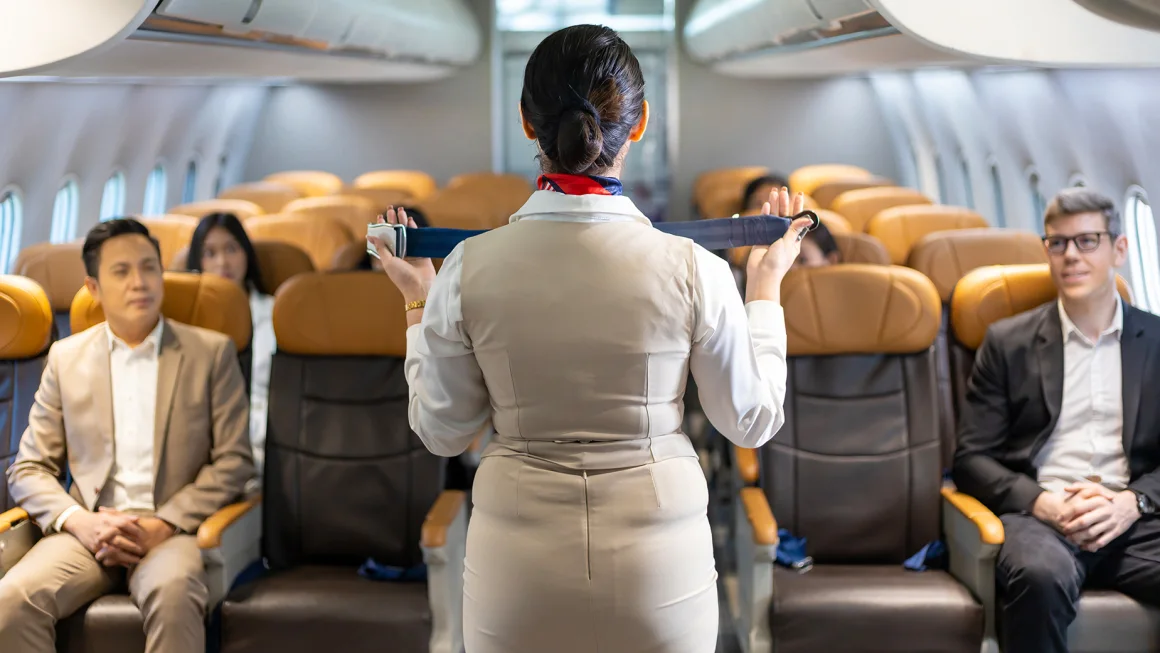
On short-haul flights on smaller aircraft, airlines often rely on entirely manual safety demonstrations led by flight attendants.
No matter how well-trained you are at communicating, you can’t force everyone to pay attention, says Major, who is used to a sea of passengers focusing on handheld devices or averting their eyes during safety briefings.
“You can’t make people do anything,” he says, “Although if people are being distracting – if they’re having loud conversations and stopping other people from listening to it – we’ll shut them up, politely ask them to be quiet.”
Major says manual demonstrations also mean potential for flight attendants to be “ridiculed,” giving the example of “a bunch of lads going on a stag do, cheering at you when you’ve got your life jacket round your neck.”
It’s almost impossible to attract all passengers’ attention during safety related duties.
Mizuki Urano, former flight attendant and cabin safety specialist
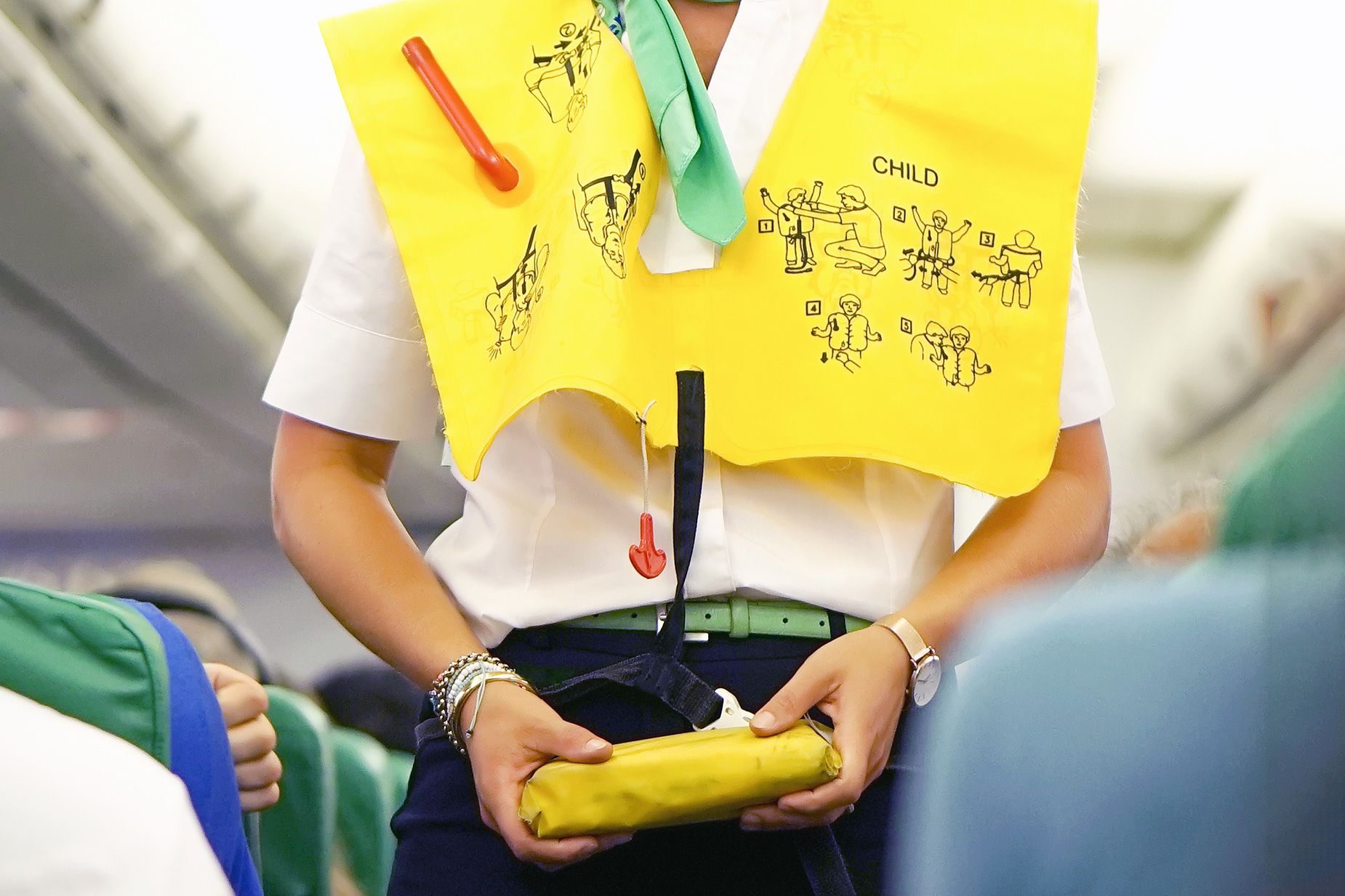
Still, Major adds that there’s a reason flight attendants might keep the life jacket on as they walk through the cabin during final safety checks. No, they’ve not just forgotten to take the jacket off – it’s so passengers can take a closer look at the life jacket in action and see where it’s tied on the waist.
Urano says the difficulties involved in attracting and keeping passengers’ attention is “a very big challenge for the aviation industry.”
“It is almost impossible to attract all passengers’ attention during safety related duties,” she admits.
“That is why educating passengers is really important. We want passengers to be interested in the safety message.”
One idea Urano is in favor of is adding safety-related content into the in-flight entertainment system, so that traveler’s can learn more at any point during their flight. She also suggests safety information could be passed out to passengers while they’re waiting at the gate.
Importance of paying attention
Flight attendants want passengers to pay attention during safety briefings.Igor Vershinsky/iStockphoto/Getty Images
Major reiterates that “the chances of ever being in an event like (the JAL crash) are very, very slim.”
“But we can’t take that chance,” he says. “We have to understand that it could be us today, we can’t be complacent in any way, shape, or form.”
Cabin crew emphasize the importance of tuning into the airline safety demonstrations even if you’ve flown dozens of times before – every aircraft and airline is configured differently, for one.
Henderson says that as cabin crew, he couldn’t be more familiar with airline safety briefings.
“But even as a flight attendant, as the safety demo is going on, I put down my book and my phone, and I pay attention – because then people around me will pay attention too,” he says, noting that usually “everyone starts to collectively just pause for a minute.”
Ultimately Major says it’s important to remember that an airplane is a “wonderfully safe environment, a pleasant experience for most people” but “at the end of the day, you are barrelling about the skies at 500 miles an hour.
“It can, very rarely, go wrong and if it goes wrong, you want to put yourself in the best chance of survival. And that just takes two minutes to watch the safety demonstration and listen to the crew. Just listen to the crew for two minutes.”