
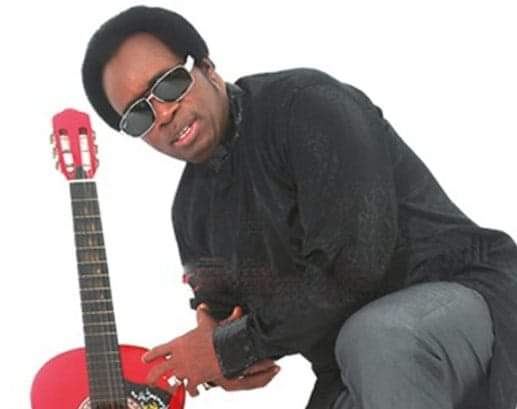
In 1967, Sir Victor Uwaifo’s music, Guitar Boy, was used to herald a military coup in Ghana that failed.
As part of the research I did while producing the acclaimed HIGHLIFE MY LIFE serial documentary, I stumbled on news reports mostly from one CAMERON DUODU in the New African of 26/09/2011, which captured the significance of Victor Uwaifo’s music in the Ghanaian polity and historical linkage to Benin City in Nigeria.


Emeka Obasi captured the details in an article he wrote in the Vanguard earlier this year.


Here are excerpts.
Uwaifo had become popular in Ghana following a second military coup code-named ‘Operation Guitar Boy’ in April 1967. The mutiny by subalterns and other ranks was led by Lt. Samuel Benjamin Arthur.
He was backed by Lt. Moses Yeboah and Second Lieutenant Ebenezer Osei-Poku.
Lt. Arthur marched into Broadcasting House Accra and slotted in Uwaifo’s hit track, Guitar Boy. Satisfied that the coup was a success, the young officer dashed to his girlfriend’s house to find out if she heard his voice on Radio announcing the take-over.
Lt. Yeboah went for the head of Chief of Defence Staff, Lt. Gen. Emmanuel Kwasi Kotoka. It was bloody at the Accra Airport as Kotoka and his orderly, Sgt.Osei Gunshie were gunned down. Elsewhere, Captains A.K. Avevor and C.Y. Borkloe were murdered.
Loyal soldiers put down the mutiny and Arthur and Yeboah were sentenced to death by firing squad. The military tribunal was chaired by Air Marshal Mike Otu. They were executed on May 9, 1967. Osei-Poku got lucky. He was sent to jail for 30 years, with hard labour. Guitar Boy song was banned in Ghana.
Those who banned Guitar Boy apparently did not realise that another of Uwaifo’s tracks, Joromi, had in 1966, won a Gold Disc, the first by an African musician. It did not occur to Gen. Ankrah that he did not know history for he was dealing with a man from his roots.
Ankrah was Ga. The people were said to have left Bini Kingdom during the reign of Oba Udegbedo (1299-1334). Historically, it would be recorded that a Bini man could not help his brother in Accra in 1967.
Okosun, an Esan man, did better when he saved his brother in 1969.
Lt. Arthur died at Labadi Beach, Accra at the Teshie Shooting Range. Lt. Yeboah refused to die. It took so much of firing to silence him. That was 10 years after Samuel Ogbemudia left the Teshie Military Academy. Ogbemudia had a Bini mother.
A few months after Arthur’s death, Ogbemudia was appointed Military Governor of Mid – Western State. Uwaifo continued to enjoy all the respect at home and abroad. He moved to Benin City. And the state benefited from all the attention.
More hit tracks followed. Arabade, Ayubele, Ekassa and the evolution continued to Akwete. Ankrah faded away.
He had to resign on April 2, 1969. The man who allegedly did him in was a Nigerian, Arthur Nzeribe. It was over a Public Relations job that was allegedly tainted with fraud.
It was later revealed that Lt. Arthur was not out to topple those who ousted Kwame Nkrumah but boasted that he wanted to be the first subaltern in Africa to stage a successful coup.
Ten years later in 1979, John Jerry Rawlings, a junior Air Force officer became Head of State of Ghana. The first thing he did was to order the execution of Gen. Akwasi Okatakye Afrifa, one of those who banned Victor Uwaifo’s Guitar Boy. Rawlings frequented Nigeria and was once honoured by Niteshift, an elite hang out in Lagos owned by Ken Caleb Olumehse, an Esan man who continued to play Guitar Boy.