
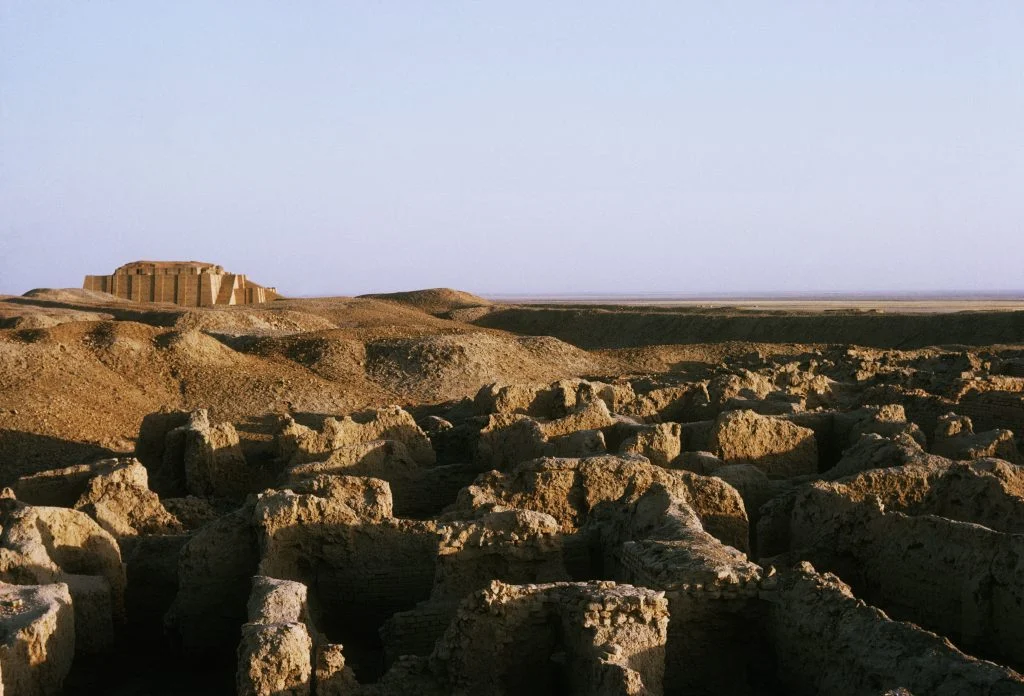
In the sixth century B.C.E., the Neo-Babylonian Empire was in a nostalgic groove. Its king, Nabonidus, led by example: he venerated the customs of the Sumerian ancestors who had ruled some 1,500 years before.
Disused statues were dusted off and returned to temples, aspects of the writing system were changed to mimic ancient Sumerian, and long-crumbled ziggurats were thoroughly restored. As an equivalent, imagine the inhabitants of modern Britain reverting to a runic alphabet and devoting themselves to Odin and Frey.


The empire’s second city, Ur, approached history in a novel and systematic way. Under the guidance of Ennigaldi, Nabonidus’s daughter and the high priestess of the moon god, a museum had been built. Housed inside a temple school for young priestesses, it presented artifacts dating back to the 20th century B.C.E.


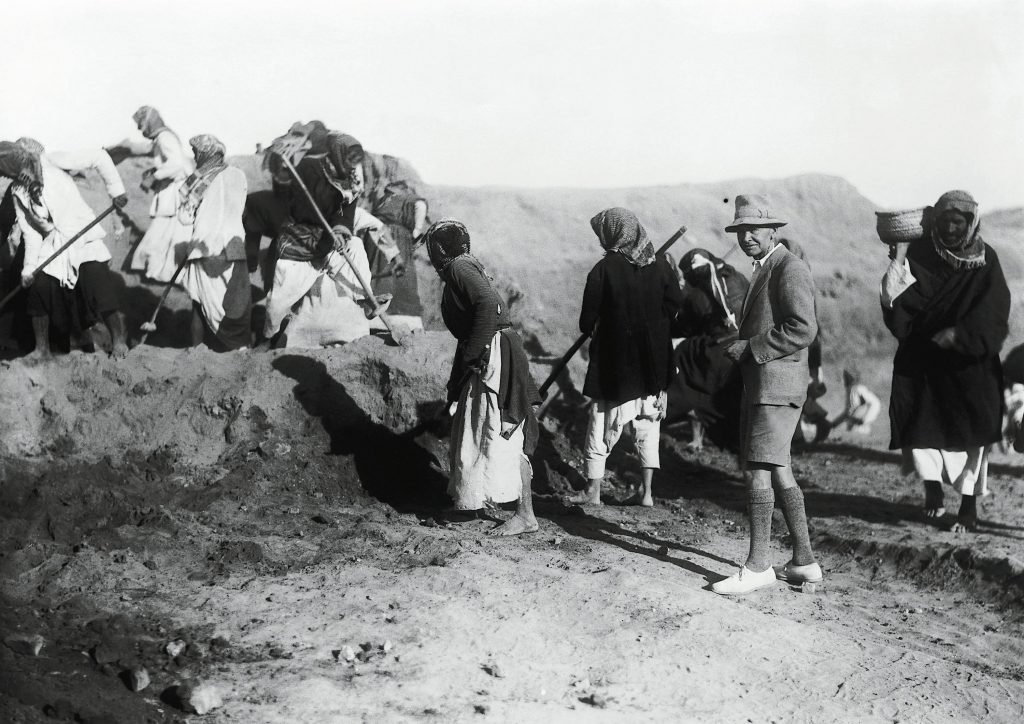
Charles Leonard Woolley during his excavations at Ur 1922-34. Photo: De Agostini via Getty Images.
Discussions of the roots of the modern museum usually cite the cabinets of curiosity created by Northern European collectors beginning in the 16th century. This may be valid, but mankind’s fascination with the past—and its attempt to understand history through excavating, assembling, and labeling—goes back much further. Ennigaldi’s museum dates to around 530 B.C.E. and is considered the world’s earliest.
It was discovered in 1925 by English archaeologist Leonard Woolley during his decade-long excavation of the ancient Mesopotamian city’s palace complex and ziggurat.
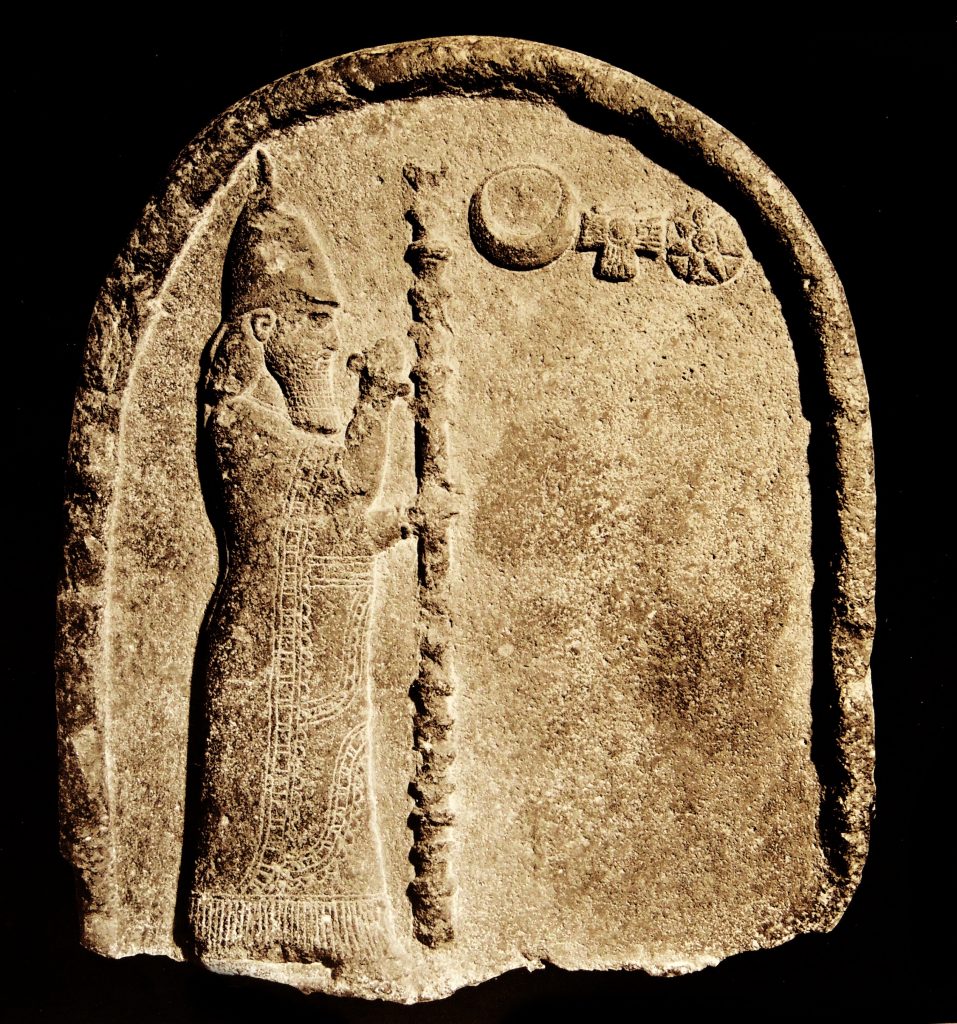
A stele commemorating Nabonidus restoring the temple of Sin in 552 B.C.E. Photo: Universal History Archive/UIG via Getty images.
At first, Woolley was baffled by what he found. He thought he was excavating the last period of Ur’s history, prior to its abandonment owing to changing river patterns. The dozens of objects he uncovered, however, were considerably older than the sixth-century B.C.E. pavement upon which they were sitting.
These artifacts included a black oval stone from 1,400 B.C.E. marked with property rights, known as a kudurru; the statue of a king who had ruled Ur around 2,000 B.C.E; and a clay cone that belonged to a royal building in Larsa in 1,7000 B.C.E.
The clue that indicated that Woolley had uncovered a Neo-Babylonian museum was the presence of artifact labels. Each object corresponded to a small clay cylinder that boasted inscriptions in four languages explaining the object, its context, and its history.
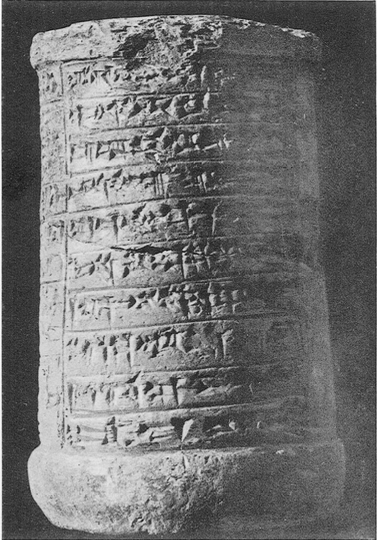
One of the clay museum label’s found by Woolley at Ur. Photo: Plate 29, Ur Excavations: The Neo Bablyonian and Persian Periods.
Woolley explained his logic in his 1954 work “Ur Excavations: The Neo-Babylonian and Persian Periods,” referring to Ennigaldi as “Bel-Shalti-Nanna.”
“The other objects found together in a Neo-Babylonian room are the remains of a museum of local antiquities,” Woolley wrote. “That there should be a collection is altogether in accordance with the antiquarian piety of the age and especially of the ruler Nabonidus.”
Many of the artifacts in the museum had been excavated by either Nabonidus or his daughter—a fact that has resulted in the last king of the Neo-Babylonian Empire being labelled the first archaeologists. They were likely used by Ennigaldi as a resource for teaching her students history.
Alas, Nabonidus’s fixation with the past somewhat doomed the empire. Though praised for sweeping reforms, his religious unorthodoxy alienated him from Babylon’s priests. In 552 B.C.E. he left the capital in the hands of his son Belshazzar and spent a decade in Tayma, an Arabian oasis, where he built a palace and searched for antiquities.
By 539, Cyrus the Great had defeated the empire in battle and entered the gates of Babylon without a fight.
What’s the deal with Leonardo’s harpsichord-viola? Why were Impressionists obsessed with the color purple? Art Bites brings you a surprising fact, lesser-known anecdote, or curious event from art history. These delightful nuggets shed light on the lives of famed artists and decode their practices, while adding new layers of intrigue to celebrated masterpieces.