
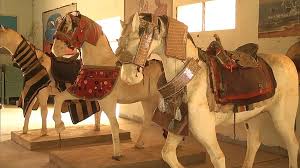
A museum in northern Cameroon highlights the centuries-old use of horses in the region —and the cars that replaced them.
The Demsa Horse Museum is one of northern Cameroon’s most popular attractions. Nestled in the heart of the Lamidat of Gashiga Demsa, the museum welcomes visitors from the north of Cameroon and from all over the world.
Aminatou Nouria is one of a group of students from the regional capital Garoua, about 40km from this border town:
“Since we saw the sign ‘Horse Museum,’ we expected to see a lot of horses, but what we find inside is more than just horses. We discover a whole history of horses and carriages that reflect the transition.”
The museum was founded in 2007 by Lamido Moustapha Moussa and visitors are consistently surprised by the richness and diversity of its collections of ancient artefacts.
They all highlight the centuries-old use of horses in the royal court and the Lamidat.
“Not only did I learn a little about the horse, its importance in the chieftaincy, and all the instruments used with horses to lend a certain air of ceremony and prestige to royalty, but we also got to see the mechanical horse, represented here by vintage vehicles that we’re used to seeing on television,” says Soudi Salé, a museum visitor and resident of Garoua.
Today, with more than 1,200 objects, the museum boasts another unique feature: vintage and collectible vehicles that represent the transition from the traditional use of the horse to modern times.
“So what was needed to attract people from Garoua here, even without a gymkhana? We needed a tourist attraction like this museum,” says Ahmadou Ahidjo, the museum’s director.
“And through the museum, we wanted to perpetuate the tradition, the legacy of the horse. And in the museum, you’ll find both the car and the horse,” he added.
“The connection lies in the power represented by the car, measured by the horse; the connection lies in the evolution of locomotion, where horses were once used and now cars. And then there’s the very value of these cars, which you rediscover because they are collector’s items, cars that are no longer found elsewhere.”
In Demsa Gashiga, this museum preserves the past but it’s also building a new appreciation for the horse.
Every month, the town hosts a gymkhana to remind people that horses remain the essence of this region that borders Nigeria.
Credit: Africa News