
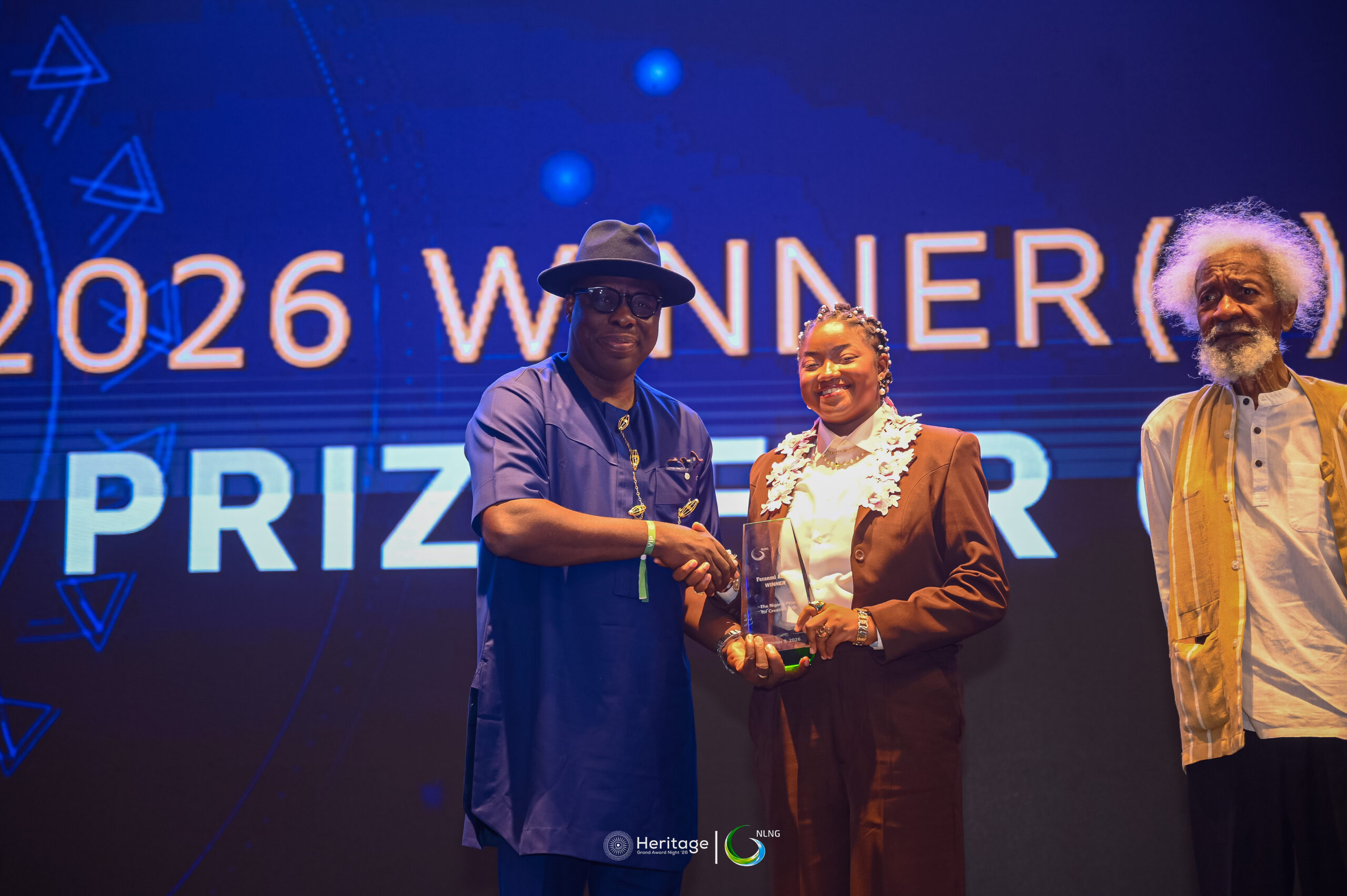
Nigerian poet, lawyer and activist Ogaga Ifowodo has won the 2026 Nigeria Prize for Literature, clinching the prestigious $100,000 award for his poetry collection, Why Does God Need a Gun?
Ifowodo emerged winner of the competition, sponsored by Nigeria LNG Limited (NLNG), after an intensive judging process that narrowed 223 submissions to three finalists.
His collection, which explores religious intolerance, terrorism and political violence, beat two other shortlisted works to the prize: Unbind Me Now by James Ngwu Eze and Flora’s Love Colony by Tares Oburumu.
The announcement marks a significant milestone in Ifowodo’s literary career, which has spanned decades of poetry, scholarship, activism and public engagement.
The 2026 edition of the prize is dedicated to poetry, continuing the award’s annual rotation among poetry, prose fiction, drama and children’s literature.
When the shortlist was announced in August, the Advisory Board of the Nigeria Prize for Literature praised Why Does God Need a Gun? for its exploration of religious and political violence in Nigeria through allegory.
The judges described the collection as a work that depicts religious and political violence in Nigeria, expressed through a rich allegorical style.
They further observed that the collection employs a tripartite structure of body, mind and spirit to interrogate the forces that define the troubled moral and social climate of the contemporary world.
The assessment highlighted the collection’s thematic ambition and its engagement with some of the most disturbing questions confronting society, particularly the relationship between religion, power, violence and the human condition.
The judges assessed the shortlisted books on the strength of their language, form, originality, craftsmanship and lasting literary value.
Professor Akachi Adimora-Ezeigbo, chairperson of the Advisory Board, said the selection of the three finalists from 223 submissions had been a demanding exercise.
She noted that the shortlisted works reflected the depth and quality of contemporary Nigerian poetry, distinguishing themselves through literary excellence, originality and their capacity to engage readers with the world around them.
At the heart of Ifowodo’s collection is a question that challenges the justification of violence in the name of religion.
Why would an all-powerful God need human beings to defend Him with guns, bombs and bloodshed?
Through this question, the poet interrogates religious extremism and the tendency of individuals and groups to cloak violence in the language of faith.
The collection also confronts the trauma of terrorism and abduction, drawing attention to the experiences of victims whose lives have been devastated by violence perpetrated in the name of religion.
One of its central concerns is the plight of children abducted by terrorist groups, including the girls taken from Chibok and Dapchi in northeastern Nigeria.
In discussing the title, Ifowodo has explained that the question emerged from the voice of a poetic persona representing children abducted by Boko Haram, the Islamic State West Africa Province and other terrorist organisations.
The collection challenges the assumption that violence can be justified by religious conviction, asking readers to confront the human cost of fanaticism and the contradictions inherent in claiming to defend an omnipotent God through bloodshed.
Through its allegorical approach, the work moves beyond a straightforward condemnation of terrorism to examine the beliefs, power structures and moral contradictions that sustain religious violence.
Ifowodo is a poet, lawyer, writer, activist and columnist whose literary career has earned him recognition in Nigeria and internationally.
He is the author of six poetry collections, including Homeland and Other Poems, which won the Association of Nigerian Authors Poetry Prize in 1993; Madiba, which won the ANA/Cadbury Poetry Prize in 2003; and The Oil Lamp, which received the ANA/Gabriel Okara Poetry Prize in 2005.
His collection A Good Mourning was also shortlisted for the Nigeria Prize for Literature, while Augusta’s Poodle was longlisted.
Beyond poetry, Ifowodo has written extensively on history, trauma and postcolonial narratives. His scholarly work, History, Trauma, and Healing in Postcolonial Narratives, was published by Palgrave Macmillan in 2013.
He is also a recipient of the Barbara Goldsmith Freedom to Write Award of the American PEN Centre and the Free Word Award from the Netherlands-based Poets of All Nations.
His poetry frequently engages with questions of political freedom, injustice, violence and the consequences of historical trauma.
The Nigeria Prize for Literature, sponsored by NLNG, recognises outstanding literary achievement and seeks to encourage creativity and contribute to the development of Nigerian literature.
With its $100,000 prize, it is among Africa’s most valuable literary awards.
For Ifowodo, the recognition of Why Does God Need a Gun? would affirm the power of poetry to confront uncomfortable truths, question entrenched beliefs and give voice to people whose suffering is often overlooked.
The collection’s engagement with religious violence and the human consequences of extremism places it firmly within Nigeria’s contemporary literary and public conversations.
Through its central question, Ifowodo invites readers to reconsider the relationship between faith and violence and to reflect on the responsibility of human beings to protect life rather than destroy it in the name of God.