
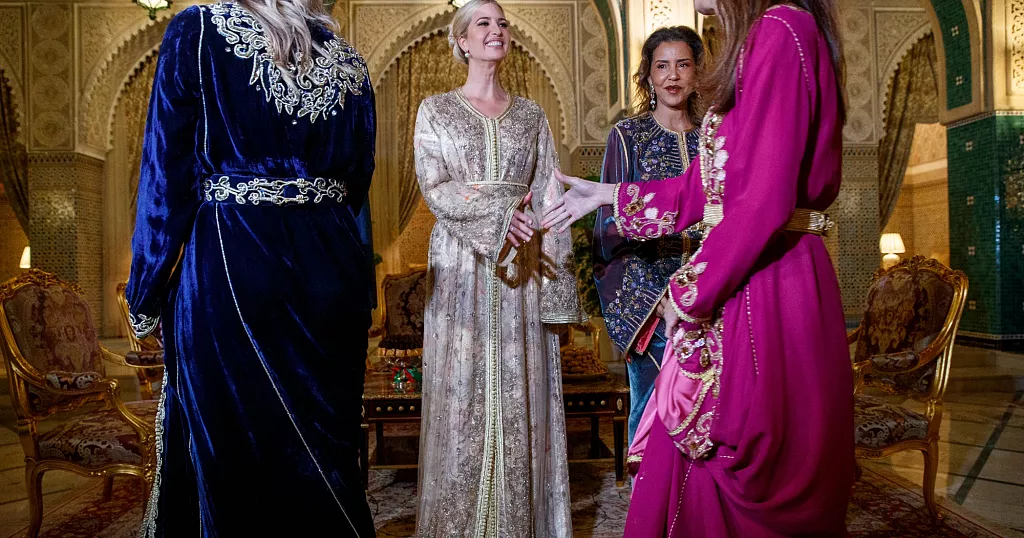
It’s a dress tradition dating back to the 12th century. Now, a collection of Moroccan caftans is on show at the National Finery Museum in the capital, Rabat, showcasing opulent heritage pieces alongside cutting edge modern tunics.
‘Yesterday’s Caftan Seen Today’ includes some dating from the 19th and 20th centuries, reflecting traditions in the use of fabrics and elaborate embroidery.
One piece, known as the Caftan of Oujda, is made of rich burgundy-coloured velvet, embroidered with gold threads.
It dates back to the 19th century, from the city of Oujda, and is crafted with delicate embroidery known as “Quitan”, a traditional style popular in the eastern region.
“The choice was to exhibit rare pieces that represent both Moroccan roots and contemporary influences of designer Fadila El Gadi, but which respect the deep-rooted heritage of Moroccan couture,” said curator, Fatima Zahra Khlifi.
At her workshop in the nearby city of Salé, traditional fashion designer Mounia Tounssi discusses the details of a new caftan with a worker.
One of the first steps is embroidering the fabric.
Credit: African News