
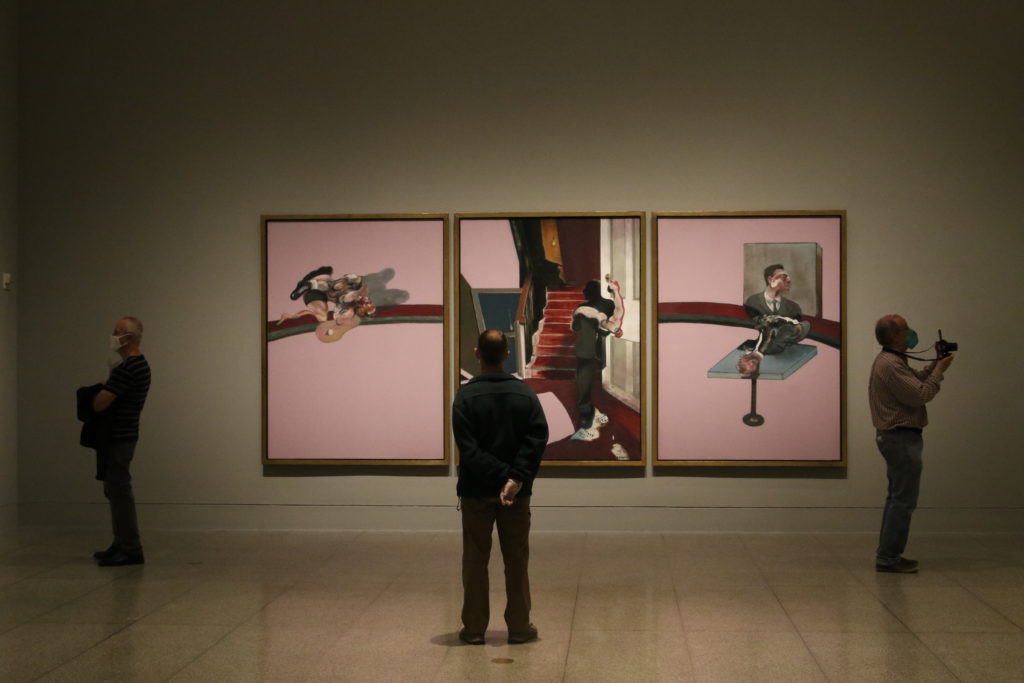
Art museums in the United States are figuring out when and how to reopen. They will be greeted by a changed world. To resume operations successfully, they need not only to minimize the risk of infection by the COVID-19 virus to visitors, volunteers, and staff, but also—critically—to instill confidence in all three parties.
In the absence of coordinated government policy or a commonly recognized and certified standard that a museum can demonstrate that it has met, museum leaders are looking to one another for advice, as well as to peer organizations worldwide, some of which are now reopening. They are seeking to coordinate efforts regionally and locally, in order to pool expertise and procurement power; to instill public confidence; and to encourage the adoption of agreed practices in visitors and audiences. Professional and sectoral bodies, including the AAM, AAMD, ICOM, and CIMAM, have put out initial guidance, as have organizations in the adjacent fields of entertainment, performing arts, retail, sport, and tourism.


That said, each museum has to find its own tailored solution within common frameworks, and in its own time. What all of them share is the need to work through a bewilderingly complex array of operational and policy considerations, and quickly.


There is no one-size-fits-all approach. Each museum’s location and its particular configuration of buildings and physical spaces will call for different design solutions. The financial implications of various opening scenarios are also more or less punitive. City and state regulations differ, making choices—such as whether to require or request that visitors wear a face mask—a judgement call with practical, legal, and, regrettably, even political ramifications. (You can read personal accounts on the reopening process from three different museum directors here.)
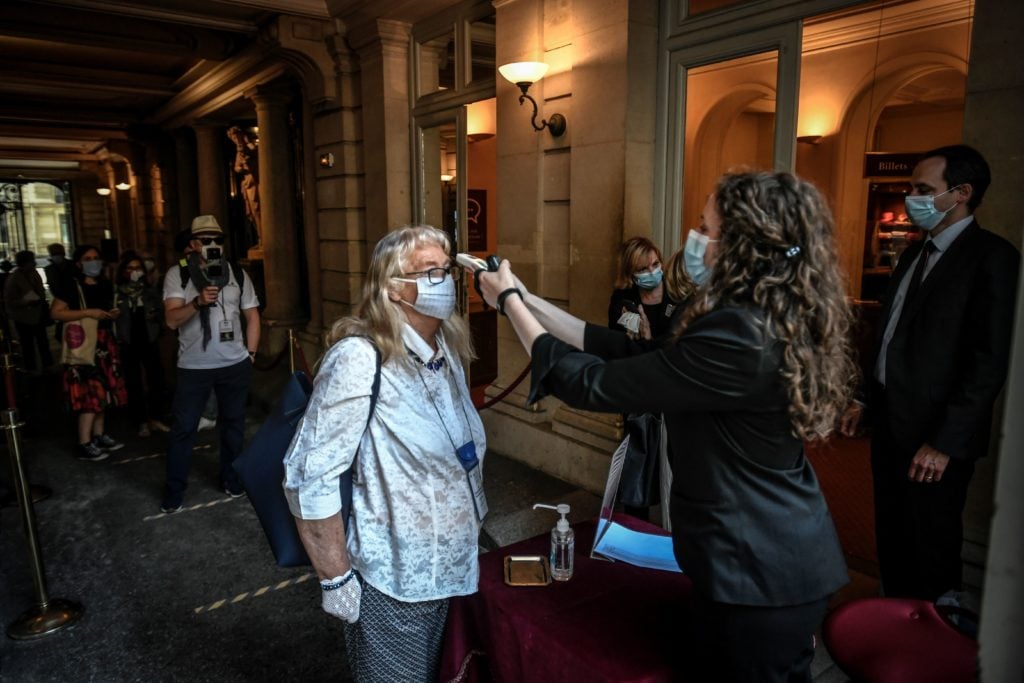
A staff member checks the body temperature of a visitor at the entrance of a Turner exhibition at the Jacquemart-André Museum in Paris on May 26, 2020. Photo by Stephane De Sakutin/AFP via Getty Images.
Technologies for mass temperature testing and measuring social distance are developing, but for the most part not yet operational. The availability of cleaning materials, PPE, protective dividers, and other equipment varies enormously. Every community is in a different place on the trajectory of the pandemic. And at some unknown point—as most believe and all hope—this moment will be behind us, requiring museums to revisit whatever measures have been put in place.
The prospect of reopening under the current circumstances also raises vexing strategic dilemmas. In recent years, museums have developed a sophisticated understanding of the many barriers to entry they inadvertently create, and how to overcome them, in order to pursue agendas informed by equity and social justice. No one wishes to raise additional barriers now. But visiting museums will inevitably become more difficult, not less, for the foreseeable future, and this will affect some visitors more than others. For example, differently abled people are more likely to use high-touch equipment, such as museum-provided wheelchairs or elevators.
We are some way from the “no-touch” museum, in which carefully elaborated protocols and technologies are harnessed to create a frictionless visitor experience. Interior retrofits to accommodate social distancing and more healthy airflows may in due course make for less obtrusive ways of ensuring public health, if the pandemic lasts long enough to require these kinds of structural changes.
So how to navigate this maze? The table below consolidates current thinking about the operational realities of reopening in a way that could be helpful to museum professionals at the sharp end of re-entry, as they try to find their way to a sustainable balance of public access, public safety, and financial and organizational reality. The chart is a work of aggregation rather than invention, and it has no claim to being the first or the final word on how to reopen, let alone when. Rather, it is a snapshot of informed guidance and opinion currently available, drawing on sources in the museum field and outside of it as of May 2020. (For a full list of sources, scroll to the bottom and click to unroll.)
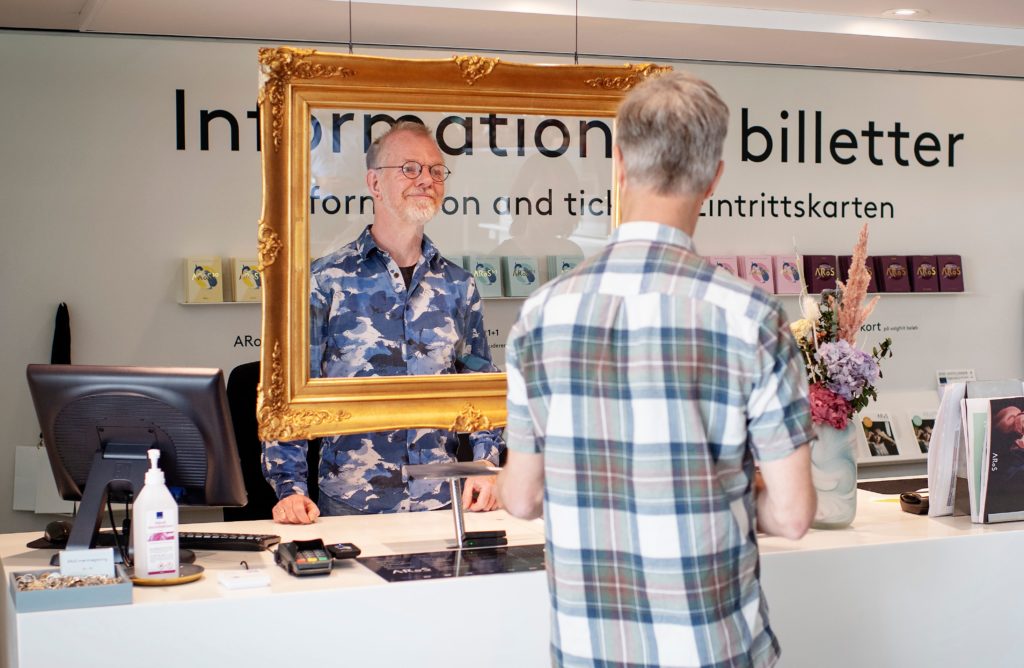
An employee is protected by a shield at the box office of the newly reopened ARoS Museum of Art in Aarhus, Denmark on May 22, 2020. Photo by Bo Amstrup/Ritzau Scanpix/AFP via Getty Images.
The bold headings on the chart list seven broad operational areas that require attention in the context of reopening. The bulleted headings identify specific measures that are candidates for action, generating a checklist intended to help museum managers and staff to establish their relevance. Click on each bulleted header to unroll additional, more detailed planning steps. These are merely prompts for consideration given that the urgency, feasibility, and cost of implementing the measures differs greatly among institutions.
While our aim has been to synthesize the myriad practical considerations museums must tackle to reopen, we are equally aware that reopening is not simply about a set of activities required to welcome back the public. It is also about dealing with the psychological toll that COVID-19 has taken on museum staff. Tactical planning tools like this are by definition operationally focused. At its simplest: museums and their leaders will need to create welcoming conditions for their staff to feel safe and supported if these institutions are to operate.
This exercise was prompted by the overwhelming response to András’s recent Artnet News article, which argued for the importance of art museums’ reopening as soon as practicable and made some initial suggestions as to how they might do so. For helping us collect and organize the material, we wish to thank, in particular, Adam Levine, who took up his position as director of the Toledo Museum of Art in the middle of the lockdown period. We also thank Christine Anagnos (AAMD), Mary Ceruti (Walker Art Center), Kaywin Feldman (National Gallery of Art), and Amy Gilman (Chazen Museum of Art), Sarah Pasti, and Lisa Beth Podos, among others, for their foundational work, observations, and feedback.
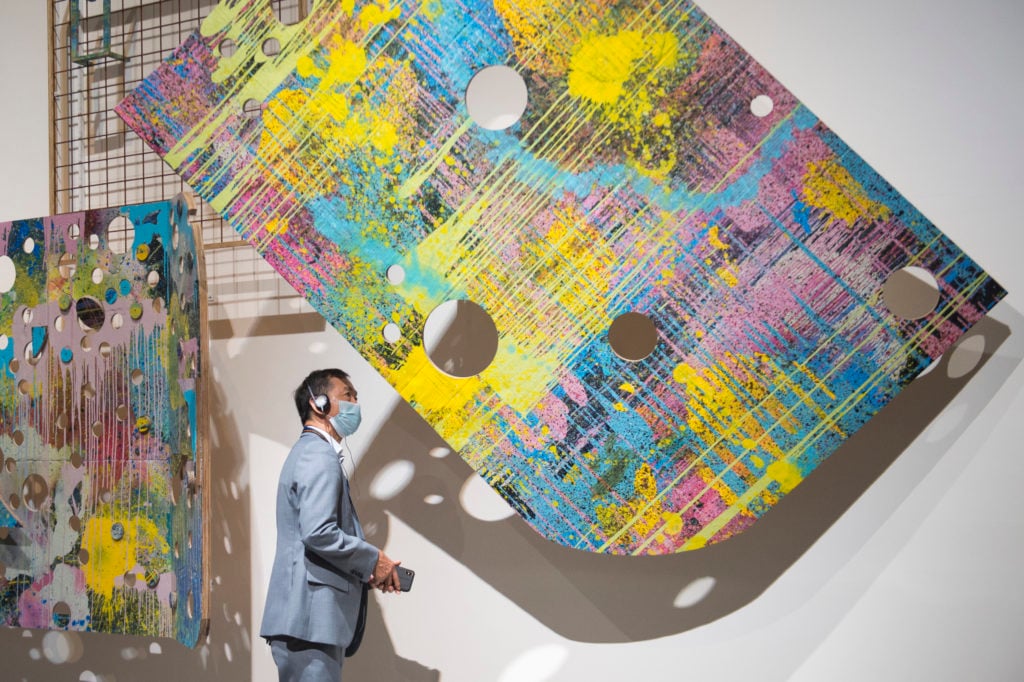
A masked man taking in the display at the Taipei Fine Art Museum on May 22, 2020. Photo by Lin Yen Ting/SOPA Images/LightRocket via Getty Images.
Finally, our planning chart is deliberately silent on the larger, more substantive visioning museums will have to consider after the pandemic. What lies on the other side of reopening is surely articulating a purpose in a changed context, defining appropriate and sustainable programming, and advancing connections and partnerships that inform an institution’s contribution to society. But these ambitions can only be realized if museums are open.
Source: news.artnet.com/