
Adire, a traditional textile from the Yoruba people of Nigeria, holds substantial cultural and artistic value. Recognised for its distinctive indigo-dyed patterns and complex designs, Adire transcends its identity as a mere fabric, representing a deeply-rooted art form within Yoruba culture and fashion. This article delves into the historical beginnings, cultural importance, and the changing function of Adire in both Yoruba tradition and modern style. It examines the techniques and symbolism behind the designs of Adire and how these reflect the values and beliefs of the Yoruba people. The article also discusses the role of Adire in contemporary fashion, highlighting its influence and adaptation to modern clothing styles. Furthermore, it explores the efforts being made to preserve this unique textile art, underscoring its significance not only as a cultural heritage but also as a source of inspiration in the broader world of fashion.
HISTORICAL ORIGINS


‘Adire’, a term that translates to ‘tied and dyed’ in English, is a craft that originated with the Yoruba people in the southwestern part of Nigeria. This textile art form began to develop in the early 20th century, pioneered by women artisans who used resist-dyeing techniques. They employed diverse materials to imprint patterns onto cotton fabrics. The use of indigo, a dye derived from plants, is a hallmark of Adire, lending the fabric its characteristic blue shade. This colour was not chosen randomly; it holds cultural significance, often symbolising depth, stability, and wisdom in Yoruba culture. The process of creating Adire is meticulous and requires a deep understanding of the dyeing techniques, reflecting the skill and artistic insight of the Yoruba people. The evolution of Adire over time demonstrates the adaptability and creativity of these artisans, as they continuously explore new methods and designs while preserving the essence of their traditional art.


CULTURAL SIGNIFICANCE
Adire traditionally served as a medium for storytelling, with every pattern and motif imbued with its own distinct significance and story. The designs frequently depicted themes from Yoruba folklore, aspects of daily life, proverbs, and elements from the natural environment. These textiles transcended their role as mere clothing; they functioned as tools of communication, conveying information about an individual’s social standing, marital status, or even emotional conditions. The intricate motifs in Adire were not just artistic expressions; they were symbolic representations, allowing wearers to express their identity and cultural heritage. Wearing Adire was, therefore, a deeply personal and cultural statement. Furthermore, the creation and interpretation of these patterns required a deep understanding of Yoruba culture and traditions, showcasing the rich tapestry of knowledge and belief systems within the community. As such, Adire textiles played a crucial role in maintaining and transmitting cultural values and stories from one generation to the next, affirming their significance in the cultural landscape of the Yoruba people.

Image Credit: My Native Fashion
PRODUCTION TECHNIQUES
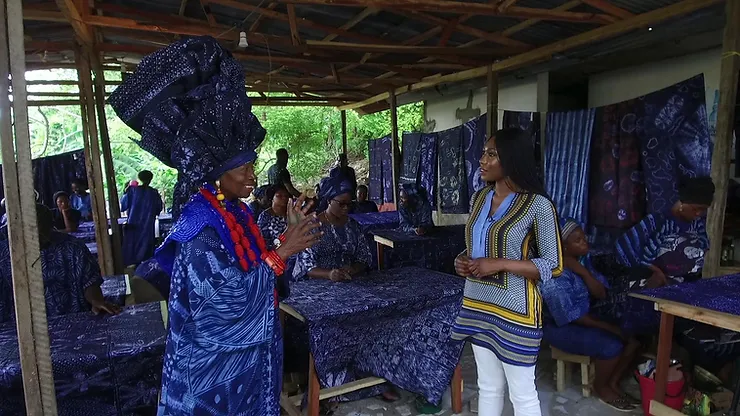
The creation of Adire is characterised by two principal techniques: Adire Eleko and Adire Oniko. In Adire Eleko, artisans apply starch resist to the fabric, meticulously painting complex patterns. This method allows for the creation of highly detailed and precise designs. On the other hand, Adire Oniko employs tying and dyeing methods akin to tie-dye, where parts of the fabric are tightly bound to resist the dye, resulting in distinctive patterns. Both these techniques demand considerable skill, precision, and artistic judgment, showcasing the artisan’s mastery and creativity.
The knowledge and skills involved in producing Adire are traditionally passed down through generations, ensuring the continuity of this unique art form. This transfer of knowledge not only preserves traditional techniques but also fosters a deep connection between the artisans and their cultural heritage. The practice of making Adire, therefore, is not just about creating a textile; it’s about sustaining a legacy of craftsmanship and cultural identity. The continuation of these methods in modern times reflects the enduring relevance and adaptability of Adire, allowing it to maintain its cultural significance while evolving with contemporary artistic trends. Through this intergenerational transmission, Adire remains a vibrant and living tradition within the Yoruba community.
ROLE IN TRADITIONAL AND CONTEMPORARY FASHION
Originally in Yoruba culture, Adire was primarily worn as wrappers and shawls, being a fundamental element of everyday attire. In recent times, there has been a renewed interest in Adire, marking its transition into the sphere of contemporary fashion. Modern designers are creatively incorporating Adire patterns into a diverse range of clothing styles, from everyday casual outfits to high-end fashion, thereby introducing this traditional art to a worldwide audience. This integration of traditional Adire designs into modern fashion highlights the adaptability and enduring appeal of this textile art. It demonstrates how traditional cultural elements can be reimagined to fit contemporary aesthetics while retaining their cultural essence. This blend of old and new not only preserves the heritage of Adire but also showcases its potential to inspire and innovate within the global fashion industry. By embracing and adapting Adire, designers are not only contributing to the preservation of this art form but also celebrating its rich cultural history and opening new avenues for its expression and appreciation. The enduring popularity of Adire in various forms underlines the significance of cultural heritage in shaping modern fashion trends and identities.

Image Credit: Bella Naija
ADIRE IN THE GLOBAL FASHION INDUSTRY
The global fashion industry is increasingly recognising the significance of African textiles, with Adire emerging as a prominent feature. The distinctive patterns and profound cultural background of Adire have captivated international designers, resulting in collaborations that extend its reach to broader markets. This international acclaim serves as more than just an acknowledgement of Yoruba artistic heritage; it also provides a substantial boost to local economies and supports artisan communities. These collaborations are instrumental in showcasing the versatility and beauty of Adire on a global stage, allowing for a fusion of traditional African art with contemporary fashion trends. Such exposure not only enhances the visibility of Yoruba culture but also promotes cultural exchange and appreciation. Additionally, the growing demand for authentic Adire textiles provides economic opportunities for local artisans, helping to preserve these traditional crafts and skills. This global recognition underscores the importance of cultural diversity in fashion and highlights the potential for traditional arts to contribute meaningfully to the global economy. As Adire gains prominence internationally, it becomes a symbol of cultural pride and a catalyst for sustainable development within the artisan communities.
CHALLENGES AND PRESERVATION
While the Adire textile industry enjoys increasing popularity, it is confronted with significant challenges, including the need to maintain traditional crafting methods and competition from mass-produced fabrics. Addressing these challenges is essential to preserve this cultural heritage. Key strategies include providing support to artisan communities, fostering innovation within the bounds of traditional techniques, and engaging in educational efforts to enlighten younger generations about the significance and allure of this traditional art form.
Supporting artisan communities involves not only financial assistance but also ensuring that they have access to markets and platforms to showcase their work. Encouraging innovation within traditional techniques can help make Adire more appealing to contemporary consumers while retaining its cultural essence. Education is vital in instilling appreciation for Adire in younger generations, ensuring the continuity of skills and interest in this art form. By understanding the history and cultural significance of Adire, young people can become ambassadors of their heritage, taking pride in and promoting this unique textile art. These efforts collectively contribute to sustaining the Adire industry, safeguarding it against the threats posed by globalisation and industrialisation. The preservation of Adire is not just about saving a craft; it’s about maintaining a living, breathing part of Yoruba culture and history.

Image Credit: BBC
Overall, Adire is more than a fabric; it is a vibrant expression of Yoruba culture, history, and artistry. Its role in both traditional and contemporary Yoruba fashion highlights the dynamic nature of cultural traditions and their ability to adapt and thrive in a changing world. As Adire continues to make its mark in the global fashion scene, it carries with it the rich tapestry of Yoruba history, telling the stories of a people through the language of textile art.