
HEW LOCKE: THE PROCESSION 140 life-size figures make up “The Procession,” British artist Hew Locke’s sprawling, carnival-esque installation commissioned by the Tate Britain in 2022. It lands at the ICA’s summer-seasonal Watershed this month to a site simpatico with the themes Locke explored in its original making:Notions of colonialism and the inequities of global exchange between Europe and the Carribbean are as present right here as they are across the pond. Perched on the edge of Boston Harbor, a historic Colonial port with its own fraught histories of triangular trade and the movement of enslaved people, it should fit seamlessly, though an ocean away. May 23-Sept. 2. ICA Watershed, 25 Harbor Shore Drive, 617-478-3100, www.icaboston.org.
HYMAN BLOOM: LANDSCAPES OF THE MIND Bloom was the foremost of the Boston Expressionists (and, if you believe folks like Jackson Pollock and Willem de Kooning, “the first Abstract Expressionist,” as they told Yale University professor Bernard Chaet in a 1954 interview, as high a complement as they could pay him). But fame never really arrived for Bloom, who died in 2009, though an exhilarating posthumous survey at the MFA in 2019 made a good case for it. Building on that is this show, drawings of the primal, unspoiled wilderness he found near Lubec, Maine, that recall his visceral depictions of the human body in various states of dissection and decay. Bloom saw in death and rot not trauma, but transcendence, a reversal that shakes the eye and staggers the mind. May 25-Dec. 1. Museum of Fine Arts Boston, 425 Huntington Ave., 617-267-9300, www.mfa.org.


MAGWINTEGWAK: A LEGACY OF PENOBSCOT BASKETRY The basket-making tradition of the four tribes that make up the Wabanaki nations in Maine — Passamaquoddy, Penobscot, Maliseet, and Micmac — stretches back thousands of years, making it one of the oldest continuous art forms anywhere in the world. But its contemporary iterations are having a very modern moment: Witness the star treatment afforded to Passamaquoddy weaver Jeremy Frey, whose solo survey is the Portland Museum of Art’s marquee summer offering. Alongside it is this exhibition, which chronicles the tireless advocacy and preservation efforts of Penobscot basketmaker Robert Anderson, whose shop on Lincolnville Beach was a hub of Wabanaki craft for more than 70 years. Works included range from the early 20th century to the present day, and show an ever-evolving practice still thriving with innovation in the current moment. May 25-Jan. 5. Farnsworth Museum of American Art, 16 Museum St., Rockland, Maine, 207-596-6457, www.farnsworthmuseum.org.


ON CHRISTOPHER STREET: TRANSGENDER PORTRAITS BY MARK SELIGER Seliger, a renowned celebrity portrait photographer for magazines like Vanity Fair and GQ, ran a personal side project from 2013 to 2016, taking street portraits of people on Christopher Street in Manhattan’s West Village. A historic epicenter of the American gay rights movement, the neighborhood remains a hub of gay life in America. The Stonewall Inn, a gay bar that was the site of a 1969 uprising against police raids, considered by many to be the foundation of the modern LGBTQ+ movement, is at 53 Christopher. Seliger’s street portraits evolved into a larger documentary project about contemporary LGBTQ+ culture. This show will include 32 of those portraits, as well as a film and responses and exhibitions from the local LGBTQ+ community. June 13-Sept. 8. Isabella Stewart Gardner Museum, 25 Evans Way, 617-566-1401, www.gardnermuseum.org.

GUILLAUME LETHIÈRE Though Lethière was as well regarded in 18th- and 19th-century France as his now-iconic peers like Jacques-Louis David, his renown has faded in the ensuing centuries to leave him all but forgotten. This summer, The Clark Art Institute, in partnership with the Louvre, revives Lethière’s remarkable story and re-situates it in context: The artist, whose father was a wealthy plantation owner in the French colony of Guadeloupe, and whose mother had been enslaved there, moved to Paris as a teen and soon after shot to fame as a painter of the rich and famous. The exhibition revisits that work, but also his experience as a mixed-race Caribbean transplant in the upheavals of pre-Revolutionary France. June 15-Oct. 14. The Clark Art Institute, 225 South St., Williamstown, 413-458-2303, www.clarkart.edu.
IMAGINE VAN GOGH In a crowded field of “immersive” experiences of the art of Vincent van Gogh — at one point in 2021, there were three video-projected Van Gogh extravaganzas happening in the city at the same time — one stood out, mostly for not being a horrendously tacky perversion of the artist’s work. Good news: This is the one. And while I’m still not a believer in the format, I can allow that “Imagine Van Gogh,” with its simple, sky-high projections of details of famous paintings, is as elegant an iteration of such a thing as you’ll find. June 21-Aug. 30. SOWA Power Station, 530 Harrison Ave., 866-524-1914, www.imagine-vangogh.com.

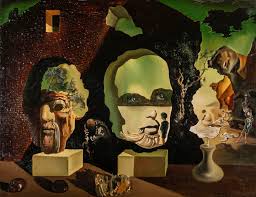
DALI: DISRUPTION AND DEVOTION This is truly a display of the sacred and the profane: Salvador Dali, the outlandish, theatrical Surrealist who more than any of his peers became a pop-culture hit, is the profane; while the MFA’s collection of classical devotional painting by the likes of El Greco, Orazio Gentileschi, and Velázquez provides the sacred. The point of the pairing, though, is to acknowledge the rift as not so wide as it may appear. Dali, showy and bombastic as he was, was deeply influenced by European masters of the Renaissance onward, which this show hopes to reveal. July 6-Dec. 1. Museum of Fine Arts Boston, 425 Huntington Ave., 617-267-9300, www.mfa.org.
EDGAR DEGAS: MULTI-MEDIA ARTIST IN THE AGE OF IMPRESSIONISM Timed to coincide with the 150th anniversary of the first-ever Impressionist Exhibition in 1874 in Paris, this show highlights Degas’s experimental urge, most prominent in the exhilarating immediacy of his works on paper. Working with pastel, graphite, charcoal, and watercolor, Degas was a relentless innovator, as this show means to explore. July 13-Oct. 6. The Clark Art Institute, 225 South St., Williamstown, 413-458-2303, www.clarkart.edu.

TOMASHI JACKSON: ACROSS THE UNIVERSE A traveling midcareer survey of the work of Cambridge-based Jackson, this show is a deep dive into nearly a decade of her vibrantly layered prints and paintings whose colorful, textural allure both masks and reveals the artist’s unwavering commitment to activism and social justice. July 30-Dec. 1. Tufts University Art Galleries, 40 Talbot Ave., Medford, 617-627-3518, artgalleries.tufts.edu.
STEVE LOCKE: THE FIRE NEXT TIME Locke is likely best-known to Boston audiences as the artist who proposed — and had approved — a memorial to victims of the slave trade, embedded in the cobblestones outside Faneuil Hall, only to withdraw it amid a firestorm of public complaint, most notably from the local chapter of the NAACP. But Locke’s work has always drawn on the history of American injustice, whether racial or otherwise, and “the fire next time,” which takes its title from James Baldwin’s book, published in 1963 at the peak of the civil rights movement, is no exception. This exhibition amalgamates recent works, including paintings, drawings, and sculpture, that deal with such subjects as police brutality, mass murderers, and the wrongfully accused. Opens Aug. 3. Massachusetts Museum of Contemporary Art, 1040 Mass MoCA Way, North Adams, 413-662-2111, www.massmoca.org.