
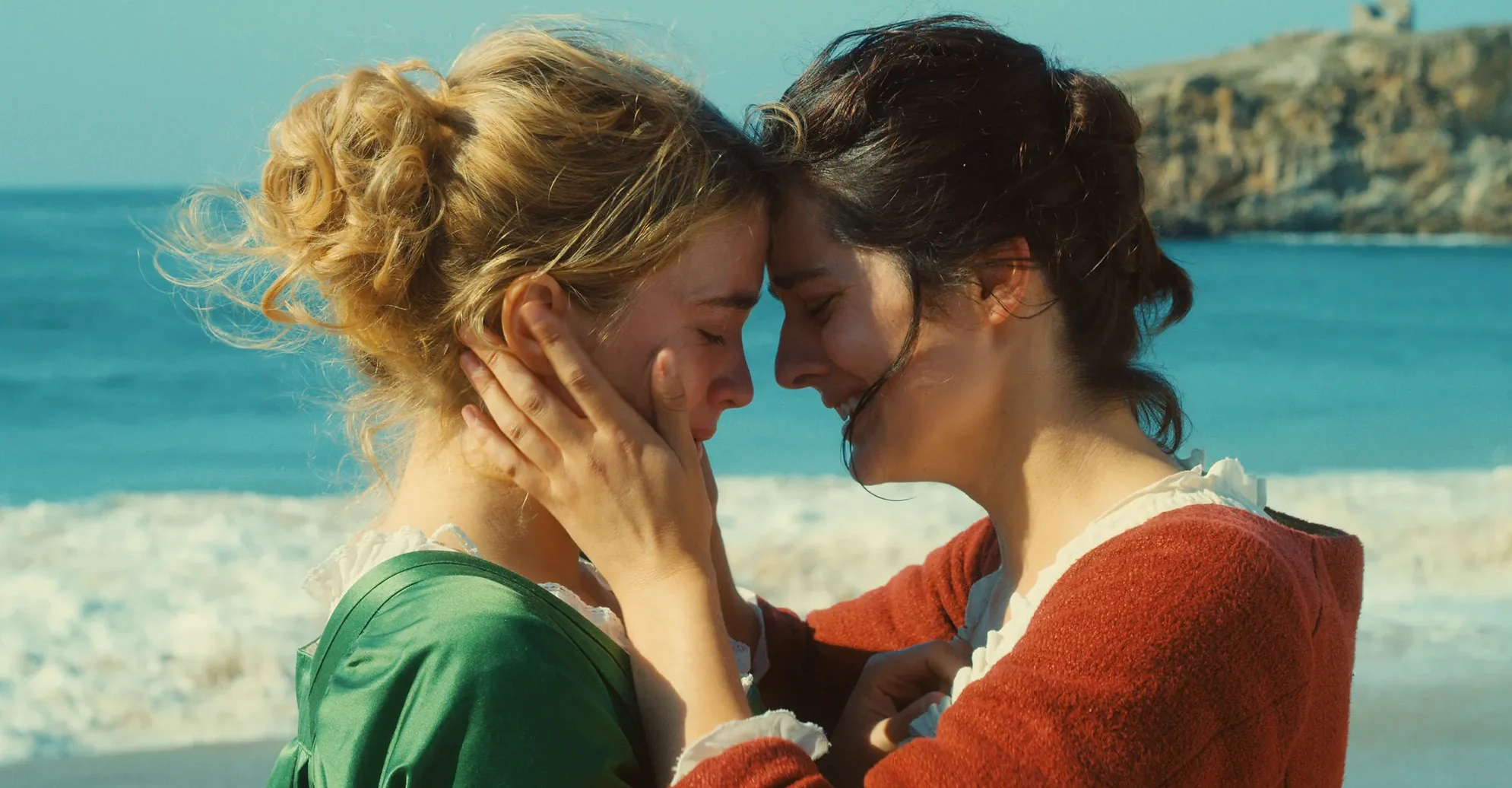
If you’re the fastidious sort who cares about historical accuracy, then you probably aren’t the right audience for Don’t Want You Like A Best Friend. Billed as “a swoon-worthy debut queer Victorian romance”, US author Emma Alban brings us the touching story of Gwen and Beth: two blushing debutantes on the London marriage market who eschew the ghastly aristo males all around them and fall for each other instead, eventually managing to rekindle an old romance between their respective single parents as well. Publishers are calling it — perfectly accurately — “the lesbian Bridgerton/Parent Trap you never knew you needed”.
In truth, though, this book makes Bridgerton look like the result of years of painstaking research by Hilary Mantel. The ostensible setting for the romance is mid-Victorian England. Gloomy gothic is out, and poppin’ pastel dresses and splendidly lush trellises are in. Characters’ surnames sound as if they are being mumbled by a drunk or spoken underwater. Over here, lurking in the shrubbery, are Lady Ashmond and Viscount Demeroven; over there, guzzling all the finger sandwiches, are the Lords Havenfort, Prous, Frightan, Thorton, and Psoris. Occasional references to “the ton” and the desirability of playing the “pianoforte” hint at the Regency period, but mainly you know you are in Victorian times because the hooped dresses are voluminous, the maidservants are cheeky but devoted, and strapping young men are always chucking muddy rugby balls around when they aren’t playing croquet. And in case you’re still in any doubt, the 1857 Matrimonial Causes Act — a real-life parliamentary bill enabling secular divorce for the first time — features as an unlikely plot device.
In every other way though, the dominant idiom is 2000s Californian. In Charlotte Brontë’s roughly contemporaneous fictional world of Villette, Lucy says things like: “Some lives are thus blessed: it is God’s will: it is the attesting trace and lingering evidence of Eden.” Yet in this version of the mid-19th century, younger characters have somehow mastered Friends-style ironic repartee. “I don’t know about you,” says an august lady character at one point, “but I think I sweat my body weight on that walk.” Gwen and her rascally father tease and flirt with each other to an extent which cries out for a family therapist’s intervention. The cook and the maid have been having an affair for years. And Beth’s liberal mother just wants her gay daughter to be happy.
It’s not new for those writing for teen audiences to plunder the classics for inspiration — in the Nineties, Clueless smartly reworked Austen’s Emma by setting it in high school, and 10 Things I Hate About You retold The Taming of the Shrew — but it is relatively new to “queer them up”, as the parlance now goes. Alongside DWYLABF, we have recently been treated to Manslaughter Park, a reimagining of Mansfield Park “as a queer romance and a murder mystery”, and Emmet, a “gender-bent” retelling of Emma as a gay man. And soon to be published in the UK is Most Ardently by Gabe Cole Novoa, whose blurb tells us that its protagonist Oliver Bennet feels trapped: “Not just by the endless corsets, petticoats and skirts he’s forced to wear on a daily basis, but also by society’s expectations. The world — and the vast majority of his family and friends — think Oliver is a girl named Elizabeth.” Luckily for Oliver, though, along comes “a sweet, intelligent boy with a warm heart” called Darcy. Suffice it to say I doubt that any of these titles will appear on Florida school district reading lists anytime soon.
Though they superficially might look similar, these creative endeavours should not be confused with established academic attempts to “queer” literature from the past. A staple of would-be edgelords in the academic humanities for decades, the hypothesis goes that, whenever a repressed author of yore such as Austen or one of the Brontës wished to represent same-sex desire to her readers, she was thwarted by nasty heteropatriarchy. Accordingly, she had to create secretly “queer-coded” characters or images instead, hoping against hope that, centuries hence, some Gender Studies major would uncover the truth. And so, via the medium of heavily meaningful paragraphs about a woman’s archery skills, the sensory delights of hyacinths or the impenetrability of walled gardens, otherwise conservative authors supposedly indicated the presence of homosexuality even as they described deeply traditional social arrangements of the time.
Indeed, these days, attempts to find secret signs of homosexuality in great works of fiction from the past are so ubiquitous and unshocking that one wonders whether some kind of alternative academic practice should be introduced instead, whereby explicitly homosexual texts are trawled for their subversively heteronormative content. And in fact, Don’t Want You Like A Best Friend would be a good candidate. It’s basically a traditional marriage plot but with a couple of twists. According to scholar Talia Shaffer, Victorian literature offers at least two competing ideals of marriage: the ideal of romantic marriage, reliant on passion and sexual intensity, versus the “marriage of rational esteem”, predicated on trust, familiarity and shared family ties. Gwen and Beth seem to achieve both: madly excited by each other, but also exhibiting levels of friendship and mutual understanding impossible to reach with the men around them.
Being newly published it’s unclear how this book will fare on the market, but what is clear is that — with or without accompanying pseudo-historical paraphernalia, and whether the protagonists are girls or boys — same-sex romance is now a very successful YA genre. And, perhaps unsurprisingly, it is particularly popular among young women, whether they are emerging lesbians, bisexuals or straights. For, ignoring their modern trappings, at the heart of most such books is something rather old-fashioned and none the worse for it: sweetly passionate love stories.
Many adolescent girls adore the idea of romantic intimacy between two young people, and their adolescence is probably the last time society will allow them to indulge in the illusion of it. Later on, progressive society will tell them they should dilute any residual emotional intensity, quash their jealousy and possessiveness, date promiscuously, and cut off searing feelings wherever possible. Hundreds of magazine articles will promote polyamory to them as a cool, antiseptic modern ideal: the complete antithesis of a teenage girl’s obsessive focus on one person at a time. But for now at least, they are socially permitted to let their burning hearts run away with them.
For the most part, these girls don’t want sexual pleasure simply for its own sake — they can barely understand what that might mean. What they long for and love to read about is passionately intense intimacy. They want a meeting of minds as well as bodies; a merging of twin souls in order to face the rest of the world together as one. The very otherness of the opposite sex in romantic fiction — his essential differences — can seem like an impediment to the female reader’s imagination in this regard, and the spectre of reproductive consequences can also get in the way. But where the lovers are both female (or both male), ecstatic union is so much easier to picture. Everything is just that bit more symmetrical.
In DWYLABF, the main characters exemplify this ideal very well, though it is far from its only manifestation. Another recent example is the graphic novel Heartstopper, written by a woman and now also turned into a film. In Japan, there is a hugely popular genre of fiction and fan-fiction called Yaoui or “boy love”, featuring homoerotic stories about male couples, written by women for women. Even where the object of teenage female lust is actually a person of the opposite sex, he is often relatively feminine in his presentation — with K-Pop boy bands sometimes taking this to a surgically enhanced extreme.
Arguably, women writing about gay male relationships are typically about as accurate as men making films about lesbians; with the women falsely inflating the role of longing looks and wildly romantic feelings, and the men falsely inflating the role of unfeasibly pornographic sex. Female authors writing about female relationships are probably on safer ground. But either way — and as with wanton carelessness about historical details — it won’t matter one jot to the average young fan of same-sex romances. They are only in it for the swoons.
There’s a deep irony here, I think. The more that the sexes are set up by contemporary society to do battle with one another, and the more all of us are encouraged to disassociate emotionally from strong romantic feeling, the more likely it is that same-sex relationships — as depicted in fiction, at least — will look like a paradigm of intimacy. When Right-wing politicians such as DeSantis or Orbán try to ban books like DWYLABF, they presumably think they are protecting young people from something subversive and corrupting. The reality, however, is arguably the opposite: they are removing a quaintly archaic vision of how close, emotionally committed, and sweetly faithful a human sexual relationship can still be.