
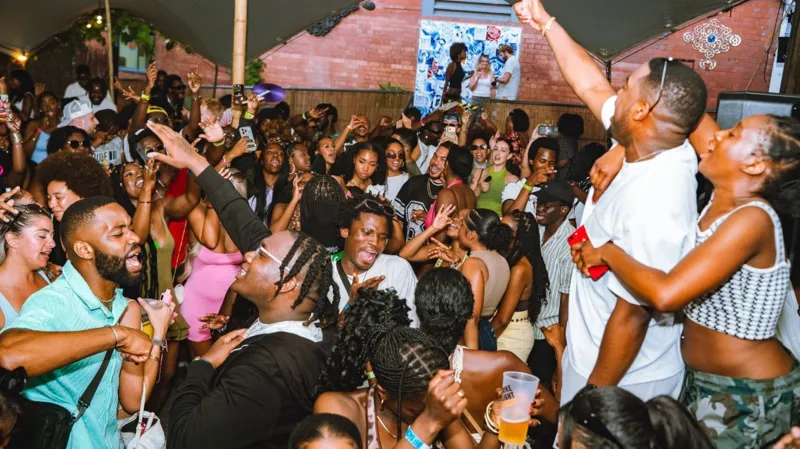
A new sound is taking Bristol’s dancefloors by storm.
Driven by rolling log drums, syncopated rhythms and infectious melodies, amapiano and other electronic sounds from across the African diaspora are finding new audiences in a city celebrated for its musical heritage.
Behind these parties is a new generation of black promoters passionate about creating spaces where black people can hear their music, celebrate their cultures and feel like they belong.
But for some, building these spaces has also meant confronting the familiar challenge of finding spaces where black music and the communities around it are welcomed and not feared.
Bristol-based promoter Unkle Mykel’s journey into events began in his own back garden after he moved to Bristol in 2017.
What started as garden barbecues gradually grew into a way of bringing people together, particularly members of Bristol’s black, Asian and minority ethnic communities.
“It’s about celebrating our cultures, bringing people into that fold and connecting,” says the 32-year-old, who hosts Bristol Barbecue Family and The Aux Social.
Originally from Kenya, Mykel moved to the UK in 2005. Since then, he has witnessed changes in the visibility of African music.
“There was no Afrobeats on the airwaves,” he laughs, recalling his early years in the country, when he says Caribbean reggae, dancehall and soca were more prominent in the musical landscape he encountered.
Now, he sees the growing popularity of genres such as amapiano – a popular South African house music subgenre – as an opportunity to broaden the scene.
“We don’t need to pretend to be nobody else, we’re just us. It just took a while to get there.”
For 30-year-old DJ and promoter Khiah Lou, representation, she says, is central to her work.
Last year she launched Khaya Nights, an event dedicated to amapiano and other African Caribbean electronic dance music.
Having performed internationally, she had seen how other cities had developed a wider range of events celebrating these sounds. Bristol, she felt, was lagging behind.
Rather than wait for the scene to develop, Khiah decided to help build it herself.
“If we don’t do it, who else is going to do it?” she says.
“Young black people are starting to make a way for themselves because I don’t think we have a choice.”
Khiah says these nights provide a place where people can connect with their identities and see their cultures reflected in the city around them.
“At first it seems like it’s just a party, but it’s so much more than that,” she says.
“It’s really important for your own self-identity. If your community doesn’t have events, where do you feel you can go?”
“At first it seems like just a party, but it’s so much more than that,’ says Khiah
Tazmin Samuels, who DJs as Azumei, shares those concerns about representation.
As part of Rushtown, a black-led music collective, Tazmin wants to champion sounds and subcultures from across Africa, Latin America and the Caribbean.
“My main motivation for getting together with people and starting Rushtown came from seeing the lack of representation of black music that black people are currently listening to within the city,” says Tazmin.
She sees encouraging signs, with more black music-focused brands emerging in Bristol. But she believes the wider music industry has yet to recognise the value of what these promoters are building.
But creating these spaces is not always straightforward.
Khiah says she has struggled to find venues willing to host nights aimed at black audiences. Although she considers Bristol an inclusive city, her experience as a promoter has revealed a different side of its nightlife.
“I’ve had some venue owners straight up tell me they’re worried about having a black event,” she says.
“I feel like black crowds are kind of met with fear, and that’s really disheartening.”
Mykel describes similar tensions, saying that some venues are enthusiastic about hosting his events, only to face objections from people in the surrounding community.
The young promoters’ experiences echo a much longer history of black Bristolians having to create their own spaces for music and social life.
Many black people were turned away from existing clubs and bars in Bristol during the 1960s, which led to the creation of “blues parties”, un-licensed house parties where people danced to genres such as ska, reggae and rocksteady.
In 1966, Tony Bullimore and his Jamaican-born wife Lalel, opened the Bamboo Club, which served as a cultural lifeline for the city’s Caribbean community.
Glen Crooks, 70, who used to perform at the Bamboo Club when he was younger, remembers “sneaking in” with his friends when they were young.
“It was the only place that we could have,” he recalls.
“Especially all the Caribbean people could go and really have a good time.”
Rushtown aims to champion a variety of music genres from the African diaspora
Marti Burgess, who has been a co-owner of the nightclub Lakota since 1994, says although attitudes have changed over the years, some prejudices remain.
“There is a long history of treating a predominantly black audience as a concern, rather than recognising the audience, creativity and business that a promoter is bringing,” she says.
“They should not have to keep proving that black audiences are welcome or commercially worthwhile.”
Growing up, Marti was surrounded by music. Her parents went to the blues clubs and attended the Bamboo Club when it hosted artists such as Bob Marley, Desmond Dekker and Johnny Nash.
“It was through listening to the adults’ conversations that I came to understand how much those spaces had grown out of exclusion from mainstream venues,” she says.
“Creating somewhere of their own was both a necessity and a source of joy.”
“St Pauls Carnival was hugely important for those of us growing up in the 1970s and 80s, and for our developing identities as Black British people.”
Lakota is predominantly known to be a bass music venue, but over the years it has broadened its programme to include Afrobeats and amapiano events.
“Latino Fest this summer opened our eyes further to the audiences and musical communities we could welcome,” says Marti.
“We want people across the different genres of black music to see Lakota as a venue that is open to them, where they can bring their music and their audiences.”
Credit: BBC