
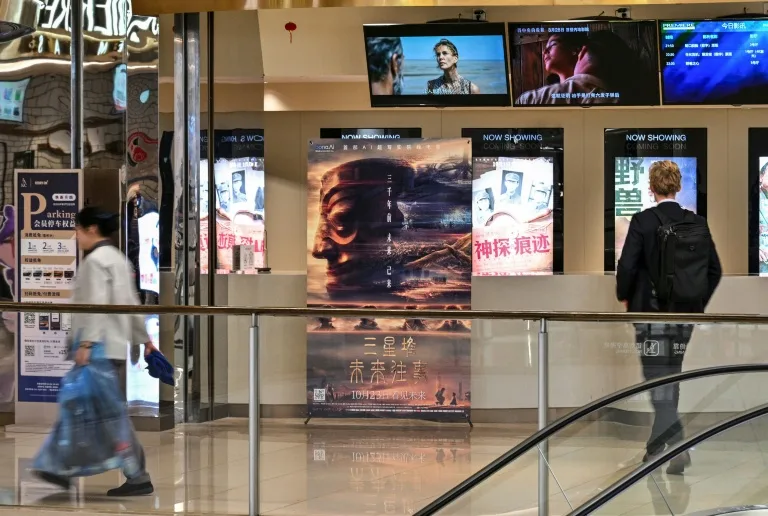
China’s first fully artificial intelligence-generated feature film has made a disappointing start at the box office, recording just $12,000 in advance ticket sales despite costing more than $1.5 million to produce.
The science-fiction thriller, Sanxingdui: Future Past, opened in Chinese cinemas on Friday, October 23, marking a major milestone in the country’s rapidly expanding artificial intelligence industry.
However, its arrival has been met with a lukewarm reception from moviegoers.
According to Chinese ticketing platform Maoyan, the film generated only 80,000 yuan, approximately $11,980, in advance ticket sales as of Friday morning.
The platform also projected that its total box-office earnings could remain below 150,000 yuan, a tiny fraction of its production budget of more than 10 million yuan.
The disappointing figures come despite more than 10,000 screenings being scheduled across China on the opening day.
Ticket prices range from 20 to 90 yuan, with advance sales indicating that only a few thousand tickets had been purchased.
Produced by Bona Film Group, the 100-minute film took nearly 100 people more than two years to complete.
Unlike conventional movies, its characters, voices and backgrounds were generated using artificial intelligence rather than filmed with human actors.
The production combines elements of ancient Chinese civilisation with a futuristic story exploring humanity’s relationship with AI.
Despite the weak commercial response, Bona Film Group’s chief executive, Jiang Defu, defended the project as a pioneering achievement.
Speaking to Chinese film industry publication Yuli, Jiang acknowledged the poor reception but maintained that bringing a fully AI-generated feature to cinemas represented an important breakthrough.
He noted that the production was among the first of its kind to secure an official theatrical release permit and face the judgement of paying audiences.
However, early reactions suggest that technological innovation alone may not be enough to persuade people to buy cinema tickets.
Iris Yang, who attended a free preview screening on Thursday, said she would not have paid to watch the film because she was dissatisfied with its quality.
She argued that AI-generated productions would need to deliver visual experiences comparable to Hollywood blockbusters such as *Avatar* before they could justify cinema ticket prices.
Independent AI filmmaker Zhang Jun expressed a similar view.
“The audience won’t automatically pay for the tickets just because it’s an AI-generated film,” he told AFP.
The weak reception comes amid extraordinary growth in China’s AI-generated entertainment sector.
In September alone, AI-produced short dramas attracted more than 200 billion views on Douyin, China’s version of TikTok.
However, the popularity of freely accessible AI content on social media has yet to translate into strong demand for AI-generated cinema releases.
Some Chinese social media users argued that viewers might embrace such films on free streaming platforms but would be reluctant to pay to watch them in theatres.
The film’s release also comes as Hollywood grapples with growing concerns about artificial intelligence replacing actors, voice performers and other industry professionals.
Another AI-generated science-fiction film, *Gods Don’t Give Gifts*, is scheduled for release in the United States on December 4.
Meanwhile, virtual actress Tilly Norwood is expected to appear in the forthcoming movie *Misaligned*, further intensifying debate about the place of artificial intelligence in filmmaking.
Although *Sanxingdui: Future Past* has secured a place in China’s technological and cinematic history, its slow advance sales highlight a major challenge facing AI filmmakers: convincing audiences that a movie created with artificial intelligence is worth paying to watch.