
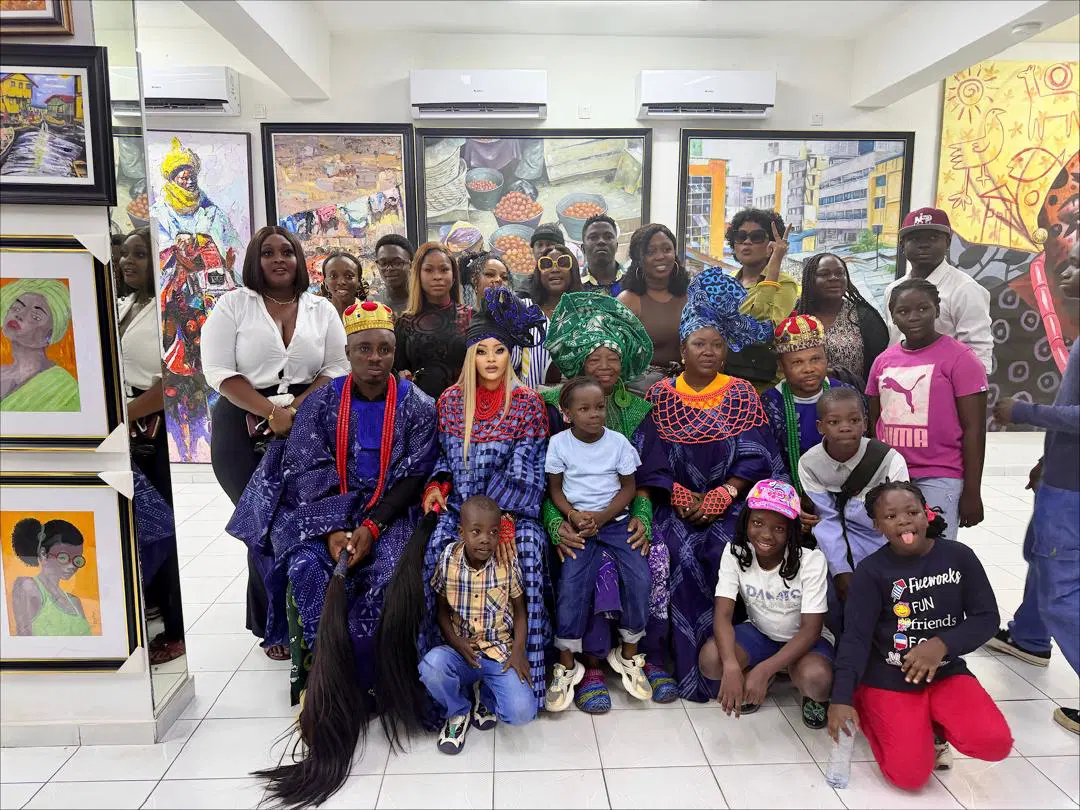
Participants in the Lagos Summer with Mr Nonso recently embarked on a memorable cultural and artistic tour of some of Lagos State’s foremost creative destinations, as part of efforts to explore the state’s tourism potential and promote Nigeria’s rich artistic heritage.
The event, organised by the Chief Executive Officer of Etravel, Uche Emmanuel Chinonso, popularly known as Mr Nonso, took participants on a tour of the iconic Nike Art Gallery and the Yemisi Shyllon Museum of Art at Pan-Atlantic University.
The excursion, divided into two parts, featured an interactive tour of artworks at the Nike Art Gallery and a tie-and-dye workshop at the Yemisi Shyllon Museum of Art, both located in the Lekki area of Lagos.
Lagos Summer with Mr Nonso is an initiative of Etravel designed to give art enthusiasts and tourists an opportunity to explore the uniqueness of Nigerian art while appreciating the country’s rich cultural heritage and tourism potential. Nestled in the heart of Lekki Phase 1, the impressive Nike Art Gallery is a multi-storey building that houses thousands of artworks from artists across Nigeria and Africa.
Founded by renowned Nigerian artist and textile designer Chief Nike Davies-Okundaye, the gallery has remained one of Lagos’ most iconic cultural landmarks and a major attraction for art lovers and tourists.
Among the striking artworks that caught the attention of participants was Adeleke’s Horses in Motion, which uses the imagery of racing horses to portray the complexities and competitive nature of life. The artwork conveys the message that life is a journey that requires persistence and determination. Even at moments when one may feel like giving up or slowing down, others may be working harder to move ahead. The world, the painting suggests, does not stop for anyone. The work features seven horses in different colours racing towards the same destination. Although they occupy different positions, they are all moving in the same direction, symbolising humanity’s pursuit of common goals through different paths.
Another notable artwork at the gallery was a painting on canvas depicting the riverine community of Makoko by Abiodun Badejo. Makoko is a waterfront settlement on the Lagos Lagoon, with parts of the community built on stilts. Through the work, the artist conveys a message of hope, determination and resilience, emphasising that one’s background, environment or personal history should not limit the pursuit of a brighter future.
The painting highlights the values of focus, dedication and commitment to one’s craft as essential tools for overcoming limitations. The shining light in the work symbolises hope and the promise of a brighter tomorrow. Badejo, a contemporary Nigerian painter, is known for his depictions of urban and waterfront scenes, including his acrylic work, Towards Makoko.
Participants also admired an acrylic painting of a plus-size woman, which celebrates the confidence, beauty and boldness of women irrespective of their body size. One of the participants said the artwork particularly resonated with her as a plus-size woman, noting that it reflected confidence and self-acceptance.
Other remarkable collections at the gallery include Adire textile masterpieces—hand-dyed indigo-patterned fabrics created using traditional Yoruba resist-dyeing techniques—and Batik wall hangings that tell historical and cultural stories through wax and vibrant dyes. The gallery also features portraits and mixed-media works celebrating Afrobeat legend Fela Anikulapo-Kuti, as well as recycled mixed-media mosaics constructed from unconventional materials such as bottle tops, old film reels and aluminium cans.
After the tour of the Nike Art Gallery, participants proceeded to the Yemisi Shyllon Museum of Art at Pan-Atlantic University for the second leg of the excursion. They were received by facilitators led by Solomon Nkwagu of the museum’s Corporate Communications and Visitor Services unit.
The facilitators introduced participants to aspects of Nigeria’s rich cultural heritage, including the artistic traditions and artefacts of ancient kingdoms and civilisations.
The tour featured discussions on the bronze works of the Benin Kingdom, the renowned Igbo-Ukwu artefacts and the masterpieces of Ile-Ife, which are noted for their naturalistic bronze, stone and terracotta sculptures. One of the remarkable artefacts at the museum was the Gelede headdress, associated with the Yoruba Gelede tradition. The Gelede tradition is rooted in the reverence of female spiritual power and motherhood. The masks are used in ceremonies associated with fertility, social harmony, communal wellbeing and the celebration of women’s roles in society. The tradition is practised among Yoruba communities and historical groups across western Nigeria, including Ketu, Oyo and Egbado.
Speaking in an interview, the Country Manager of RwandAir in Nigeria, Ginette Kadigiri, said she had lived in Nigeria for over a year and had visited the gallery more than 10 times, adding that every visit offered a refreshing experience. “For every tourist who visits Nigeria, this should be one of the first stops. The creativity in this gallery is unique, and the fact that all these works are put together in one place is very inspiring.
“Even an artist who is lacking inspiration can visit this gallery and find a new source of creativity because of the beauty of the artworks. I also bring my visitors here, and they always appreciate the artworks and the creativity on display,” she said.
Kadigiri said she had not encountered anything on such a scale in Rwanda. “We do not have something as big as this in Rwanda. We have smaller art galleries, but I think this is the biggest I have ever seen. Having several floors filled with artworks is incredible. “The major thing I love about this gallery is the way different people express their creativity in different ways. It is really calming,” she added.
Also speaking, the organiser of Lagos Summer with Mr Nonso, Uche Emmanuel Chinonso, said the decision to visit the Nike Art Gallery was aimed at giving art enthusiasts an opportunity to experience the artistic side of Lagos through its culture, history, creativity and tourism assets.
He said: “Nike Art Gallery represents a very important part of Nigeria—our creativity and our identity. It gives visitors the opportunity to see Nigeria beyond the usual narrative of beaches, nightlife and entertainment.
“For me, tourism should educate, inspire and entertain at the same time. So, taking our community to Nike Art Gallery was about exposing them to the richness of Nigerian art and showing them that there are beautiful destinations and experiences right here in Lagos that many people living in Lagos have never explored. It was also a deliberate way of connecting tourism with culture. You can visit a gallery, learn about our heritage, appreciate creativity and still have an amazing tourism experience. That is the kind of domestic tourism I want to promote.”
Nonso further described art as a major driver of tourism, noting that it provides a platform through which a people’s history, culture, traditions and identity can be communicated to visitors. “Art plays a huge role because it tells our story. Before a tourist visits a destination, they want to know what makes that place different. Art gives us a way to communicate our history, culture, traditions, people and identity without necessarily saying too much. When you look at Nigerian art, you see stories of our communities, our traditions, our struggles, our celebrations and our way of life. That is tourism content in itself,” he said.
He added that art could also create compelling reasons for people to travel, citing museums, galleries, cultural festivals, sculptures, traditional crafts and heritage sites as important tourism attractions. “People travel across the world to experience the Louvre, the Vatican Museums, galleries and cultural heritage sites. Nigeria has equally powerful stories and creative expressions. We therefore need to stop seeing art and tourism as separate industries. They are connected. If we package our art properly, promote our artists, develop museums and cultural spaces, and make them accessible to visitors, we can create more reasons for both Nigerians and international tourists to travel within Nigeria,” he added.
The Lagos Summer with Mr Nonso experience underscored the growing importance of art and culture in driving domestic tourism, while highlighting the opportunities available in Lagos for visitors seeking experiences beyond the state’s beaches, nightlife and entertainment.
Credit: Vanguard