
The story I have carried
I have known the story of Igbo Landing for 30 years. I have always understood it as one of the great stories of African resistance, dignity, memory and survival – a story that must be told not only to Igbo people, but to Africans, African-Americans and the entire world.


In 1803, at Dunbar Creek on St. Simons Island in Georgia, captive Igbo people resisted their captors and refused enslavement. Some survived, were never recaptured and lived as free people. The memory endured for more than two centuries through the Gullah Geechee people and through the story of the Flying Africans. The fact that the story survived is itself a form of victory: power could displace bodies, but it could not completely extinguish memory.

This essay is not simply an attempt to recover a historical episode. It is an argument that we, Continental and Global Africans, must reclaim full authorship of ourselves, by ourselves. We must confront what was done, recover what endured, heal what remains wounded and build forward together.
I was raised inside one Global African story
My understanding of the relationship between Africa and the Black diaspora did not begin in a book or with a film. It began at home.
My late parents both arrived in the United States in 1961, at the height of the Black freedom struggle. Our family history holds that they were present at the March on Washington. My mother played drums in a band, read the news on television and participated in Black political and cultural circles that preceded the emergence of the Black Panther Party. My father became president of the African Students Association on the West Coast. He was associated with the ANC, was a Black nationalist and a Marxist, and stood intellectually and politically with the wider Black liberation movement.
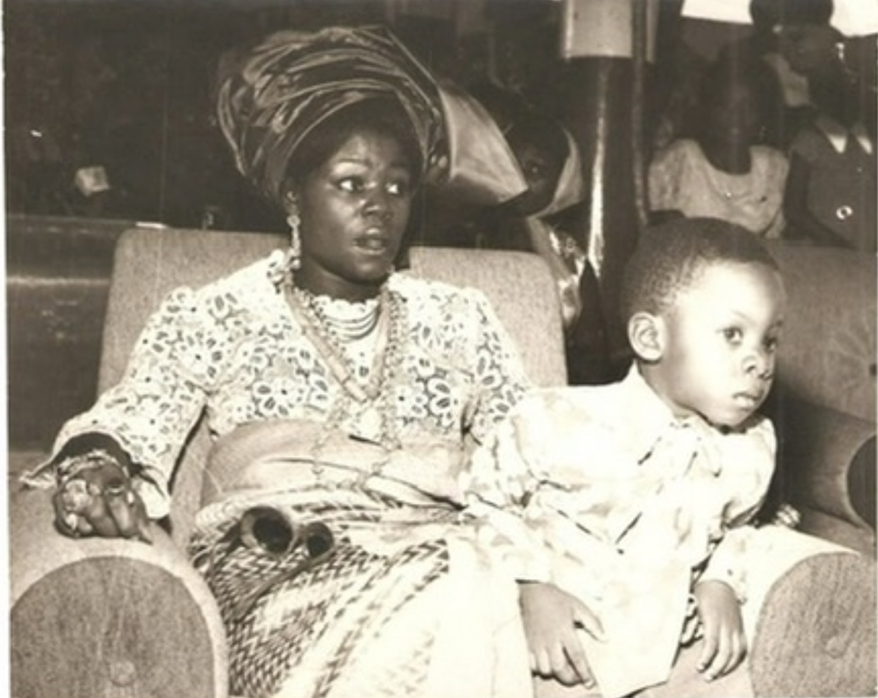
There were also a million conversations with my late mother, H.E. Chief Mrs Chinyere Asika OFR, who never stopped educating me about our possibilities, our responsibilities and our role on this planet. She taught me the long history and journey of our people: the civilisations from which we came, the resistance through which we endured and the global nature of a story that could never be contained by the borders imposed upon Africa. She helped me understand that we were not a diminished people searching for relevance, but an ancient, creative and connected people whose knowledge, culture and imagination still had work to do in the world.
Her own life made those lessons tangible. She was a scholar and a pioneer in computer science, a builder of institutions, a lifelong mobiliser and the founder of Otu Olu Obodo, the great women’s movement through which millions of women were organised around dignity, agency and self-reliance. But her leadership was never only institutional. There were perhaps a thousand people who called her Mother because she was always emotionally available to them. She listened without judgement. She never used her vast intellect to talk down to anyone or to create distance; she used it to elevate people, to help them recognise their own worth and to enlarge their sense of what was possible. She was the principal driving force behind our family art collection, collecting and protecting our art, antiquities and family memory because she understood that culture was not decoration; it was evidence, inheritance and power. She became the inspiration behind Iba Ajie, the Ukpabi and Chinyere Asika Resource Centre, and she always ensured that I honoured my father and carried his life, work and legacy forward. Again and again, she taught me to see possibility where others saw limitation and responsibility where others saw only history. She was the guiding light behind my work. The platforms, archives, bridges and institutions I have spent my life building all carry something of what she placed inside me.
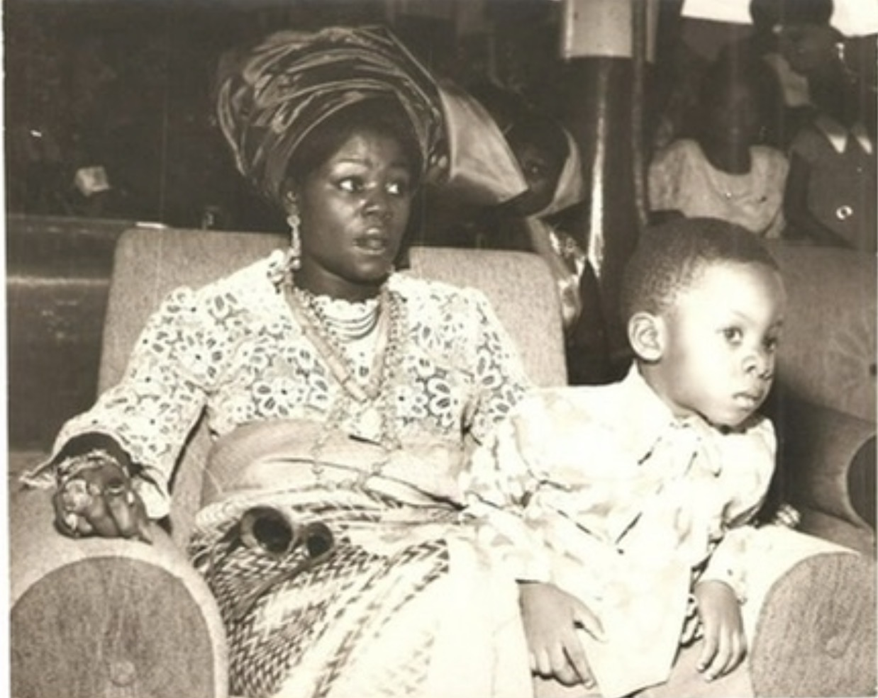
They returned home carrying that connection with them. Their children were raised to understand African-American history as our history and Global African history. As a child, I read Malcolm X – Malik el-Shabazz – Martin Luther King Jr. and the histories of Black struggle in the Americas. I did not grow up believing that the Atlantic had created separate peoples whose histories had nothing to do with one another.
That Global African consciousness was also present in my father’s public life. The relationships around him joined the work of rebuilding post-war Eastern Nigeria to the wider responsibilities of Nigeria and Africa. Photographs of him in conversation with His Imperial Majesty Haile Selassie I, and alongside General Yakubu Gowon and General T. Y. Danjuma, are not simply records of proximity to power. They belong to the history of reconstruction, African solidarity and the continental world in which I was raised.
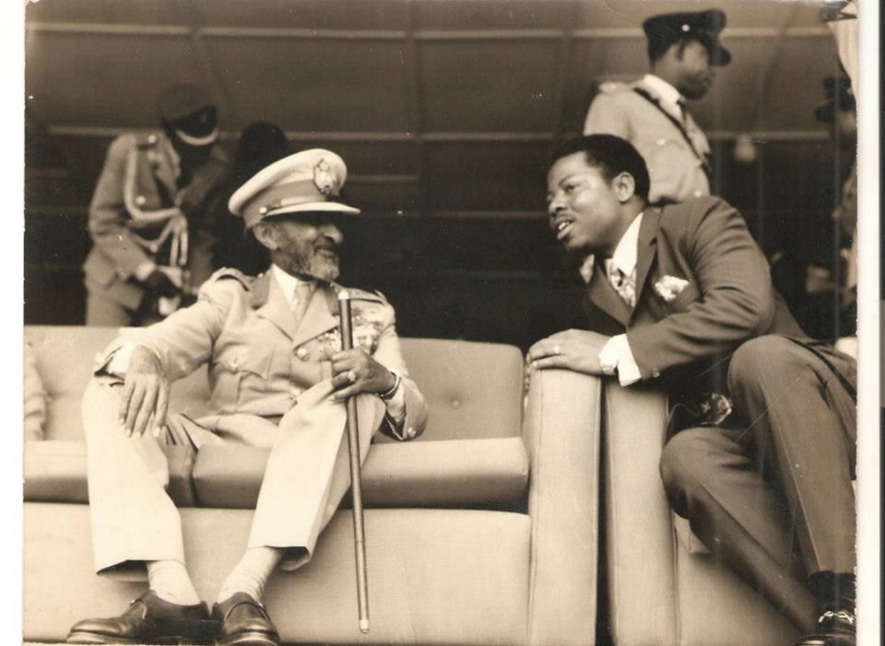
H.E. Dr Ukpabi Asika CFR in conversation with His Imperial Majesty Emperor Haile Selassie I—an image from the continental African world that shaped the author’s earliest understanding of history, leadership and solidarity.
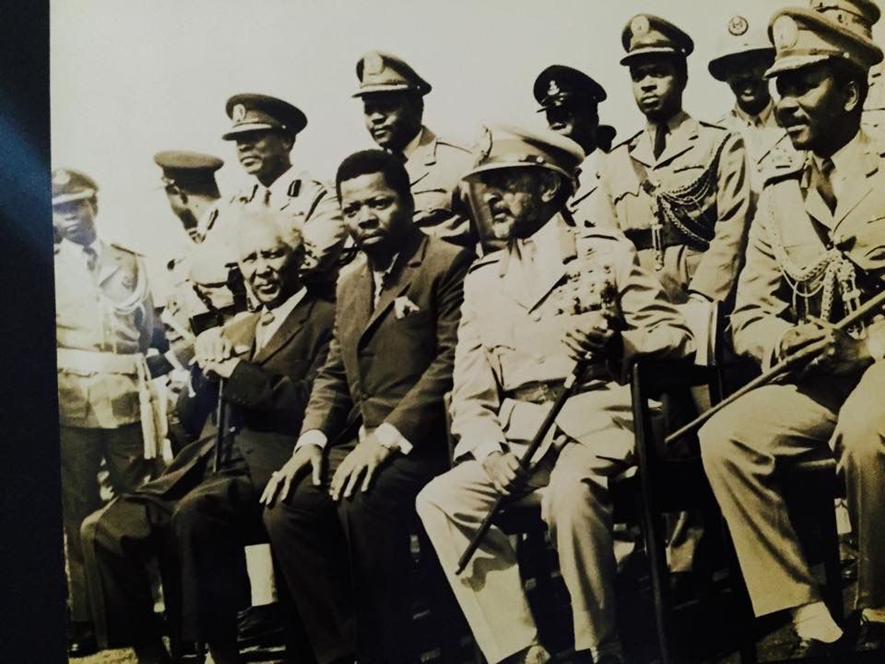
H.E. Dr Ukpabi Asika CFR with His Imperial Majesty Emperor Haile Selassie I, Head of State General Yakubu Gowon and General T. Y. Danjuma, among other officials—part of the political and continental setting surrounding Nigeria’s post-war reconstruction. Family archive.
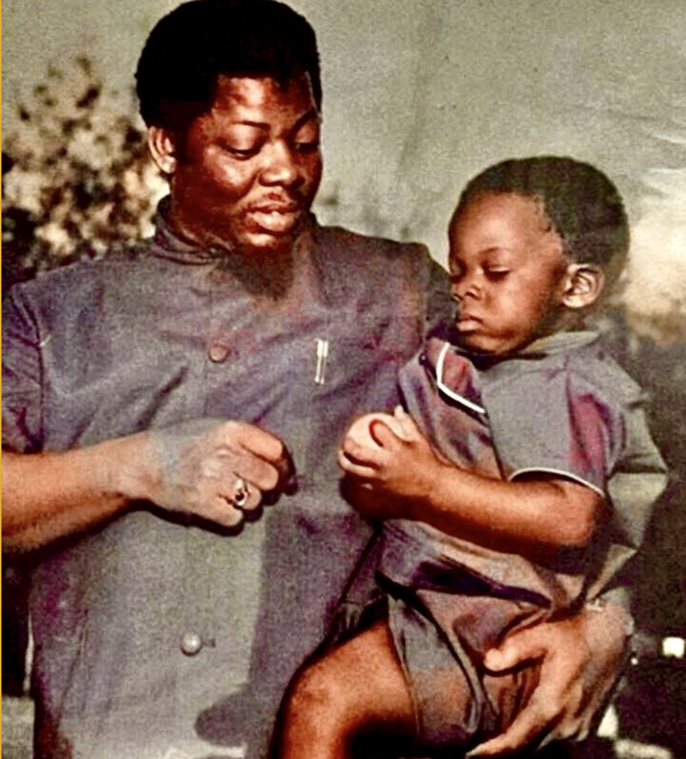
H.E. Dr Ukpabi Asika CFR with his son, Obi Asika, as a child—a personal inheritance of African history, public service and Global African consciousness. Family archive.
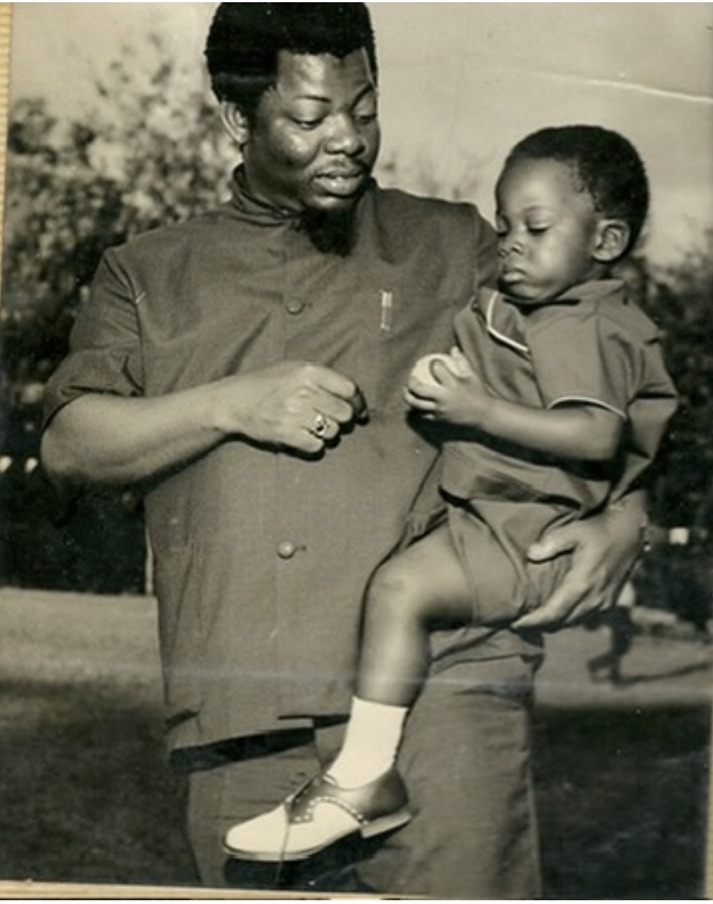
My sisters became authors and television producers. We grew up surrounded by books, knowledge and the conviction that African civilisation was ancient, sophisticated and useful: that our cosmologies, philosophies and community systems were not relics, but living resources. We were taught that Africa was foundational to human civilisation and to knowledge, science, medicine, agriculture, technology and the arts.
The idea that Africa was inherently less did not emerge from the evidence of human history. It was manufactured and repeatedly enforced to justify enslavement, extraction and colonial rule. Five centuries of pressure have left consequences in institutions, economies and, perhaps most painfully, in the way many of us have been taught to see ourselves.
Music carried the memory forward
Music was one of the ways this Global African worldview became real for me. Fela Kuti was not an abstraction in our family history. He was my father’s friend, and my father was perhaps the only Nigerian leader to have Fela perform at Government House, in Enugu in 1974. Years later, when a family friend in Enugu insisted that I listen seriously to Fela, I began to understand more fully the force of what had always been around me. I would eventually find myself mixing Fela Kuti with LL Cool J: bringing African political rhythm and American hip hop into the same imaginative space.
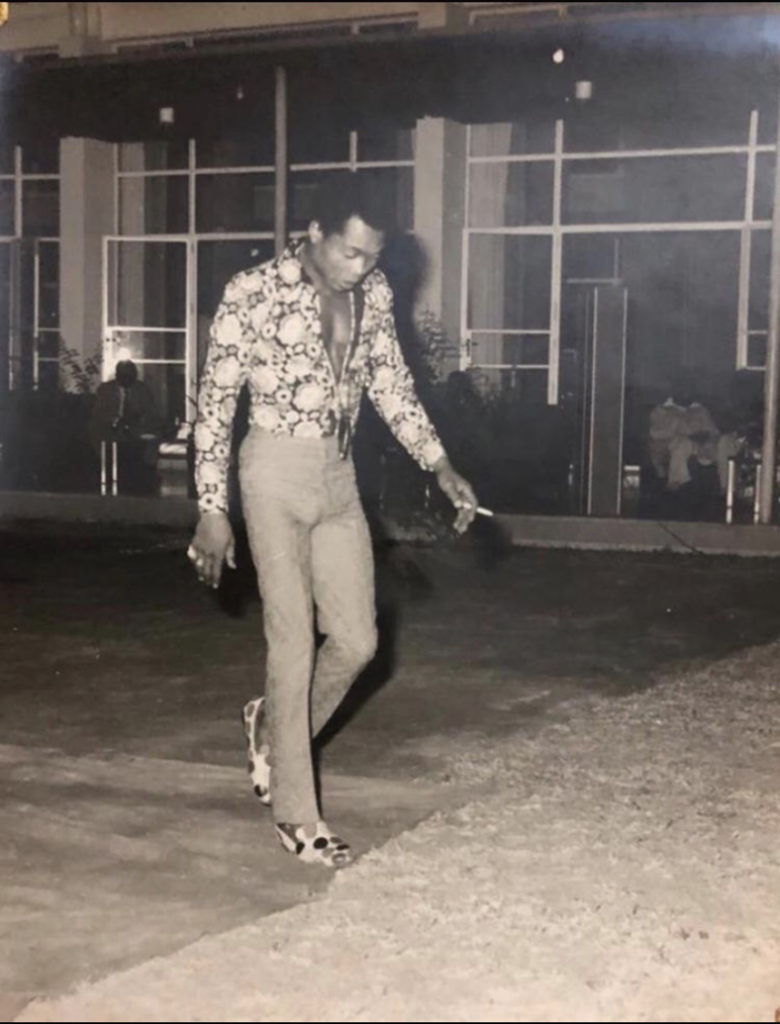
Fela Kuti performing at Government House, Enugu, on Nigerian Independence Day, 1 October 1974—the only known occasion on which he performed at a Nigerian Government House on Independence Day. Family archive.
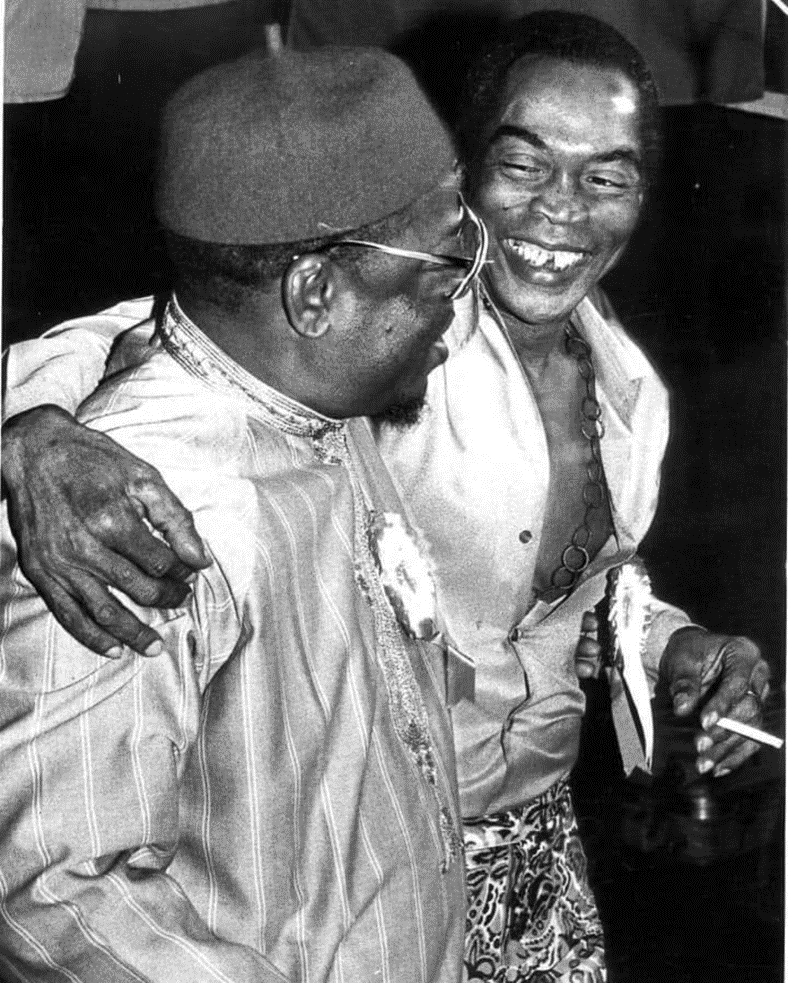
H.E. Dr Ukpabi Asika CFR and Fela Kuti together at the Children of Africa concert press conference, 1991: friendship, political conviction and cultural brotherhood across decades. Family archive.
Fela, Bob Marley and hip hop belong within the source code of the world we now call Afrobeats. Fela made music an instrument of African freedom, confrontation and self-definition. Marley became one of the great Global African voices of resistance, carrying memory, spirituality, dignity and liberation across borders. Hip hop arose from Black communities in the United States as another technology of survival: turning the street into an archive, rhythm into reportage and marginalisation into cultural power. Each emerged from a different history, and none should be diminished by being collapsed into the others. Yet all three demonstrate how Black people turn pressure into language, style, community and possibility.
Afrobeats – with the s – is, in part, hip hop domesticating itself in Nigeria and entering a much older musical conversation. It absorbed Highlife, juju, Afrobeat, indigenous rhythms and languages, reggae, dancehall, R&B and hip hop, then reshaped them through Nigerian cities, humour, movement and ambition. This is connected culture in sound: music travelling with dance, food, fashion, hairstyles, fabrics, language and attitude, each form opening a door for the others.
My own work has taken place inside that continuum. We built Storm first as a movement and then as a company, guided by a simple conviction: Nigerian music had to win. We worked across music, television, platforms and partnerships to create visibility, standards and access for artists at a time when the infrastructure was still being invented. We placed close to one hundred Nigerian videos on Channel O, and in 2006 Nigerian artists won 14 of the 17 Channel O Music Video Awards for which they were nominated. That was one of the early signals that a new African cultural force was gathering momentum. I do not stand outside Afrobeats describing it after the fact; I have spent decades helping to architect the relationships, platforms and pathways through which it could travel.
For more than 18 years, my brother Briant “B-High” Biggs – a director of Roc Nation and Jay-Z’s first cousin – and I have worked to keep Africa alive and visible within that ecosystem, creating relationships, visibility and access for African artists. This was never simply about placing artists in rooms. It was part of the longer work of building bridges between hip hop and Africa, and between the global power of hip hop and the emerging force that became Afrobeats.
These collaborations matter because the Black Atlantic is not only a history of separation. It is also a living system of exchange. Fela speaking to Harlem, Marley speaking to Lagos, hip hop returning to African cities and Afrobeats carrying African language and confidence back across the Atlantic are not disconnected events. They are evidence that culture remembers routes that history tried to erase.
Naeto C performing at “Fela Is Hip Hop” during Felabration at the New Afrika Shrine in Lagos—Femi Kuti’s iconic venue, imagined after his father Fela Kuti’s original Shrine. The event made visible the continuing conversation between Afrobeat, hip hop and Afrobeats.
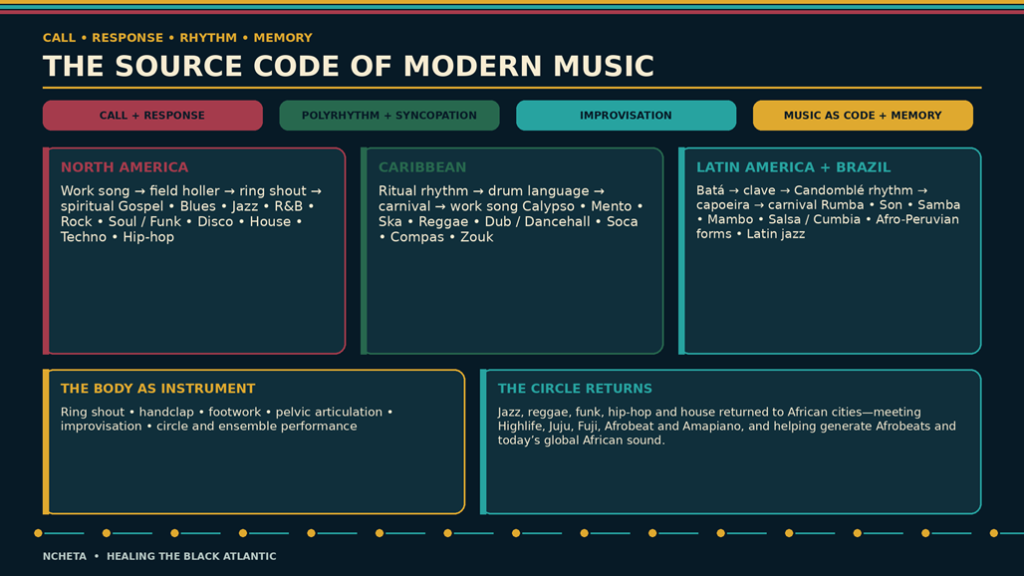
That understanding became visceral in 1985. I had been trying to teach my father my hip hop and explain why I loved it. Instead of dismissing the music, he took me to our ancestral village and showed me what I now think of as its source code: the call and response of the Egwu Ota royal drums and the Ogene troupe. In that exchange between leader, chorus, drum, bell, dancer and community, I heard the architecture that runs through so much of Global African music. It fundamentally shifted how I saw the world. I understood that hip hop was not a cultural orphan. Call and response lay at the heart of our music, and the Atlantic had not broken the underlying grammar that connected us.
I had entered the masquerade society around 1984, and in 1994 I took my own Ozo title. Those experiences deepened my understanding that music, rhythm, dance, spirituality, title, community and memory are not separate cultural departments. They form one connected system. The music does not merely accompany the culture; it carries and activates it.
That same thesis shaped Journey of the Beats, the documentary series I made for Showmax in 2022. Across a thousand years of African music, the series tracked the importance of call and response and the ways Africans used music as code, memory and resistance wherever they were taken. It followed the transformation of those musical principles across Africa, the Caribbean and the Americas, and their central role in the canon of modern popular music.
Infographic: Call and response as the recurring architecture of Global African music and the source code of modern performance.
Africa was not waiting for Europe
Howard W. French’s Born in Blackness helps restore Africa and Africans to the centre of the making of the modern world. His argument is important because the conventional story begins with European expansion and treats Africa as scenery or raw material. French reverses the direction of vision: European modernity, Atlantic wealth and the rise of the West cannot be understood without Africa’s people, resources, knowledge and coerced labour.
Professor Toby Green’s A Fistful of Shells reaches further into the worlds that existed before and during the rise of Atlantic slavery. He reconstructs West and West-Central African societies organised through commerce, diplomacy, complex belief systems, currencies, artistic production and political negotiation. These were not empty spaces waiting to be discovered. They were functioning worlds with their own measures of value and systems of authority.
This matters because the first theft was not only of people. It was also the theft of context. Africans were stripped of the civilisations that made them intelligible as full human beings. Later accounts often began the African story at the point of capture, as though the person placed on a ship had no name, language, family, philosophy, profession, divinity, political identity or memory before that moment.
To own our narrative is to restore that before. Who were these people? What did they know? Which communities formed them? What songs, symbols, medicines, sciences, laws and sacred relationships did they carry? What survived the crossing? What changed? What returned? These are not secondary questions. They are the foundations of recovery.
Long before the present conversation, Cheikh Anta Diop insisted that Africa be restored to the centre of world history and that ancient Egypt be understood within its African geography and civilisational continuum. Dr Yosef Ben-Jochannan—Dr Ben—John Henrik Clarke, W.E.B. Du Bois, Marcus Garvey and Ivan Van Sertima likewise challenged inherited structures of erasure and taught generations of Black people to investigate history for themselves. Their arguments were not identical, and some claims remain contested, but their larger intervention was indispensable: they refused the premise that Africa entered history only through enslavement or colonial encounter. More recent work by Henry Louis Gates Jr., Zeinab Badawi, Howard W. French, Toby Green and the UNESCO General History of Africa continues that labour with new archives, methods and audiences. Ncheta belongs within this longer work of recovery.
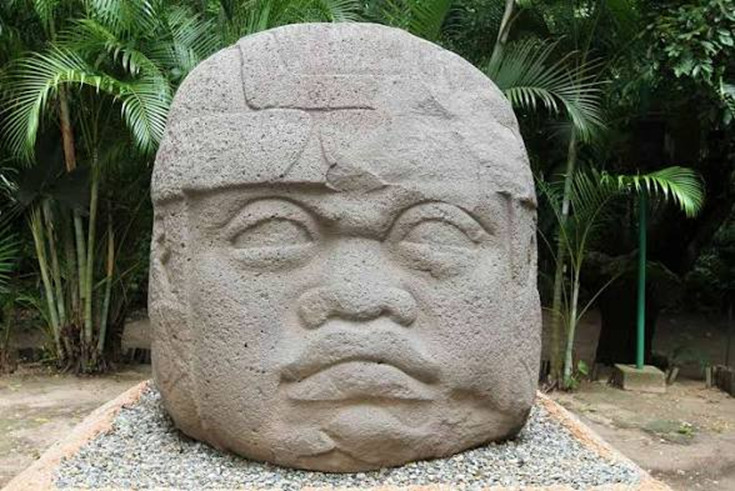
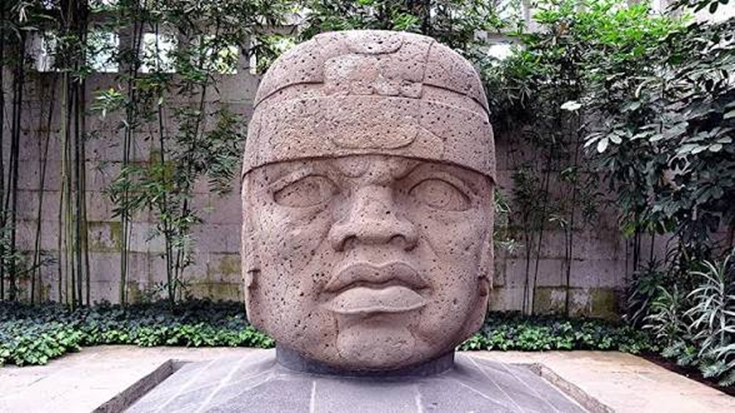
The Olmec colossal heads also enter this contested field of interpretation. Writers including Ivan Van Sertima saw their features as evidence of African presence in the Americas before Columbus, while mainstream archaeology identifies them within the Olmec civilisation of ancient Mesoamerica and disputes that conclusion. I include them not as a substitute for evidence, but because owning our narrative also requires us to examine the arguments, images and exclusions through which the ancient world has been interpreted—and to insist that African history be approached with seriousness rather than automatic dismissal.
Olmec colossal head, ancient Mesoamerica. The monumental portrait tradition continues to animate debate about identity, encounter and the interpretation of the pre-Columbian world.
A second Olmec colossal head: one work within a distinctive sculptural tradition created by the Olmec civilisation in what is now Mexico.
A third Olmec colossal head, shown as part of the visual record around which competing historical interpretations have developed.
Infographic: Africans carried complete systems of knowledge into the Americas—agriculture, medicine, engineering, governance, craft, communication and resistance.
Unpaid African labour and the making of modern Britain
The history of the Industrial Revolution in Britain cannot be honestly told without chattel slavery. Enslaved Africans were not only an unpaid labour force. They arrived with agricultural, metallurgical, medicinal, hydraulic, building and organisational knowledge; they cleared land, cultivated and processed plantation crops, constructed roads, drainage works, workshops, housing and other infrastructure, and sustained the plantation economies of the Caribbean, Brazil and mainland North America. British merchants and plantation owners drew enormous returns from sugar and other Caribbean commodities, while slave-grown cotton from the American South fed the mills of Lancashire. The resulting trade enriched ports, shipping, banking, insurance, manufacturing and infrastructure across Britain.
The precise claim is not that slavery was the Industrial Revolution’s only cause. It is that coerced African labour and skill formed one of its foundational engines and supplied critical commodities, markets and capital to the industrial economy. To describe Africans merely as labour is itself an erasure: plantation production depended upon knowledge, adaptation, engineering, craft and management performed without wages or legal ownership of the value created.
The settlement at abolition reveals the moral architecture of that system. Parliament authorised £20 million in compensation to former slave-owners—about 40 per cent of annual government expenditure at the time—while the formerly enslaved received nothing. The public borrowing associated with that settlement remained part of Britain’s consolidated public debt until 2015. That does not mean individual slave-owners received cheques until 2015; it means British taxpayers serviced the financing long after emancipation. The contrast remains stark: ownership was compensated, stolen labour was not, and the demand for reparatory justice remains unresolved.
Infographic: Enslaved African labour and skill as a foundational engine within the making of industrial modernity.
The Black Atlantic: wound, archive and bridge
Paul Gilroy gave us an influential language for understanding the Black Atlantic as a cultural formation that exceeds the borders of any single nation. My own use of the term begins there but moves towards an explicitly African work of memory, spirituality, healing and reconnection.
The Black Atlantic is a wound because millions were displaced and nearly two million people were lost during the Middle Passage. It is an archive because African memory survived in language, rhythm, food, worship, burial, craftsmanship, agriculture, storytelling, resistance and family practice. It is a bridge because these surviving fragments can be brought into conversation with living communities on the continent.
Whenever I cross the Atlantic and encounter turbulence in those skies, I think of the souls carried by those waters and of unfinished spiritual business. I offer this as a personal and cultural conviction, not a meteorological claim. The point is that history does not become emotionally finished merely because centuries have passed. Trauma can travel through families, institutions and collective memory. So can dignity, ingenuity and the will to survive.
Igbo Landing cannot be separated from Igbo spirituality
In 2023, after I suggested that he visit Igbo Landing, the gifted musician, academic and custodian of tradition Gerald Eze travelled independently to Dunbar Creek as part of a study tour. There he offered a ritual performance of remembrance, playing the Oja in honour of those whose final rites had never been completed.
The Oja is not simply an Igbo flute. It is a sacred instrument used to summon Mmuo – the masquerade. Mmuo literally means spirit. In Igbo culture, masquerades represent the ancestors, serve as their living presence within the community, guide society and participate directly in burial ceremonies.
Gerald’s ritual act therefore carried a meaning beyond performance. It called upon an essential part of Igbo burial tradition in honour of those who had been separated from family, land and the ceremonies through which a community accompanies its departed. It was an act of remembrance, return, healing and spiritual responsibility.
We cannot celebrate Igbo Landing while denigrating the spiritual worldview that made such resistance possible. Every Igbo person celebrating the Landing must ask a serious question: would Igbo Landing have been possible without Igbo cosmology and spirituality? If we refuse to answer honestly, the commemoration becomes empty. We praise the fruit while rejecting the roots.
How Black Panther opened a global door
I knew Igbo Landing long before Black Panther. Ryan Coogler did not introduce me to the story. What he did was bring its meaning into the global mainstream without naming or showing the site.
Killmonger first takes an Igbo Mgbedike war mask from a British museum. In his final scene, he invokes ancestors who refused enslavement. The mask establishes an Igbo visual identity; the final words complete the historical connection to Igbo Landing. Millions encountered the spirit of the story without necessarily knowing its name.
Coogler was intentional across the film: fabrics, hair, colour, language, architecture and systems of knowledge all carried meaning. Shuri’s technological world drew upon digitised Nsibidi, an indigenous system of communication associated with communities across southeastern Nigeria and Cameroon and connected to Ekpe, the Leopard Society.
A reference chart of Nsibidi signs and variations. Ryan Coogler’s use of digitised Nsibidi in Shuri’s technological world was intentional: African visual intelligence became part of Wakanda’s future. That same provocation informed the Nsibidi facade of Iba Ajie.
That challenged me. I could not think of a major building in Nigeria where our own indigenous script had been placed so boldly on the architecture. At Iba Ajie – my cultural hub, archive and place of living memory in Onitsha – we covered the facade in Nsibidi. We placed ancestral intelligence on a contemporary building dedicated to memory, creativity and the future. Coogler used Africa’s cultural intelligence to imagine Wakanda. At Iba Ajie, we brought that inspiration home.
Iba Ajie—the Ukpabi and Chinyere Asika Resource Centre—in Onitsha. Its contemporary façade places Nsibidi boldly on the architecture, making ancestral intelligence part of a living institution dedicated to memory, creativity and the future.
A closer view of the Nsibidi-inscribed upper façade of Iba Ajie: indigenous visual language carried into contemporary civic and cultural space.
Iba Ajie is not simply a building or a family archive. It is an institution of living memory that joins the Ukpabi and Chinyere Asika collections with my own personal archive and the legacy of the work I have done across culture, media, music, public life and institution-building, as well as the scholarship, archives and intellectual labour of its co-founder, Ed Keazor. Its holdings include official documents, speeches and images from my father’s public life; our family’s cultural collection; my own records and creative legacy; Ed’s extensive archive; the Renaissance newspaper archive of the late Gilbert Ofodile; and other important collections already entrusted to it. Iba Ajie therefore holds multiple legacies, not one. It is being extended as a responsible home for the stories, archives and accumulated knowledge of prominent Nigerians, families and communities whose contributions might otherwise be dispersed or lost. With the right support, it will preserve, interpret and activate these collections for scholarship, education, culture and future generations—not as private memory sealed away, but as a growing national resource.
Ed is an eminent historian, a Fellow of the Royal Historical Society and the Royal Society of Arts, and my father’s biographer. He has led much of Iba Ajie’s programming and knowledge work, while serving as executive producer of important documentaries on the Nigerian Civil War and Enugu Rangers. His archive sits at Iba Ajie because the institution is built not around one family claiming history, but around evidence, scholarship, multiple voices and the patient work of recovering Nigeria’s fuller story. The record of Fela at Government House in Enugu belongs within that same continuum: culture, politics, memory and resistance held together rather than separated into convenient fragments.
Ed Keazor, eminent historian and co-founder of Iba Ajie. A Fellow of the Royal Historical Society and the Royal Society of Arts, he is H.E. Dr Ukpabi Asika’s biographer and a central custodian of Iba Ajie’s archives, scholarship and public programming.
Welcome home
In June 2026, another part of the circle was completed when Gerald Eze brought the Gullah Geechee delegation to my home. The same person who had carried the Oja to Dunbar Creek now carried descendants of that Black Atlantic memory back into an Igbo home. The gathering included the Honourable Commissioner Griffin Lotson and Engineer Dennis Wiley, together with Gerald and Alfie Nze. Alfie’s presence was critical. He is a Cultural Adviser to the National Council for Arts and Culture and a gifted director, photographer and producer across film and theatre, who was based in Milan for decades. He has also been my teacher on these deeper cultural and philosophical questions, showing me the light and helping me understand the right and responsible way to represent our culture.
At the author’s home in June 2026: Obi Asika and Gerald Eze seated, with Alfie Nze standing behind them. Gerald’s journey from Igboland to Igbo Landing—and his return with the Gullah Geechee delegation—completed an extraordinary circle of remembrance and welcome.
Their journey into Igboland had been encouraged by Dr Carter-Enyi, a white American professor at Morehouse College, and his wife, Mrs Carter-Enyi. Dr Carter-Enyi had previously worked in Lagos and Enugu, where he met his wife and developed a deep love for Igbo culture. His knowledge helped the delegation explore the strong possibility that their roots were Igbo.
DNA confirmed the connection. Honourable Commissioner Griffin Lotson, after a search spanning 30 years, established that he was 70 per cent Igbo. Yet beyond the science, something happened when they arrived in the East: they could feel it. The people, culture and land carried a familiarity that the DNA result helped them understand.
When I met him, I said simply: Welcome home.
For two extraordinary hours in my home, we connected their journey through Igboland with Igbo Landing, Gullah Geechee memory, the Oja, Mmuo, Nsibidi, Ekpe, Iba Ajie and the Black Atlantic. This was not merely a discussion of history. It was about inherited trauma, suffering and the healing that becomes possible when people understand where they come from and are received by an ancestral home.
The Gullah Geechee visitors seated at the centre of the gathering in Obi Asika’s home, surrounded by Peter Mbam, Legal Director of the Federal Ministry of Art, Culture, Tourism and the Creative Economy; Alfie Nze; Gerald Eze; Obi Asika; and other participants. The encounter joined personal testimony, cultural knowledge and the work of reconnection.
The circularity mattered. Gerald had first travelled from Igboland to Dunbar Creek to perform an act of remembrance; he then became the vessel through whom Gullah Geechee descendants came from the other side of the Atlantic into my home. Memory moved outward and returned carrying living people, questions and possibilities. The Atlantic was no longer only a site of rupture. In that moment, it became a route of return.
Alfie Nze has been my teacher on these issues, and his presence when the Gullah Geechee delegation came to my home gave the encounter an essential depth. Through his exposition of Odinani – Igbo philosophy as a living order connecting the human being, community, land, spirit, ancestry and responsibility – he helped us understand that return cannot end with ancestry or recognition. His work reveals the extraordinary depth and complexity of Igbo philology: a philosophical world hidden in plain sight within the language, where words, tonal relationships, proverbs, names and idioms hold layered meanings accumulated across generations. He has shown me the light and guided me towards the right and responsible way to understand and represent these traditions. Alfie has a particular gift for decoding, transcribing and interpreting these meanings for the contemporary world, allowing an inheritance carried orally and linguistically to enter modern scholarship, culture and public understanding without losing its roots.
Alfie Nze with a Gullah Geechee minister during the gathering. Alfie’s exposition of Odinani and Igbo philology gave the encounter essential philosophical and cultural depth.
That gift became profoundly important in the room. There was no guilt on the part of our Gullah Geechee visitors. But across the Black Atlantic, many descendants of those who were taken have carried a deep feeling of abandonment: the question of whether Africa forgot its kidnapped children. The truth is more painful and more human. Families and communities whose children were seized often had no means to know where they had been carried, no route by which to find them and no power within the Atlantic system to bring them home. This was not abandonment. It was a separation deliberately made vast, violent and almost impossible to reverse.
Yet the circle was never completely broken. We have extraordinary stories of people who earned, secured or reclaimed their freedom and found their way home to Africa, rebuilding lives and communities on the continent. Alfie’s interpretation helped place the Gullah Geechee survival of memory within this longer history of endurance and return. He helped us understand that the culture had travelled with them, lived through them and now returned with them. In that room, ancestry became more than a scientific discovery. It became recognition, welcome and a measure of healing.
Some found their way home 250 years ago. Some will find their way home this year. But of one thing we can be sure: humanity will always come home – and for humanity, home surely means Africa.
The origins of life and humanity, and deep traditions of compassion, intelligence and reconciliation, are held within this philosophical and cultural inheritance. So too are music, performance, theatre, fashion, fabric, language, ritual and the context that gives each expression its full meaning. These are not disconnected fragments. They form a connected culture – living systems of memory, creativity and knowledge that have travelled, adapted and continued to recognise one another across the world.
This is the philosophy behind Origins, the digital platform we are building to connect and bridge these worlds. Origins will enable Continental and Global Africans to trace stories, identities and cultural connections; contribute family and community memory; encounter music, food, fashion, language, ritual and history in their proper context; and create new relationships across the distances history imposed. Origins celebrates and gives context to the past while creating a platform through which we can reimagine the future and build real collaborations across our worlds. The purpose is not simply to place culture online. It is to use digital tools to bring our connected culture into conversation with itself – to turn memory into reconnection, reconnection into collaboration and collaboration into a shared future that we imagine and build together.
Why narrative power remains a life-and-death question
This history is not as distant as we pretend. Whenever I witness a case like that of Professor Jason Arday, it is personal. Most Black people understand this instinctively. We recognise the anatomy of what feels like a public lynching: the relentless pursuit, the stripping away of context and humanity, and the permission given to a crowd to treat a Black life as disposable.
I do not raise Professor Arday’s story to displace Igbo Landing. I raise it because everything is connected. Every time another Black life is destroyed physically, professionally or through the destruction of name and dignity, it feels like 1803 again. The instruments change, but the underlying permission to question, diminish and discard Black humanity remains familiar.
Racism is not an artefact preserved in a museum. It is alive, adaptive and embedded within contemporary institutions, media narratives and systems of power. That is why Igbo Landing is not only a story from the past. It is a warning about the present and a demand upon the future. We must remain vigilant.
The modern world is driven by narrative. The wealthiest people and most powerful political movements understand this. Right-wing billionaire capital is flowing into newspapers, television, social platforms and systems capable of shaping attention and belief. The attacks on Critical Race Theory are not merely debates about a curriculum. They are contests over what society is permitted to remember, whose suffering may be named and whether the structures created by racism may be examined at all.
The racial theories advanced by Nathan Cofnas expose the intellectual absurdity at the heart of this project. Here is an academic promoting a hierarchy of intelligence by race while disregarding thousands of years of African scholarship, science and innovation. Herodotus described Egyptians in terms commonly translated as dark-skinned and woolly-haired, and credited Egypt with transmitting knowledge such as land measurement to the Greeks. Plato’s dialogues repeatedly present Egypt as a civilisation of immense antiquity and accumulated knowledge. Long before classical Greece, Imhotep had distinguished himself as an architect, administrator and healer of such renown that he was later deified and associated with medicine – at a time when much of Europe remained prehistoric and without written records. Across later centuries, Africa sustained great traditions of organised scholarship, from al-Qarawiyyin in Fez – widely recognised among the world’s oldest continuing centres of learning – to the manuscript libraries, mosques and scholarly communities of Timbuktu.
Nor does Africa’s intellectual record begin and end with Egypt. The Meroitic script of the ancient kingdom of Kush and Nsibidi – the graphic knowledge system of communities across southeastern Nigeria and Cameroon – are part of a much wider continental archive. The Kano Chronicle preserves the dynastic and political history of one of West Africa’s great cities. Hausa and Fulfulde Ajami traditions carried history, theology, law, poetry and public memory in African languages written in adapted Arabic script; manuscripts and inscriptions remain in libraries, palaces and historic buildings across northern Nigeria and the Sahel. The manuscripts of Timbuktu are not myths: they are still here. Great Zimbabwe’s monumental architecture, material culture and far-reaching trade connections likewise bear witness to a sophisticated African state and knowledge tradition. These are only fragments of the evidence distributed across the continent. The falsehood that Africa possessed neither history nor systems for recording knowledge survives only through deliberate narrowing of what counts as an archive. The evidence was never absent; it was ignored, misclassified, removed or erased. Our task is to bring it back into full view.
From Imhotep to the digital age: knowledge made, denied and reclaimed
Ancient Egypt was an African civilisation long before modern racial categories existed. Imhotep, active in the third millennium BCE, is remembered as the architect associated with Djoser’s Step Pyramid complex and was later revered as a figure of healing and learned knowledge. Egyptian civilisation developed sophisticated traditions of measurement, geometry, medicine, monumental engineering, irrigation, calendrical observation and astronomy. These achievements belong inside African history, not outside it. The point is not to replace one racial mythology with another, but to refuse the removal of Egypt from the continent whose land, peoples and intellectual worlds produced it.
Infographic: African foundations of mathematics, medicine, engineering, irrigation, astronomy and monumental civilisation.
Across the continent, knowledge was encoded in many forms: the Nile and Sahelian management of water and seasons; metallurgy at sites such as Lejja and Nok; architecture from Kush to Great Zimbabwe; mathematics, law and astronomy in manuscript traditions; navigation and ecological knowledge; and cosmologies that mapped the relationship between earth, sky, ancestry and social order. Dogon astronomical traditions belong to this history as a serious body of indigenous cosmology and observation, while sensational claims about prior knowledge of invisible companion stars remain contested and should not be needed to establish the intellectual dignity of the tradition.
The same politics of recognition continued in the Americas. Enslaved people had no legal standing to patent inventions, and white enslavers could appropriate their ideas. The Smithsonian records the case of Ned, an enslaved artisan whose double cotton scraper could not be patented under the law, and the wider evidence that Black invention was often hidden, transferred or claimed by others. Yet the surviving record is immense: Norbert Rillieux transformed sugar processing; Lewis Latimer advanced electric lighting; Granville T. Woods developed railway and electrical systems; Mark Dean helped shape the IBM personal computer and its peripheral architecture; James West co-invented the electret microphone; Marian Croak advanced Voice over Internet Protocol; Gladys West’s geodetic work contributed to GPS; and Jesse Russell became a major figure in digital cellular communications. These are not claims that one person invented an entire modern system. They are evidence that Black inventors were central to the teams, patents and technical foundations from which modern life was built—even when public memory, ownership and financial reward did not match their contribution.
Infographic: Black innovation—legally excluded, hidden, appropriated and reclaimed across the technological record.
That record is also present in the full range of our artistic and cultural expression and in our tangible and intangible heritage: in sculpture, architecture, fabrics and textiles, hairstyles and adornment, symbols, music, dance, language, ritual, masquerade, oral tradition, food and foodways, medicine and healing knowledge, spiritual systems and the memory carried by communities. These are not decorative remnants of a lesser past. They are repositories of philosophy, technology, identity, governance, ecology and ways of understanding the human condition. Artificial intelligence, augmented reality and other immersive technologies are now giving form to layered worlds, expanded identities and relationships between the visible and invisible that African cultures have imagined and expressed for centuries. We must enter these new spaces as owners and authors, ensuring that our knowledge is neither extracted nor detached from its people and meaning. Through the Council for Creative Technology Futures, we are already working with leaders such as Malik Afegbua, whose practice brings together AI, storytelling and creative visual futurism, and Judith Okonkwo, founder of Imisi 3D and a pioneer in building Africa’s extended-reality ecosystem. We must bring this expertise in AI, augmented reality and immersive technology to bear on the recovery, interpretation and activation of our history and the knowledge embedded within it – not as spectacle, but as education, infrastructure, ownership and a source of collective empowerment for the future. We must end the systematic diminishing of African culture and origins. Modern humanity began in Africa, but Africa’s place in the human story is not confined to its beginning: it is permanent, living and present across every field of human experience. The task now is not merely to correct the record, but to carry this inheritance forward with confidence, ownership and creative power. The world is turning again towards Africa. We must be ready not simply to participate in that future, but to define it. This is the beginning of an Age of Africa.
In my view, Cofnas hid behind the construct of so-called race realism to diminish an accomplished colleague who happened to be Black and whose very presence contradicted the hierarchy Cofnas sought to defend. We see this pattern repeatedly: Black achievement is treated not as evidence but as an exception to be interrogated, discredited or explained away. It has never been intellectually honest, and it has never been acceptable.
Chattel slavery did not begin with ships or chains. It began with a narrative: the deliberate construction of Africans as less human, less civilised and therefore available for exploitation. That lie was repeated through religion, academia, law, commerce, education and media until cruelty could be presented as normal and profitable. Memory and narrative are therefore among our strongest protections against racism and against the conditions that could ever make industrialised human enslavement possible again.
This is not a call for freedom from scrutiny. It is a demand for equal humanity, equal standards, due process and the refusal of public dehumanisation. As a public officer, I know that words carry consequences. Silence also carries consequences. Leadership requires discipline, but discipline cannot become an alibi for refusing to confront racism, denial and historical erasure.
Digital colonialism and the work of building capacity
Some functions of colonialism are now being reproduced through digital platforms, algorithms and artificial intelligence. The largest platforms through which Africans communicate, learn, trade and represent themselves are mostly owned and governed outside Africa. Their algorithms decide what becomes visible, what is suppressed, what is rewarded and which version of history travels furthest.
These systems may appear neutral, but technology reflects the priorities, assumptions and source material of those who build it. Artificial intelligence trained without sufficient African history, languages, philosophies, archives and cultural canon will misunderstand us. It will reproduce the silences and distortions already present in its source material. Africa becomes an afterthought, while external interpretations of Africa are treated as authoritative.
This is a subtler version of an old power relationship: others collect our knowledge, organise our stories, determine their meaning and control the means through which the world encounters us. But our response cannot be limited to complaint. We must get busy.
We must digitise our archives, encode our languages, document our knowledge systems and build African datasets governed by Africans. We must train our own researchers, engineers, historians, archivists and cultural technologists. We must create platforms through which our communities can tell, preserve and control their own stories. Digital sovereignty is now part of cultural sovereignty.
We should work with global platforms where our interests align, but we must never outsource our entire memory, identity or imagination to them. Projects such as Origins will form one small part of a much wider African-owned ecosystem, but the larger task belongs to all of us: governments, communities, universities, families, creators, technologists and capital.
We must move from complaint to capacity, from consumption to creation, and from being interpreted by other people’s systems to becoming authors and architects of our own. The task is not simply to participate in the digital future. It is to help build and own it.
From memory to intellectual property sovereignty
This is also why Nigeria’s intellectual property framework is so important. Reclaiming the narrative is only the beginning. We must also establish the rights, institutions and commercial pathways through which our people can protect, control and benefit from what they have created and preserved.
We sit upon an immense body of cultural and intellectual property that the world has barely begun to understand: stories, languages, symbols, fabrics, designs, music, dance, theatre, festivals, architecture, food, herbs, healing knowledge, scientific practice, cosmologies and mythologies reaching into the oldest layers of human civilisation. Much of this knowledge remains alive in families and communities, yet it is undocumented, unprotected and too often extracted without recognition or benefit returning to its custodians.
A serious IP framework must therefore go beyond conventional copyright. It must address traditional knowledge, collective and community rights, indigenous designs and symbols, geographical indications, image and personality rights, digital ownership, benefit-sharing and the relationship between cultural custodians and commercial partners. It must protect sacred knowledge from misuse while creating ethical routes through which appropriate cultural IP can support creators, communities and national development.
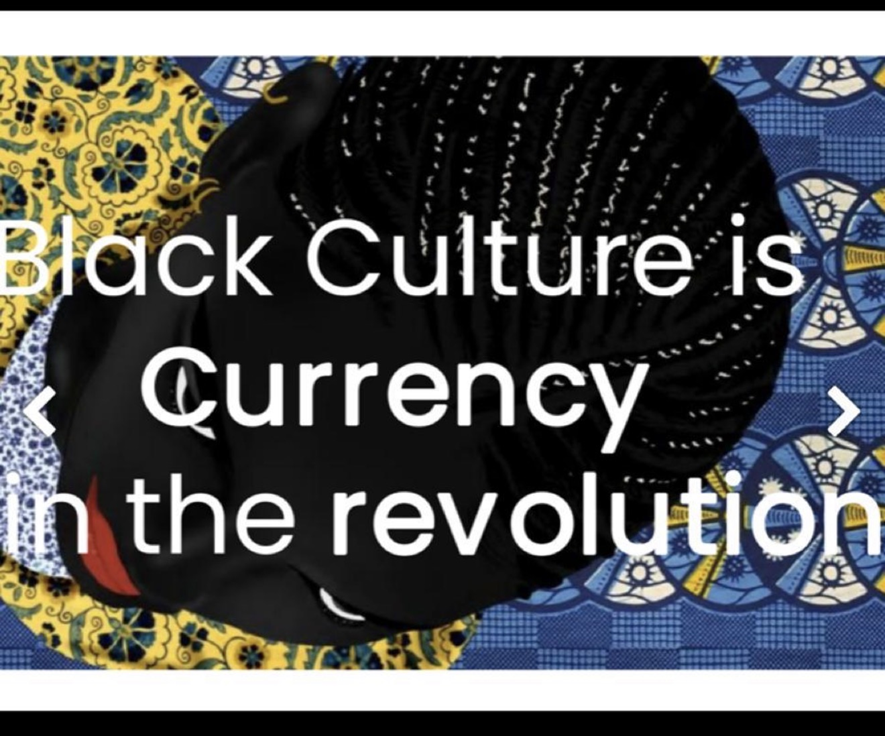
The objective is not to lock culture away. It is to unlock value without surrendering ownership. Our fabrics should create prosperity for the communities that developed them. Our music and dance should generate enduring rights and institutions, not only moments of global attention. Our stories and mythologies should become books, films, theatre, games, animation, education and immersive experiences on terms shaped by us. Our knowledge of herbs and healing must be documented and researched responsibly, with scientific rigour, cultural respect and fair benefit-sharing.
“Black Culture is Currency in the Revolution.” The image captures the central economic argument of Ncheta: memory and culture are not ornamental inheritances but stores of knowledge, identity, intellectual property and sovereign value. Influence must become ownership, rights, institutions and shared prosperity.
We are not starting from nothing. Nollywood and Afrobeats have already demonstrated that Nigerian stories, sounds and cultural codes can travel across the world at extraordinary scale. They have created audiences, industries and new possibilities for millions of people. Ryan Coogler’s work shows how powerfully African histories, symbols and knowledge can enrich global cinema. When filmmakers elsewhere are drawing upon our masks, scripts, resistance stories and spiritual imagination, the message is clear: the material is already globally compelling.
Nor did Nigeria’s global cultural presence begin with Nollywood or Afrobeats. Chinua Achebe’s Things Fall Apart has carried an African worldview across the world since 1958. Wole Soyinka became a global literary and theatrical force from the 1960s, and Chimamanda Ngozi Adichie is now an international cultural superstar. They demonstrate that when Nigerian writers speak from the depth and particularity of our experience, the world listens.
Our fashion and food are also globalising, increasingly animated by the energy
and visibility of the music. Afrobeats has become more than a genre: it is an accelerator carrying language, clothing, dance, beauty, cuisine, cities and attitude into global consciousness. But visibility is only the surface. We must go deeper than the style around the music into the civilisational reservoir beneath it.
We must move from exporting aesthetics to expressing whole knowledge systems: the philosophies behind our stories, the cosmologies behind our symbols, the histories behind our fabrics, the communities behind our food, and the rituals, ethics and social ideas behind our performance traditions. The world has encountered our sound and our style. It is time for it to encounter the full depth of our thought.
Now we must move with greater intention. We must give our own creators the research, financing, archives, rights management, technology and distribution required to build from the full depth of our inheritance. Influence is important, but influence without ownership leaves value on the table. We must move from being referenced to becoming the principal authors, producers, rights-holders and beneficiaries of the stories that come from us.
We have not even touched the full scale of what we possess. The danger is that if we do not document, protect and develop it, others will continue to extract fragments, rename them, commercialise them and sell them back to us.
This is the moment to move from cultural influence to protected assets, from protected assets to enterprise, and from enterprise to intergenerational value. Our IP framework is not a technical side issue. It is part of how we recover memory, defend identity, create wealth and build forward.
The world has encountered fragments of Africa, but it is still waiting to experience our full essence. Nigeria alone contains many nations, peoples, languages, histories, philosophies and creative traditions. Each carries worlds of knowledge and imagination capable of generating new literature, cinema, theatre, music, fashion, food, design, science, technology and enterprise.
We are not one story. We are thousands of stories – ancient, contemporary and still unfolding. The talent is present. The cultural material is present. The audiences are waiting. Our people are ready. The many nations and peoples of Nigeria are ready to roll.
It is time, people. It is time.
Healing the Black Atlantic: a coordinated global act of release
The work I am now pushing towards is a coordinated act of remembrance and healing on a global scale, timed across the Atlantic world and designed with the relevant communities, traditional institutions and spiritual custodians. Its purpose would be to honour those who were denied the final rites through which their communities would ordinarily have accompanied them; to acknowledge the nearly two million people estimated to have died during the Middle Passage, alongside the many losses that cannot be fully counted; and, within the spiritual frameworks of participating traditions, to release the pain, negative energies and unsettled memory surrounding those unfinished rites. I offer this as a cultural and spiritual proposition, not as a scientific claim. The healing lies in remembrance, recognition, ritual responsibility and coordinated human action.
The Atlantic is the pathway that separated this world and the pathway through which it can be reconnected. Nigeria has roughly 850 kilometres of Atlantic coastline. Old Calabar, Bonny, Opobo, Lagos and Badagry sit within a wider geography of forced departure that extends immediately west to Ouidah and across the ports and routes of West and Central Africa. SlaveVoyages estimates identify the Bight of Biafra as one of the major embarkation regions of the transatlantic trade; Old Calabar and Bonny were among its most consequential ports. No single percentage can capture the full Nigerian share, because historic regions, modern borders, internal routes and incomplete records do not align neatly. What the evidence does establish is that the ancestral reach of the peoples of present-day Nigeria across the Black Atlantic is immense.
This is why I speak of Nigeria not as the owner of the Black Atlantic story, but as one of its great points of responsibility and return. Claims such as “seven out of ten Black people are Nigerian or of Nigerian descent” express the felt scale of that connection, but they cannot presently be established as a demographic statistic and should not carry the argument. The stronger truth is already sufficient: millions departed through the Bights of Benin and Biafra and neighbouring routes; their descendants helped form societies across the Americas and Caribbean; and Nigeria has a profound duty to help build the spiritual, cultural and institutional bridge home.
The circle of remembrance must therefore include Lisbon and the other European ports that organised and profited from the traffic; Bahia, Kingston and the Caribbean; Haiti and Cuba; Colombia and Ecuador; Brazil and the mainland Americas; and the many coastal and inland communities through which captive Africans were taken, sold, transported and dispersed. DNA is now making biological connections increasingly visible, but connected culture had already preserved the evidence in rhythm, language, food, dance, burial, healing, family practice, sacred symbols and collective memory. The archive lives not only in documents, but in bodies, communities and repeated forms of cultural recognition.
In some parts of the diaspora, the gods travelled so successfully that African divinities and ritual systems remain more publicly visible than in some of the communities from which they came. Vodou in Haiti, Lucumí and Regla de Ocha in Cuba, Candomblé in Brazil, Orisha traditions in Trinidad and related practices across the Americas demonstrate that African spirituality was not extinguished; it adapted, protected itself, entered new languages and continued to organise community. At home, many indigenous systems were driven underground or diminished through missionary Christianity, colonial rule, religious conquest, modern state power and social stigma. Christianity and Islam have also been indigenised and made fully African by generations of believers, so the point is not to deny anyone’s faith. It is to end the unequal treatment that honours imported traditions while calling ancestral African traditions primitive, shameful or unreal.
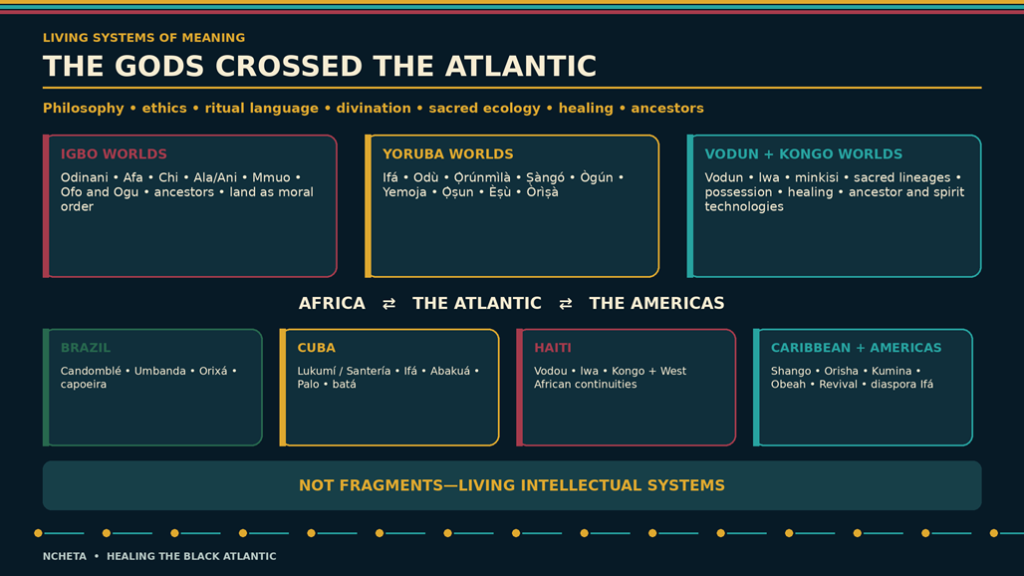
Infographic: African philosophies, divinities and sacred systems crossed the Atlantic and remain living institutions throughout the diaspora.
The United States of America must be named explicitly within this geography. Charleston and the wider South Carolina Lowcountry, the Chesapeake and Virginia, Savannah and Georgia, New Orleans and the Gulf Coast were major destinations and centres of redistribution. Direct arrivals in mainland North America represented less than four per cent of the total transatlantic landings recorded in the historical estimates, but that figure must never be used to minimise the scale of United States slavery. Forced reproduction, the domestic slave trade and the internal sale and movement of African-Americans expanded the enslaved population and carried people, culture and memory across the continent. America is therefore one of the central sites at which remembrance, final rites, historical accountability and reconnection must take place.
We must also name Europe as the organising and commercial driver of the system. Lisbon and other Portuguese ports; Seville and Cádiz; Liverpool, Bristol and London; Nantes, Bordeaux and La Rochelle; Amsterdam and Middelburg; Copenhagen and other European centres supplied ships, finance, insurance, manufactured goods, weapons, legal authority and imperial protection. European crowns, merchants, investors, banks, insurers, shipbuilders and plantation interests constructed the machinery that converted kidnapped Africans and their descendants into capital. The Middle Passage did not simply happen between Africa and the Americas. It was designed, financed, legislated and defended from Europe.
Within the Caribbean and the Americas, landing and translocation ports must likewise be called by name: Kingston and other Jamaican ports; Bridgetown in Barbados; Havana and Matanzas in Cuba; Cap-Français and other ports of Saint-Domingue, now Haiti; Willemstad in Curaçao; ports in Martinique, Guadeloupe, Trinidad and the Guianas; Cartagena de Indias and routes into Colombia and Ecuador; Veracruz and the Spanish mainland; Salvador da Bahia, Recife and Rio de Janeiro in Brazil; and Charleston, Savannah, the Chesapeake and New Orleans in the United States. These were not only endpoints. Many became hubs from which enslaved people were sold again and forcibly relocated within the Caribbean and across the American mainland.
The animated Atlantic-slave-trade map created by Andrew Kahn and Jamelle Bouie from the Trans-Atlantic Slave Trade Database makes this system visible. More than twenty thousand documented voyages appear as moving points across 315 years; the larger the point, the more people carried on that voyage. Behind each point were names, families, skills, gods, languages and futures. The visual record helps us see why an Atlantic-wide ceremony must call the routes and places by name: not to turn suffering into spectacle, but to transform data into remembrance and every recorded passage into an obligation to honour the people who were taken.
Infographic: The Atlantic routes. Naming European organising ports, African embarkation shores and destinations across the Caribbean and Americas as sites of memory and responsibility.
Culture connects us and empowers us. It is time for Africans and Global Africans to stop allowing others to frame the meaning of our history for us. That framing has repeatedly removed our agency: beginning the story at capture, reducing accomplished people to anonymous labour and sometimes leaving the obscene impression that Africans were somehow complicit in, passive before or responsible for their own suffering. We must reject that architecture of narrative. Africans resisted at every stage; preserved knowledge under impossible conditions; rebuilt family, faith and culture in new worlds; and transformed every society into which they were carried. Reclaiming the narrative does not deny complexity or internal responsibility where evidence establishes it. It restores proportion, authorship and the central fact that the Atlantic system was designed and driven by powers that profited from African dispossession. Our culture is the evidence of survival and the instrument through which we reconnect, heal and act with agency.
The Atlantic current: return was also part of the journey
The Atlantic story did not end with forced departure. From the nineteenth century onward, liberated Africans, formerly enslaved people and their descendants returned to West Africa through Sierra Leone and Liberia and from Brazil, Cuba and the wider Caribbean. In Nigeria, Saro and Aguda or Amaro communities became powerful agents in education, printing, religion, commerce, law, building and public life. Their return reshaped Lagos, Abeokuta and other cities, and Afro-Brazilian influence remains visible in architecture, food, carnival, music, fashion and patterns of social life.
This is why the story must be drawn as a current rather than a single arrow. Africa travelled outward under coercion; African knowledge survived and recombined across the Atlantic; and people, practices and institutions also travelled home. Return did not restore a world unchanged. It produced new African modernities and new forms of kinship linking Bahia, Cuba, Jamaica, Freetown, Monrovia, Lagos, Ouidah, Porto-Novo and communities across the continent and diaspora.
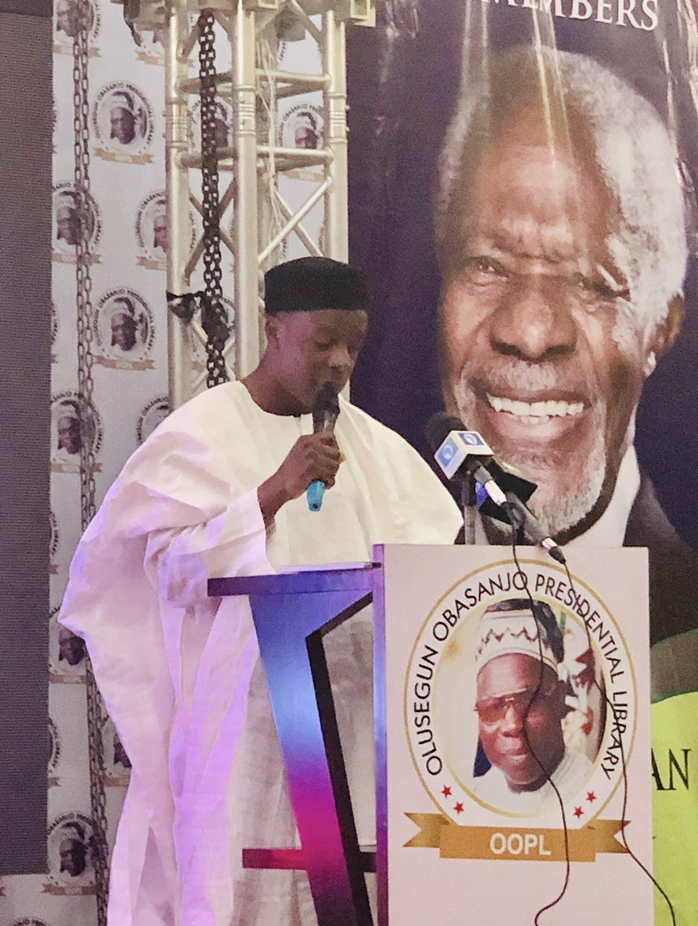
My own bridges belong inside this longer history. Kojo Annan—my brother and partner—is the only son of Kofi Annan, Ghanaian through his father and Nigerian through his mother, and for me a living example of the Global African. He is the maternal grandson of Sir Adeyemo Alakija KBE, a major lawyer, newspaper founder and public figure from a prominent Afro-Brazilian returnee family. That lineage, and the contemporary relationships I have built with cultural, media, business and technology leaders across the diaspora, show that the return is not merely historical. It is continuing work: rebuilding relationship, exchanging knowledge, preserving archives and restoring African agency.
Kojo Annan speaking at the memorial for his father, Kofi Annan, at the Olusegun Obasanjo Presidential Library in Abeokuta. The image embodies memory as responsibility: a Ghanaian–Nigerian life carrying family legacy into a continuing Global African future.
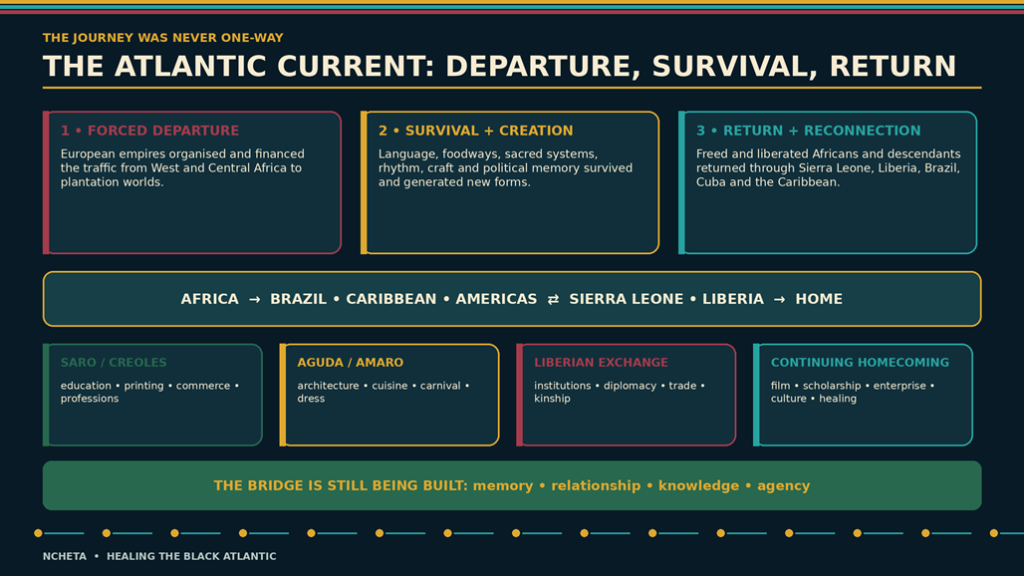
Infographic: The Atlantic current—from forced departure and cultural survival to return, recombination and continuing reconnection.
A return to Igbo Landing – and beyond
I believe we must return to Igbo Landing with Gerald Eze, Gullah Geechee and African-American leaders, and senior African traditional leaders, including the Obi of Onitsha, the Ooni of Ife, the Emir of Kano and His Majesty the Asantehene of the Ashanti Kingdom in Ghana.
The invitation must extend beyond an official delegation to every traditional leader, cultural custodian, family, community and Global African who feels moved to move. Igbo Landing should be the beginning, not the boundary.
Jamaica, Brazil and Cuba are important next locations, but they cannot be treated as an exclusive list. Our people were taken across the Caribbean, North, Central and South America, Europe and many other places touched by the Black Atlantic. In each place, they carried knowledge, belief, language, music, food, spirituality, resistance and memory. Every community shaped by this history must be able to participate.
These gatherings must never become spectacles. They must be serious cultural and spiritual undertakings, designed with the relevant communities and custodians: opportunities to remember, mourn, heal, reconnect and confront inherited pain without allowing pain to define our future.
A wake-up call: memory must become action
This essay is a wake-up call. It is not enough for readers to be moved by Igbo Landing, angered by continuing racism or inspired by the survival of African culture. Emotion without organisation fades. Memory without action can be buried again. Every one of us has work to do.
Families must preserve photographs, letters, names, songs and oral histories before another generation of elders passes. Communities must document their festivals, languages, sacred practices, crafts and knowledge systems in their own voices. Schools and universities must teach African history as world history, not as a marginal appendix to somebody else’s civilisation.
Traditional institutions and cultural custodians must create serious pathways for diaspora return, learning and participation. Historians, artists, filmmakers and journalists must tell these stories with scale, accuracy and imagination. Technologists must build the tools, datasets and platforms through which our languages, archives and knowledge can survive in the digital age.
African and diaspora capital must fund this work. Governments must protect archives, heritage sites and cultural rights. Media owners must create channels through which Global Africans can see themselves with complexity and dignity. Individuals must refuse the convenience of self-erasure and begin the work of learning, preserving and sharing their own family histories.
No single government, platform, traditional ruler or institution can complete this work alone. The call is to everyone. Wherever you stand – in Africa, the Caribbean, the Americas, Europe or anywhere our people were carried – there is something you can preserve, teach, build, fund, connect or defend.
Do not wait to be invited into your own history. Become active in its recovery. The purpose of memory is not simply to know what happened. It is to change what happens next.
Ncheta: memory as a responsibility to tomorrow
This is not only about recovering history; it is about reclaiming full authorship of ourselves, by ourselves.
When descendants of the people taken from Africa sought freedom from the institutions and instruments of their subjugation, they did not always look towards indigenous West African practices. One reason is painful: many West Africans had themselves been taught to abandon or denigrate the traditional practices that once served as sources of mental, cultural and spiritual power.
We must stop being afraid of our own reflection in the mirror. Owning our narrative gives us the power to confront inherited trauma without being imprisoned by it. It gives us the power to heal, reconnect and recover relationships that history tried to break. It helps us break the shackles of self-loathing instilled through enslavement and colonialism.
This is not about retreating into the past. It is about what Igbo philosophy calls Ncheta. The word is often translated simply as memory, but its meaning is more active. Ncheta asks us to guard today. It carries yesterday into today and allows both to form tomorrow.
For me, Ncheta is also inseparable from my mother. Those countless conversations were her way of carrying memory forward: teaching me that history is not something we inherit passively, but something we must protect, interpret and turn into possibility. If this essay asks us to remember in order to build, it is because she taught me that remembrance must always have a future.
We remember so that we can build forward together, with greater knowledge of who we are, deeper respect for what our ancestors carried and a stronger responsibility to one another. We remember taa – today – so that we can build a greater sense of self for tomorrow.
Those who live in denial must now be confronted – not with hatred, but with evidence, confidence, cultural authority and institutions strong enough to preserve and transmit our truth. We are not asking permission to exist inside history. We are taking responsibility for telling it.
That is why this article is written in memory of Professor Jason Arday. We must not allow the circumstances surrounding his death to become the final word on his life. The final word must be his light, his intellectual achievement and the possibility he represented. We answer erasure with memory, grief with action, separation with reconnection and dehumanisation with joy. That is why we need intentional platforms that protect us and bring us together. There is literally nothing more important when you understand what is truly at stake. Our joy is not an escape from history; it is an act of sovereignty and defiance. We will remember the light. We will carry it forward.
I also want to thank Misan Harriman, whom I have known for most of his life, for his work and commentary at this difficult moment. Misan is an award-winning photographer, an Oscar-nominated filmmaker and one of the defining British-Nigerian creative voices of his generation. He has led the Southbank Centre with distinction, used his platform to elevate others and consistently insisted that Black people and those too easily pushed outside the frame must be seen with complexity, empathy and dignity. His willingness to speak truth, informed by his own experience of racism, reflects both moral courage and a profound belief in inclusion. His photography, filmmaking, leadership and public voice remind us that memory must not only honour those we have lost; it must also protect the living, defend their dignity and preserve their joy. I celebrate him and thank him for refusing silence.
The Atlantic separated us. Memory preserved us. Our stories will reconnect us.
Now we must rekindle the fire: owning our narrative, healing together and building forward as one Global African family.
We have known the story. We have carried its memory.
Now we are here to tell it – our way.
Selected References and Public Sources
• UNESCO, General History of Africa, multi-volume scholarly series.
• John Henrik Clarke, Africans at the Crossroads: Notes for an African World Revolution (Africa World Press).
• Yosef A. A. ben-Jochannan, Black Man of the Nile and His Family (Black Classic Press).
• Cheikh Anta Diop, The African Origin of Civilization: Myth or Reality (Lawrence Hill Books).
• Howard W. French, Born in Blackness: Africa, Africans, and the Making of the Modern World, 1471 to the Second World War (Liveright, 2021).
• Toby Green, A Fistful of Shells: West Africa from the Rise of the Slave Trade to the Age of Revolution (Allen Lane, 2019).
• Paul Gilroy, The Black Atlantic: Modernity and Double Consciousness (Verso, 1993).
• Georgia Historical Society, Ibo Landing: The Legacy of Resisting Enslavement.
• Gullah Geechee Cultural Heritage Corridor, cultural history and community resources.
• SlaveVoyages, Trans-Atlantic Slave Trade Database.
• IBM, historical profile of Mark Dean and the development of the IBM personal computer.
• United States Patent and Trademark Office, historical profiles and Henry E. Baker’s records of African-American patent holders.
• Smithsonian Lemelson Center for the Study of Invention and Innovation, Black Inventors and Innovators: New Perspectives.
• Historic England, research on the transatlantic slave economy, plantation wealth and Britain’s built environment.
• University College London, Legacies of British Slave-ownership database and research on the £20 million compensation settlement.
• University of Cambridge, profile of Professor Jason Arday; public reporting and statements following his death, August 2026.
About the author
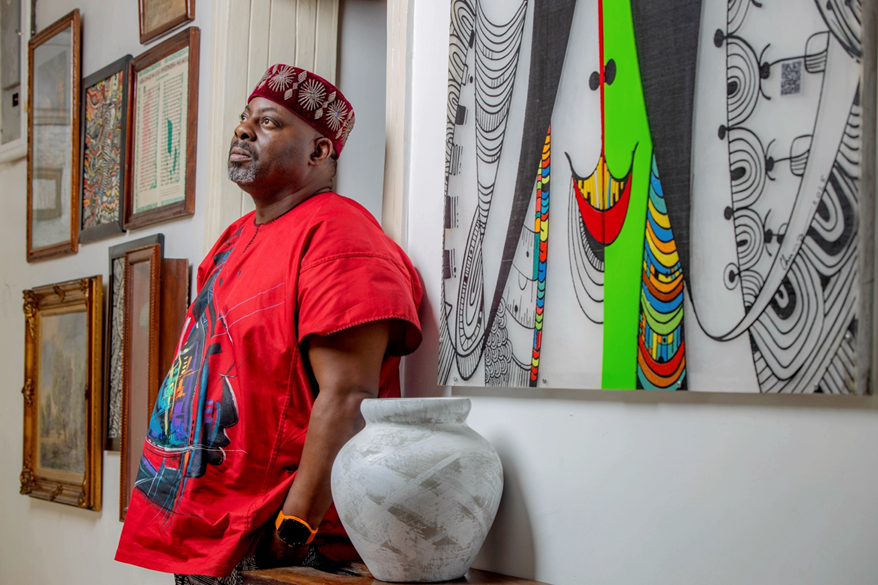
Obi Asika, author of Ncheta: Igbo Landing and the Work of Healing the Black Atlantic.
Obi Asika is a Nigerian creative-industries entrepreneur, cultural strategist, institution-builder and public servant whose work across music, television, live events, sports, technology, heritage and public policy spans more than three decades. He founded Storm 360 and helped build influential platforms including Big Brother Nigeria, Social Media Week Lagos and The Omniverse.
He is the founder of Iba Ajie—the Ukpabi and Chinyere Asika Resource Centre in Onitsha—a living archive and cultural institution preserving family, community and national memory. He currently serves as Director-General/Chief Executive Officer of Nigeria’s National Council for Arts and Culture. His work is guided by the conviction that culture is sovereign power and that Africa must move from influence to industry, ownership and enduring value.
PERSONAL-CAPACITY STATEMENT
This essay expresses the author’s long-held personal philosophy, historical interpretation and intellectual perspective. It is written in a personal capacity and does not represent the official position of the National Council for Arts and Culture, the Federal Ministry of Art, Culture, Tourism and the Creative Economy, or any other institution of the Federal Government of Nigeria.