
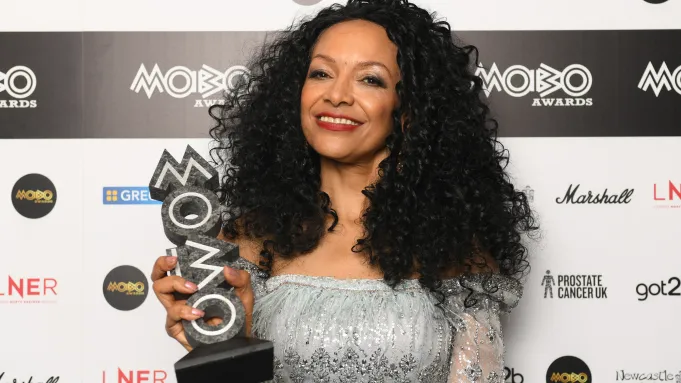
Mobo Awards founder Kanya King has been remembered as a “visionary” who “changed the face of culture and music”, following her death at the age of 57.
King worked tirelessly to champion black musicians’ contribution to British culture and funded the first Music of Black Origin awards in 1996 out of her own pocket.
BBC on Friday reported that she died on Wednesday after “a courageous and characteristically determined battle with colon cancer”, the Mobo Organisation said in a statement.
Tributes have been paid by stars including TV host and Mis-Teeq singer Alesha Dixon, who called King an “incredible woman”, adding: “You helped so many people, your impact is immeasurable!”
Stormzy posted heart and dove emojis, while Sir Idris Elba said she was gone “too soon”.
The Luther actor posted: “You inspired me. Your dedication is unmatched. I will miss you @kanyakingcbe; we will all miss you.”
JLS star Oritsé Williams said she was “a pioneer” who had “created a powerful platform that championed cultures, communities and talent that were often unseen and underrepresented, despite our cultural influence being felt across the world”.
Williams added: “You didn’t just create opportunities; you created belief—belief in our culture, our creativity and our potential.
“You are an icon, a true visionary. I trust and believe that your impact will be felt for generations to come.”
London Mayor Sadiq Khan echoed his sentiments, calling King “a true pioneer” who “changed the face of culture and music”.
Culture Secretary Lisa Nandy added: “She was a real pioneer who changed British music for the better through the MOBO Awards.”
King’s family said they were “devastated” by her death.
“She faced every moment of her illness as she faced every moment of her life: with courage, with faith, with humour, and with an absolute refusal to be diminished,” they said.
Through the Mobos, she gave “an entire generation of black British artists the right to be seen, to be celebrated, and to be heard on their own terms”, they added.
“Kanya leaves behind 30 years of music, of joy, of resistance, of proof—proof that one woman, with vision, nerve, and love, can move an entire culture.
“We are broken. We are grateful. We are so profoundly, endlessly proud to have been her family.
“Kanya King CBE. Gone too soon. Never, ever forgotten.”
Defied expectations
Over three decades, the Mobos have become globally renowned for their recognition of black talent—platforming upcoming stars and pushing to break industry boundaries.
King defied expectations as a teenage mother who dropped out of school to gatecrash the predominantly white, male music industry.
She studied English literature at London’s Goldsmiths College and later, while working as a TV researcher, spotted a gap in the market for a black-focused awards show.
But success did not come easily.
“I remember being told, ‘You’ve got a chip on your shoulder, why are you talking about race all the time?’” she told Music Week in 2021.
By 1999, King had been awarded an MBE for services to music, as the Mobos grew from scrappy underdog to music industry fixture, holding its own against the long-established Brit Awards.
Its musical spectrum remains uniquely broad—giving early support to UK garage at the turn of the millennium, alongside R&B, soul, reggae, jazz, Afrobeat and broader African music, and championing grime before its mainstream explosion.
Growing up as the youngest of nine children in a cramped council flat in Kilburn, north London, King’s upbringing inspired her forthright passion for change and her entrepreneurial spirit.
She told the Evening Standard she felt “written off” when she became a mother at 16, recalling a careers adviser suggesting her best prospect was managing a local Sainsbury’s.
“That put a fire in my belly and gave me the motivation to say, ‘Why should I not have ambition’,” she added.
Mobo magic
Her aim with the Mobos, she would later write for The Times, was to bridge the “real music divide” that existed at the time, with R&B and hip-hop “completely ignored” by award shows.
Getting it off the ground wasn’t easy, especially as someone attempting to reshape the industry from the outside.
“Rejection became normalised,” she told Music Week. “People didn’t want to take my calls.”
But she made it happen through persistence, eventually gaining support from the few black industry executives of the time, like Dej Mahoney and Stevie Wonder’s former manager Keith Harris.
“My bedroom was my office,” she explained to 1Xtra. “I was answering the phone saying ‘Mobo Organisation’.
“People didn’t need to know I had clothes everywhere and the room was in disarray!”
Her tenacity paid off. The first televised event, held at the Connaught Hotel in London, appeared to come out of nowhere—just seven weeks after her pitch was accepted.
But the ceremony made headlines when Labour’s soon-to-be Prime Minister Tony Blair attended with his wife Cherie, walking the red carpet alongside King.
At the ceremony itself, Lionel Richie accepted the Mobo’s first-ever lifetime achievement accolade on stage with Tina Turner.
King’s mother, meanwhile, spent the evening asking Blair if he could find her daughter a job in the government. It wasn’t until 1999, when King received her MBE, that her mother finally accepted the awards as more than a passion project.
AFP
King worked tirelessly to champion black musicians’ contribution to British culture and funded the first Music of Black Origin awards in 1996 out of her own pocket.
BBC on Friday reported that she died on Wednesday after “a courageous and characteristically determined battle with colon cancer”, the Mobo Organisation said in a statement.
Tributes have been paid by stars including TV host and Mis-Teeq singer Alesha Dixon, who called King an “incredible woman”, adding: “You helped so many people, your impact is immeasurable!”
Stormzy posted heart and dove emojis, while Sir Idris Elba said she was gone “too soon”.
The Luther actor posted: “You inspired me. Your dedication is unmatched. I will miss you @kanyakingcbe; we will all miss you.”
JLS star Oritsé Williams said she was “a pioneer” who had “created a powerful platform that championed cultures, communities and talent that were often unseen and underrepresented, despite our cultural influence being felt across the world”.
Williams added: “You didn’t just create opportunities; you created belief—belief in our culture, our creativity and our potential.
“You are an icon, a true visionary. I trust and believe that your impact will be felt for generations to come.”
London Mayor Sadiq Khan echoed his sentiments, calling King “a true pioneer” who “changed the face of culture and music”.
Culture Secretary Lisa Nandy added: “She was a real pioneer who changed British music for the better through the MOBO Awards.”
King’s family said they were “devastated” by her death.
“She faced every moment of her illness as she faced every moment of her life: with courage, with faith, with humour, and with an absolute refusal to be diminished,” they said.
Through the Mobos, she gave “an entire generation of black British artists the right to be seen, to be celebrated, and to be heard on their own terms”, they added.
“Kanya leaves behind 30 years of music, of joy, of resistance, of proof—proof that one woman, with vision, nerve, and love, can move an entire culture.
“We are broken. We are grateful. We are so profoundly, endlessly proud to have been her family.
“Kanya King CBE. Gone too soon. Never, ever forgotten.”
Defied expectations
Over three decades, the Mobos have become globally renowned for their recognition of black talent—platforming upcoming stars and pushing to break industry boundaries.
King defied expectations as a teenage mother who dropped out of school to gatecrash the predominantly white, male music industry.
She studied English literature at London’s Goldsmiths College and later, while working as a TV researcher, spotted a gap in the market for a black-focused awards show.
But success did not come easily.
“I remember being told, ‘You’ve got a chip on your shoulder, why are you talking about race all the time?’” she told Music Week in 2021.
By 1999, King had been awarded an MBE for services to music, as the Mobos grew from scrappy underdog to music industry fixture, holding its own against the long-established Brit Awards.
Its musical spectrum remains uniquely broad—giving early support to UK garage at the turn of the millennium, alongside R&B, soul, reggae, jazz, Afrobeat and broader African music, and championing grime before its mainstream explosion.
Growing up as the youngest of nine children in a cramped council flat in Kilburn, north London, King’s upbringing inspired her forthright passion for change and her entrepreneurial spirit.
She told the Evening Standard she felt “written off” when she became a mother at 16, recalling a careers adviser suggesting her best prospect was managing a local Sainsbury’s.
“That put a fire in my belly and gave me the motivation to say, ‘Why should I not have ambition’,” she added.
Mobo magic
Her aim with the Mobos, she would later write for The Times, was to bridge the “real music divide” that existed at the time, with R&B and hip-hop “completely ignored” by award shows.
Getting it off the ground wasn’t easy, especially as someone attempting to reshape the industry from the outside.
“Rejection became normalised,” she told Music Week. “People didn’t want to take my calls.”
But she made it happen through persistence, eventually gaining support from the few black industry executives of the time, like Dej Mahoney and Stevie Wonder’s former manager Keith Harris.
“My bedroom was my office,” she explained to 1Xtra. “I was answering the phone saying ‘Mobo Organisation’.
“People didn’t need to know I had clothes everywhere and the room was in disarray!”
Her tenacity paid off. The first televised event, held at the Connaught Hotel in London, appeared to come out of nowhere—just seven weeks after her pitch was accepted.
But the ceremony made headlines when Labour’s soon-to-be Prime Minister Tony Blair attended with his wife Cherie, walking the red carpet alongside King.
At the ceremony itself, Lionel Richie accepted the Mobo’s first-ever lifetime achievement accolade on stage with Tina Turner.
King’s mother, meanwhile, spent the evening asking Blair if he could find her daughter a job in the government. It wasn’t until 1999, when King received her MBE, that her mother finally accepted the awards as more than a passion project.
AFP