
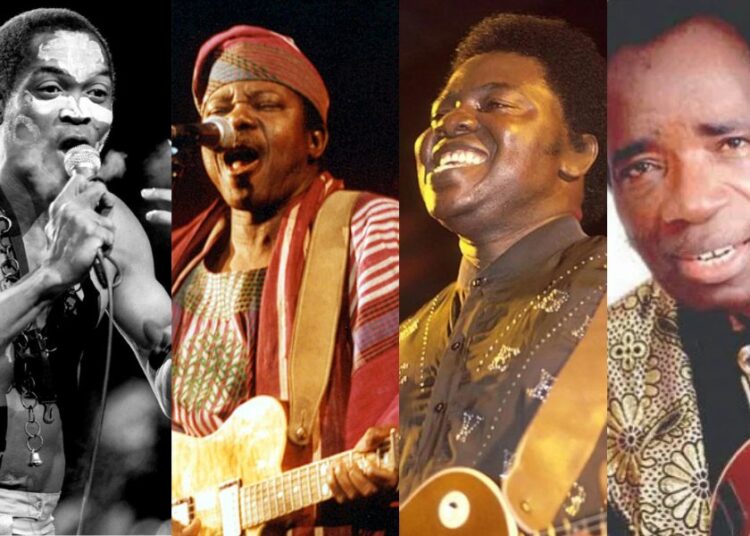
Afrobeats is now a worldwide phenomenon rather than a local sound. Afrobeats has emerged as one of Africas most important cultural exports with albums on Spotify and Apple Music dominating playlists and sold-out arenas in Europe and America. However a number of renowned Nigerian musicians laid the groundwork long before artists like Burna Boy, Wizkid and Davido swept the globe.
These innovators created a distinctive musical style that has developed into what is now known as Afrobeats by fusing contemporary sounds with traditional African rhythms. This article examines the key Nigerian musicians whose inventions hardships and artistic brilliance enabled Afrobeats to become a worldwide phenomenon.
1. Fela Anikulapo Kuti – The Godfather of Afrobeat
Without mentioning Fela Kuti no discussion of Afrobeats can begin. Although Felas original Afrobeat genre is different from Afrobeats (spelled with an s) there is no denying the connection. Fela combined jazz funk highlife and traditional Yoruba rhythms to create Afrobeat in the late 1960s. But he began a movement in addition to making music.
Infectious rhythms and biting political commentary were combined in his songs such as “Zombie “Water No Get Enemy and “Sorrow Tears and Blood”. The lyrical bravery instrumental arrangements and sense of cultural pride present in contemporary Afrobeats are all clear examples of Felas influence.
Todays musicians openly acknowledge Fela as a fundamental influence particularly Burna Boy. Fela established the standard for succeeding generations of artists with his emphasis on African identity self-expression and confronting colonial legacies. International artists ranging from Beyoncé to J sample and reference his timeless music. Cole.
2. King Sunny Adé – The Juju Maestro
King Sunny Adé has made a significant contribution to the international appreciation of Nigerian music even though it is not strictly classified as Afrobeats. Unquestionably the king of Juju music he created an approachable yet distinctively Nigerian sound by fusing guitars synthesizers and contemporary instruments with traditional Yoruba percussion.
He made his breakthrough in foreign markets in the 1980s playing on stages all over the world and even receiving a Grammy nomination which was unusual for African musicians at all.
His flawless stage presence deft guitar playing and genuine cultural identity impacted the professionalism and aspirations of todays Afrobeats artists. African music was demonstrated by King Sunny Adé to be both firmly anchored in tradition and globally commercially successful.
3. Ebenezer Obey – The Philosopher with a Guitar
Stories were introduced to Nigerian music by Ebenezer Obey another Juju legend. His lyrics which were frequently encased in catchy guitar riffs and rhythmic percussion frequently contained social commentary moral lessons and philosophical reflections. Because of Obeys music musicians now view music as a means of enlightenment and social change rather than merely as entertainment.
His serene yet captivating performance opened the door for musicians who use music to address topics like poverty corruption and resiliency—themes that are prevalent in many contemporary Afrobeats songs.
4. Sir Victor Uwaifo – The Guitar Boy Genius
Famous for his highlife hits like “Joromi” Sir Victor Uwaifo combined modern instrumentation with his Edo cultural heritage. The first Nigerian musician to win a gold disc Uwaifo is renowned for his inventive electric guitar playing and flamboyant performances.
Afrobeats musicians would later be inspired to experiment with indigenous sounds and regional languages by his creativity and originality. His skill at fusing pop sensibilities with traditional folklore demonstrated to subsequent generations how to make African storytelling more widely known.
5. Onyeka Onwenu – The Elegant Stallion
One of the few female musicians to succeed in the male-dominated Nigerian music scene of the 1980s and 1990s was Onyeka Onwenu also known as The Elegant Stallion.
Her songs touched on topics like nationalism love and womens rights. She developed a style that was both conscious and commercial by fusing pop highlife and Igbo traditional music. Her popular songs such as “One Love” and “Iyogogo” reflected the values that todays Afrobeats artists frequently advocate: unity and cultural pride.
Todays stars like Tiwa Savage, Tems and Ayra Starr were made possible by her demonstration that female musicians could be both commercially successful and culturally relevant.
6. Majek Fashek – The Rainmaker
By fusing reggae with African rhythms and spiritual liberation messages Majek Fashek introduced the genre to the Nigerian mainstream. Send Down the Rain his 1988 hit is still regarded as one of Nigerias most famous songs. He had widespread appeal and infused African music with elements of rock soul and reggae. Future Afrobeats musicians who wanted to share African stories in a universal way found inspiration in Majeks activism and global perspective.
It was demonstrated by his appearance on MTV and other international platforms that Nigerian musicians could travel the world without sacrificing their message.
7. Daddy Showkey – The Ghetto Soldier
Through Galala a dance and music genre originating in the streets of Ajegunle Lagos Daddy Showkey introduced the ghetto experience into Nigerian popular culture in the late 1990s and early 2000s. Despite being a period of transition it elevated street culture and regional music. Success didnt have to come from upper-class circles as demonstrated by artists like Showkey.
Inspiring artists like Olamide, Zlatan and others who would go on to dominate street-pop and add to the diversity of Afrobeats his music celebrated the hardships and vitality of regular Nigerians.
8. 2Baba (formerly 2Face Idibia) – The Pop Prophet
Perhaps the link between the contemporary Afrobeats movement and Nigerias elder musicians was 2Baba. African Queen his 2004 solo hit was a cultural revolution. Nigerian pop music gained international recognition thanks to the song which also signaled a change to the catchy romantic sound that characterizes a lot of Afrobeats today.
Formerly a member of Plantashun Boiz 2Baba brought simplicity and sincerity to African rhythms reggae and RandB. His popularity in the diaspora and throughout Africa demonstrated that Nigerian pop music could be sold abroad. He served as an inspiration to a generation of Afrobeats artists who viewed commercial music as both a business and an art form.
9. D’banj – The Entertainer Who Took Africa to the World
In the middle of the 2000s Dbanj and producer Don Jazzy transformed the Nigerian music industry. Hits including “Oliver Twist“, “Why Me” and “Tongolo” were released by their label MoHits Records and made it into the UK charts.
Dbanj contributed to the development of Afrobeats pop culture identity with his charisma showmanship and global perspective. He signed with Kanye Wests G which opened doors. Okay. Oh. D Music and working alongside Big Sean and Snoop Dogg. He demonstrated to Afrobeats musicians that not only was the global stage within reach but it was also achievable. His audacious branding and marketing strategy has since been imitated by Davido and Wizkid.
10. P-Square – The Pop Duo Who Redefined African R&B
African pop music was revolutionized by the twin brothers Peter and Paul Okoye better known as P-Square. They became well-known throughout the continent thanks to their energetic performances catchy songs and elegant choreography. “Do Me”, “Personally” and “No One” Like You” are just a few of the songs that helped create the rhythmic danceable and broadly appealing sound that came to be known as Afrobeats. Nigerian music gained international recognition thanks to P-Squares commercial success international tours and partnerships (such as with Akon and Rick Ross).
Afrobeats didnt just appear overnight. It is the result of decades of inventiveness defiance joy and unrelenting imagination. Todays international stars are influenced by the story sounds and confidence that were created by the aforementioned legends.
They combined modern styles with traditional rhythms sang in their native tongues and dared to dream outside of Africas boundaries. From the rebellion of Fela to the soul of 2Baba from Sunny Adés global perspective to Dbanjs showbiz flair these pioneers laid the way for todays Afrobeats artists. These musical giants legacies are still essential and relevant as Afrobeats continues its rise around the world. In addition to creating music they also created history.
Credit: Leadership