
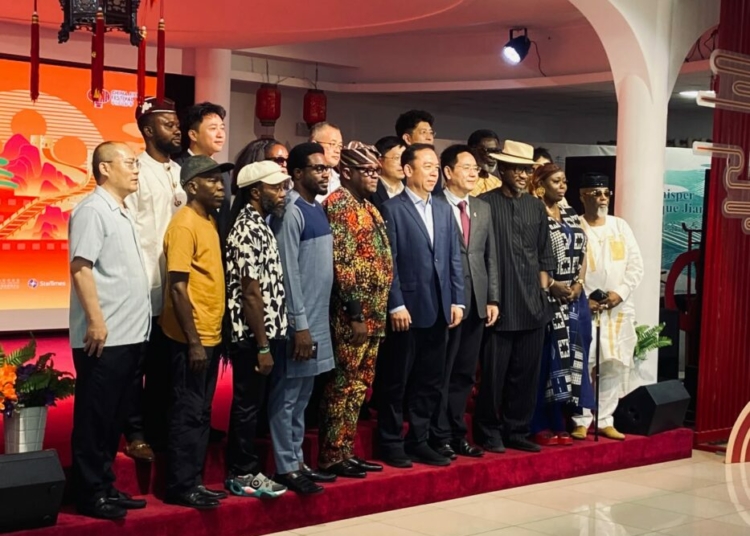
A groundbreaking strategic alliance poised to redefine the global footprint of African cinema has been unveiled in Abuja as Nollywood leaders and top Chinese film executives announced a direct commercial theatrical pathway between Nigeria and China.
The historic initiative, launched at the China Cultural Centre during the opening of the Chinese Film Exhibition in Nigeria 2026—hosted alongside the 23rd Abuja International Film Festival (AIFF)—aims to bypass traditional Western distribution gatekeepers and connect Nigerian storytelling directly to the world’s second-largest box office.
Addressing an audience of regulatory officials, foreign diplomats, and filmmakers, AIFF Founder Fidelis Duker framed the partnership as a strategic economic imperative for the continent’s creative economy.
“For too long, African stories have travelled to the world through third parties. Today, we are building a bridge directly from Lagos to Beijing,” Duker stated. “Nollywood is a global powerhouse of storytelling, driven by relentless grit and unparalleled local creativity. China possesses one of the most advanced film-technology infrastructures and the largest box office in the world. When you marry Nigerian narrative vitality with Chinese technical infrastructure, capital, and distribution expertise, the opportunities for our film industries are limitless.”
Duker emphasised that the deal goes beyond mere screening rights, focusing on capacity building for Nigerian youth. “This partnership opens direct channels for co-productions, technological exchange, and cross-continental market expansion. It gives our youth fresh horizons for capacity building and gives Nigerian stories a potential bridge into the massive Asian market.”
The collaboration brings heavyweights from both nations to the negotiating table, including representatives from the National Film and Video Censors Board (NFVCB) and key cinema distributors from Lagos.
Representing the Chinese distribution giant, Mr Dai Yiming, Chairman of Huaxia Film Distribution Co., Ltd., outlined the venture’s commercial viability, noting that Chinese audiences are eager for diverse, high-quality content.
“The Chinese market has grown exponentially, not just in revenue, but in appetite for diverse narratives,” Mr. Dai stated. “We have watched the rise of Nollywood with great interest. This partnership is not just about bringing Chinese films to West Africa; it is about taking Nigerian stories to millions of Chinese theatregoers. We are committing our distribution networks and technical expertise to ensure that this is a profitable exchange for both nations.”
The parties are currently conducting strategy sessions aimed at streamlining regulatory frameworks and establishing co-production channels, technology exchanges, and theatrical release avenues. A key focus is the “localization” of content, with plans to dub and broadcast productions into native African languages.
Yang Jianxing, Director of the China Cultural Centre in Nigeria, emphasised that the partnership aligns with China’s Global Civilisation Initiative, leveraging cinema to build enduring cross-cultural bridges rather than just commercial ties.
“Cinema is the universal language of the people,” Yang said. “By working together, Nigeria and China are not just trading films; we are exchanging souls and understanding. This partnership is a practical manifestation of the Global Civilisation Initiative, proving that when cultures meet through art, they create a resonance that transcends borders.”
He highlighted ongoing joint achievements, including the successful dubbing of productions into Hausa and other local languages, which have already begun to test the waters of cross-cultural viewership.
This year’s festival showcase features a lineup of critically acclaimed titles, including The Lychee Road, Blades of the Guardians, and Shadow Edge, with five Chinese feature films entering active competition for Saturday’s AIFF awards.