
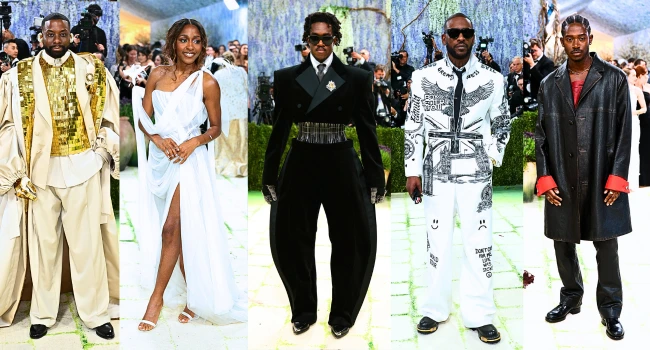
Nigerian talent and heritage stood out at the 2026 Met Gala, held Monday at the Metropolitan Museum of Art in New York, where stars embraced bold creativity under the theme “Costume Art” and dress code “Fashion Is Art.”
Even as full red carpet details continue to emerge, Nigerian influence was clearly visible both on the carpet and in the wider cultural conversation surrounding the event.
Co-chaired by global icons including Beyoncé and Venus Williams, the 2026 edition celebrated fashion as sculpture, where the human body became a canvas for storytelling, identity and expression.
British-Nigerian actor Damson Idris delivered one of the night’s standout moments, stepping out in a dramatic custom Prada ensemble. His oversized black leather coat layered over a striking red outfit, finished with bold gold jewellery, leaned fully into the evening’s artistic direction.
Music star Skepta also embraced the theme with a conceptual Thom Browne suit that featured embroidered versions of his tattoos, transforming body art into couture and aligning directly with the “Fashion is Art” brief.
On the Hollywood front, Nigerian-American actress Ayo Edebiri was among the African diaspora figures spotted at the gala, further reinforcing the growing presence of Nigerian heritage on one of fashion’s biggest stages.
Both John Imah and Ayo Edebiri also made notable appearances. Edebiri wore a structured white gown by Chanel, styled with a long, loose braid that gave her an ethereal, “angelic” presence on the red carpet. Imah, who attended alongside designer Charles Harbison, stood out among the men with a bold and distinctive look.
Edebiri has also built a strong Met Gala track record in recent years. In 2025, for the “Superfine: Tailoring Black Style” theme, she wore a custom Ferragamo design by Maximilian Davis, incorporating elements inspired by her Edo heritage, and served on the event’s Host Committee.
She made her Met Gala debut in 2024 with a floral, backless Loewe gown designed by Jonathan Anderson, further establishing her as a rising fashion figure.
Meanwhile, Nigerian fashion icon Akin Faminu released a high-fashion editorial titled “Fashion is ART” to celebrate the year’s theme. He showcased multiple bold looks designed to spotlight the excellence of Nigerian craftsmanship as a true art form.
Beyond celebrity appearances, conversations around Nigerian fashion talent gained significant traction.
Designers such as Tia Adeola, Veekee James, and Toyin Lawani were widely highlighted in pre-event editorials and social media discussions as creatives whose sculptural, body-conscious designs naturally align with this year’s theme.
The influence extended beyond Nigeria, with African stars like Tyla and model Anok Yai also contributing to the evening’s celebration of Black and African identity through fashion.
Back home, social media buzzed with pride, as many Nigerians praised the visibility of “Naija” talent while calling for greater representation of homegrown designers on global red carpets.
Ultimately, while the 2026 Met Gala spotlighted fashion as art, it also quietly spotlighted a narrative that Nigerian creativity is not just part of the conversation, but increasingly central to it.