
_Remembering the faces, voices and legacies that shaped our culture_
There are some seasons that are remembered for success.
A hit film.


A chart-topping song.


A sold-out concert.
And then there are seasons remembered for the people we lost.
The third quarter of 2026 will likely be remembered not for the growth of Nollywood, the global rise of Afrobeats, or the growing recognition of Nigeria’s creative economy. Instead, it may be remembered as the quarter when Nigeria paused repeatedly to say goodbye.
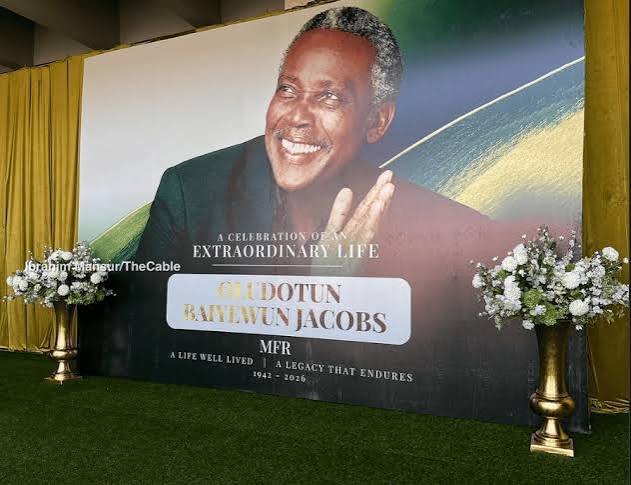
The passing of Olu Jacobs reminded the country of a generation that laid the foundations of modern African cinema.


The death of veteran Yoruba actor Taiwo Hassan (Ogogo) brought grief across the Yoruba film industry and among audiences who had grown up watching him on their television screens.

At the same time, the industry reflected on the lives and contributions of actress Tope Osoba and several respected figures within the Fuji and Juju music community, including St. Janet, Love Azeez and Dimbo Atiya.
Individually, each loss was painful. Together, they felt like the closing of a chapter.

For many Nigerians, Olu Jacobs was more than an actor. He was a fixture in our cultural memory. Long before Nollywood became a global brand, he represented a standard of excellence that younger actors aspired to emulate. His commanding performances gave life to countless characters, whether as a king, patriarch, statesman, mentor or villain. Across generations, audiences encountered him through roles in productions such as The Royal Hibiscus Hotel, Pirates, The Dogs of War, Ashanti, Second Chance, Mirror in the Sun, Secret Laughter of Women, Royal Castle, Potomanto, and The Meeting. Each role portrayed a performer whose presence could elevate an entire production without appearing to try.

Yet, what many people remember most may not be any single role. It was the consistency. For decades, he represented dignity, professionalism and artistic discipline.
In an industry often characterised by rapid change, he remained a steady reference point. Younger actors looked to him for inspiration, while audiences trusted him to deliver authenticity. His passing therefore felt less like the loss of an actor and more like the loss of a trusted elder whose influence stretched far beyond the screen.
The passing of Olu Jacobs prompted a wave of tributes from across Nigeria and beyond, reflecting the profound influence he had on generations of actors and audiences. His enduring legacy was further celebrated through ‘Doyen of Nollywood: Celebrating Olu Jacobs’, a documentary broadcast by Africa Magic that chronicles his remarkable journey across theatre, television and film. Directed by Femi Odugbemi, the documentary features reflections from industry icons including his wife, Joke Silva; Richard Mofe-Damijo, Taiwo Ajai-Lycett, Patience Ozokwor and Kate Henshaw, offering a poignant tribute to a man whose contributions helped shape the foundations of modern Nollywood.

The death of Hassan (Ogogo) carried a different but equally profound significance. While Olu Jacobs helped shape pan-African cinema, Ogogo became one of the most recognisable faces of Yoruba-language filmmaking. For decades he brought energy, humour, intensity and cultural authenticity to every role he played. Whether portraying fearless warriors, cunning antagonists, village leaders, fathers, hunters or complex traditional characters, he possessed a rare ability to connect deeply with audiences. His unforgettable performances in films such as Legal Wife, Amin Orun, Basorun Gaa, Ayanmo, Owo Blow, Anikulapo, Olaniyonu, Eru Okan, Ija Omode, Asewo To Re Mecca and Apase helped define generations of Yoruba cinema.
The emotional outpouring that followed his death revealed just how important indigenous storytelling remains. In an era dominated by streaming platforms and global entertainment, Ogogo’s career served as a reminder that stories rooted in language, culture and local identity still matter. He belonged to a generation that proved Nigerian audiences would always have an appetite for stories that reflected their own realities. The significance of his legacy was further underscored by the visit of the Minister of Art, Culture, Tourism and Creative Economy, Hannatu Musawa, to his family, a gesture that highlighted both his contribution to Nigeria’s cultural heritage and the lasting impact of his work on the nation’s creative landscape.

As the film community mourned these giants, attention also turned to other corners of Nigeria’s cultural landscape. The passing of notable Fuji and Juju music personalities including St. Janet, Love Azeez and Limbo Atiya may not have generated the same volume of national headlines, but their contributions were no less significant. Their deaths reminded many Nigerians of the rich musical tradition that helped shape communities, celebrations and popular culture across several decades.
Fuji music itself tells an important story about Nigeria’s cultural evolution. Emerging from the Islamic Were musical tradition and growing into one of the country’s most uniquely Nigerian genres, Fuji became the soundtrack of celebrations, social commentary and everyday life. Artists such as Barrister, Ayinde Wasiu (KWAM 1), Obesere and many others transformed the genre into a powerful cultural institution. Behind the famous names, however, were countless performers, promoters and contributors who kept the music alive within communities.
Figures such as St. Janet, Love Azeez and Dimbo Atiya belonged to that wider ecosystem. Their lives remind us that culture is sustained not only by superstars but also by the many dedicated individuals who preserve traditions, entertain communities and pass knowledge from one generation to the next.

Perhaps, that is the deeper story. The real significance of these departures is not simply that important people died. It is that they leave behind legacies that now require active preservation. The future of Nigerian culture depends not only on discovering new stars but also on remembering the pioneers who came before them.
Before there were streaming platforms, international film festivals, billion-naira box offices and global music charts, there were men and women who carried Nigerian stories with little certainty of reward or recognition. They performed on modest stages, appeared in early television productions, travelled with theatre troupes, recorded music for local audiences and dedicated their lives to their craft because they believed those stories mattered.

Today, Nigerian culture is a global force. But every global force has foundations. We are reminded of the people who built them. And in remembering Olu Jacobs, Ogogo and many others, we are reminded that while icons may depart, the stories they leave behind continue to shape who we are.