

It’s hard to imagine a worse place to get sick than on an airplane. But unfortunately, it happens ― in many forms. There are a number of unpleasant and even potentially dangerous conditions that travelers can develop during a flight. Nausea, diarrhea, headaches, dizziness, congestion, blood clots, sinus infections, tinnitus — travelers may find themselves dealing with these problems once they’re in the air.
“A bad sinus infection can sometimes worsen when you fly because of the change in air pressure,” Dr. Danielle Qing, an assistant professor and internal medicine specialist at Mount Sinai, told HuffPost. “This can lead to a popping sensation in your eardrums, and in very rare instances can sometimes cause your eardrum to perforate. And then, of course, there’s motion sickness, which can look like nausea, vomiting, headaches and lightheadedness. Turbulence can make it even worse.”
Getting sick while flying can be hard to handle. As Dr. Daniel Chandler, a primary care physician at Tufts Medical Center, told HuffPost, “Airplanes are funny places because things that would be so easy to fix on the ground are more difficult to fix in the air due to a lack of resources and people to fix it.”


Still, there are steps you can take to alleviate the issue if you get sick on a plane. HuffPost asked doctors to share their advice for dealing with in-flight illnesses:
1. Avoid looking at screens.

“If you are experiencing motion sickness, try to avoid things that are visual like your phone or the plane TVs,” Chandler said. “Instead, sleep. But if you can’t sleep, listen to something like music, a podcast or an audiobook.”


If you’re trying to stave off nausea, he also advised against looking at the vomit bags in the seats, as that might make you feel more nauseous.
“Stare at the horizon if you are in a window seat,” Dr. Rabia De Latour, a gastroenterologist and assistant professor of medicine at NYU Grossman School of Medicine, said. She also recommended avoiding unnecessarily moving your head.
Qing offered similar advice in the event of dizziness.
“Closing your eyes and applying a cold compress can often lessen the symptoms,” she said.
2. Hydrate, hydrate, hydrate.
If you’re experiencing nausea or gastrointestinal symptoms, do your best to stay hydrated, as dehydration can worsen your condition. Be sure to drink your fluids slowly and carefully, however, to avoid another trip to the bathroom.
“Attempt hydration with water, not carbonated beverages,” De Latour said.
The airplane cabin environment can be very dehydrating, so even if you aren’t feeling sick, take extra care to drink plenty of water on flight days. Getting ample H2O can help with headaches and dizziness as well.
“People aren’t drinking enough water when they travel, so dehydration is a common reason for headaches during a flight,” Chandler said. “Sometimes dizziness is just a version of motion sickness, but sometimes it can be from dehydration, too. Particularly if you had alcohol, take in some extra water.”
3. Try to eat a little food.
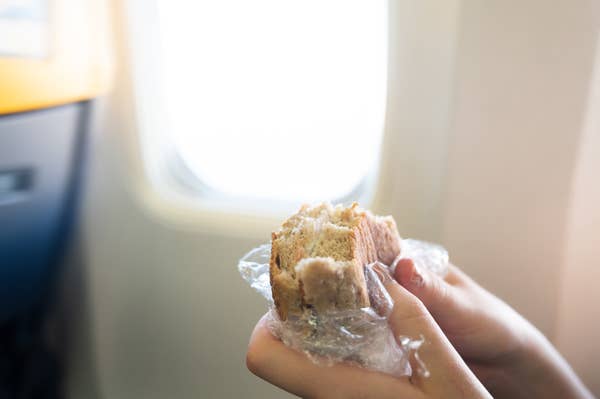
Sometimes, eating is the last thing you want to do when you’re feeling sick. But do what you can to get a little something down.
“Try some bread or crackers,” Chandler said. “Having a small amount of bland food in your stomach can actually take away a little bit of that nausea.”
Many experts recommend the BRAT diet ― bananas, rice, applesauce and toast ― in cases of nausea, vomiting and/or diarrhea. Travelers with chronic conditions should try to pack helpful snacks in their bags, too.
“If you are diabetic or taking insulin, make sure you bring some candy or snacks on board in case your blood sugar gets too low,” Qing said.
4. Take medicine.
“When you travel, it’s always a good idea to keep an extra supply of medication handy, especially if you have certain chronic conditions, such as diabetes or angina,” Qing said. “Having at least seven days of your medications in your carry-on is a helpful precaution, especially if your checked bag gets lost.”
For example, if you have a seizure disorder, she recommended that you have your seizure medications handy in case of an emergency. Those with coronary artery disease or angina should bring their nitroglycerin tablets, and anyone with a history of anaphylaxis should bring an EpiPen, in addition to informing the airline of allergy concerns.
If you’ve experienced motion sickness while traveling, take medication like Dramamine to help with that, Chandler said.
He noted that many travelers pack medications like ibuprofen, aspirin, Pepto-Bismol, Tylenol, Benadryl and Excedrin to address potential health issues, especially if they have a previous history.
“Traveler’s diarrhea is quite common, so if you’re traveling to a country where that often happens, you might want to bring medicine for it,” Chandler said. “Usually it’s a crummy 12 to 24 hours that you just have to tough out. But you need to stay hydrated.”
5. Stay seated.
Some illnesses that arise might require you to make frequent trips to the bathroom, but for the most part, you want to stay in your seat while you’re sick on a plane ― especially if you’re experiencing dizziness or headaches.
“Try to stay seated, as sometimes standing could worsen your symptoms,” Qing said.
“Make sure you are not standing to avoid fall risk and head injury,” De Latour added. “If you are able to lie down, that is ideal, although that can be difficult on a plane.”
If you can manage to fall asleep either sitting or lying down, that’s an ideal way to pass the flight time and keep your body still.
“Dizziness could also be from something called vertigo,” Chandler said. “If you’ve got either a predisposition to vertigo or have experienced it, some medicines can help. Otherwise, keep your head down and eyes closed. Having your center of gravity a little lower can help you feel less dizzy.”
6. Tell a flight attendant.
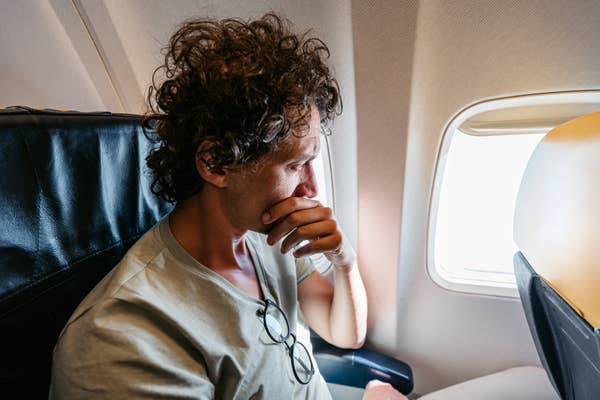
Vomiting or getting diarrhea on a flight can feel embarrassing, but it’s important to inform someone in the flight crew if you’re experiencing a health issue.
“If you are having any of these symptoms, the first thing you need to do is let a flight attendant know so that they can get you medical attention if needed,” Qing said. “They should be able to get you some water or other fluids, especially if you are dehydrated. Many airlines also carry some over-the-counter medications that might help you feel better.”
In extreme situations, the flight crew might even designate a lavatory for you to use for extended periods, though they can’t allow you to stay in there during takeoff and landing.
Let a flight attendant know if you’re feeling dizzy and your symptoms are worsening as well. The more information the crew has, the easier it is for them to properly assist you if you pass out.
“Flight attendants are incredibly well trained,” Chandler said. “If you have a chronic condition ― say you’re diabetic and at risk for having low blood sugar ― wear a medical ID bracelet so that people can read the bracelet and know to give you sugar or check your blood sugar.”
He also recommended traveling with a list of your chronic illnesses, allergies and medications you take.
7. Look out for blood clots.
“Another important issue to keep an eye on, especially long-distance flights, is blood clots, particularly for people who have a history of them,” Qing said. “The best defense against blood clots is to simply move your legs every once in a while. Swelling or pain in one leg can be a sign of a blood clot forming.”
Staying immobile for long periods of time increases your chance of developing blood clots, and conditions like pregnancy can further escalate your risk. If you have a history of blood clots, Qing suggested trying to walk along the aisle every few hours to keep from developing another one.
You can also inform the flight attendants to get the OK to move around, as long as it’s safe. Compression socks help as well.
“Usually, when a flight causes blood clots, they develop after you land. But these days, some flights are almost 20 hours long,” Chandler said. “Make sure to walk around every 30 to 60 minutes. And if you notice one leg is more swollen than the other, then you definitely want to alert the cabin crew.”
8. Avoid flying while sick when possible.
Sometimes, illness develops unexpectedly during air travel, but in other cases, you might have a heads-up.
“Avoid flying when hungover or withdrawing from alcohol,” De Latour said. “Avoid traveling while sick, also to prevent infecting others. Don’t fly if you have any instability in your underlying medical condition.”
Consult with a medical professional before flying if you’re unsure.
“If you have certain lung conditions that require oxygen, they may worsen because of the change in air pressure,” Qing said. “If you are on oxygen, it’s definitely a good idea to discuss your plans with your doctor.”
Also, pay attention to time zone changes if you’re traveling a long distance.
“It’s very easy to miss a dose of your medication because your phone might switch to local time while your body is on the original time,” Chandler said. “Make sure you stay up on whatever medications you take on a regular basis so your chronic illness isn’t exacerbated.”
Do your best to make contingency plans, even if it means postponing your trip or taking precautions like wearing a diaper, Chandler added.