
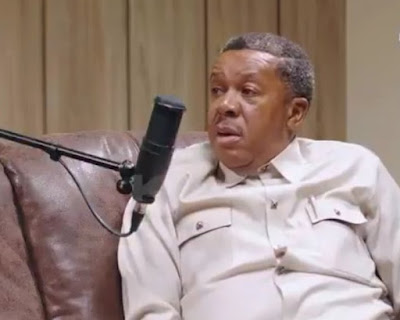
Nollywood actor Francis Duru has expressed concern over the declining presence of Igbo-centric movies and cultural heritage stories in contemporary Nigerian cinema, calling on Igbo filmmakers and investors to learn from their Yoruba counterparts.
Duru made the observations during an interview on Gbam, aired on the Yan Content Factory YouTube channel on Friday.
Responding to questions about why Yoruba producers currently dominate major cinematic release windows and global streaming platforms like Netflix, the veteran actor cited a failure to adapt, invest strategically, and protect regional stories.
“When they say charity begins at home, that’s what has happened to the Yorubas. We need to learn from them. If you don’t protect your own, if you don’t project your own, you know, who will do it?” Duru said.
“We created an industry. It’s so shameful. Go to Netflix today; you hardly see one Igbo film that speaks of the Igbo heritage. It’s annoying.”
Duru added that Yoruba stakeholders effectively organised themselves, mobilised capital, and intentionally shielded their cultural ecosystem, urging Igbo stakeholders not to harbour resentment toward Yoruba creators, but rather to reflect on their own strategic lapses.
He said, “The Yorubas created an opportunity for themselves and utilised it very well for themselves. So why were you not learning? Why didn’t you see it? Because of that same concept: you think you are the big man, but you forget that there will come a time when you need to be expansive, proactive and ask yourself, ‘There is a new market space. Why am I not there?’
“They (Yorubas) perfected themselves. Got together, called their people who were able to spend money and all that stuff. So the Yoruba-centric nature protected their own. Don’t get angry with them. These are people who saw their own and protected their own. What happened to you?”
Duru also lamented the underutilisation of prominent historical figures and rich literary traditions from the Igbo culture, noting that creators from other regions are now stepping in to tell those narratives.
“We have how many great men in Nigeria? When was the last time you saw the epic of one of these great men?” Duru asked. ” We have great writers who are even writing for the Yorubas. We see the Yorubas crossing over to write Igbo stories, like Ahamefuna, and made a mess of who we are.”
Analysing why Igbo filmmakers fell behind in modern cinematic market spaces, Duru explained that many early pioneers approached film production primarily through a trader mindset without long-term structural expansion or genuine artistic passion.
He added that early producers and marketers prioritised immediate financial gain and control over professionalisation, leading to their eventual loss of influence in the evolving market.
“They were just merchandising. Not passion. They just wanted to make money,” he stated. “They were busy about the power, authority and money they were making to the point that they didn’t know that they were losing it… That’s why they left; that’s why they lost out. Where they now? Those names don’t make any sense.”
Addressing nostalgia for classic Nollywood films and iconic soundtracks, Duru argued that earlier productions stood out because they adhered to rigorous procedures, ethics, and artistic discipline, unlike the rushed timelines seen in contemporary productions.
“That hallmark of nostalgia is because it was content, passion, and people sat down and thought through every moment, even from audition to rehearsal to casting. It was very procedural,” he said. “But today it is all step and jump, today script, tomorrow go and sell. There’s an influx of so many people, ‘everybody can do it.’ People no longer respect the ethics and principles that guide everything you do in life.”
“We don’t have an idea of the necessary principles that built our success; once you cannot define it, then you’re progressing in error, and you cannot pass that knowledge to another person,” he added.
The actor clarified that he does not view modern content creation as a threat to Nollywood, but rather as an expansion of industry frontiers. However, he urged veteran custodians to lead by example and reinstate fundamental standards.
“Everything is adding up, and we’re getting better and bigger, so it is expanding the frontiers of the industry,” he concluded. “But those who created the platform of the industry should work hard to actually push towards the ethics and be exemplary to set a new standard so people can know the way to go.”