
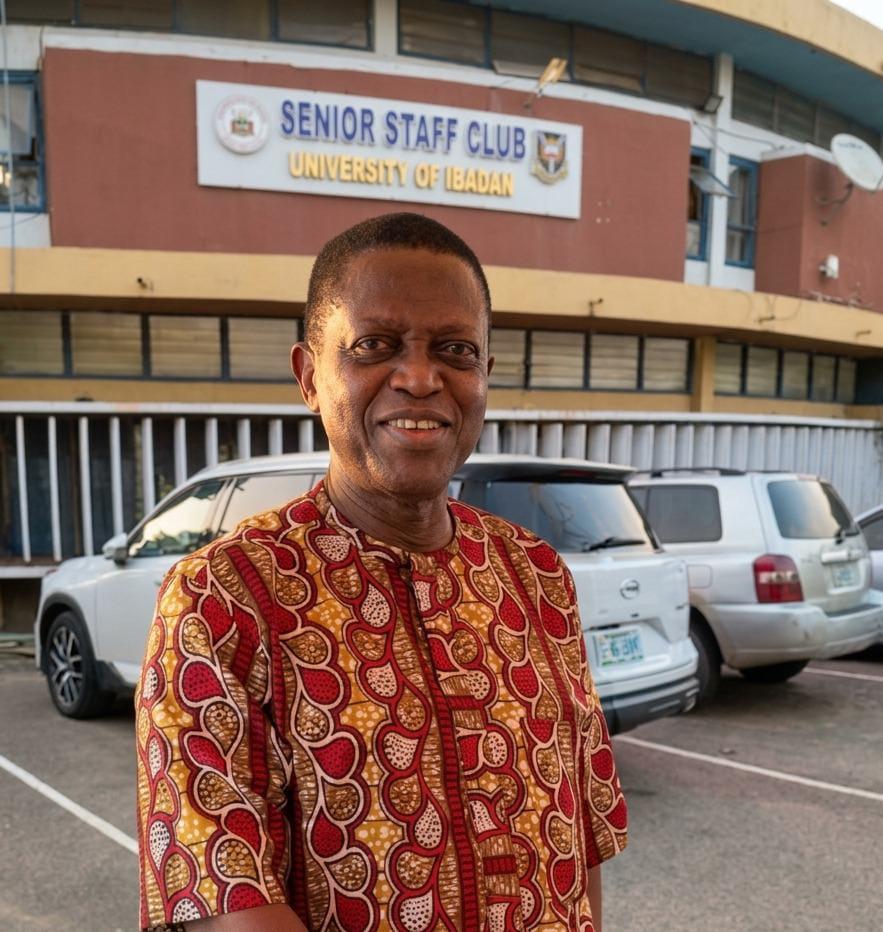
‘SAVE WATER, DRINK BEER’ was the witty poster that welcomed me to the Senior Staff Club of the University of Ibadan, Nigeria that rainy afternoon.
Despite my long absence from the club, I was surprised when I heard my name called from a circle of patrons who were comfortably ensconced in a corner of the cavernous club house. Before I knew it, I was in the warm embrace of my old friend, Prof Duro Adeleke. After a hearty exchange of greetings, and without asking for my mission to the club, the retired Professor of Linguistics and African Languages as well as a former President of the Club.quickly asked one of the waiters to take my orders.
Before long, a steaming bowl of goat-meat pepper soup and a chilled bottle of my favourite drink were set before me. However, the waiter, obviously unimpressed with my‘favourite drink’ which was non alcoholic said; ‘ our bar is also well stocked with a variety of choice wines and whiskey’. I thanked him and set to work on the task before me.
Moments later. I was joined on my table by another friend, Niji Akanni, film director and member of the Ibadan Film Circle, the organization which had invited me to Ibadan for the screening and a discourse of the film adaptation of my book; Tenants Of The House. Niji also received his own bowl of pepper soup alongside his favourite drink which obviously aligned very well with the waiter.
More and more of my old friends, continued to emerge from different alcoves of the club’s belly. Familiar faces mostly hidden behind manes of white beards, they stepped out of the mist of the club’s smoky interior like ghosts in a Shakespearean play as we hugged each other. Expectedly, the questions were unending; “How is Ghana?”, “Do you still practice medicine?’ “Do you still play Tennis?” ‘When do we expect your next book’? ‘When are you coming back home?’.
The arrival of the 89-year old Professor Mark Nwagwu, professor of cell and molecular biology in the club was marked with a big fanfare. He was obviously the club’s new star boy. The reason for this was obvious. The elderly but young at heart writer and retired scholar had recently gone back to school to bag another Phd degree, this time in Culture and Media Studies, and so, the special reception.
Everybody looked well fed and in a happy mood as jokes and banters flew around the club premises in a special lingo which only club regulars could understand. ‘‘ You forget your sorrows once you enter the club” one bearded regular said. Regarding the special style of communication among club members, my friend laughed and said. “We also speak in tongues when the spirit moves us”.
Established in 1958, for ‘Recreation and Relaxation”, the Senior Staff Club, University of Ibadan like many University Staff Clubs, has contributed enormously to the University’s roles of teaching, learning, discovery and cultural enrichment, while promoting closer ties among members of the University community through social activities, engagements and networking.
My relationship with the Club dates back to the 80s when I joined the Club’s Tennis Section. My twice weekly tennis game was a good interlude to my then hectic schedule as a private medical practitioner in the city. Being a doctor also increased my circle of friends as some club members sometimes consulted me for medical advice and treatment.
Despite my foray into politics with a seat at the Parliament in Abuja for a few years, I still continued to make periodic appearances at the club.
Even though some of the club members were averse to partisan politics, I was invited on some occasions to deliver lectures on my activities as a member of parliament. On those occasions, I always made sure to spice my intellectual lectures with some of my unpalatable but witty encounters with politics and politicians much to the delight of my audience.
As I moved round to exchange pleasantries with club members during my recent visit, it was obvious that nothing much has changed in the club. The large swimming pool, with its pool side bar was still active alongside different bars, meeting rooms, the lawn tennis court, lounge and spacious car park for visitors. Even though some of the patrons were younger and unknown to me, they still welcomed me with that special camaraderie found among people of the same profession or avocation.
Different types of drinks, food and fish/meat pepper soup among others were still flowing despite the rumors of economic downturn in the country. When I pointed out this seeming contradiction to a friend, his response was that everything in the club were sold at reasonable prices. “ For example, our beer is the cheapest in the whole of Ibadan’’ he added as he poured himself another glass of his favourite drink.
It has been confirmed that staff clubs play a vital role in the development of universities by enhancing staff well-being, fostering relaxation and improving productivity.
Another friend was emphatic that the club was a good place for net working. As he put it; ‘All the good things of life which I have garnered for myself on this campus came through the staff club’
It is also on record that in addition to relaxation, a lot of intellectual discourse as well as local university politics, appointments and promotions take place within the precincts of the club. In addition, club members enjoy a variety of social events including family nights with occasional movies, dancing and children’s activities including father Christmas shows.
Studies also confirm that well-managed staff clubs contribute to higher job satisfaction and lower turnover rates among university employees.
Additionally, staff clubs often serve as venues for hosting cultural events, team-building exercises, and academic discussions, further enriching the professional lives of university employees.
Unfortunately, regular maintenance of staff club facilities continues to be a big challenge to many universities as could be seen in the case of the university of Ibadan staff club.
Even though the 68-year old facility was said to have been recently renovated, the club house would still benefit from another touch up in line with the institution’s position as the flag bearer of Nigerian universities.
Despite being a supportive and engaging environment for the staff of many universities, some universities have refused to allow staff clubs to be established in their campuses. Factors such as safety concerns for students and staff, where staff clubs could be seen as potential flash-points for conflicts or incidents have been cited as one of the reasons for this.
In addition, some universities see staff clubs as potential pressure groups against university authorities, while other universities lack adequate facilities for the establishment of staff clubs.
It is always difficult to tear yourself away from a friendly and happy community of people. So it was that auspicious day at the Ibadan University staff club.
As I later took my leave, I passed the recently refurbished flood lit tennis court which many years ago used to be my second home. Watching nimble footed and energetic players slugging it out on the courts brought back beautiful memories of my days as a tennis player.
For a fleeting moment, I was tempted to join the game. However, that will be another day.
…Dr. Okediran is a prolific writer, and adjunct professor of creative writing and secretary General of the West African Writers Association.