

The Bayeux Tapestry will return to Britain for the first time in 950 years in a historic deal between Britain and France, which is set to be finalized on July 9. The epic 230-foot-long textile, adorned with scenes of the Norman Conquest of 1066, will be loaned to the British Museum in London. Though experts believe it was likely produced by nuns in Canterbury, England, the historical marvel has remained in France since 1077.
The tapestry will appear in a once-in-a-lifetime blockbuster exhibition about the Norman Conquest, which will feature other loans as well as highlights from the British Museum’s collection. It is expected to open in September 2026.


The best of Artnet News in your inbox.

Sign up for our daily newsletter.


In exchange, prized treasures from all four nations of the U.K.—England, Wales, Scotland, and Northern Ireland—will travel to France, including objects recovered from the Anglo-Saxon ship burial known as Sutton Hoo and the 12th-century ivory Lewis chessmen. The deal will be announced at the British Museum tomorrow by Britain’s prime minster Keir Starmer and French president Emmanuel Macron, currently on a state visit to the U.K. It will signed by British Museum director Nicholas Cullinan.
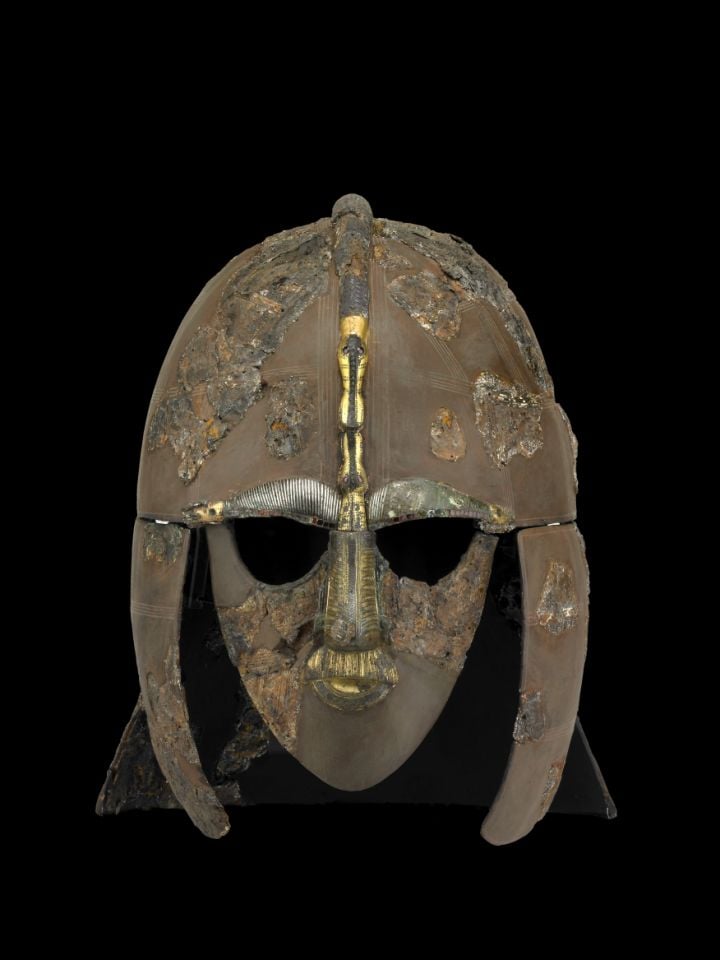
Helmet from Sutton Hoo. Photo: courtesy the Trustees of the British Museum.
“The Bayeux Tapestry is one of the most important and unique cultural artifacts in the world, which illustrates the deep ties between Britain and France and has fascinated people across geographies and generations,” said Cullinan.
“There is no other single item in British history that is so familiar, so studied in schools, so copied in art as the Bayeux Tapestry,” said George Osborne, chair of the British Museum Trustees. He thanked ministers, officials, and diplomats for their work in securing the landmark deal. “It is the most visible expression of a stronger relationship between Britain and France. Merci beaucoup!”

Detail of the Bayeux Tapestry. Photo: © Bayeux Museum.
The Norman Conquest refers to the invasion of England by William, Duke of Normandy, in 1066. It brought an end to Anglo-Saxon rule and established Norman dominance, forever reshaping English culture, society, and language. The Bayeux Tapestry, which was commissioned by William’s half-brother, Bishop Odo of Bayeux, in the 1070s, is a key source helping historians understand the events that took place.
It was hung around the nave of Bayeux Cathedral in 1077 and has remained in the town ever since, barring two trips to Paris during the French Revolution and the Second World War. The U.K. first attempted to arrange a loan in 1953, in celebration of the coronation of Elizabeth II, and plans were put in place. French authorities made a last minute decision to reverse the deal just a month before it was set to ahead.
More recently, the possibility of a loan deal between the neighboring countries has been on the table for some years. Rumors that Macron had agreed “in principle” began circulating in 2018. The move was described as a generous, diplomatic gesture that would reflect a strong relationship between France and the U.K. in the wake of Brexit. This initial proposal never came to fruition, partly due to concerns over the fragility of the tapestry, which made any attempts to move it risky.

Bayeux Tapestry on view at the Bayeux Museum. Photo: © Bayeux Museum.
More recently, in 2021, it was reported that the mayor of Bayeux would only consider loaning out the precious embroidery if the U.K. agreed to restore it. He added that it would only travel once the Bayeux Museum, its home since 1983, had closed for a major planned restoration expected to cost some €35 million ($40 million).
“It has to be moved because we can’t restore the tapestry in situ in the museum, as it’s too small,” he explained. “Given that, whether it moves one kilometer, 100km, or 500km changes little.”
The Bayeux Museum is slated to close for two years on September 1, creating a rare window of opportunity for the tapestry to be sent out on international loans. This spring, Keir hinted on the History Extra podcast that U.K. culture officials were in ongoing dialogue with their French counterparts about the possibility. It is not yet clear whether conservation work would be part of the agreement.