

Summertime in Switzerland means one thing: Basel is getting ready to welcome art lovers from around the world. Art Basel 2024, held from June 13th to16th, has a lot to offer, but so does the rest of town. Beyond Messeplatz, the art fair is a moment to experience art across the city, and is just an hour’s train ride from Zürich, where Zürich Art Weekend takes place June 7th through 9th.
This year, as part of Art Basel’s Parcours section, public art installations curated by the Swiss Institute’s Stefanie Hessler will line Clarastraße along the Rhine, bringing a taste of contemporary art to the outdoors. While there’s plenty in store at the fair itself, there’s more to see in Basel if you venture away from the fair and into the museums and galleries.


Here, we select 10 museum and gallery shows worth wandering away from the fair booths for.

“When We See Us. A Century of Black Figuration in Painting”
Kunstmuseum Basel
Through Oct. 27
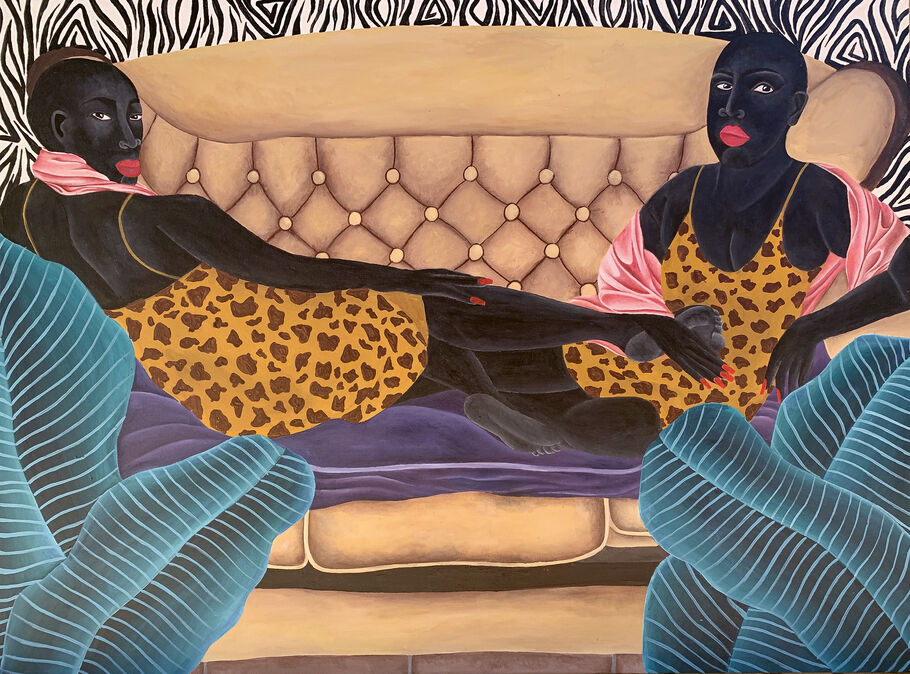

Zandile Tschabalala, Two Reclining Women, 2020. © Zandile Tshabalala Studio. Courtesy of the Maduna Collection
Advertisement
Tandazani Dhlakama and Koyo Kouoh, curator and chief curator respectively of the Zeitz MOCAA in Cape Town, have curated this comprehensive show, which asks how artists from the African continent and diaspora capture their lived experiences as subjects of their own art.
A selection of works from 156 artists, including Romare Bearden, Esiri Erheriene-Essi, YoYo Lander, Scherezade Garcia, and Pamela Phatsimo Sunstrum, is shown under six distinct themes: “The Everyday,” “Joy & Revelry,” ”Repose,” “Sensuality,” “Spirituality,” and “Triumph and Emancipation.” With its name inspired in part by When They See Us, Ava DuVernay’s documentary series on the Central Park Five case, this exhibition explores how Black artists portray their own subjectivity and, in doing so, offers a varied vision of Black people in their own lives.
Vilhelm Hammershøi, “Silence”
Hauser & Wirth
Through July 13
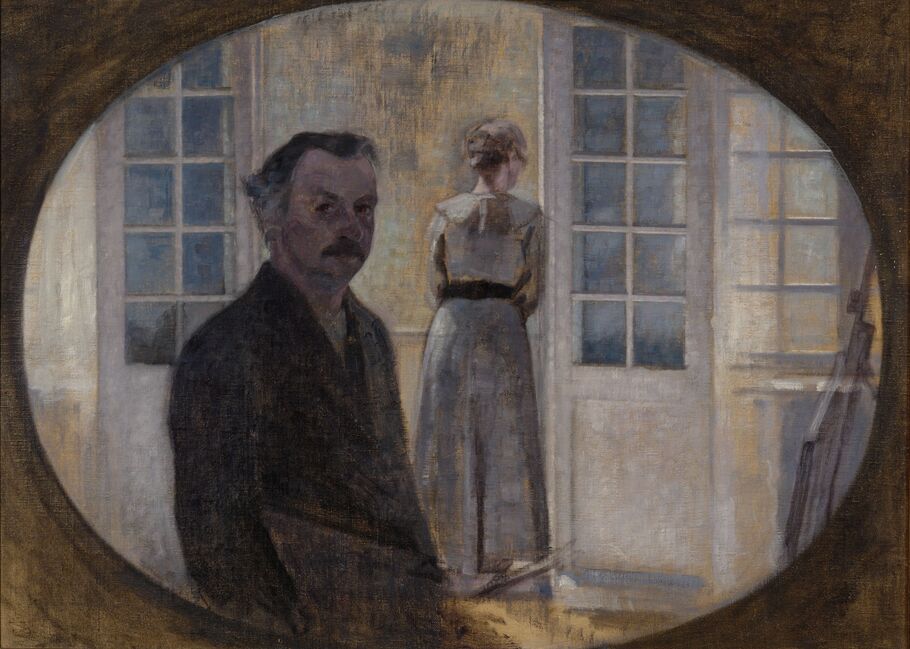
Vilhelm Hammershøi, Double Portrait of the Artist and His Wife, Seen through a Mirror. The Cottage Spurveskjul, 1911. Courtesy of private collection.
The newly opened Basel gallery of Hauser & Wirth will feature a solo show of works by Danish artist Vilhelm Hammershøi. Curated by Dr. Felix Krämer, the historical survey features 16 pieces by the 19th-century artist that capture the interiors of Copenhagen’s architecture alongside London cityscapes from the turn of the century. Inspired by the Dutch Old Masters, like Johannes Vermeer, Hammershøi employs the darker neutral colors of the Danish Golden Age to create moody pieces with an extraordinary attention to light: works that demand quiet contemplation.
“Cloud Chronicles”
Fondation Beyeler
Through Aug. 11
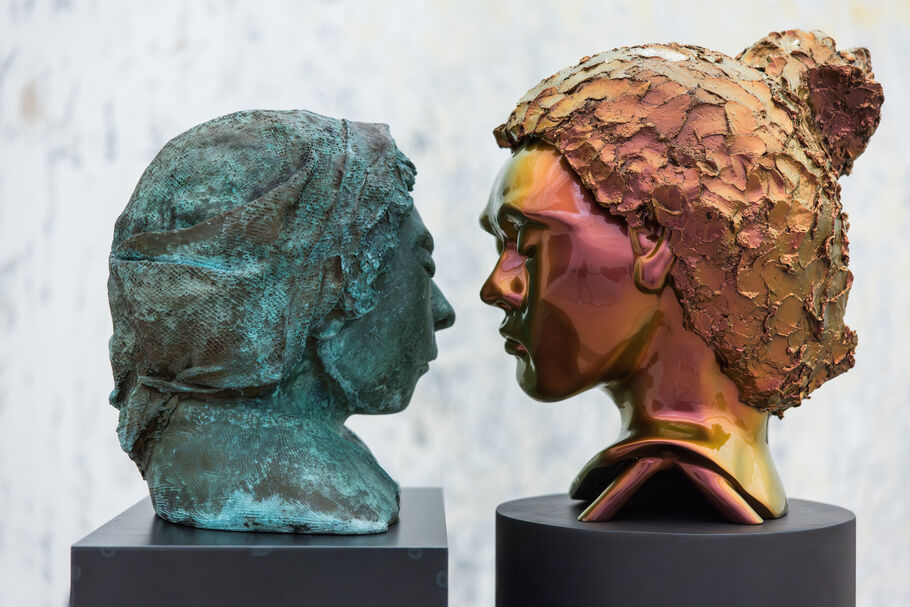
Installation view of “Cloud Chronicles” at Fondation Beyeler, Riehen/Basel, 2024. © 2024 ProLitteris Zürich. Photo byStefan Bohrer. Courtesy of Fondation Beyeler.
Connections are at the core of this summer show, an experimental project transforming the museum and its surrounding gardens into a haven of contemporary art. Building interrelationships between individual works from the museum’s collection and newly commissioned paintings, sculptures, films, and installations, the exhibition features the work of 30 participants including painters Michael Armitage and Marlene Dumas alongside plenty of conceptual artists, such as Frida Escobedo, Peter Fischli, Koo Jeong A, Cildo Meireles, Rirkrit Tiravanija, and Adrián Villar Rojas. In partnership with the LUMA oundation, and with Philippe Parreno, Tino Seghal, and Precious Okomoyon joining the curatorial team, this ambitious, all-encompassing exhibition is envisioned as a “living organism that changes and transforms.”
Toyin Ojih Odutola, “Ilé Oriaku”
Kunsthalle Basel
June 7–Sept. 1
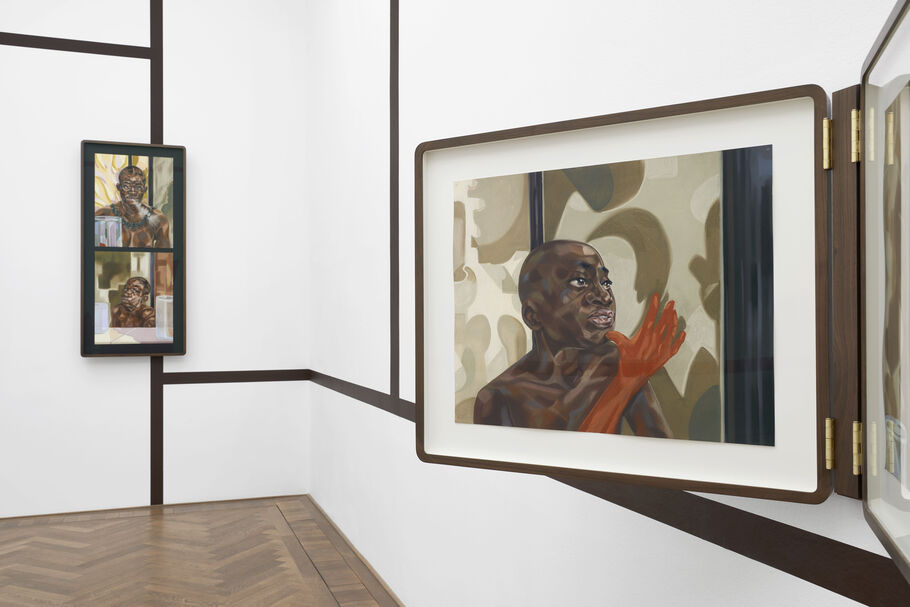
Toyin Ojih Odutola, installation view of “Ilé Oriaku” at Kunsthalle Basel, 2024. Photo by Philipp Hänger. Courtesy of Kunsthalle Basel.
Housed in a stunning 19th-century Neoclassical building in the heart of Basel’s cultural quarter, the Kunsthalle is known for presenting comprehensive institutional exhibitions of internationally recognised artists for the first time in Switzerland. Among them is Nigerian American artist Toyin Ojih Odutola, whose showcase of brand new works creates character-rich narratives around Black personalities. Layering pastels alongside pencil, charcoal, and graphite, Ojih Odutola’s texturized portraits capture a unique, distorted aesthetic, as if seen through water.
Ebecho Muslimova, “Whispers”
Bernheim, Zürich
June 7—July 26
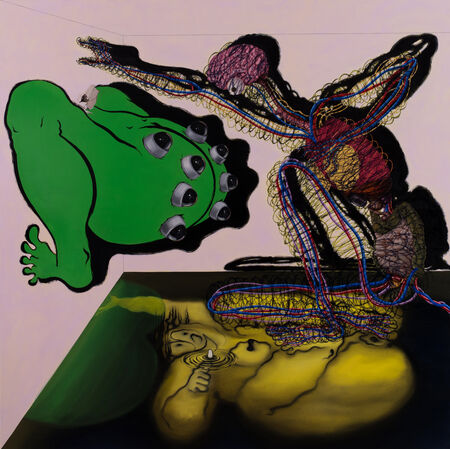
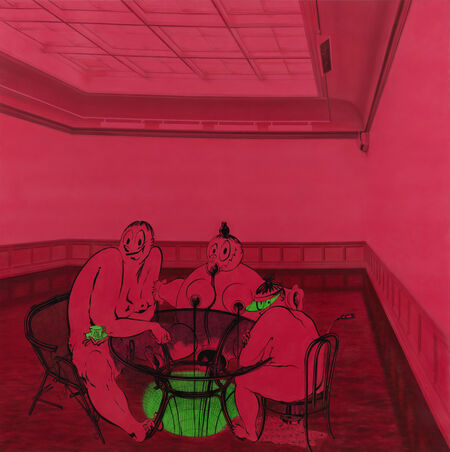
In the Zürich half of a two-part presentation (the other show, “Rumors” is at Mendes Wood DM in São Paolo), Ebecho Muslimova’s series of paintings portray Fatebe, the artist’s alter ego, in flat, cartoonish lines. This signature character frequently finds herself in contorted, surrealistic situations, visualizing desire as Goya-esque grotesquery amid skyscrapers and modern urban domesticity. In cheerful, irreverent paintings, Muslimova offers a vision of a liberated, playful female body.
“EXPRESSIVE! The Nude in Modern Art”
Galerie Henze & Ketterer
Through Aug. 17
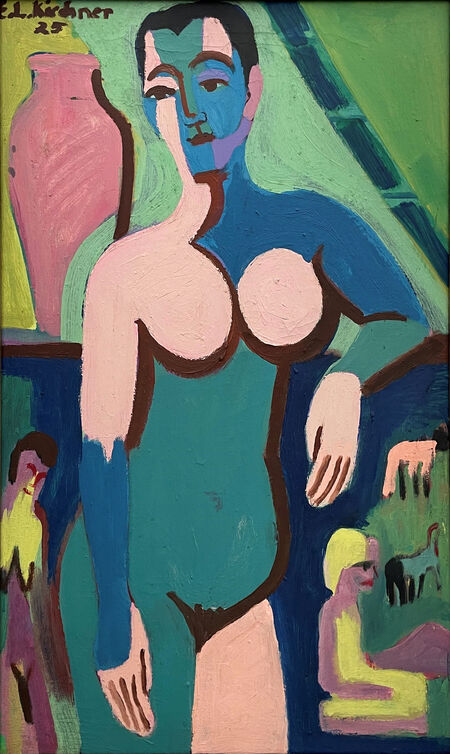
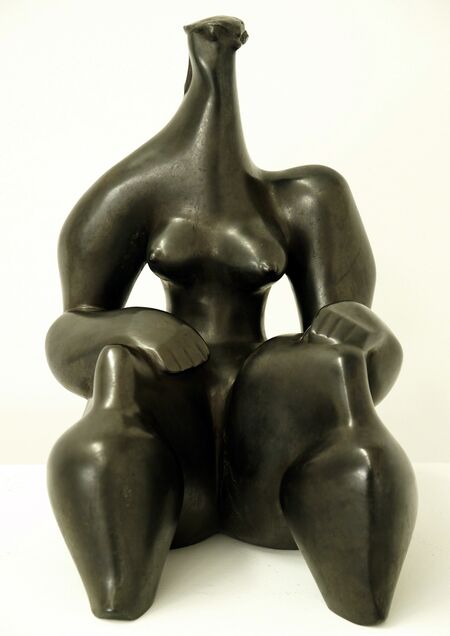
While formal portraiture had previously required long sittings, artists began taking a new approach to portraying the nude form in the 20th century. In particular, the group of artists known as Die Brücke implemented its “quarter-hour nude” technique, asking models to pose for less than 15 minutes. Their unusual compositions, which place emphasis on the artist’s own impressions over physical reality, continue to influence abstract depictions of the naked form today. Featuring paintings by George Grosz and Georg Baselitz alongside watercolors by Emil Nolde and abstract sculptures by Karl Hartung that examine representational depictions of human figures, this show uses the body as a conduit to explore the human condition.
Jim Shaw, “The Past is Never Dead. It’s Not Even Past.”
Kunsthaus Biel, Biel
June 9–Aug. 25
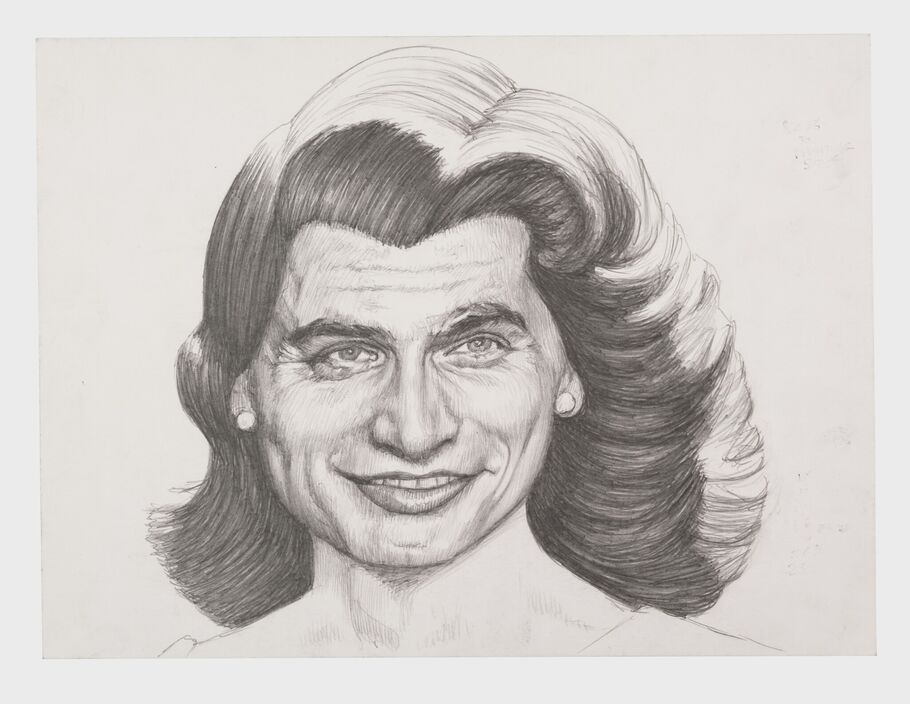
Jim Shaw, Jeff in Drag Head Study, 2022. Photo © 2023 Jeff McLane Studio. Courtesy of the artist and Gagosian.
Located an hour’s train ride from Basel, the quaint village of Biel is home to an incredible contemporary art institution that draws international artists in for exhibitions. This solo show features photographs, study drawings, sculptures, and a dozen paintings by Jim Shaw that offer insight into the artist’s world. With references to pop culture and Hollywood, Shaw uses sharp visual language to critique mainstream society’s values.
Curated in collaboration with the Museum of ContemporaryArt Antwerp and supported by Gagosian, the Kunsthaus exhibition also features the immersive installation The Electronic Monster and Thirteen Ghosts (2024). This layered black-and-white film employs cartoon imagery and movie outtakes to poke fun at the shifts in American culture, while showing how pop culture influences our belief system.
Not Vital, “Silence”
Galerie Tschudi, Zürich
June 7–Aug. 3
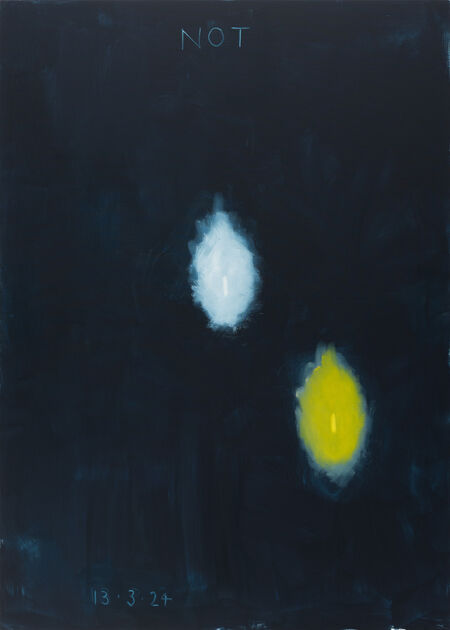
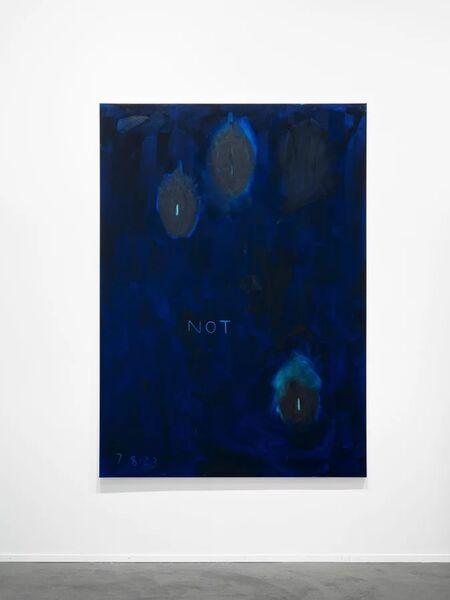
Not Vital, 2- self-portraits, 2024. Photo by Mattia Angelini. Courtesy of the artist and Galerie Tschudi.
Not Vital, 3 Self-Portraits, 2024. Courtesy of the artist and Galerie Tchudi.
Not Vital is one of the foremost sculptors of our time. Over his decades-long career, he has produced an enigmatic visual language exploring our built environments through large-scale sculptures, some of which he calls “Scarch” (a term describing hybrids of sculpture and architecture).
Featuring ghostly new works by the Swiss-born artist, “Silence” presents new paintings and sculptures that incorporate disembodied heads. Vital combines a neutral palette with a deep blue pop of color that serves as a thread through this solo show in Zürich. Evoking Dadaist ideas and inspired by his travels across the globe, this show represents a different side of the artist’s practice.
Pedro Wirz, “Substance Shifts”
PHILLIPPZOLLINGER, Zürich
June 7—July 20
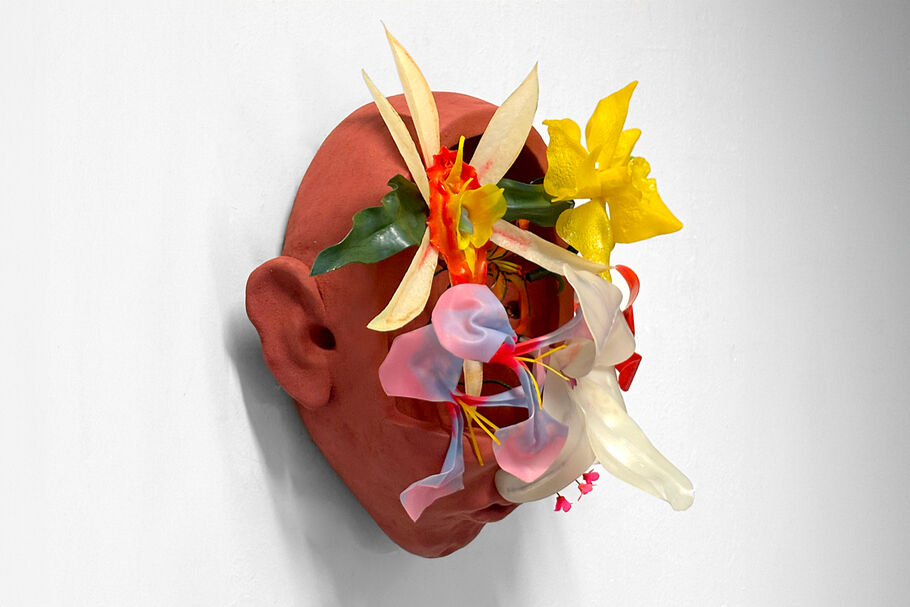
Pedro Wirz, The Boy with Many Friends, 2024. Courtesy of the artist and PHILLIPPZOLLINGER.
Brazilian sculptor Pedro Wirz collaborated with a material scientist to create adaptive, reusable polymers for this exhibition focused on reimagining our relationship to everyday materials as we confront the climate crisis. This series of sculptures experiments with new materials that can be reshaped and reconceived repeatedly, a statement about the need to address the disposable nature of our modern culture, including in the art world. In reimagining materiality through the use of these cutting-edge polymers, Wirz draws on iconic mythological imagery, including the myth of Daphne, who transformed into a tree to escape the god Apollo. In The Boy with Many Friends (2024), a mask-like burnt clay sculpture adorned with bright flowers, this metamorphosis is on full view.
Marina Adams, “To a World Full of Others”
von Bartha
June 11—July 27
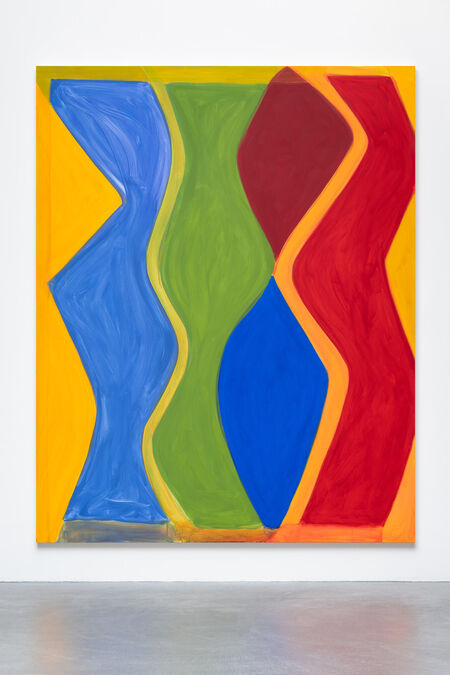
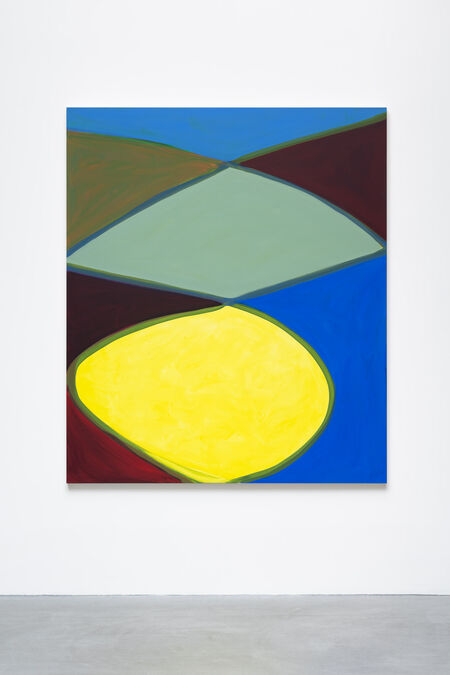
The vibrant colors of Marina Adams’s paintings capture the brilliance of her life lived between New York and Parma, Italy. Playing with form and movement, Adams employs soft lines in the trademark geometric patterns that signify her unique visual language. Adams has been exhibiting for decades, but only received acclaim in the 2010s, and this will be her first exhibition in Switzerland. It includes 13 new paintings and several drawings, inspired by the patterns of Moorish tiles and rugs.
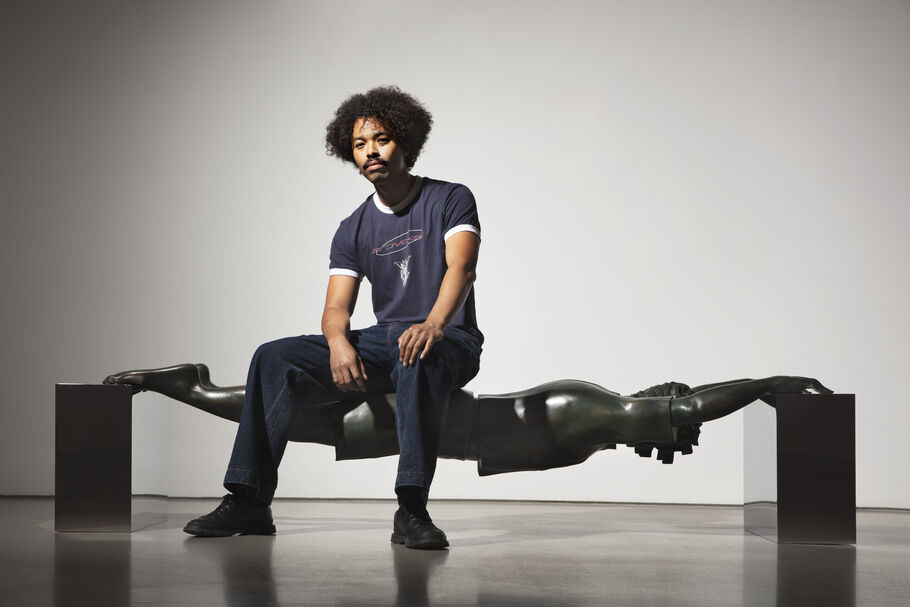
Portrait of Alex Gardner by Guillaume Ziccarelli. Courtesy of the artist and Perrotin.
In December 2023, Alex Gardner emptied his Los Angeles studio for his solo exhibition “Good Luck” at X Museum in Beijing. This exhibition explored the delicate balance between hope and despair in contemporary society through a series of large-scale acrylic paintings. Embracing the new beginning of an empty studio in January, Gardner leaned into the sanguine perspective for his new body of work: one that appreciates our “mental, spiritual endurance,” as he put it.
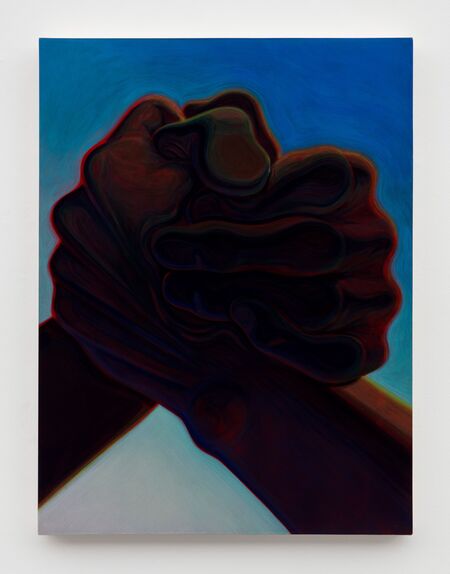
This invigorated sense of optimism is on view in Gardner’s “Psychic Stamina” at Perrotin, his first show with the gallery, in New York until July 26th. A BFA graduate of California State University, Long Beach, Gardner is earning a reputation for his ethereal acrylic paintings, featuring pitch-black faceless figures that radiate within luminous, vaguely defined color fields. By emphasizing this emotional stamina, his new works celebrate the strength of human connection in a world fraught with societal turmoil.
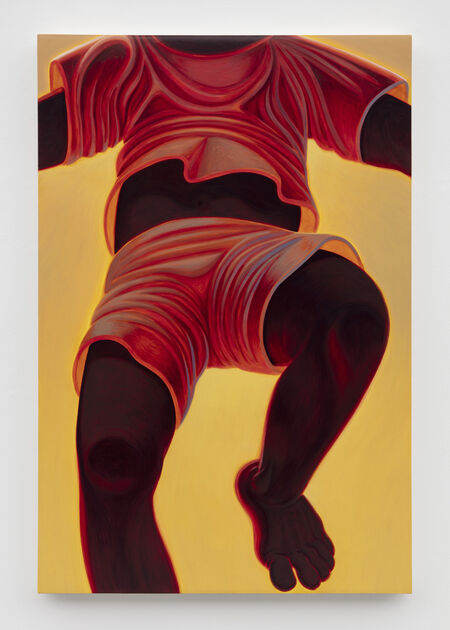
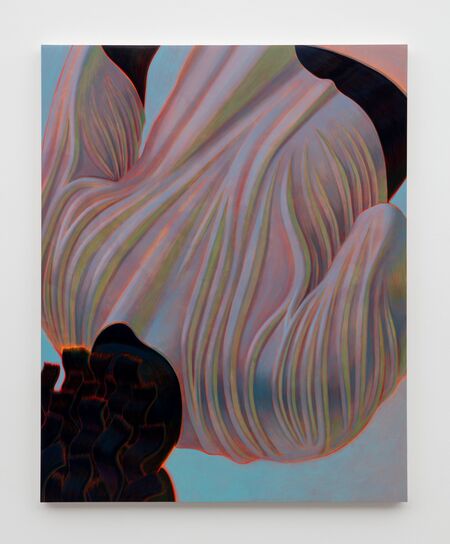
Alex Gardner, Exploding On The Launch Pad, 2024. Photo by Guillaume Ziccarelli. Courtesy of the artist and Perrotin.
Advertisement
“After having a kid, I’m more empathetic than ever,” Gardner told Artsy in his studio earlier this year. Now 36, Gardner finds that fatherhood has made him acutely aware of his responsibility to nurture his one-year-old son’s bright-eyed outlook in an increasingly turbulent world. The realities of parenthood have pushed him to move beyond the cynicism that defined his 20s and have lent his art a renewed sense of hope. “His existence is an embodiment of optimism…my job is to not take away his optimism,” he added.
During his own childhood, the Los Angeles–born artist fostered his love for painting and drawing with a vendetta: an enduring distaste for a David Hockney poster in his mother’s house—an Italian piazza print that is burned into his memory. As an only child, however, drawing quickly became Gardner’s preferred pastime. “I liked hiding in a room, making it, and then just having this one moment of vulnerability,” he said.
Though uninspired by the “crude” Hockney (an artist he said he otherwise admires), Gardner would frequent local museums, such as LACMA and MOCA in Los Angeles, where he honed his obsession with more technically challenging works. “I was like a technical nerd, and I loved classical Italian paintings, where the technical ability [is] to capture, replicate, and create a scene that looks real, like it actually exists,” Gardner said.
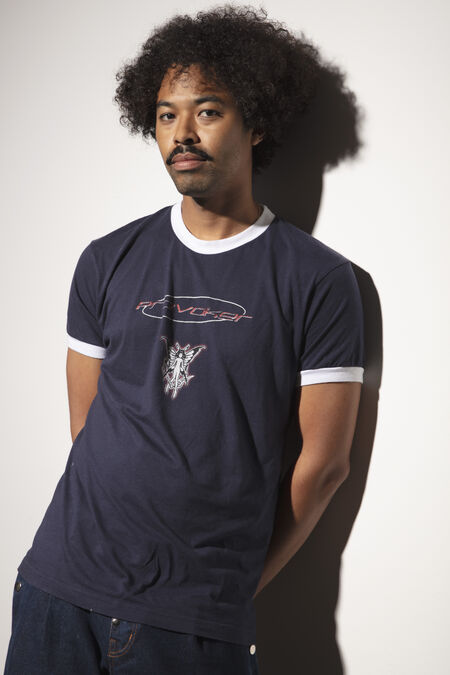
Portrait of Alex Gardner by Guillaume Ziccarelli. Courtesy of the artist and Perrotin.
With “Psychic Stamina,” Gardner’s technical ability is evident, not because he creates hyperrealistic scenes, but rather because of his scrupulous approach to production, where one painting can take weeks to complete. “I paint very slow, controlled, and meticulous, but that’s my way of trying to have a sense of control…in life,” Gardner said. His glowing, decontextualized figures are rendered in bright acrylic paints with care and precision. These figures, as seen in No Prenup For The Thrill (2024), are shown embracing one another against ethereal backgrounds that often evoke blue skies, creating a serene yet intimate atmosphere.
This intimate moment of connection is a recurring motif in Gardner’s work, where entwined figures convey both comfort and vulnerability. For example, in All I trust is my trust fund(2024), an adult figure holds a child dressed in coral-colored clothing, capturing the emotional strength and fragility that define both Gardner’s exploration of human connection and his own experience as a father.
Rather than relying on photos, Gardner takes mental notes or writes down phrases or ideas collected throughout the day. These memos are then translated into his acrylic paintings, where he attempts to capture their essence. Though Gardner’s works are often described as surrealist, he doesn’t define his work that way.“I’m more of an observer and strive to be an objective truth teller,” he said.
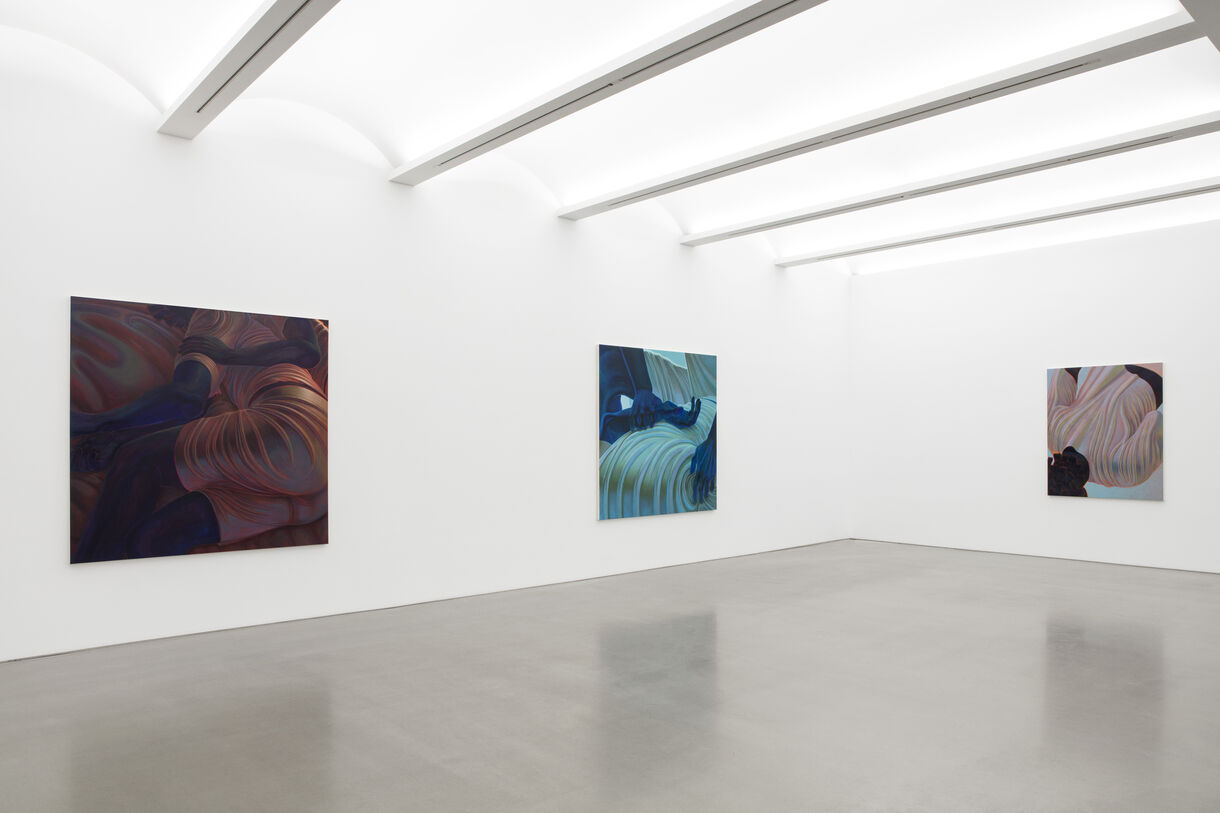
Alex Gardner, installation views, “PSYCHIC STAMINA”
4
View Slideshow
Telling the truth, of course, means portraying the negative as well as the positive. Chaos Bloom (2024), for example, depicts two headless figures, an adult and a child in coral and white clothing, seemingly suspended and falling backward in a state of serene embrace. However, as Gardner sees it, this pair is in a state of “free fall,” acknowledging the “sense of precarity” in everyday life, a nod to the unpredictability of human existence. It’s a depiction of his own experiences. “The thing about getting older is you just realize how little time you actually have,” said Gardner. “I still want to incorporate some discomfort and an acknowledgment of suffering because that’s inevitable and unavoidable.”
Still, today, Gardner is making work under new circumstances, exploring what it means to guide his son’s life—a responsibility that will soon be doubled, as he is expecting his second child in December. Looking head-on at the precarity of the world, marked by intense political discourse and growing social paranoia, Gardner is continuing to push towards hope and resilience. Shrugging off the nihilism and cynicism of his youth, he is now committed to painting these intimate embraces as a testament to the “carpe diem” mentality needed to live in an uncertain, free-falling world. “Life’s so short, you can’t be dilly-dallying,” he said.